
Myths and facts about the autumn depression: why in late September we often fall into a bluster and what to do about it
Summer has passed as if it never happened. We are again on the verge of a long period of short light days, cloudy skies, prolonged rains and characteristic weather.
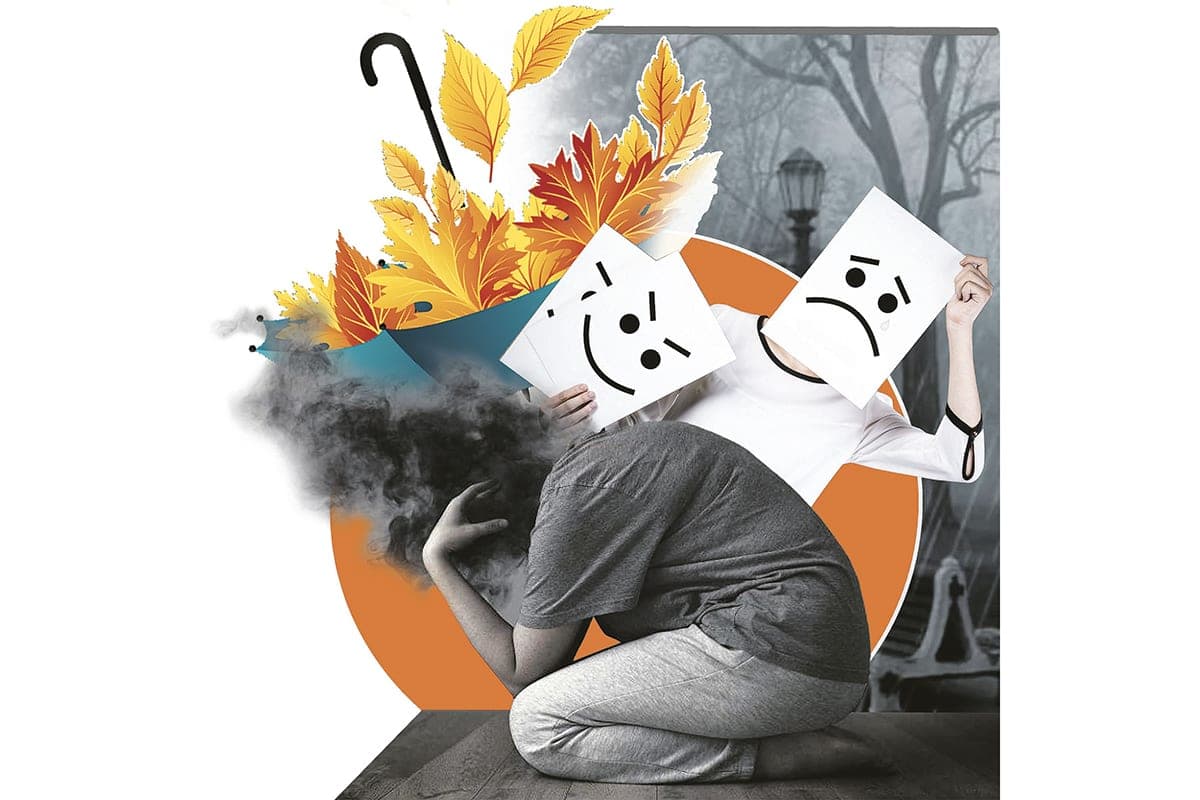
Summer has passed as if it never happened. We are again on the verge of a long period of short light days, cloudy skies, prolonged rains and a characteristic Belarusian winter, which now differs little from late autumn (adjusted for last December, January and February: they suddenly turned out to be really snowy and frosty, as in the good old days). The depressive state associated with the dull at times of the year, which, as we remember, Alexander Sergeyevich Pushkin loved so much that he considered it an “eye charm”, is familiar to many. Today let’s figure out how to get out of the vicious circle of annual seasonal melancholy and why you should not take lightly to the persistent alarm bell of the body under the code name “how tired of everything!”.
Hello, sadness! In fact, the common expression “autumn depression” in the strict medical sense is not an independent diagnosis, but it has a clinical equivalent. According to modern guidelines, such as the DSM-5 (Diagnostic and Statistical Manual of Mental Disorders) and ICD-11, this condition is classified as recurrent depressive disorder with a seasonal pattern, or seasonal affective disorder (SAD).
“The line between mild seasonal meddling and true clinical depression lies in the degree of impairment of social and biological adaptation,” says family psychologist Svetlana Zhukovsky. Handra is a temporary decrease in mood, a slight decline in strength and the desire to wrap yourself in a blanket that does not prevent a person from going to work and performing basic duties. With this condition, the quality of life can subjectively decrease, but a person does not fall out of professional and interpersonal communications, does not forget about the satisfaction of his basic needs. But seasonal affective disorder, according to the clinical recommendations of the American Psychiatric Association (APA), is characterized by severe hypersomnia (constant drowsiness), hyperphagia (insatiable craving for overeating, and mainly something sweet) and deep exhaustion of the volitional sphere, in which the quality of life is disturbed, and the symptoms last at least two weeks.
- Svetlana Viktorovna, why are we so dependent on the change of weather and the duration of daylight hours?
- This condition is deeply rooted in evolutionary neuroscience. From the point of view of physiology, the main trigger of SAD is desynchronosis, that is, a failure of circadian rhythms. As modern research in the field of chronobiology shows, the retina of our eye transmits signals about the level of illumination in the suprachiasmatic nucleus of the hypothalamus. With a shortage of sunlight in autumn and winter, the pineal gland (episode) begins to produce excessive amounts of melatonin (sleep hormone) even in the daytime, which causes lethargy. In parallel, the level of serotonin decreases, since bright light is critical for its synthesis. Interestingly, some people suffer from the so-called spring depression, although the daylight hours increase. This paradoxical condition is due to the fact that a sharp increase in insolation and the restructuring of biorhythms exhaust the already vulnerable nervous system after winter. The brain does not have time to adapt to new circadian requirements, which provokes not classical apathy, but rather an anxious, agitated depression, accompanied by insomnia and internal tension. Vitamin D deficiency also plays a role, which is very common for us, residents of a region with very few sunny days a year.
- So almost all northerners experience seasonal affective disorder?
Geographical factors play a key role here: the farther a person lives from the equator, the higher the risk. For example, in Scandinavia or northern regions, the prevalence of ATS can reach 10%, while in southern latitudes it barely exceeds 1-2%. If we turn to epidemiological data, the seasonal blues have a pronounced demographic roll. Clinical studies show that SAD is four times more likely to be diagnosed in women than in men, which is associated with fluctuations in sex steroids - estrogen and progesterone - affecting serotonin metabolism. The typical age of onset of the disorder is from 18 to 30 years, but specifically the autumn blues of this period, of course, is not limited and can occur in youth, youth, maturity and old age. Nutrition and sleep are the basis of mood – What about the psychological factor? Autumn from school time many associate with the end of the period of vacation / vacation and return to routine (study, work).
- Indeed, in addition to purely neuroendocrine disruptions, psychological and social factors play a huge role in the development of autumn depression. SAD is often triggered by social stress: after returning to rigid work deadlines, the load on the psyche increases. Autumn is archetypally perceived as a time of withering, the end of the life cycle, “summing up” of the year, which in people with an anxious character or unresolved existential crises causes a sense of loss and hopelessness. Thus, seasonal sponge is always a complex biopsychosocial phenomenon that requires careful attitude to your body.
From the point of view of modern medicine, lifestyle, nutrition and sleep quality are not just banal and boring recommendations, but fundamental factors that determine our neuroendocrine homeostasis and the state of our psyche. Scientific publications of recent years are actively exploring the so-called axis “intestine – brain”. It is proved that an excess of simple carbohydrates and sugars, to which people are physiologically drawn with SAD (hyperphagia), disrupts the microbiome, on which the synthesis of serotonin directly depends. Proper nutrition, rich in tryptophan and omega-3 fatty acids, acts as a powerful neuroprotector, helping the nervous system to cope with autumn blues. Of course, it is impossible to cure depression with nutrition, but it is the very foundation, without attention to which it is impossible to talk about a good psychological state.
However, the most underappreciated factor in the development of seasonal melancholy remains sleep. We are used to sacrificing it for work or evening scrolling on the news feed, forgetting its critical role for the psyche. When sleep time is reduced or its architecture is disrupted due to fall desynchronosis, the amygdala (our fear and anxiety center) becomes hyperactive. As a result, we wake up with already skyrocketing levels of cortisol, and our prefrontal cortex loses the ability to adequately control emotions, plunging us into apathy and irritability. That is why the correction of any affective disorder should begin with careful restoration of basic physiology, where high-quality, deep sleep in complete darkness and a balanced diet are the main tools for the return of psychological well-being. It is important to remember: hypersomnia is characteristic of SAD, which is a symptom and worsens the condition, so “sleeping out of depression” will not work. On the contrary, you will need to make an effort and engage in what is called behavioral activation - this is regular walks in the fresh air, moderate physical activity, even if it seems that it is completely powerless. Even a 15-minute walk in front of your home can contribute to your mental health!
Color therapy against grayness – We used to think that depression can be cured only with prescription drugs. But modern medicine offers many equally effective ways. Tell us more about them.
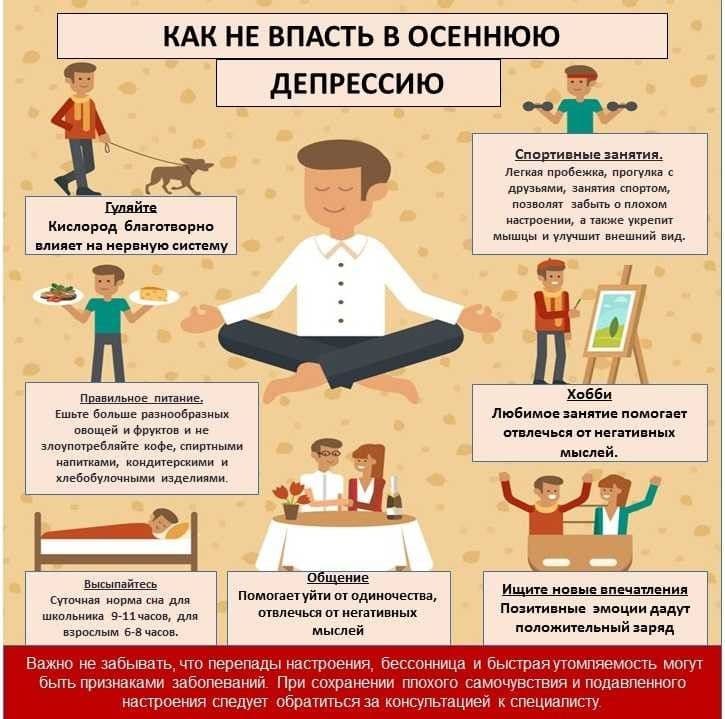
The fight against seasonal affective disorder requires a comprehensive approach. Light therapy is recognized as a promising and modern method of treatment: the use of special medical lamps with illumination from 10,000 lux imitates bright sunlight, which through the retina of the eye suppresses excess daily production of melatonin by the pineal gland. At the same time, adequate “insolation” triggers the synthesis of serotonin, which reduces the level of apathy and returns the volitional resource. It is important to remember that such lamps must be certified, and they should be used after consulting an ophthalmologist, as they can negatively affect the retina.
The effect of the lamp is well complemented by regular walks in the fresh air. Even on a cloudy autumn day, the level of natural light outside is much higher than indoors, which helps the hypothalamus adjust our biological clock correctly. In addition, light physical activity improves the blood supply to the brain, reduces hypoxia, and contact with nature works as a body-oriented therapy, shifting the focus of attention from anxious thoughts to physical sensations “here and now”.
To compensate for the sensory deprivation and visual hunger caused by autumn grayness, color therapy comes to the rescue. Although it is not included in medical protocols for treating depression, the perception of warm shades - yellow, orange, red - physiologically stimulates the visual cortex and causes associations with warmth and safety. The conscious addition of such bright accents to the interior or clothing serves as a mild dopamine stimulus and returns the person to the internal locus of control over his emotional state.
Finally, an equally important factor is competent nutraceutical support. The level of vitamin D, which is inherently prohormone, is critical: receptors for it are found in almost all parts of the brain and its deficiency is directly associated with the development of depressive episodes. In combination with omega-3 fatty acids, as well as magnesium and B vitamins that support the nervous system, we can help ourselves through a difficult climatic period. If you notice that, despite all the actions taken, on the support of friends and family, the depressive state continues to worsen, and the symptoms only increase (do not want to get out of bed in the morning, it seems that life loses the meaning that it used to be), it is better not to postpone a visit to a mental health specialist. This may be a psychologist who will talk to you, orient you in the issues of diagnosis and, if necessary, recommend you to consult a psychotherapist for possible prescription of drug therapy.
- In the modern world, going to a psychologist or psychotherapist is no longer a kind of shameful action, as it was a few decades ago, Svetlana Zhukovsky emphasizes. Today, this method of therapy speaks of a competent, balanced attitude to one’s own mental health and psychohygiene. Coping strategy (from English. coping - "to cope") - a way that a person uses to adapt to a stressful situation, cope with difficulties, internal conflict or strong emotional stress. These can be specific actions, thought processes, or emotional reactions. Their goal is to normalize the mental state, reduce stress, make an informed decision taking into account the circumstances and ultimately successfully resolve the problem.
So, as for the autumn depression, one, unfortunately, popular with many people coping strategy can be not just ineffective, but frankly harmful, warns Svetlana Zhukovsky:
- Of course, this is about alcohol. Of course, a glass of wine at dinner or a good cocktail in the company of friends can not do much harm, but if you feel that alcohol becomes, in fact, the only tool to combat stress and bad mood, here you need to say a firm “stop!” and seriously think. The fact that alcoholic beverages for our nervous system are depressants (not ANTI-!). This means that after a short-term euphoria, an even more pronounced decline occurs. Moreover, alcohol negatively affects the balance of the most important neurotransmitters, which only aggravates the process of development of seasonal affective disorder. Symptoms of SAD are similar to signs of normal depression, but they are strictly tied to a specific time of year and should recur for at least two years in a row. Typical manifestations include:
depressed mood, loss of interest in usual activities;
fast fatigue, reduced energy;
problems with concentration and memory;
sleep disturbance (hypersomnia - pathological drowsiness or insomnia);
changes in appetite (often increased appetite and cravings for carbohydrate foods, which can lead to weight gain);
Irritability, anxiety, a sense of hopelessness. Self-medication in the form of uncontrolled use of various types of drugs that are not agreed with a specialist in the field of mental health (including those that are now sold in pharmacies without a prescription) is an extremely undesirable move. Select a suitable drug and its dosage is possible only after the necessary examinations. Remember that any substance included in a seemingly harmless psychostimulant has a huge number of side effects. lvk@sb.by


