Mankind predicted destruction by 2100 due to 17 catastrophic threats
According to a new global risk assessment, humans could become extinct by 2100 due to the malicious use of artificial intelligence or nuclear conflict
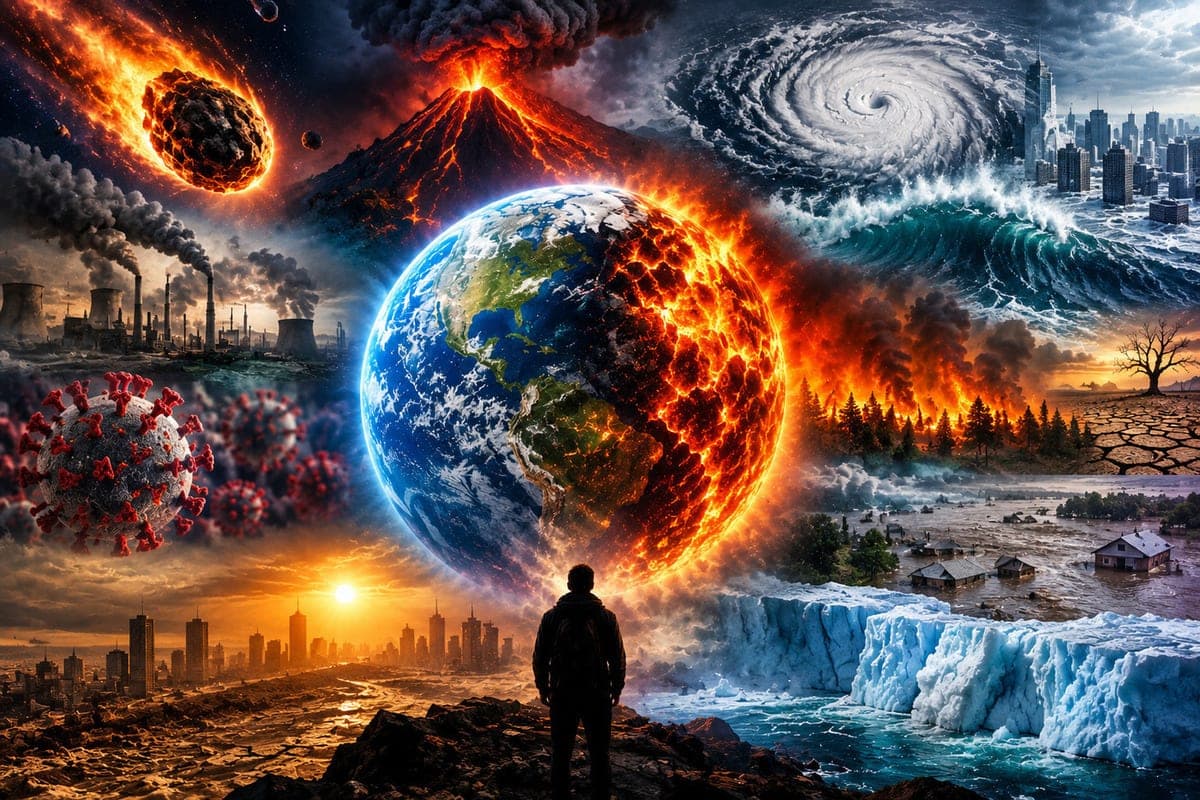
Experts chairing the Lancet Commission on Global Health Threats in the 21st Century said all threats interact, meaning they need to be tackled together, but stressed there was a "realistic way of dealing" with each.
“The decisions leaders make today will determine the health and well-being of the next generation,” said Professor Christopher Murray, co-chair of the commission and director of the Institute for Health Metrics and Evaluation at the University of Washington.
To compile its list, the commission modeled how many years of good health could be lost due to illness, disability or early death due to each threat, based on current trends - a measure known as Daly (disability-adjusted life years).
“The malicious use of artificial intelligence, including biological weapons, and nuclear conflict with nuclear starvation carry extinction risks in the next 75 years,” the report said, adding that while their likelihood remains low, they could potentially end humanity in the event of a nuclear conflict by throwing enough particles into the upper atmosphere to block sunlight and cause starvation, or using biological weapons created by artificial intelligence. An accompanying Lancet article, published alongside the report, warned: “The magnitude of the damage, if realized, will lead humanity to the apocalypse.”.
Other risks that could lead to accumulation of more than $1 billion. Daly and therefore considered “serious catastrophic threats” include air pollution, antimicrobial resistance, childhood malnutrition and climate change, as well as conventional conflicts, foreign aid cuts, alcohol abuse, high blood pressure, income inequality, low education, natural disasters. pandemics, obesity, poor mental health, smoking and unhealthy aging.
To be included on the list, the threats not only had to potentially lead to the loss of a large number of healthy years of life, but also had potential solutions.
Ibrahim Abubakar, a member of the commission and a professor of infectious disease epidemiology, said: “We don’t assume that ‘oh look, we want to scare you – humanity faces many threats.’” Our premise is that if you're making policy today, whether it's at the global, multilateral or national level, it's the potential threats that you can face, and it's the scale that, if you act, you can actually make a difference.
According to the report, which modelled the best and worst-case scenarios for each threat, measures to limit global warming to about 1.8°C, rather than 4.4°C, could prevent the loss of 1.89 billion years of healthy life.
In higher-income regions, the main threats were noncommunicable diseases such as obesity and poor mental health, while in lower-income regions, health loss was caused by problems such as low education.
Many major donor countries, including the US and the UK, have announced significant cuts in humanitarian aid spending over the past year. The Commission concluded that a potential collapse or sharp cut in international health assistance could lead to an increase of up to 1.5 billion Daly by 2100, of which almost 70% will be in sub-Saharan Africa. The region also bears the brunt of child malnutrition.
The commission consists of 35 experts, whose assessment will be updated annually to reassess 17 identified threats, taking into account new data and any emerging hazards.
The authors urged leaders to address risks before they escalate into a crisis, including by investing in technological innovation and strengthening health systems.
“We started this process three years ago believing that there are three big threats: conflict, climate and pandemics,” Murray said. “There are a much larger number of threats that we need to worry about, and governments really need to allocate a bit of money and personnel to predict, prevent and prepare for this more diverse set of threats.”.