How new Belarusian simulators help to wake up the brain of special children
Domestic simulators for sensory integration appear in the centers of correctional and developmental training and rehabilitation The main feature of the Belarusian ...
Domestic simulators for sensory integration appear in the centers of correctional and developmental training and rehabilitation
The main feature of the Belarusian complex is universality. The equipment was invented for children of any age with severe and multiple developmental disorders, with autism. Today, such installations exist in every region. How does the domestic novelty, told in the Central district of the capital.
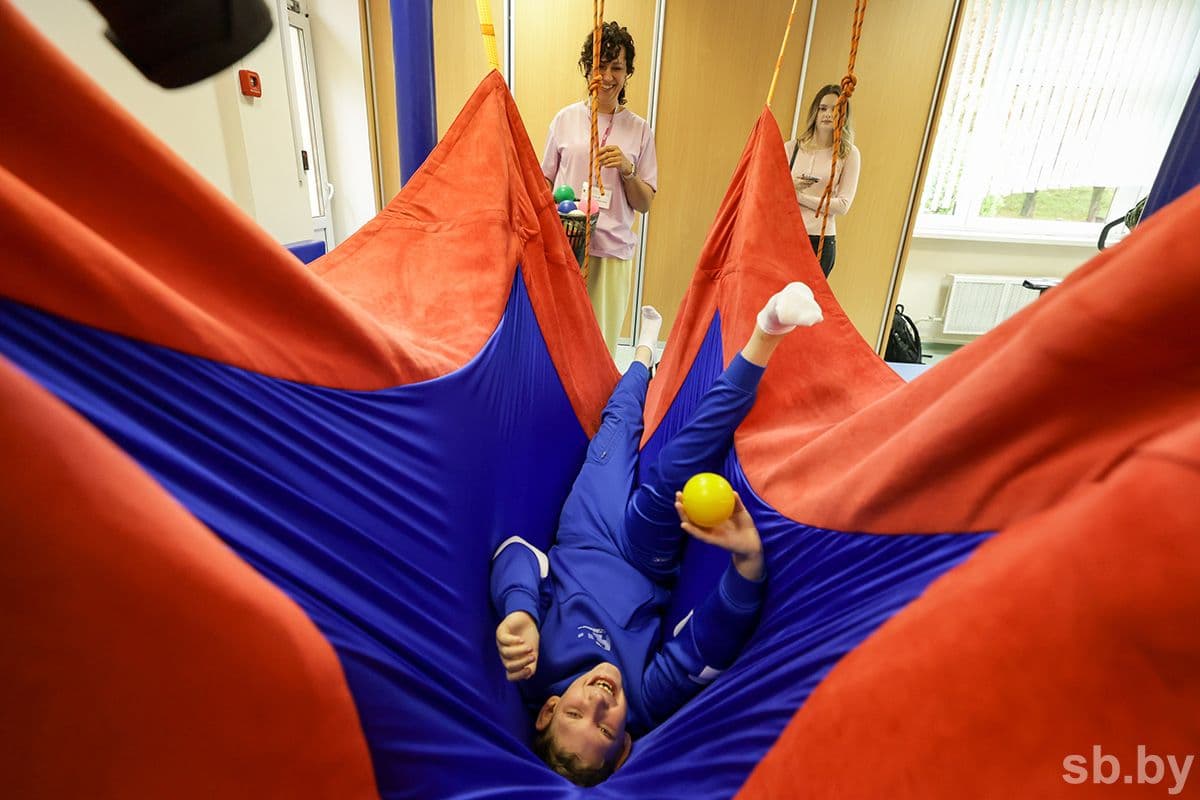
The simulator is used by both crumbs from two or three years of early integrated care groups and teenagers, says Svetlana Verbitskaya, director of the Central District of Minsk. Classes are suitable for preschoolers and schoolchildren with attention deficit hyperactivity disorder, impaired sound pronunciation. Anyone who needs sensory integration.
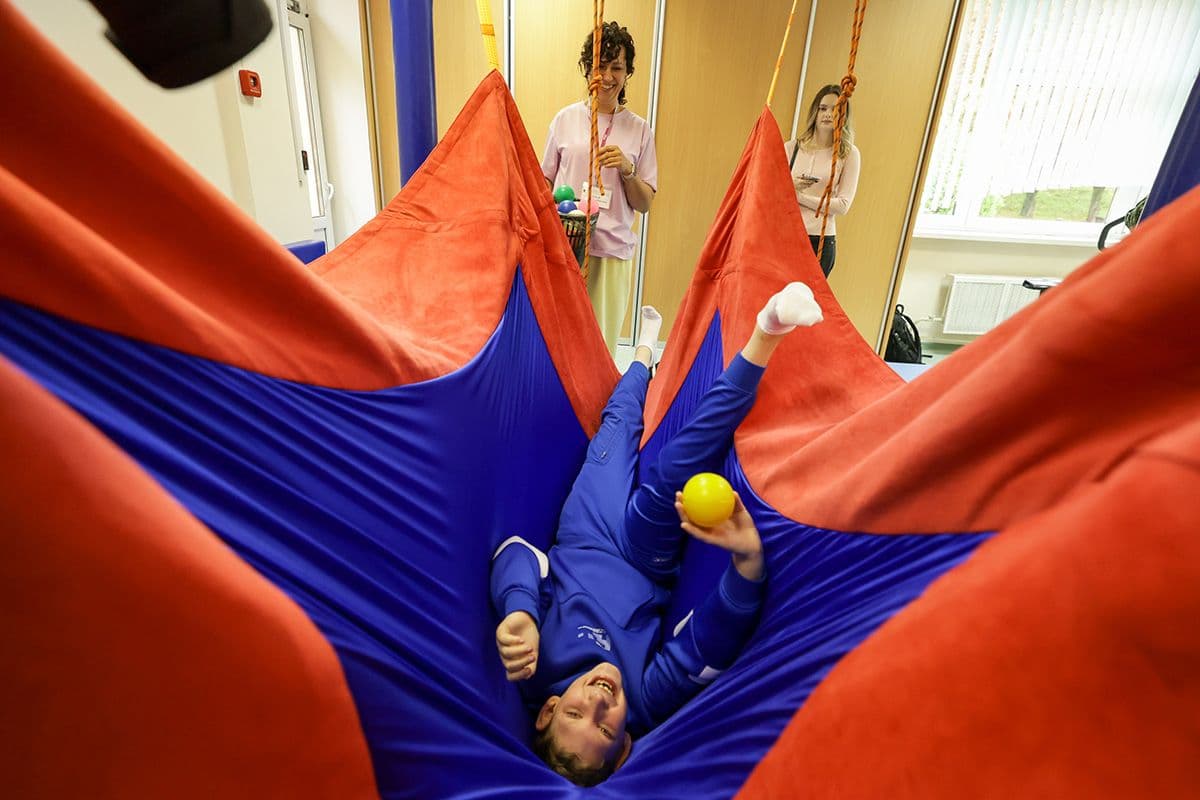
46 children are under the care of the center: 36 are studying in six grades, another 10 are home-schooled, but rehabilitation takes place here. Sixth grader Andrei Novikov goes to the center from preschool age. Now he has a lesson in sensorimotor training on a new simulator. Most of all, the boy was hooked by an elastic hammock. sewn from a special material, gently envelops, gives a feeling of comfort and security.
- It’s like a hug, says teacher Tatiana Danube. Imagine that you do not feel your body at all and cannot control it. This is how our children live in a sensory vacuum. They have intellectual, motor, sensory and speech impairments. They often do not speak, are limited in movement, do not see or hear well. For such students, sensorimotor integration is not a whim, but the only way to “wake up” and teach the brain to perceive the world.
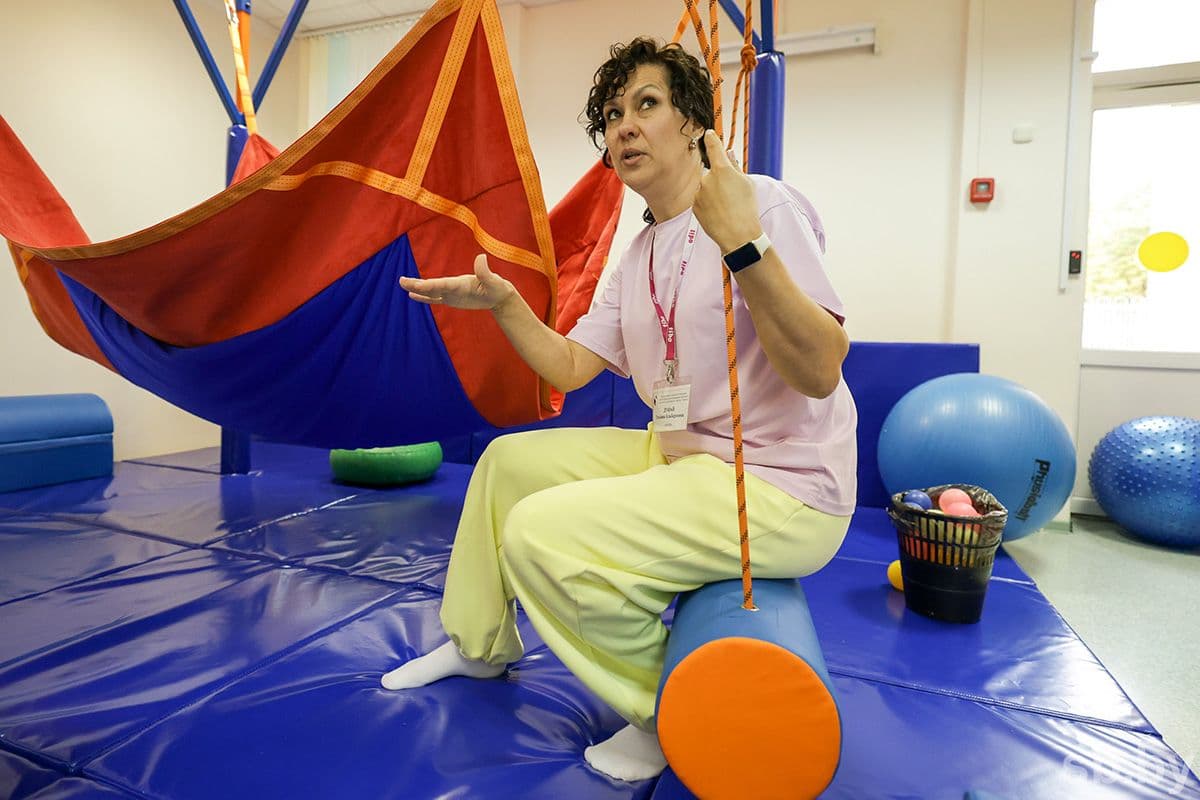
The new sensory-dynamic complex is precisely sharpened for this purpose. While the child rocks, balances and overcomes obstacles on the simulator, his vestibular apparatus, tactile perception, vision and hearing are actively stimulated.
- A diagram of the body is formed, motor planning develops - the ability to conceive a movement and perform it. The brain receives "food," explains the educator.
The load and exercises are selected for each child individually. Class at the complex is strictly individual: one child - one teacher. Now, in the period of adaptation, the blocks hang lower. Gradually they will rise higher and complicate the tasks.
The Belarusian simulator has an important household plus: the equipment calmly tolerates processing with disposables.
- Our children will never become fully independent, but we strive to make them as adaptable as possible to everyday life, says Tatiana Danube. Even a little progress is a huge victory. A child who could not hold a spoon before now eats himself. A child who was afraid of people begins to smile and reach for the teacher
They study here almost like a regular school. Only their own subjects: adaptive physical education, visual and musical-rhythmic activity, subject-practical classes, basics of life, practical mathematics and communication. Pope Andrey Vadim Novikov admits: This is a holy place. It allows parents to work, unload. My son is hyperactive: as a child I could not leave him even for a second, it required constant inclusion. The burden on us is enormous. This is a huge help from the state. Professionals are engaged in children, food is good - breakfast, lunch, afternoon. And even after classes - walks, interest circles. And it's absolutely free. CCROIR provides early comprehensive assistance to children under three years old: the youngest pupil is only ten months old. Classes are held with teachers-defectologists, teachers-psychologists, musical directors, training in a wellness bowl-pool. They help not only with severe disorders, but also serve as an excellent correction of minor developmental delays.
azanovich@sb.by