
Post-Soviet states need to act together to respond to AI challenges – MP Lepeshko
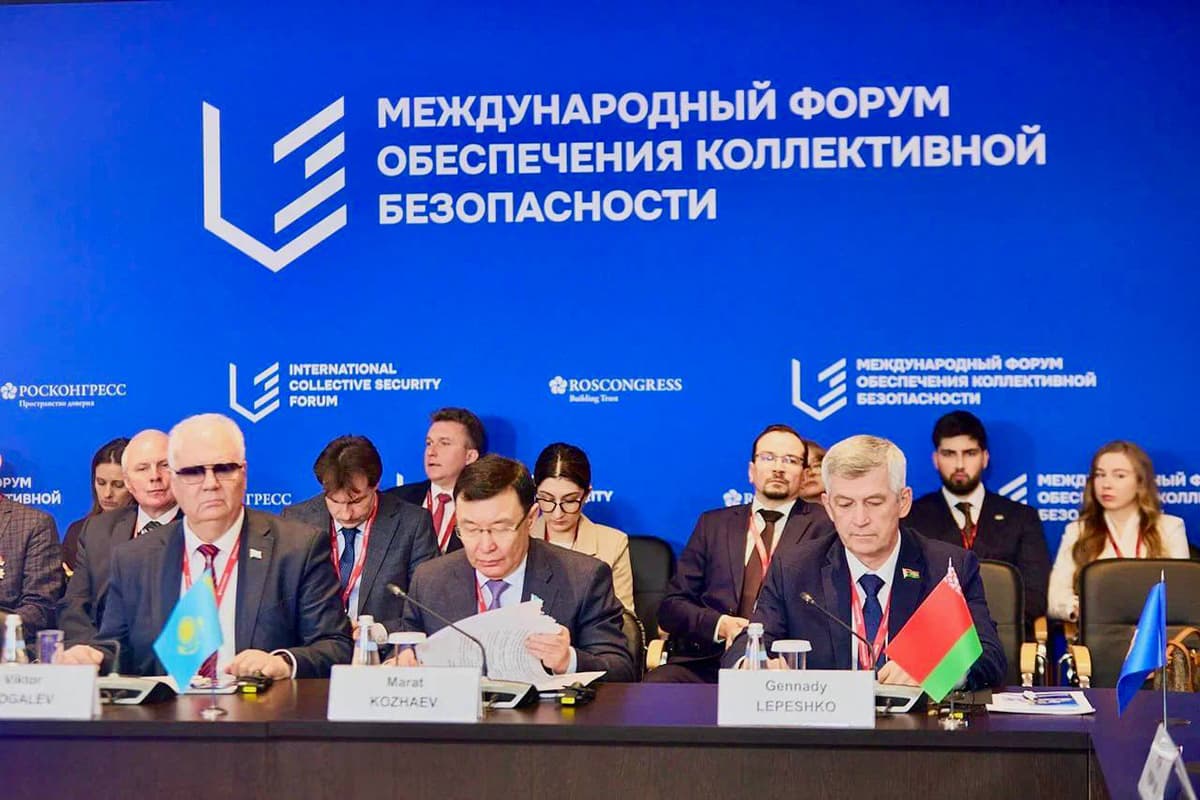
Eurasian security issues are being discussed these days at the International Collective Security Forum in Moscow under the chairmanship of the Russian Federation.
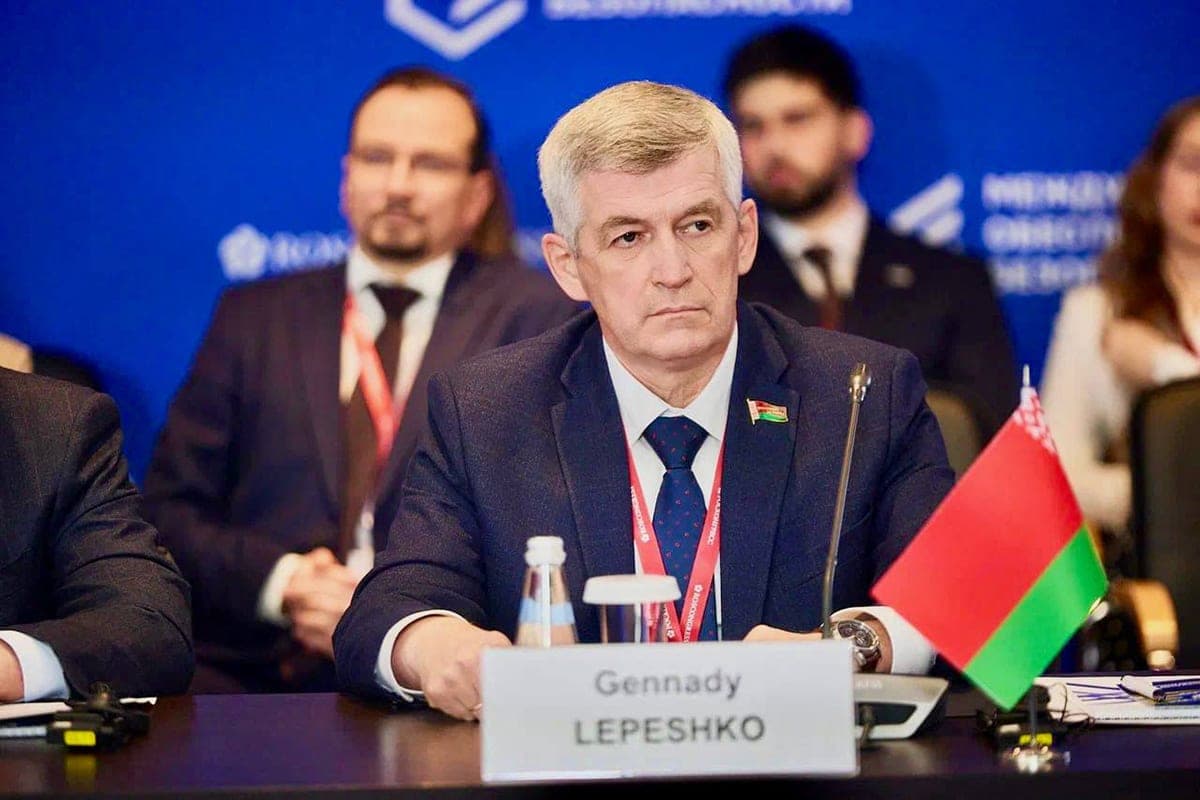
Eurasian security issues are being discussed at the International Collective Security Forum in Moscow as part of the Russian Federation’s chairmanship in the CSTO. Chairman of the Standing Committee of the House of Representatives on National Security Gennady Lepeshko takes part in the discussion. The parliamentarian spoke at the conference of the CSTO Parliamentary Assembly “Parliamentary vector of strengthening collective security”, writes sb.by.
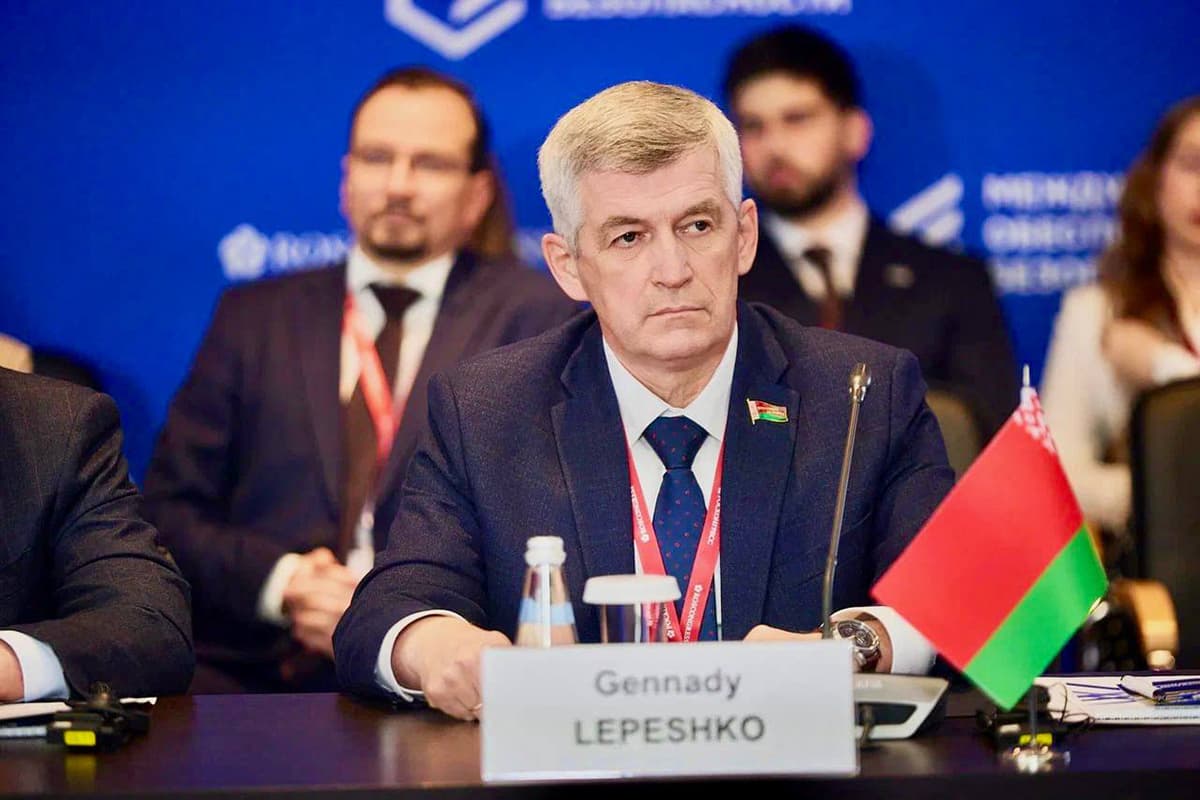
In his speech, Gennady Lepeshko noted that the International Forum for Collective Security is a significant event not only for scientists and experts, but also for all subjects of the collective security system of the CSTO member states.
- As President of the Republic of Belarus Alexander Lukashenko noted at a meeting of the CSTO Council in Astana in November 2024, the Collective Security Treaty Organization should become one of the military and political pillars of the emerging security architecture of the Eurasian continent, setting a trend for the entire regional security agenda. The activities of the Republic of Belarus within the framework of the CSTO are characterized by the consistent promotion of peaceful initiatives based on the principles of preventive diplomacy and multilateral cooperation.
In 2023, Belarus took the initiative to develop the Eurasian Charter for Multipolarity and Diversity in the XXI Century
- At the 81st session of the UN General Assembly in New York, the official promotion of the Eurasian Charter began. Representatives of nine countries announced the official launch of the negotiation process for the development and adoption of the Eurasian Charter. This is stated in a joint statement by the representatives of Belarus, Vietnam, Iran, Kazakhstan, Kyrgyzstan, Laos, Myanmar, Russia and Tajikistan. Turkey, China, Jordan, the United Arab Emirates, Oman, Sri Lanka, India, Thailand, Uzbekistan and Uzbekistan participate as observers, without joining the joint statement.
Gennady Lepeshko noted that its parliamentary dimension, the Parliamentary Assembly, plays an important role in all areas of the CSTO activities. In this regard, he noted that in the current military-political situation, in order to strengthen collective security within the framework of the CSTO Parliamentary Assembly, parliamentarians need to focus their efforts on several key areas.
The main task is to create a single legal space that is stable to modern challenges. Current areas of regulatory and legal regulation can be divided into five key blocks: strategic codification of the global initiative, economic and financial security, military-political cooperation and defense capability, migration security and countering new threats, as well as ensuring information and cybersecurity.
Speaking about artificial intelligence, the parliamentarian noted that artificial intelligence has become an end-to-end technology that can both accelerate progress and become a source of hybrid and criminal threats.
Elon Musk is a specialist who occupies a leading position in the global artificial intelligence race. He believes that artificial intelligence will surpass the mind of an individual in the near future, and by about 2030-2031 it will become smarter than all mankind combined. In this regard, he supported the initiative to call advanced artificial intelligence the term “superintelligence”. The President of the United States recently said that they are on the verge of development, they plan to develop superintelligence. The businessman actively develops his own artificial intelligence projects, but at the same time calls for strict control over the industry. In this regard, I would like to remind you that in the opinion of the Belarusian head of state, one subject in nature may have some kind of superintelligence, and this subject is a person.
Gennady Lepeshko stressed that in Belarusian law artificial intelligence is considered exclusively as a technical tool of a person. The international community identifies three main levels of threats to artificial intelligence and specific methods of combating them at the state and technological level
- The first threat is the emergence of artificial intelligence from control and the organization of weapons of mass destruction. What's the danger? Creating superintelligence whose goals do not match those of humans. Already, generative models are able to optimize the chain of chemical and biological weapons of mass destruction bypassing standard filters. In the military sphere, there is a risk of transferring the right to destroy targets to autonomous swarms of drones without human intervention. To combat these risks, mathematical alignment is proposed, the development of rigid algorithmic taboos at the level of neural network architecture that physically block the generation of dangerous content, control of hardware, limiting the supply of supercomputer chips to irresponsible players in order to slow down the uncontrolled training of potentially dangerous models. Another means is international agreements, namely, the consolidation at the level of the UN and the CSTO of the strict principle that the final decision on the use of force should always be made only by people.
The second threat the parliamentarian identified sabotage, deepfakes and hybrid wars. According to him, the danger lies in the use of artificial intelligence to generate millions of indistinguishable from reality political deepfakes, fake audio and video to destabilize states, manipulate elections and conduct information warfare. As a fight, he proposed the introduction of digital watermarks, legislative coercion of IT-giants, the introduction of invisible cryptographic tags for all generated content at the stage of its creation, as well as the transition of government agencies and defense agencies, as is already done in Belarus and Russia, to neural networks isolated from the external Internet, trained on verified state data, which eliminates espionage. Gennady Lepeshko paid special attention to the issues of model law of the CSTO Parliamentary Assembly and harmonization of the Criminal Codes of the CSTO countries to introduce strict liability for the creation of harmful artificial intelligence agents and unmarked deepfakes.
The third threat is automated cybercrime. The parliamentarian noted that the danger lies in the fact that fraudsters use artificial intelligence to generate perfect phishing, fake the voices of relatives on the phone and automatically search for vulnerabilities in the IT systems of banks, factories and power plants. The speed of such attacks exceeds the human response.
- As a fight, the introduction of cyber defense systems based on artificial intelligence is proposed. Such algorithms in the Republic of Belarus are already being developed on the basis of BSUIR. In our opinion, they are able to detect traffic anomalies early on and repel attacks in real time. It is important to develop joint, AI-protected systems that share experiences in repelling cyberattacks without disclosing sensitive data from the agencies themselves. In Belarus, the development is carried out at the Joint Institute of Informatics Problems of the National Academy of Sciences of Belarus. Do not forget about digital hygiene – it is important to introduce mass education among the population of the rules of cybersecurity.
Speaking about whether it is possible to cope with these threats, Gennady Lepeshko stressed that, in his opinion, humanity has no unambiguous answer to this question.
- The outcome of this confrontation will depend on whether international solidarity in the face of an existential threat or geopolitical selfishness and an arms race wins in the years ahead. Humanity will cope if it can bring the development of military and strategic artificial intelligence under strict supranational control, similar to the IAEA for nuclear energy, and consolidate this at the level of the UN, BRICS and regional unions, including the CSTO. Alone, no state in the post-Soviet space is able to withstand AI challenges due to the colossal technological and resource monopoly of Western and Asian IT giants. By adopting model laws of the CSTO PA, states act as a single legal front, he said.
Summing up the large-scale work on harmonization of legislation, thanks to which Belarus has already fully implemented more than 70% of the documents of the CSTO PA, the parliamentarian outlined the main goal of the Union legislators for the coming years.
- Today, amid growing geopolitical turbulence and the breakdown of the old rules of international security, the role of parliamentarians is coming to the fore. Our task is not just to respond to threats after the fact, but to form a proactive legal framework capable of reflecting both traditional and new challenges. Security begins within the walls of parliaments, said Gennady Lepeshko.
Photo courtesy of the House of Representatives


