“It doesn’t lend itself to logic, but I’m afraid to fly.” Air traffic controller - about his work
International Air Traffic Controller Day is celebrated on October 20 in Belarus. Where to learn this profession, in what language...
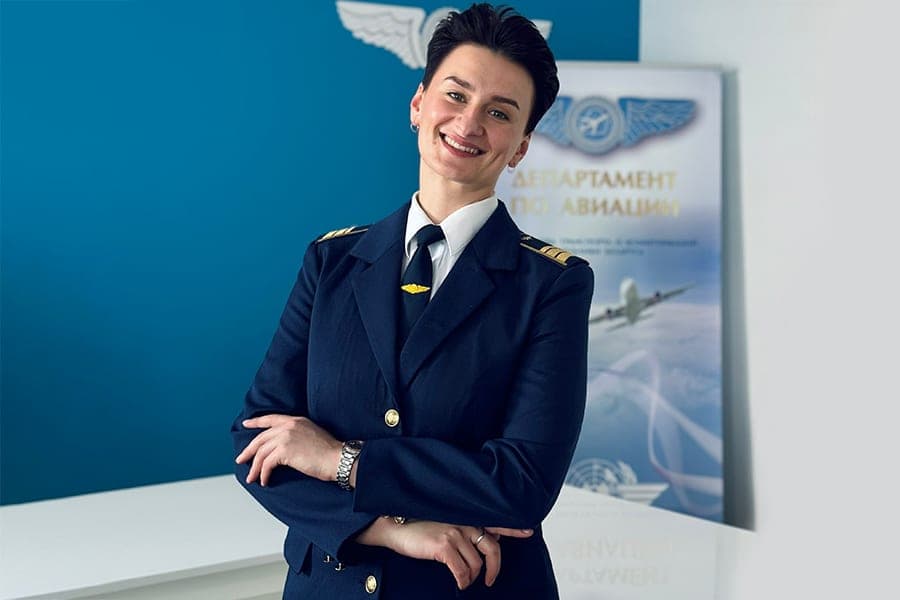
International Air Traffic Controller Day is celebrated on October 20 in Belarus. Where you can learn this profession, what language is spoken in the sky, the correspondent of the agency “Minsk-Novosti” told the air traffic controller of the Minsk center for air traffic management of the enterprise for air navigation services of air traffic “Belaeronavigation” Ekaterina Kaminskaya.
Who's Roger
Ekaterina, you have been in aviation for about 10 years. Aren't you afraid to fly?
- It doesn’t lend itself to logic, but I’m afraid to fly. - Author's note. I know the principle by which lift is formed on the wing, I know that it is indestructible and that even with the engines turned off, an aircraft can plan. I understand how much the entire air navigation system duplicates each other, and for something serious to happen, about six layers of protection must fail. But I'm afraid to fly. It's inexplicable. You also know things that the average passenger doesn't know. For example, when a plane lands and slows down the runway at high speed, and people start slamming the pilot, you know: not all the risks are behind you.
- That's how passengers thank the pilot. Is there a way to thank the dispatcher?
- The pilots thank us. It's great to hear on the air, "Thank you for the management." Although this phrase is not included in the list of phraseology of radio exchange, hearing this is always valuable for the dispatcher.
- What language do pilots and controllers speak?
- This is called the phraseology of radio exchange: a special coded language based on English. It is spoken by aviation around the world. In Belarus, it is allowed to conduct radio exchange in Russian only for domestic flights. In the aviation language, all prepositions are omitted, unnecessary words are removed, sounds are exaggerated so as not to mislead the interlocutor.
For example, the numeral 9 is conveyed as “niner”, the four is “fower”, and the interdental th is pronounced [t], so the three is transmitted as “tree”. This habit is very difficult when you fly to another country as a tourist and try to speak English: it is always very difficult to rebuild. Also, to eliminate errors in the transmission of call signs and codes, the radiotelephone alphabet is used: A – Alfa, B – Bravo, C – Charlie and so on. Pilots do not say “yes” or “no” during radio exchanges with air traffic controllers: Affirmative means “affirmative”, Negative means “negative”. There are codes for confirming actions, for example, Roger [Rodger] - "accepted.".
In addition, the speed of speech should be no more than 100 words per minute. Once a month, the flight safety department removes the extracts of the controller-pilot radio exchanges. This is also understood in technical training, which takes place at dispatchers every four weeks. Aviation is organized as a non-punishable environment. Up to certain limits, of course. To prevent aviation events, it is necessary that the pilot or dispatcher, out of fear, does not hide an unintentional error. For example, the dispatcher said the preposition to. But the pilot regarded it as a number, which led to unpredictable results. Therefore, it is more rational to tell the other dispatchers, and we have about 250 people in Belarus, so that this does not happen again. Moreover, when something happens in the aviation of any country, every pilot and dispatcher understands that it will affect him, too. If a breach is found in a system considered safe, it is fixed in all regions.
- Where are they taught to air traffic controllers and what awaits the graduate next?
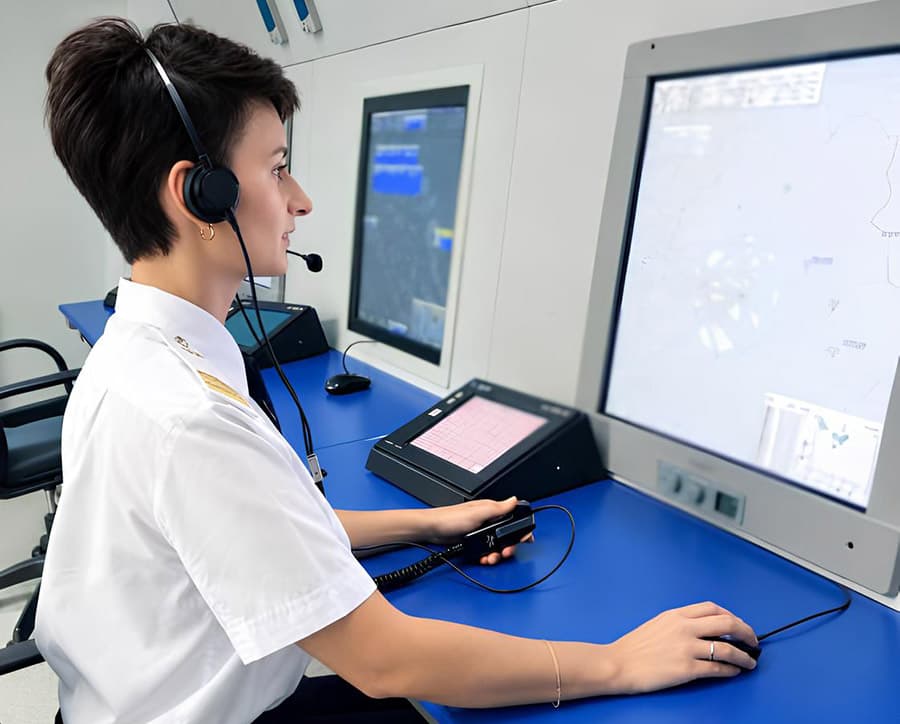
- This specialty can be obtained at the Belarusian State Aviation Academy. However, you can not come after school and immediately become a dispatcher: the graduate is sent to related departments, and then he is waiting for an internship. After graduation, I was assigned to a training module by a dispatcher-operator. My responsibilities included simulating radio exchanges from the pilot’s side so that current controllers would receive or validate skills. Less than a year worked in this way, then sent to train in the dispatchers of the district center. The internship lasted six months and was very intense. It was at this time that the World Cup was held in Moscow and many planes were passing through the airspace of our country.
- How long does the manager have to make a decision?
A minute in the air - 10-20 kilometers of flight. Even 30 seconds is considered long. And if, for example, the pilot reports that he has entered the zone of turbulence, a decrease is required, but you see that another plane is 20 kilometers away, in a few seconds you need to find an option and give an answer.
Burnout? No, you haven't
- How did you choose your profession?
- Literally sat and flipped through the directory of the applicant, until the Minsk State Higher Aviation College caught the eye at that time. Then I thought about aviation about space: something sky-high and only for a select few. And here it is, on the directory page. The choice was made, and there were no other options for me.
- What do you enjoy more in your work?
- Everything is very structured: this makes it calmer in our difficult times. This is such a strong team of like-minded people, a unique community. And the scale of the team is the world. Aviation has all the hallmarks of a subculture: we have our own songs, phrases, reservations that only our own people can understand. It gives an invaluable sense of belonging and doesn't go away with the years. Every time I sit down behind the canal, I feel like you are in your place. (I’m telling you, I got a goose bump.) I am very proud of my profession. And if I had the opportunity to say hello to my teenager, I would say: Well done, great choice! You made it work.
- Is there a trade-off for air traffic controllers?
- Of course, like all professions. But it's pretty funny here. Recently, I am standing in the window of the clinic. The employee says, "Girl, we have two minutes until lunch." I honestly don't know what she's saying. She adds, "Do you count every minute at work, too?" I immediately pictured the pilot saying, "I have two minutes until lunch, wait." The internal chronometer, when you understand the value of a minute, came from work. For example, I stand at a traffic light, which shows that it will burn red for another 27 seconds. I lower my eyes and raise them in 27 seconds.
I can get up in the middle of the night and work right away. I quickly read the text, instantly perceive and analyze information, clearly formulate priorities and instantly make decisions in any field. I have special requirements for discipline, both my own and others. Spatial thinking and predictive ability are very helpful in life, especially while driving.
I can also tell you which airline owns the flying plane: most flights are on schedule, and I am well acquainted with it. By the way, I know who it is flying. - Author's note. I was waiting for a colleague at a public transport stop. I raise my head (this is also a habit), the plane flies, I looked at my watch and for some reason said out loud: “Something is early today.” It looked like everyone was waiting for a bus and I was waiting for a plane. Here’s the job description: always wait for the plane
Photo provided by the interviewee