A hammock, a trumpet, a platform is not just a game: how new simulators help special children learn and relax. Reporting by ONT
By September 1, domestic sensory integration simulators arrived in the correctional and development centers of Belarus, and the first successes are already visible. For children, this is a fascinating game: hammock, hanging pipe, platform, soft log and mats.
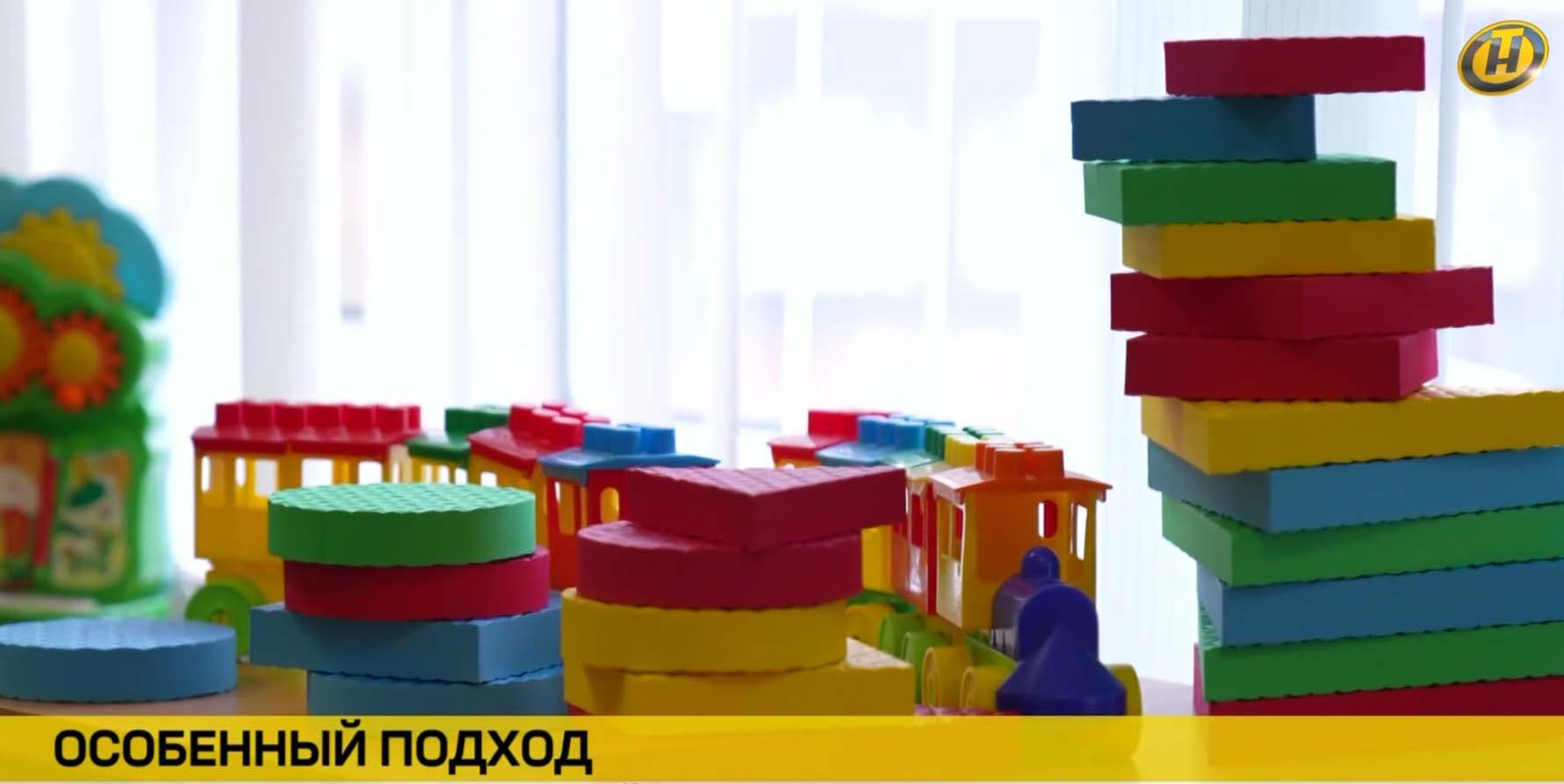
For special children – special approaches to learning. By September 1, sensory integration simulators arrived in the correctional and development centers of the country. Complexes help not only to develop physical qualities, coordination, balance, vestibular apparatus, but also to form communication skills and self-control. Teachers are already seeing positive results.
In the correctional and development centers of Minsk and the country, new equipment appears – sensory integration simulators. At first glance, these are just elements of the playground: hammock, suspension platform, tunnel, soft log, mats. But behind this “game” is accurate correctional work: shells help children with psychophysical development to learn to feel their body, concentrate and cope with emotional stress.
From the Impossible to the Favorite Occupation: Vanya's Story
Vanya is 12 years old, and he is actively developing a new simulator. Staying on a movable platform and performing tasks in a hanging pipe – what once seemed impossible, has now become a favorite pastime.
Vanya’s mother, Lyudmila Apenko, shares her observations: We are studying here for the second year, and since the beginning of this academic year we have started trying this platform. We began to notice progress. First of all, the child likes it. We can see from his body how he relaxed, how he began to feel better, and even, I would say, tired – because for such children it is important to get tired not from idleness, but from stress.
Not a game, but a tool: what do sensory simulators do with a child
For a child, it really feels like a game. For specialists, this is a calibrated tool of correctional work. Sounds, smells, touches and light can cause discomfort and overload in children with developmental disabilities, so the approach is always individual, and the main goal is to reduce anxiety.
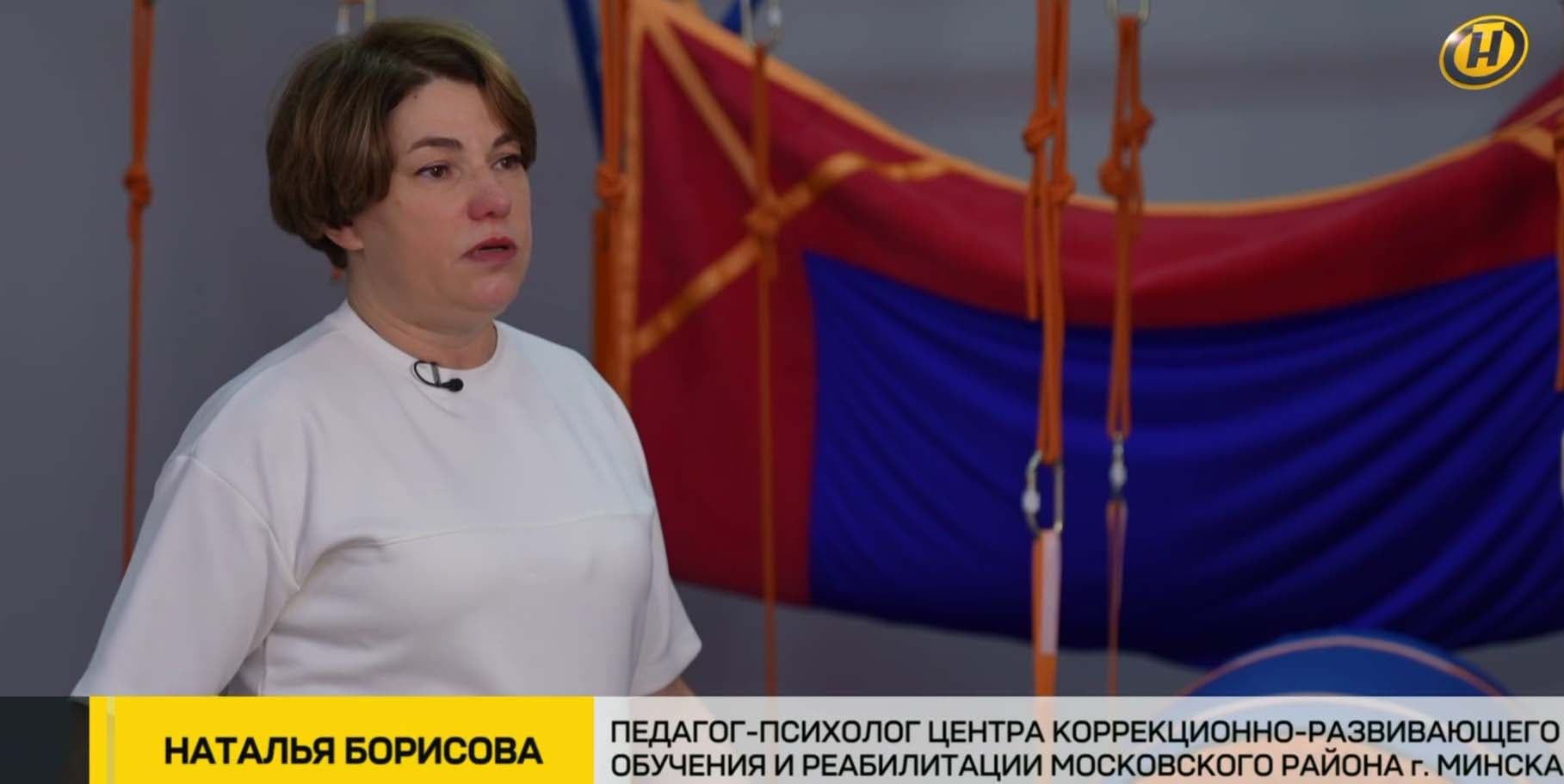
Natalia Borisova, a psychologist at the Center for Correctional-Developing Education and Rehabilitation of the Moscow District of Minsk, explains for whom such classes are especially important: In classes, we take children with hyperactivity, these are children with autism spectrum disorders, these are guys with hypo- or hypertonus, with Down syndrome. This training complex, here are the shells that are presented here, they allow us to achieve higher results both in the students’ studies, and in concentration, and in the removal of emotional tension, and in self-regulation. Thanks to this complex, the child’s brain correctly processes sensory information. The vestibular system is, of course, involved.”.
The first results: how the child’s condition changes
The center in the Moscow district was one of the first to test the complex in practice - it was brought in early May. Today, domestic development is already working in five of the ten centers of the capital. The main thing is the result, and the children like it.
Another interesting story is about Christina. Psychologist: This is our Christina, she came to us recently. We're in the second month. This is a wonderful child: a smiley, kind girl. After two months, Christina noticeably removes the clamps: Christina unloads not only physically, but also emotionally, removes all the clamps, she smiles, her mood rises. Christine, how are you smiling? And in this simple invitation to smile, there's been tremendous progress.
New techniques and new opportunities: the experience of the Frunze district
In the Center for Correctional and Developmental Education and Rehabilitation No. 2 of the Frunze district, 61 children are engaged, each with their own needs and capabilities. It is important for children with disabilities not just to perform the exercise, but to explore the space in a new way – through the signals of their own body.
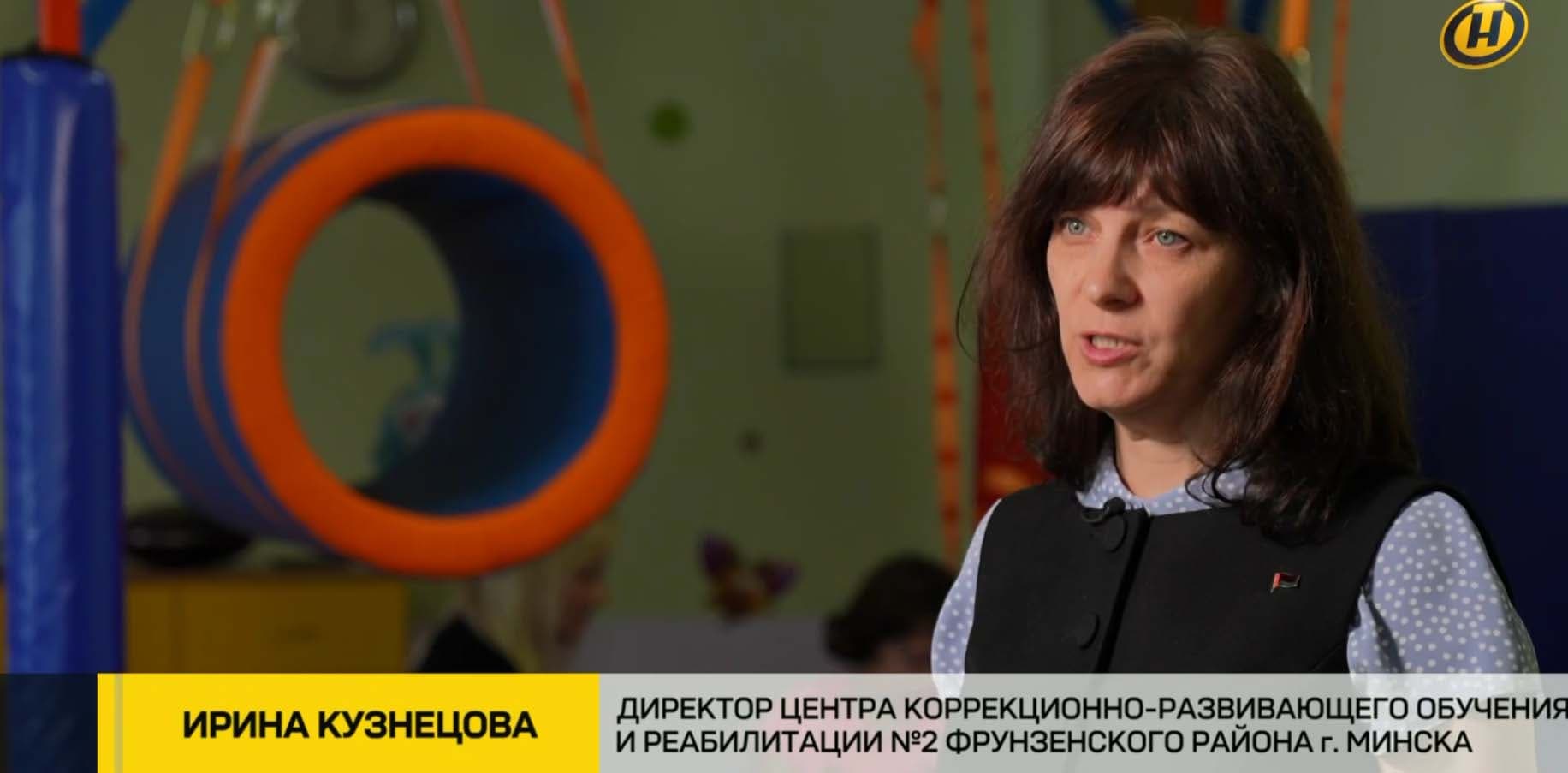
Director of the center Irina Kuznetsova tells how the complex changes the very approach to classes: “Thanks to this complex, we can diversify the methods of submission of educational material. We train children visual-motor coordination, voluntary attention, train the ability to be aware of your body in space, the ability to coordinate your movements, the ability to hear instructions and act in concert. In this complex, we now have a pipe and hammock suspended. This is what we started to work with, and what we're designing for kids now.”.
Updates in the center are not uncommon. Among the latest arrivals is a complex with interactive panels, music and movements, which helps to start speech in children.
Early Aid and Systems Approach: The City’s Position
In Minsk, more than 35 thousand children with disorders of psychophysical development. The most important stage is early detection: sometimes an alarming symptom can be noticed already in the first months of life. Therefore, the centers provide comprehensive assistance to children from 0 to 3 years.
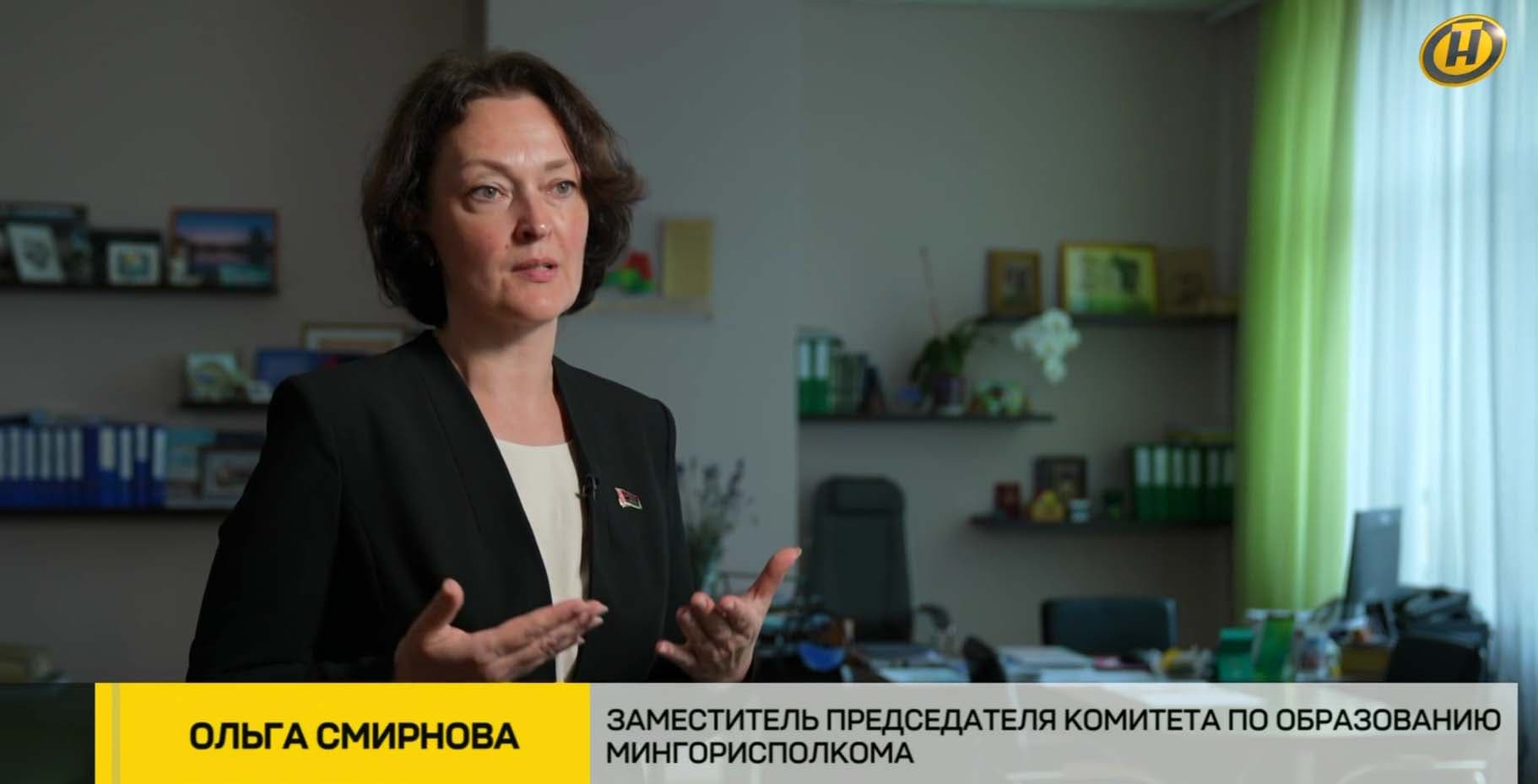
Deputy Chairman of the Education Committee of the Minsk City Executive Committee Olga Smirnova emphasizes the importance of timely support: “The sooner work begins with a child with this feature, the higher the result, the more effective will be socialization, the opportunity for the child to reach the level of development that will allow him to be independent, self-sufficient, get an education.” Therefore, every new year, every new day, we improve not only methodological approaches to the education and upbringing of such children, but also the equipment of the learning and upbringing process.
The state’s approach to inclusion is clear: every child should feel cared for from birth. And today, this concern is manifested not only in words, but also in new complexes, in hanging pipes and hammocks, in patient “come on, well done” and in sincere “come on five” – as in the very real recognition of a small but very important success.