
It starts with a joke. How to recognize bullying and resist it
It starts with a joke. Awkward, hurtful, but it seems nothing terrible. Someone laughed and went away. ...


It starts with a joke. Awkward, hurtful, but it seems nothing terrible. Someone laughed and went away. But the next day everything repeats itself. And then again. Jokes become tougher, words become more painful, and the circle of people who laugh is wider. At some point, a person no longer wants to go to school, university or work. He looks for a reason to stay home, avoids talking, stops looking people in the eye. About how imperceptibly bullying comes to life, and how to deal with it, the correspondent of the agency “Minsk-Novosti” told psychologist Tatiana Grinkevich.
The photo is illustrative, created by AI
Silence hurts
Bullying is being talked about more and more often today, but this problem remains underestimated. However, there are real psychological consequences that can persist for years.
Bullying is not a one-time conflict or an emotional outburst. This is systematic behavior aimed at humiliating, suppressing or excluding a person from a group. Unlike conflict, where the parties are roughly equal, there is always an imbalance of power in bullying. One person or group has power, whether physical, social or psychological, and another is in a vulnerable position, Grinkevich said.
Bullying is rarely just physical. Much more often it manifests itself in words, views, ignoring. A person can demonstratively ignore, not be called into general activities, discuss behind his back, spread rumors. In the digital age, cyberbullying – online bullying – has been added to this. Messages, comments, memes can all become tools of pressure.
According to T. Grinkevich, the most difficult thing about bullying is that the victims are often silent. They are ashamed, frightened, or feel that they have somehow provoked such an attitude. There is a feeling that it is better to endure than to take the garbage out of the house. As a result, the situation is protracted and the pressure increases.

Photo is illustrative, photo magnific.com
Case in point
- In the team, my client was initially perceived with caution: she was a young specialist, a new one, and did not immediately engage in informal communication.
Over time, this became a reason for jokes. It seems that no one did anything serious, but the pressure increased, says the psychologist.
Gradually, the situation began to affect the condition of the woman.
- She began to doubt herself as a professional, although she objectively coped with the work. There was constant tension, anxiety before the working day, fear of saying something wrong.
At the same time, there was no open conflict, and that was what prevented them from seeking help - it seemed that there was not enough reason.
- Such situations are often devalued because there is no overt aggression. But systematic ignoring, sarcasm, exclusion from communication are also forms of bullying, which greatly affect the psychological state, said T. Grinkevich.
How to recognize bullying:
- 1.people are regularly ridiculed or humiliated;
- 2.it is ignored, excluded from communication;
- 3.spread rumors or offensive messages;
- 4.he begins to avoid the collective, closes;
- 5.anxiety, sleep problems, decreased self-esteem.
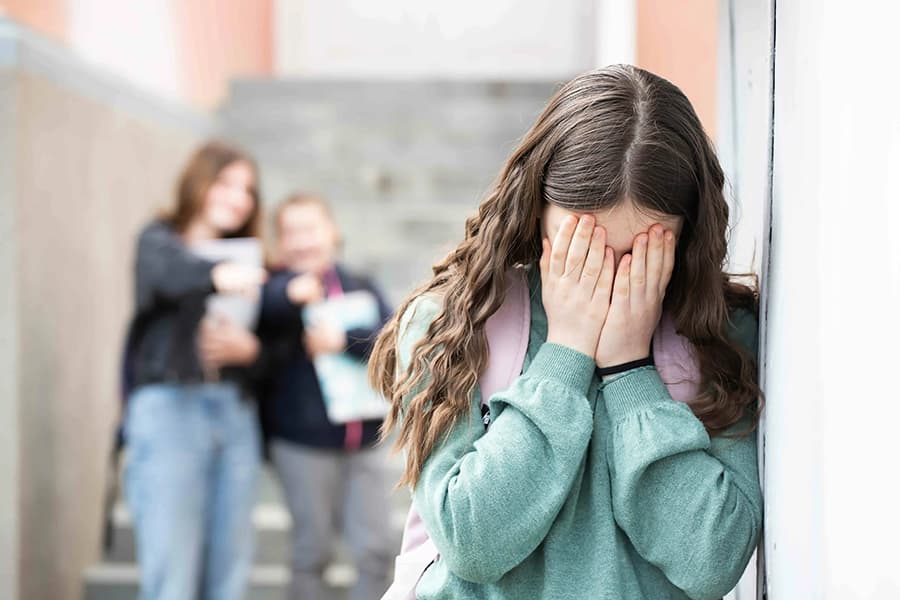
The photo is illustrative in nature
Yearly implications
Bullying never exists in a vacuum. In addition to the aggressor and the victim, there is always a third party. It is their reaction that largely determines whether the bullying will continue. Laughter, succumbing, or even simple inaction become tacit approval. Conversely, even one person who does not openly support aggression can change the dynamics of the situation.
Why people become aggressors is a complex and ambiguous question. Sometimes behind this is the desire to assert themselves, control or improve their status in the group. Sometimes it is a pattern of behavior derived from a family or environment where aggression is the norm. But it is important to understand that the reasons do not justify the consequences. Bullying is always a responsibility.
The consequences of bullying deserve special attention. They are not limited to resentment or shame at a particular moment. A person may have anxiety, decreased self-esteem, difficulties in communicating, distrust of people. In some cases, the effects appear years later, affecting relationships, careers, and overall security.
The psychologist notes that the most destructive thing about bullying is feelings of loneliness and hopelessness.
- When a person feels that no one sees or wants to see what is happening, they are left with a one-on-one problem. Therefore, support from family, friends, teachers or colleagues plays a key role, says T. Grinkevich.

The photo is illustrative in nature
Right to protection
Talking about bullying means not only fixing a problem, but also creating a space in which it can be solved. It is important that a person has the opportunity to talk about what is happening without fear of being ridiculed or ignored. It is important that adults – parents, teachers, managers – do not devalue the situation with phrases like “do not pay attention” or “it will pass.”.
Attitude to the topic of bullying is gradually changing. More and more attention is paid to psychological safety, respect for personal boundaries, culture of communication. But change doesn't happen instantly. And as they go, the responsibility for the atmosphere in the team - whether it's a school class, a student group or a work team - lies with everyone.
Bullying can’t always be stopped with a single conversation. Sometimes it takes time, the participation of specialists, systematic work with the team. But the first step is always the same: Stop being silent.
- It is important to convey a simple message: bullying is neither normal nor inevitable. You can and should work with it. And the person who has encountered it has the right to protection, support and a safe environment, Grinkevich said.
Even a small act, a word of support, or a refusal to engage in bullying can make a difference. Because bullying is based not only on aggression, but also on silence around it.

Photo is illustrative, photo magnific.com
What to do if they poison:
- 1.the first and most important thing is not to be alone;
- 2.tell the one you trust (parent, teacher, friend);
- 3.record the facts of bullying, especially in the case of cyberbullying;
- 4.try not to react as the aggressor expects, sometimes it reduces their interest;
- 5.seek support from friends, family, and professionals.


