
Topical issues of school meals were discussed at the round table by experts and journalists of “SG”
♦ What's on the 5th grader menu and what's on the 11th grader menu? ♦ What are the opportunities to respond to the gastronomic preferences of students? ♦ Why parents...
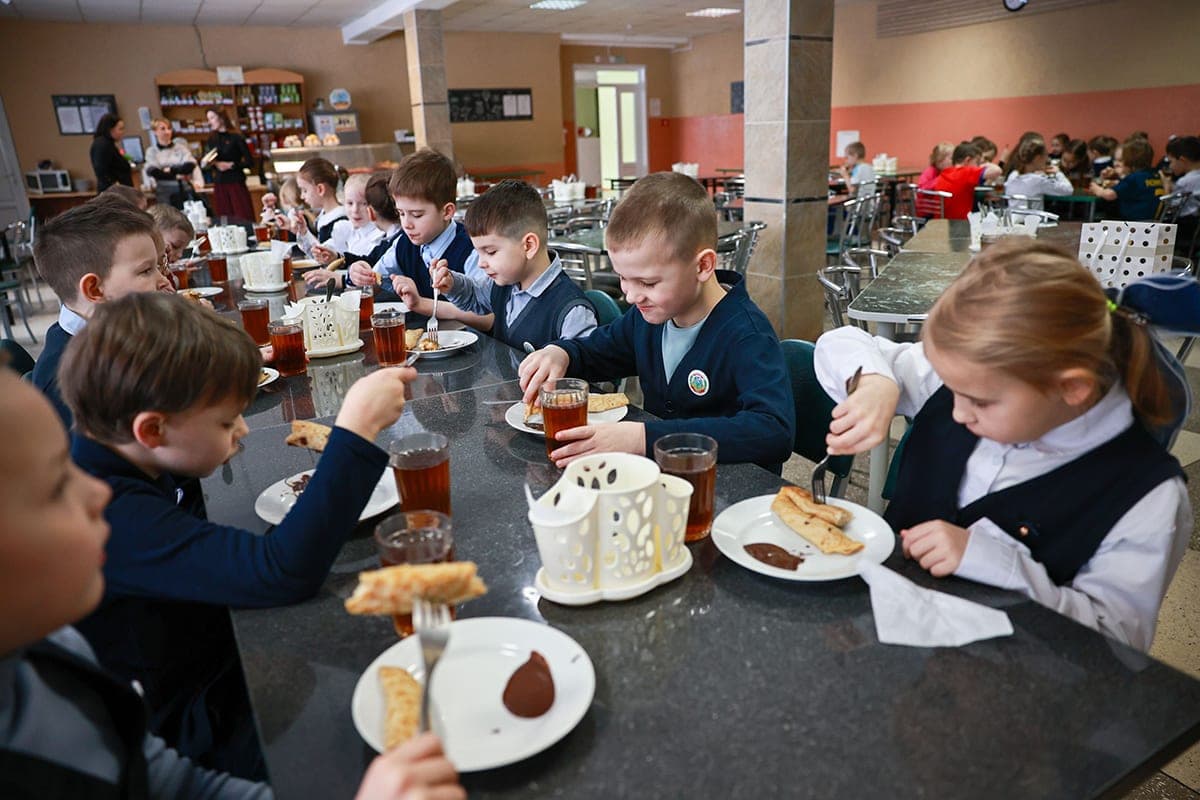
♦ What's on the 5th grader menu and what's on the 11th grader menu?
♦ What are the opportunities to respond to the gastronomic preferences of students?
♦ Why do parents trust Belarusian manufacturers?
♦ What do school buffets and vending machines sell?
♦ Who and what does the Marriage Commission control?
♦ What trade-offs form the right eating habits?
Many copies were broken when discussing the perfect school menu. The President set the point. At the beginning of the school year, on September 3, receiving the report of Minister of Education Andrei Ivanets, the Head of State recalled the task: We agreed that we should do so that we no longer worry about food, did not discuss at the level of the President. You have set this task before the Government.”.
Indeed, since September 1, approaches to the organization of school meals have changed: instead of two age groups, there were three classes, instead of lunch, a single meal was introduced for everyone – a second breakfast in the first shift and an afternoon meal in the second, monetary norms for food were increased by 5 percent, new dishes were added to the menu, including fast food, and vending machines with baby food products began to be installed in schools. Many of the changes still require testing and analysis. This discussion topic was discussed with the guests of the SG editorial board: a mother of many children from the village of Mazuri of the Kobrinsky district, Natalia Alimusina, Deputy Director of the State Enterprise School Catering Plant of the City of Minsk Olga Tretyakova, Director of the Kurin Basic School of the Hero of the Soviet Union named after M. F. Silnitsky Igor Sushko, Nutriciologist Ekaterina Dezurna.
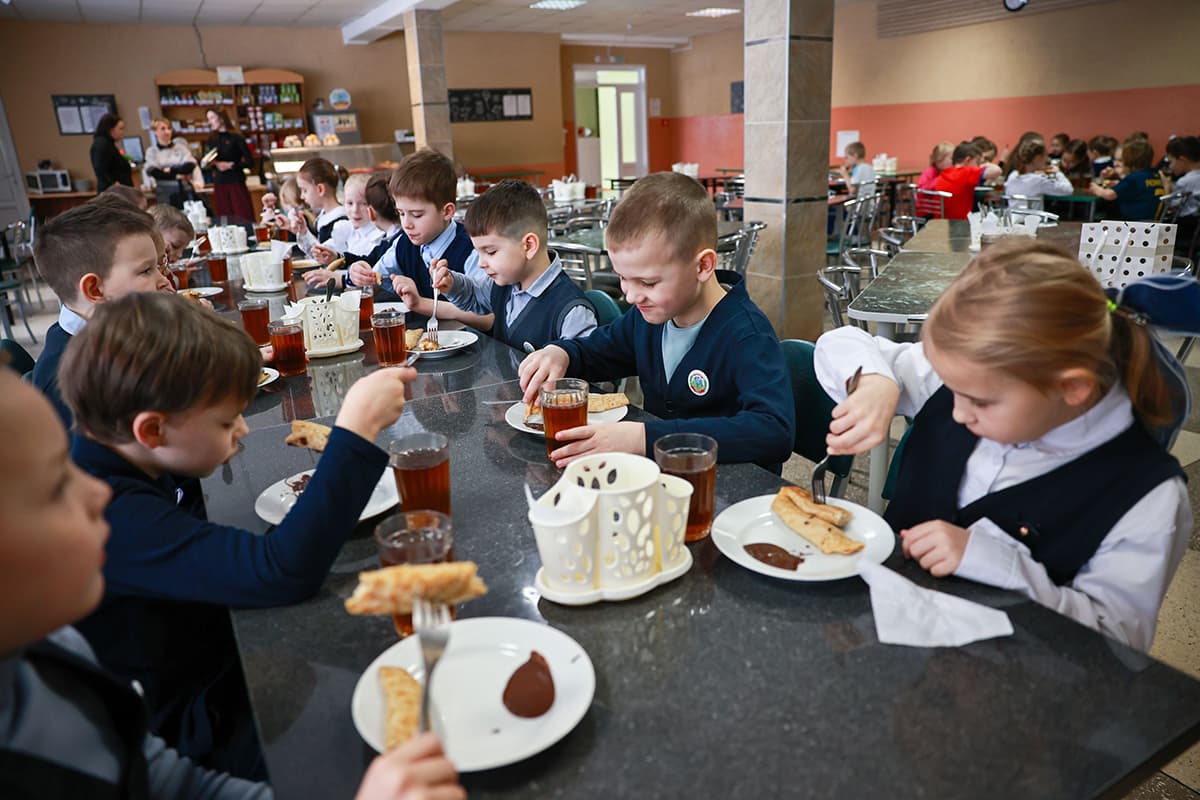
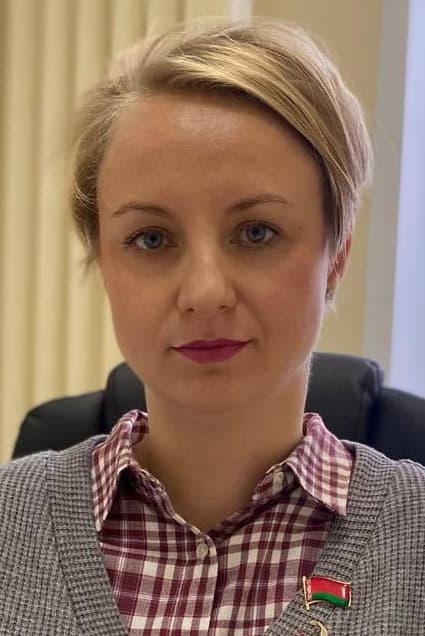
Olga Tretyakova. O. Tretyakova: It is important that the new principles take into account age groups according to classes: 1 – 5th, 6 – 8th, 9 – 11th classes. This is due to the fact that earlier the fifth grader received the same diet as the 11-grader. Obviously, a fifth-grader could not eat that much food. In this regard, it was decided to divide students into classes and offer an appropriate amount of food. The rations themselves have changed. Instead of lunch, all students receive a second breakfast. The amount of food increased by 5 percent. The second breakfast of 1-5 grades costs 2.41 rubles, the second breakfast of 6-8 - 2.64, the second breakfast of 9 - 11 - 2.85.
I. Sushko: In my opinion, the most valuable thing about the new rules is that the school finally got the right to change diets more often and prepare meals that children actually eat. Previously, the menu was adjusted twice a year, now we have the ability to respond to the preferences of children faster. For rural schools, this is especially important: we have a small team, we see what is left on the plates and what is eaten to the crumb.

Natalia Alimusina. N. Alimusina: Keep in mind that I am not just a mother with many children, but a doctor with many children, so I always treated nutrition carefully. First of all, watch the reaction of your children. They came from school and told me what they were eating. Indeed, it was rational to divide children into several groups. Grade 6-8 is the most vulnerable category. In many urban schools, they are more likely to attend the second shift. This increases the stress on the nervous system. In this regard, it is necessary to pay increased attention not only to the energy value of the diet, but also to its qualitative composition. In this regard, I have infinite confidence in our Belarusian manufacturer of products. And schools are focused on that, too. It couldn't have been otherwise.
E. The most important thing is that the state recognizes that nutrition should not only be useful, but also in demand. The introduction of three age groups and the revision of natural norms with a focus on the taste preferences of students is a step in the right direction.
SG: But how to find a compromise between strict norms and real taste preferences of children?
N. Alimusina: In fact, these rules are not as strict as some describe. Gastronomy preferences and food culture are formed in the family. It is usually food that is cooked with a soul. No wonder when they interviewed children, they said: pancakes, dumplings, cutlets. That is, home kitchen, not fast food, mind you. Here it is not dishes that are important, but the composition of the ingredients: less preservatives, dyes, flavor enhancers ..
O. Tretyakova: When compiling a menu, the engineer-technologist simultaneously solves several tasks: develops a diet in accordance with the physiological needs of students, takes into account the fulfillment of natural norms established by law, fulfills the requirement to comply with the recommended amount of food according to age, and also takes into account the taste preferences of students. And at the same time, it should be in line with the monetary rate of food costs. Solving these problems is a kind of compromise between the requirements of sanitary legislation and the taste preferences of schoolchildren.

Catherine on duty. E. On duty: It is possible to find a compromise, but it is much easier to do it when children are brought up with the right culture of nutrition. They do love sweets and salty foods, but this is often the result of marketing and habit rather than physiological necessity. I see several solutions. First, a healthy alternative. Instead of chips - baked fruit or vegetable chips, instead of sweets - healthy bars without sugar, instead of soda - water and natural juices. It is important that healthy food is packaged as brightly and attractively as junk food. Secondly, the involvement of children in the preparation of their diet. If we want them to eat healthy food, we need to ask their opinion. Conduct tastings, arrange competitions for the best useful dish. When a child participates in the choice, he eats it with great pleasure. Third, gradualism. You can't just take away all the sweets and expect the kids to be happy. It is necessary to reduce the amount of sugar and salt in the usual dishes imperceptibly for them, expand the range of buffets due to useful positions.
And most importantly, education. Children should be taught why some foods provide energy for the whole day and others only for 10 minutes. Compromise is possible if we not only prohibit, but offer a tasty, safe and convenient alternative, forming the right habits for the future in children.
SG: But there are also children with special nutritional needs (allergics and others). And you have to take that into account, too
O. Tretyakova: On the basis of approximate rations, the technologists of our plant develop a menu for organizing dietary nutrition with the following indications: diabetes mellitus, phenylketonuria, gluten intolerance, as well as with intolerance to certain groups of food products (milk, eggs, fish, citrus fruits, etc.) taking into account the characteristics of nutrition in these indications and the use of specialized food products. Dietary nutrition in the school is controlled at the medical, administrative and sanitary levels on the basis of a certificate from a pediatrician with the correction of daily rations under the specific restrictions of the child and regular inspection of the quality of dishes by the marriage commission. New Opportunities or Harmful Seduction: Schools will supply vending machines, and buffets will expand the range. Is it convenient for children or is there a risk that they will substitute snacks for a normal lunch?
N. Alimusina: Many children take something with them in their briefcase. Like an apple or a waffle. So why not do it at school? Moreover, the second shift begins only at two hours. And if the child goes to electives or additional classes after school, it is important for him to replenish his energy. Let it be a vending machine snack. There is also healthy and child-friendly food, not energy drinks. Why not? I, for one, welcome that.
O. Tretyakova: Children always buy something in the buffet. And not everyone keeps up with the change. We have thought through different approaches to address this situation. For example, the equipment of an additional point of calculation with the involvement of a new employee. It's just that extra hands are hard to find. The solution to this issue was the installation of a vending machine. Currently, snack machines have already been installed in 9 educational institutions of the capital. Products of industrial production in individual packaging, sold through the device, fully meet the requirements of children's dietetics. The work of our plant for the installation of vending machines will continue. Educational institutions and hygiene centers constantly organize a large-scale awareness-raising campaign about the benefits of hot food and its impact on the child's body. Students are informed that the school buffet and vending machine is an additional opportunity for snacking, which must be implemented after the main meal.
E. On duty: I think it’s more a risk than a convenience. Children have not yet formed willpower and understanding of the benefits. Automats and extended buffets with chips and sweets are a direct temptation. Instead of a full meal, they will snack on junk food. Plus, this provokes them to spend the money that their parents gave for a normal lunch, and those who bring food from home will either have to beg for money or feel deprived. This is the wrong approach to child health. About portions and waste "SG": Now, when organizing food, schoolchildren are divided not into two age groups, but into three - according to classes. What are the key objectives of this transition?
O. Tretyakova: The distribution of students not by age (6-10 and 11-18 years), but by classes (1-5th, 6-8th, 9-11th) made it possible to provide children with a differential portion volume. Obviously, food with this approach will more accurately correspond to the real needs of the child's body, as well as adjusted eating schedules. According to methodological recommendations, the second breakfast is approved to offer from 08:45 to 11:00.

Igor Sushko. I. Sushko: This decision is of great help to our school. Previously, children with a difference in age up to two years could be in the same class, they had to focus on average norms. Now that the groups are formed in parallel, we know exactly how much food everyone needs. This simplifies the work of cooks and class leaders. And most importantly, children began to eat portions completely, because the food corresponds to their appetite.
E. On duty: And more importantly, it will reduce the amount of food waste that used to reach 75 percent. For the school, this will make the job easier. The division into classes (1-5th, 6-8th, 9-11th), instead of being tied to age, removes confusion in drawing up food schedules and calculating norms. Technologists and food plants will be easier to plan the menu, and the recommendatory nature of natural norms will allow them to quickly replace dishes that children do not eat with those that they like. However, the main risk, in my opinion, remains in how it will be implemented. If the same "ultra-processed" food appears in buffets and vending machines, the benefit of precise portions in the dining room will be reduced to zero.
SG: But really quite often the question was raised that in school canteens a lot of food goes to waste. Will the new rules fix this?
N. Alimusina: Of course they will! I'm sure. But the best indicator of food quality is when children eat everything. You'll see. God forbid that there will be less waste, and our children will eat more balanced, properly and most importantly on time. The mode of rest, food and study of schoolchildren should be observed. In my experience as a doctor, this is a prerequisite for a healthy childhood.
O. Tretyakova: I support it. New approaches will accompany this. Let me remind you that the organization of disposable meals introduced a single type of food intake: the first shift – the second breakfast, the second afternoon (equivalent in calorie content and monetary rate of breakfast). Previously, students of grades 1 – 4 received a second breakfast, 5 – 11 – lunch. In students of 5-8 grades, lunch (according to meal schedules) was after 2-3 lessons, by this time the schoolchildren did not have time to get hungry and the amount of lunch portion did not eat. Thus, there was a significant amount of food waste.
I. Sushko: At school, the waste was minimal. It affects the fact that we work in one shift and cook for a small number of children. But the new system has given us another tool: we can quickly remove from the menu dishes that the guys do not finish.
E. On duty: Indeed, the advisory nature of the rules will give schools the flexibility to remove from the menu dishes that children do not eat and replace them with those that are in demand. If the food is tasty and the portion is on hand, it does not go to garbage. But it's important to keep an eye on filling the buffets: if children interrupt their appetite with chips, the problem of waste in the dining room will remain. The villagers are definitely not deprived of "SG": Are there differences in adapting the new rules between urban and more compact, somewhere with more modest facilities, rural schools?
N. Alimusina: In rural schools, I think everything is perfect. There are almost never two shifts – always one. In the morning, the child had breakfast, then ate at school, then had a snack from the machine, stayed on the elective. As for “modest opportunities,” I disagree. Many schools in the hinterland are patronized by advanced farms, whose management is interested in ensuring that children of rural workers are educated in the most comfortable conditions. And they provide serious support in updating the material base, provide quality products of their crop. It seems to me that there is even more opportunity: you can cook for a small number of children every day like in a fine restaurant.
And. Dry: As the headmaster of a rural school, I will say bluntly: our new rules work even better than anywhere else in the city. Small classes in this regard are only a plus. The food industry really helps with the food. Cooks know who likes what. If someone does not eat, for example, porridge, we see it and offer an alternative. In a rural school there are no lines in the dining room, no fuss. The children come, eat quietly. With the choice, quality, service and taste, we are absolutely fine!
SG: The advantages of the new system are obvious. And yet, no one canceled control. What are the suggestions?
O. Tretyakova: That's all worked out. To ensure control over the quality and safety of nutrition of students, compliance with specific sanitary and epidemiological requirements in each educational institution, the work of the marriage commission is organized. It consists of representatives of educational institutions, workers of the plant, doctors within their functional duties. The marriage commission evaluates organoleptic indicators of the quality of finished dishes and products, the full weight of portions. To provide additional supervision over the catering of students, we have a control and audit department, and mobile working groups have been formed. The results of the surveys are immediately reviewed at the plant’s production meetings, which allows for prompt response measures. On an ongoing basis, the plant carries out laboratory control of the quality and safety of products manufactured and sold in catering facilities of educational institutions. To strengthen control over the technology of preparation of products, its quality, the completeness of the investment of food raw materials, compliance with sanitary norms and rules, video surveillance cameras are installed at all food units of school canteens. In addition to internal production control, there is also control over the organization of food by supervisory authorities.
I. Sushko: In my opinion, the ideal control system is when all the links of the chain – from the suppliers of products to the employees of the food unit – act coherently, quickly, conscientiously and efficiently. Everything rests on the personnel, if the workers of the food unit strictly conduct the entire technological process, then it is much easier to exercise control. Much, of course, depends on the state of material and technical equipment of food units. Schools and local authorities always pay close attention to this. But the main thing is that the marriage commission and the nutrition board in the educational institution should work together in a coordinated manner, so that the slightest violations and shortcomings can be quickly eliminated, and preferably, they should not be allowed at all. And the best grade is healthy children, empty plates of our students.
chargaziya@sb.by
yakovleva@sb.by


