
Entrepreneurship and missionary work
Social entrepreneurship in Kazakhstan gradually ceases to be known only to specialists
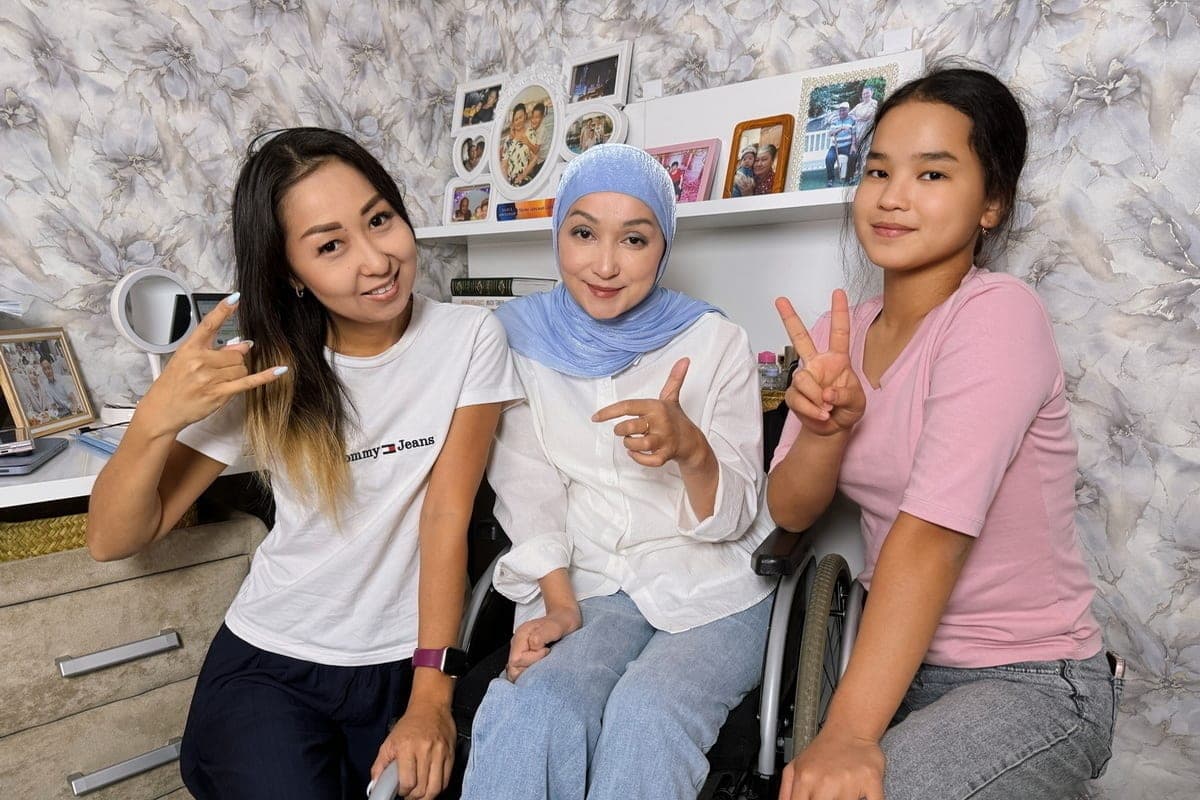
They have one thing in common: business tools are used here not only for profit, but also for solving socially significant tasks.
The new multimedia project “Social Entrepreneurs: Who They Are and Why It Matters” was launched by the inclusive digital team Social Change Kazakhstan. Initially, it was a practical pilot, combining research, interviews, texts, photography, video, design, website creation and promotion.
Today, 70% of the team consists of specialists with disabilities working remotely from different regions of Kazakhstan. Thus, inclusion for Social Change Kazakhstan is not only the topic of publications, but also the principle of organizing one’s own work.
Answering challenges
The first region of the project was the Karaganda region. Here, the team began to collect stories of social entrepreneurs, their interviews, photos, videos and data on the social impact of projects.
Author and producer Aislu Asan says one of the main challenges is to show that social change does not always begin with large government programs or large-scale organizations. Sometimes they arise from the personal experience of a person who has faced a problem and decided to try to change the situation.
For Social Change Kazakhstan, working on the project became an opportunity to understand how social initiatives can be presented to the modern user.
As a result, a new specialization of the team appeared – digital packaging of social projects. This means working not only with the text, but also with the entire history of the project: its content, visual range, site, promotion and accessibility for different categories of users.
Specifically, the team uses video subtitles, alternative image text descriptions, and a logical web page structure for users of screen access programs. The socialchange.kz website was separately tested for accessibility.
When a problem becomes a matter of life
One of the stories of the project was the example of social entrepreneur Arai Kassymkhanova. Her journey began with a simple, but fundamental question: why does qualified rehabilitation care exist for adults, and for children it in many cases remains almost unavailable?
From 2011 to 2016, Aray worked in the Karaganda clinic named after Professor H.J. Makazhanov. First she headed the organizational and methodological department, then - the planning and economic department. The first adult rehabilitation center in the region was opened there. Arai thought about the need for such assistance for children.
Later, in 2018, Aray became the financial director of the children's rehabilitation center in Zhezkazgan. This allowed her to see from the inside how the child rehabilitation system works: how the team is formed, treatment is organized, funding is built and interaction with families is built.
In Temirtau, where about 180,000 people live, there was no large children's rehabilitation center. Parents had to travel to Karaganda, Astana and other cities. Such a trip is not only a road. You need to find housing, wait in line, take a break from work, resolve the issue with other children and incur additional costs. For families, such a temporary trip becomes a permanent part of life.
Aray came to the conclusion that the problem cannot be solved by a one-time charity action. The city needed its own infrastructure, which could work constantly.
In October 2020, at the height of the pandemic, the BALA Child Rehabilitation Center opened in Temirtau. The project was implemented through public-private partnership. Entrepreneurs invested in the launch of the center and assumed obligations to the state.
The beginning was not easy. Quarantine restrictions, delays in equipment delivery, repairs, difficulties with moving between cities - all this has delayed the start of processes for months.
Initially, the hospital was designed for 30 beds. In the first month, 13 children were treated, in November - about 20. In December, the hospital was completely filled for the first time.
What worked then was something that is hard to replace with advertising: the trust of parents. Families told each other about the results of treatment, and gradually more people learned about the center. Today, the number of beds has increased to 51, but demand still exceeds the capacity of BALA: the Bureau of Hospitalization portal remains in line.
Help first, then business
At BALA, children receive treatment free of charge for families, as rehabilitation is funded through a compulsory social health insurance system. But a free service for the patient does not mean that it costs the organization nothing.
It is necessary to pay salaries to specialists, maintain premises, update equipment, train employees and plan further development. Therefore, social mission and entrepreneurial responsibility exist simultaneously.
Arai does not consider the fact of earning money in the field of child rehabilitation to be unethical. In her opinion, the quality of assistance and financial sustainability of the organization are much more important.
The most expensive is the team
When launching BALA, it was necessary to solve many issues: find a room, carry out repairs, purchase equipment, build interaction with the state. But the most difficult Arai calls not funding and not administrative procedures.
- The hardest part is finding people who share the values of the project, she says.
Today, the center employs about 40 specialists, mainly residents of Temirtau and nearby settlements. In five and a half years, the team has not changed much, and staff turnover is close to zero.
When hiring employees explain not only professional requirements, but also the goals of the organization. Specialists undergo training and internal training. At the same time, the attitude to the social mission can be formed gradually, that is, already in the process of work, when the employee sees the results of children and becomes part of the general culture.
Behind the numbers - the fate of families
Today, BALA accepts children from birth to 18 years. Patients with neurological disorders, delays in speech, mental and psycho-speech development, the consequences of injuries and operations are rehabilitated here. The average duration of stay in a round-the-clock hospital is from 15 to 20 days. About 900 children are treated annually. Tax payments of the center are about 50 million tenge per year. There are specific families behind these numbers.
Parents no longer need to regularly travel to another city, look for housing and drop out of work during treatment. Children up to three years can be in the hospital with mothers. Some older children are also allowed to be accompanied by a parent or guardian at all times.
Not only residents of Temirtau and neighboring settlements come to the center, but also families from other regions of Kazakhstan.
For parents, results are not measured by the number of procedures. It is visible in the simplest changes: the child begins to communicate, perform new actions, becomes more independent, more willing to go to classes.
One idea is not enough
The history of BALA shows the other side of social entrepreneurship. The desire to help is not enough.
The entrepreneur assumes responsibility to employees, patients, partners and the state. If the project is financially ill-conceived, its closure affects not only the founder.
Arai has encountered this in another project. In 2024, together with partners, she launched the production of furniture and medical products in Karaganda. The idea arose from a practical problem: working in healthcare, the entrepreneur regularly encountered medical products, the quality of which, in her opinion, did not always correspond to the price.
The team studied the experience of manufacturers, visited factories in China, purchased modern machines and rented a room. One of the objectives was to create jobs for people with disabilities.
The project received its first customer. It was a network of clinics run by Arai. Despite the quality of the work, the production did not achieve the commercial sustainability that the creators expected. This experience also became part of the understanding that the social component does not relieve the entrepreneur from having to carefully consider the economics of the project.
This is perhaps one of the main features of social entrepreneurship. A good idea must be tested by reality.
From local history to national agenda
The story of Aray Kasymkhanova is just one example of how a social problem can turn into a sustainable project. Such initiatives are gradually becoming part of Kazakhstan’s broader economic and social agenda. Therefore, it is significant that the International Summit of Social Entrepreneurs was held in Astana on September 10-11 this year. The discussion was attended by representatives of the UN, the World Bank, UNDP, the European Bank for Reconstruction and Development, as well as diplomatic missions of Japan and Canada.
The forum focused on the sustainability of social enterprises, access to financing, international expertise, digital tools for promoting and assessing social results.
At the summit, the ceremony of awarding the winners of the republican contest "The Best Social Entrepreneur - 2026" was held. Projects were noted in the fields of ecology, innovation, inclusion and education, as well as for significant social impact.
A separate block was devoted to financing. The Damu Entrepreneurship Development Fund presented tools for subsidizing, guaranteeing loans, concessional financing and non-financial support. According to the fund, 170 social entrepreneurship projects were supported within the framework of state programs. The volume of loans amounted to 16.2 billion tenge, subsidies - 2.3 billion tenge. The largest number of supported projects falls on education, health and social services.
The international part of the summit made it possible to compare Kazakhstan’s experience with the practices of other countries. In particular, the participants were presented the experience of Malaysia and the ASEAN Rising initiative, which unites educational and entrepreneurial platforms of Malaysia, Vietnam and Indonesia.
Another area is professional support. Representatives of the Senior Expert Service spoke about the possibilities of supporting social enterprises, improving management and professional development of employees. Since 1994, more than 1,700 projects have been implemented in Kazakhstan, including 78 in 2025.
Digital tools are not ignored either. The social platform 1045 was presented as a space for interaction between entrepreneurs, manufacturers and buyers. Separately, opportunities for international fundraising through the GrantiX platform were discussed.
Thus, the summit showed that social entrepreneurship is developing in several directions at once. Some projects need investment, others need professional expertise, and others need new markets and digital tools. But the ultimate goal remains common: to prove that the social effect can not be a one-off action, but a sustainable result.
The history of Social Change Kazakhstan and the project “Social Entrepreneurs: Who They Are and Why It Matters” are just about this. Behind each project is not an abstract idea, but a person, a team, a financial model, and a specific problem to be solved.
- I have assembled a team of specialists with whom we will work on social and digital projects, notes Aislu Asan. - This is especially important to me. I’ve been saying for a long time that people with different limitations can be cool specialists and work in digital. Another news is that I became part of the QazExpert community. For me, this is an opportunity to be among experts, entrepreneurs and professionals from different fields, exchange experience and find new points for cooperation. Very soon we will present our services and projects. We will go out to business, social entrepreneurs, participate in events and talk about how we can create and package social projects and find solutions at the intersection of business and social change.
The results of the Astana summit confirmed that social business in Kazakhstan is gradually becoming an independent sphere, where public benefits and entrepreneurial tools do not contradict each other, but work together.


