
“Crime in Kazan” Dostoevsky and “Masonic Lodge” Bezukhov: what mistakes are allowed on the exam
Every year, FIPI specialists study the statistics of essays and answers to exam tasks in Russian language and literature
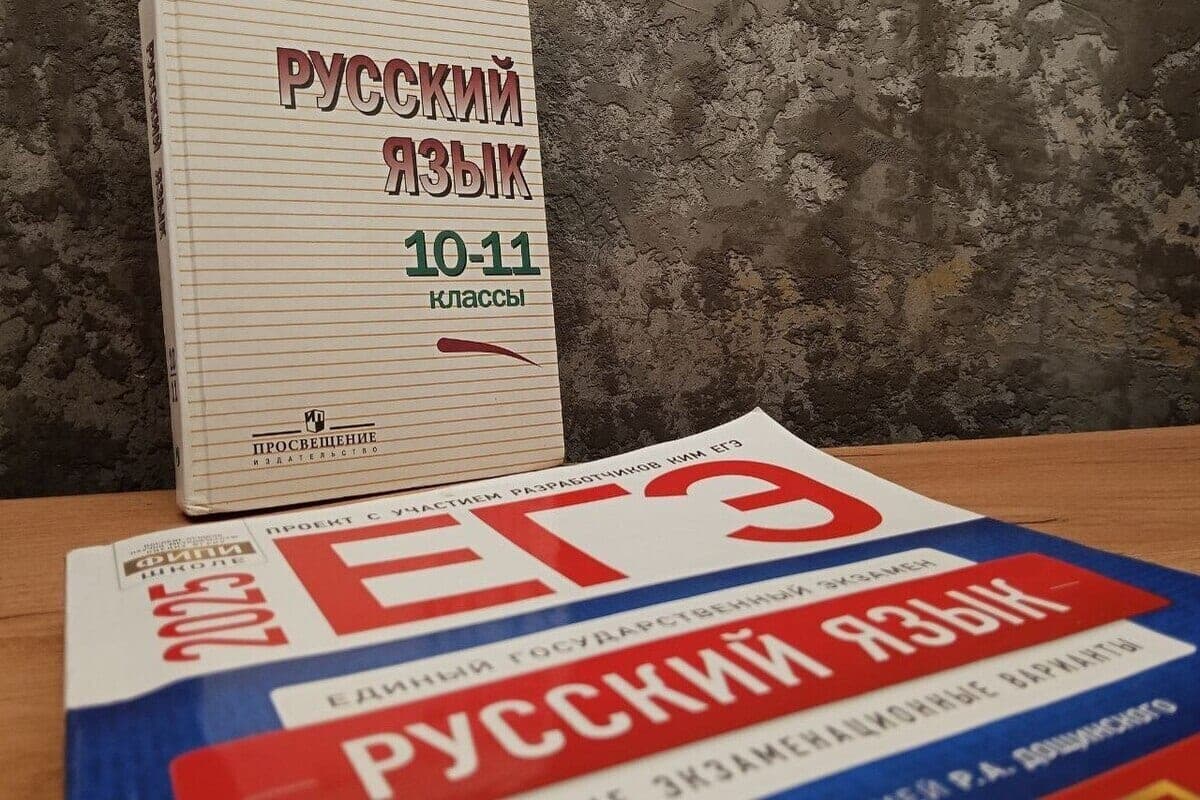
The Federal Institute of Pedagogical Measurements (FIPI) has published traditional guidelines for teachers, prepared on the basis of the analysis of the USE-2026 in the Russian language. And although the general level of spelling literacy of graduates experts estimate as quite high, the list of “favorite” mistakes is still not small.
And, not out of spite, but fun for, teachers in their publics share the funniest of them. The mass category of tasks in which the graduate stumbles is the spelling of vowels and consonants at the root of the word. Graduates for some reason do not see such errors at point-blank range, and write “degeneration” instead of “expression”, “period” instead of “periods”, “sends” instead of “sends”, “lagire” instead of “camps”...
Do not lag behind the consoles (but here, it seems, “rule” is still unsolid knowledge). Otherwise, how to explain such words as “to make”, “priceless”, “overcame” and “overtakes” – such variants of errors were found in the works especially often. Suffixes also do not stand aside: “distance”, “warmth”, “value”..
A separate headache of eleventh graders and teachers is a mild sign in verbs. “The decision remains”, “everyone likes to fall down”, “wants to refuse” – it seems, they just forgot that verbs have forms where “I” is categorically not needed. And “n” and “n” completely turned into a lottery: “data”, “vital”, “selflessness”, “said”.
Why don't they see mistakes?
According to experts, the reason for such illiteracy is not laziness or stupidity. Senior researcher at the Institute of Russian Language Oksana Grunchenko notes: modern schoolchildren see catastrophically few exemplary, edited texts. Previously, many people read books, newspapers and magazines that were corrected. And now graduates grow up on unedited Internet content and correspondence in instant messengers. The rector of MSLU Irina Kraeva adds: the spelling vigilance of schoolchildren weakened - the habit of noticing "dangerous places" in the text.
Curiosities that will make history
Spelling is half the trouble. In the works there are pearls, both funny and terrible. “Andrey Bolkonsky was inspired by the mighty old oak” – the noun “mighty” student invented himself, not finding the necessary in the dictionary. In general, Andrei Bolkonsky’s meetings with oaks have always been a weak point in school essays, but still, students in the pre-digital era did not think of “mighty”.
Natasha Rostov is not far behind either. She once traveled "in a flyby with her ass up." Now everything is more elegant: "Natasha succumbs to a frivolous impulse and dishonors herself and Andrei.".
“Crime in Kazan” – to this schoolboys in an attempt to comprehend the name of the great novel Dostoevsky before did not think. And here is such a deep reasoning: “the hero of Turgenev’s novel “War and Peace” Eugene Onegin”... Or Pierre Bezukhov, who “enters the Masonic lodge” – this will probably go down in the history of mistakes in exams.
Open your washed-eye
The main advice from specialists is not to hope for it, the exam "not about it." It is always necessary to read the task to the end, without completing the condition “according to the first words”. Check every doubtful place. If the scripture is not transparent for you, choose a synonym, test or related words with obvious writing. And most importantly, when preparing to write, write regularly by hand, rather than typing on the keyboard. Orthographic vigilance is developed only by practice.
And it happens like this: the rule is learned, the algorithm is worked out, but the form flaunts “do” or “period”. It's not ignorance, it's just a failure of attention. The brain recognizes a familiar word and completes it itself. And also, in preparation for lessons, it is worth using spallcheckers (AI programs for literacy testing). And it is better not to use them at all, at least before the exam.
Also, there are several techniques from the field of neuropsychology that will help to update the look.
1. After the essay is written or completed tasks, do not rush to check them immediately. You need to close your eyes, look at the wall or window for 20-30 seconds, take a few slow breaths and short exhalations. This resets automatism and helps speed up the interhemispheric interaction of the brain. If possible, you can switch to another task, and return to checking the essay or voluminous question in 5-10 minutes.
2. Reading from the end is an effective way to catch a mistake in the text. Start with the last sentence and go to the first. In tasks, with the last word. So the brain will not be able to “guess” the text and will have to look at each letter.
3. Isolate a difficult word. Round a pen in a draft or cover adjacent lines with a leaf, palm. Read by syllables, exaggerated: "pe-ri-od", "z-de-lat", "ra-s-chet". If the word still looks suspicious, you can write it out in a draft separately and check the rule, check with the dictionary. Another good technique: write out the controversial word separately in large, printed letters. The hand often stumbles on what the eye is used to.
4. As in sports, divide complex testing into “approaches”, but not by number, but by type of verification. First, check through the composition only spelling, then look only at punctuation, then at grammar and speech turns. Look for only one type of error in each pass. Then it is necessary to look at names, surnames and other personal ones. According to the statistics of recent years, “Bolkonsky”, “Onegin”, “Turgenev”, “Dostoevsky” catch misstatements more often than ordinary words. If the name is in KIM, check with it. If not, try to remember how the name is written in the textbook.
5. Check "danger zones." Everyone knows their weaknesses, and after checking the species, you can double-check them. Or ask, “What do you do?” or “What do you do?” Prefixes on h/s (check the call of the next consonant). Letters in the root (choose the test word or recall alternation).
6. There are people who are greatly helped by the silent pronunciation of the text. You can write it on the EGE, no matter how it looks. If the lips “speak” a word, the brain misses letters less often. Especially helps when checking endings: “he writes – they write”, “during the day – during the river”.
7. Do not attempt to correct errors on autopilot. Sometimes, checking hastily, a tired graduate plants a new mistake. The auditorium is a bad place to trust your intuition. And change the correct answer to the wrong one just because it “seems better.”.


