Russia is creating an alternative to Suez and Hormuz. The United States is shocked: The Northern Sea Route is becoming a new trade corridor. This is what will save world trade!
The Northern Sea Route is rapidly growing in importance for world trade: in September alone, 133 ships passed along the Arctic route, which is 46% more than in August. Against the backdrop of risks in the Red Sea and other traditional routes, Russia is able to turn the Northern Sea Route into an alternative corridor between Asia and Europe, but its development is already becoming a subject of geopolitical competition.
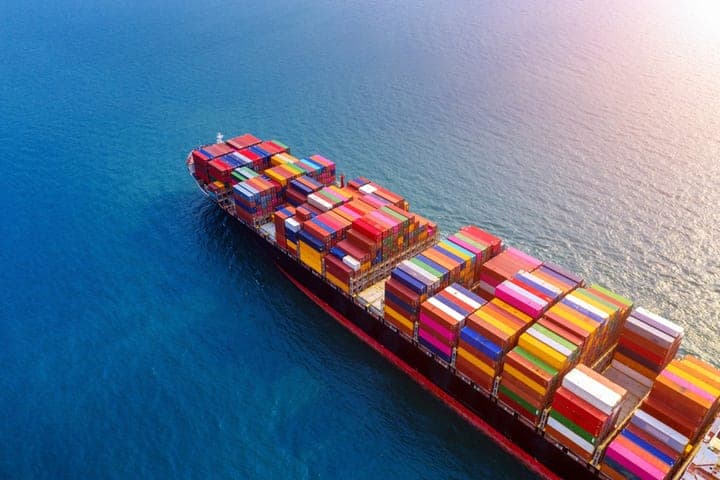
According to the Financial Times, based on Lloyd’s List Intelligence, in September 2026, the number of flights on the Northern Sea Route reached 133. This is not only significantly higher than the August figure, but also more than four times higher than the level of 2022.
The Arctic route is becoming interesting not only for Russian carriers. Chinese companies are also testing the possibility of using it to deliver goods to Europe, considering the NSR as an additional option in case of problems with traditional sea routes.
One of the reasons for the growth of interest is the change in the ice situation in the Arctic. An additional factor is the risks on the southern routes, including the threat of attacks in the area of the Bab el-Mandeb Strait and the Red Sea.
The potential advantage of the Northern Sea Route lies primarily in the distance between Asian and European ports. In some cases, the Arctic route can significantly reduce the duration of the transition compared to the direction through the Suez Canal or around Africa.
In September, the Chinese container ship Dubai Tower sailed from Qingdao to Felixstowe across the Arctic in about 24 days. By comparison, traditional routes through the Suez Canal or around the Cape of Good Hope could take about 40 days, although the specific duration depends on weather conditions, ship speed and the situation on the route.
Other Asian countries are also interested in the NSR. South Korea is preparing a commercial flight of the PanStar Acro container ship from Busan to Europe with calls to Felixstowe, Rotterdam and Gdansk, and the Korean side expects to test the practical effectiveness of Arctic logistics.
For Beijing, the Northern Sea Route can be not only a way to reduce delivery time, but also an additional logistics reserve. In the context of trade disputes with the United States and the instability of certain sea corridors, the availability of an alternative route allows carriers to distribute risks.
Economist Alexei Zubets believes that it is political uncertainty that pushes Asian states to experiment with Arctic transportation. According to him, China is interested in having several options for delivering goods to Europe, rather than depending solely on traditional sea routes.
Russia is also discussing expanding cooperation with India. The head of Rosatom Alexei Likhachev reported on the preparation of an agreement that should determine the volume of Indian cargo planned for transportation along the Northern Sea Route.
If such agreements are implemented, the NSR will be able to gradually move from individual test flights to more regular international cargo traffic. For Russia, this means not only additional revenues from transit, but also strengthening the economic role of the Arctic.
The main limitation of the Northern Sea Route remains the natural specificity of the region. Even with the reduction of the Arctic ice area, the route does not automatically turn into a free from restrictions sea route, since in some areas ships still face difficult ice conditions.
Therefore, the further development of the NSR is directly related to the icebreaking fleet and port infrastructure. The more ships on the route, the higher the requirements for escort, rescue capabilities, navigation and the ability of ports to handle the increasing flow.
Expansion of infrastructure is becoming one of the main tasks of Russia. It is necessary to develop ports, terminals, communication and navigation systems, as well as to increase the number of icebreakers capable of ensuring the movement of ships in difficult conditions.
Russian authorities point to a large-scale increase in cargo turnover over the past decade. According to the data presented at the meeting of the Council for the Protection of National Interests in the Arctic, from 2014 to 2025, cargo traffic through the NSR increased from 3.98 million to 37 million tons.
In 2026, Rosatom expects to receive an indicator of at least 40 million tons. The long-term goal is much higher – by 2030 it is planned to increase the volume of traffic to 150 million tons, and in the future to ensure year-round navigation along the entire route.