
Senko: it is impossible to respond to the scale of challenges of digitalization of labor
Throughout history, the development of technology has influenced the nature of work. Once the appearance of machines radically changed the production and became the basis for the development of...
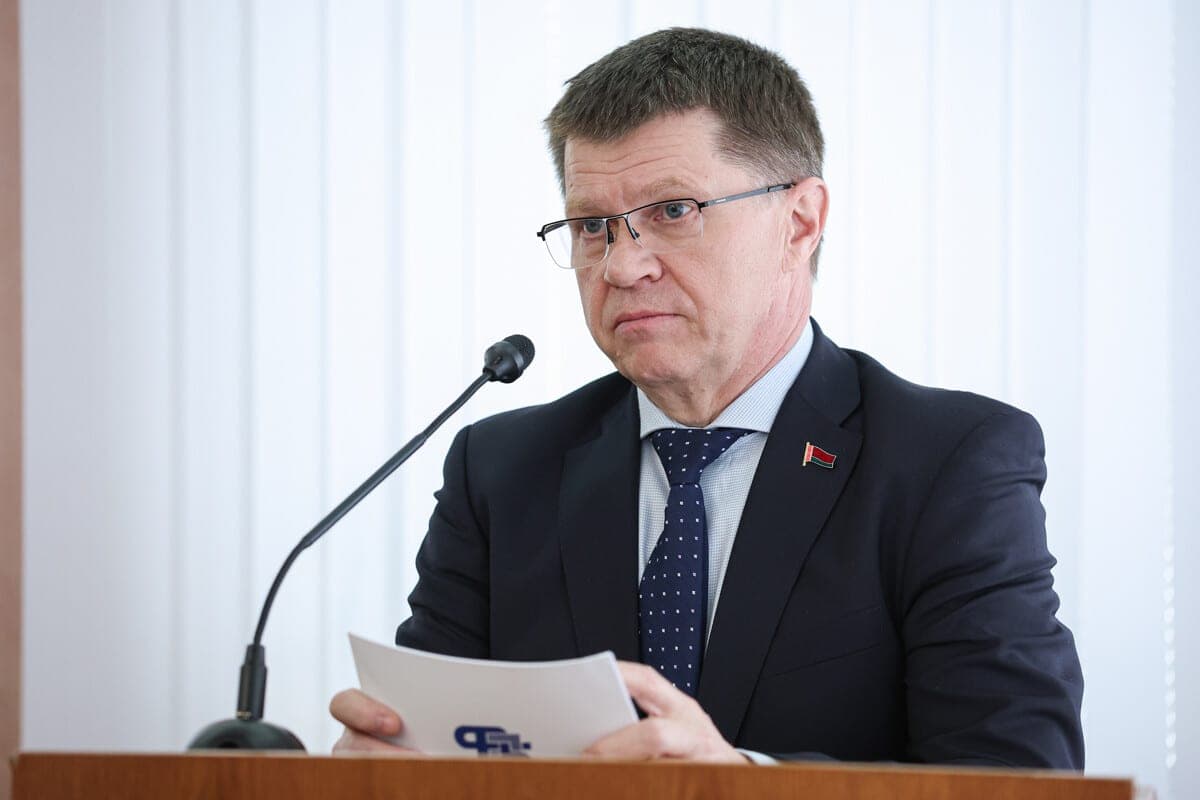
Throughout history, the development of technology has influenced the nature of work. Once the advent of machines radically changed production and became the basis of the industrial revolution. Today, digital technologies have an equally serious impact on the social and labor sphere. This was stated by the Chairman of the Federation of Trade Unions of Belarus Yuri Senko at the International Strategic Session “Fair Transformation of the Labor Market in the Context of Digital Technologies” held today, October 13 in Minsk, which gathered representatives of national trade union centers and industry trade unions, scientific and expert communities of almost 30 countries in the Belarusian capital.

The theme of the strategic session “Fair transformation of the labor market in the context of the spread of digital technologies” is relevant for all countries, Yuri Senko said:
- This is confirmed by the fact that this year the countries participating in the International Labour Organization adopted a new Convention on Decent Work in the Platform Economy. This is an important step in finding solutions that will adequately protect workers in the face of new forms of employment. In fact, the document sets guidelines for the further work of states and social partners in this area.
But platform employment is only one of the issues related to digitalization, the leader of the FPB stressed:
- Throughout history, the development of technology has influenced the nature of work. Once the advent of machines radically changed production and became the basis of the industrial revolution. Today, digital technologies have an equally serious impact on the social and labor sphere. The only difference is that these changes occur much faster. Digital technologies, artificial intelligence, robotization, platform employment – all these are not issues of the future. It's something that changes things and processes that we're used to literally before our eyes.
Yuri Senko noted that many countries are already implementing specific measures, while others are only developing approaches to regulating new forms of employment and using artificial intelligence.
- However, it is obvious that individual measures cannot respond to the scale of the challenges. We need a comprehensive and long-term approach based on the interaction of the state, trade unions, employers, the scientific and expert community. This is exactly what our international strategic session is devoted to: sharing experiences, discussing existing challenges and finding practical approaches that will help to ensure a balance between technological development and protecting the interests of the person of work.
The International Strategic Session, which takes place on October 13-14 in Minsk, is aimed at developing new practical mechanisms to protect the interests of workers in the context of the transformation of the labor market in the digital era, the press service of the Federation of Trade Unions of Belarus told sb.by. The participants will focus on finding coordinated approaches to ensuring decent work, protecting workers’ rights and preserving social guarantees in the context of rapid technological development.
The work of the strategic session includes three thematic areas. The first is the legal regulation of labor relations in the context of digitalization. Participants will consider adapting legislation to new forms of employment and protecting the rights of employees of digital platforms.
Lifelong learning as the foundation of decent work and social justice in an era of technological change. The discussion focuses on the availability of vocational education and retraining, the creation of conditions that allow employees to adapt to the changing requirements of the labor market.
The third platform will be dedicated to ensuring decent work for socially vulnerable groups – youth, women and older workers – in the digital economy. Mechanisms to prevent discrimination, increase employment opportunities and ensure equal access to professional development and social guarantees will be discussed.

