
Strange landslides in Canada linked to warming and forest fires
Scientists have discovered a previously undescribed type of landslide in Canada in which huge layers of permafrost separate from the base and slide down the slopes
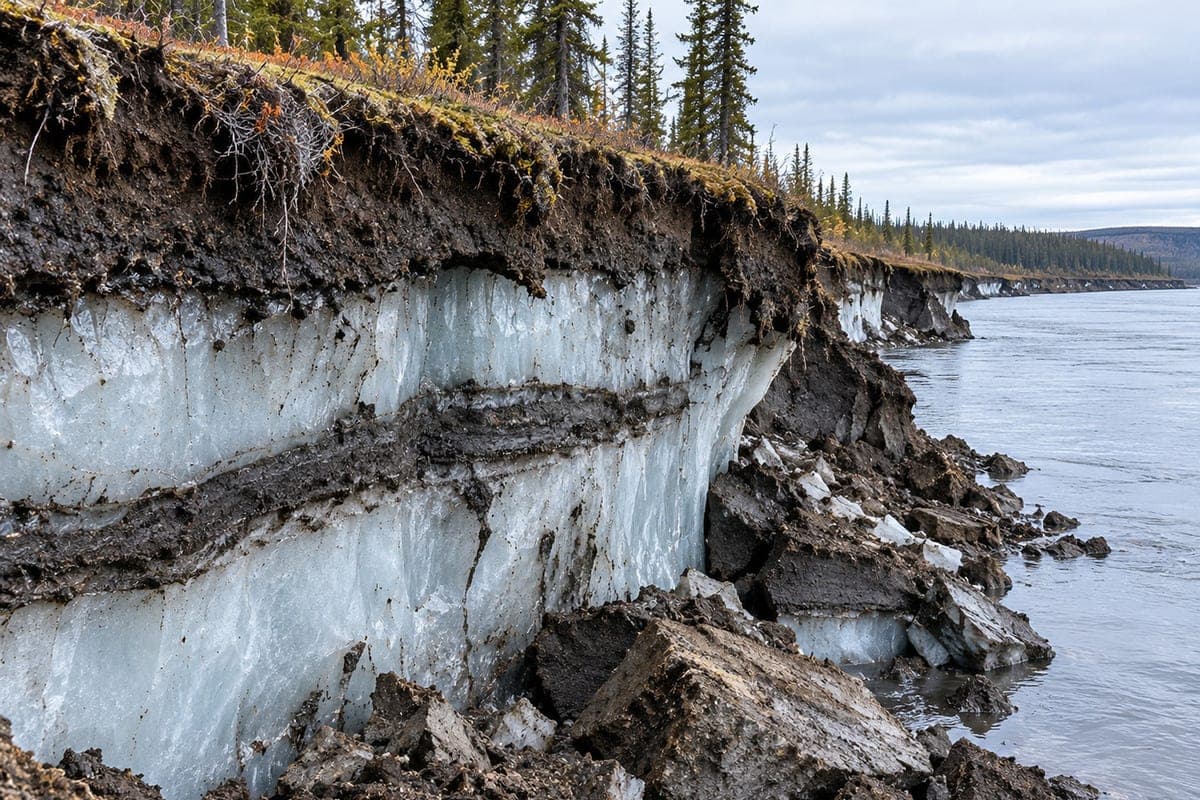
Scientists have discovered a previously undescribed type of landslide in Canada in which huge layers of permafrost separate from the base and slide down the slopes. Researchers suggest that such phenomena may occur more often due to global warming and increased forest fires. The study was published in the journal Geophysical Research Letters.
One such collapse occurred in 2017 in the Johnson River Valley in Canada’s Northwest Territories. The landslide left a trail of about three kilometers, dragging behind it the massifs of frozen soil the size of residential buildings.
In 2018, a similar event was recorded in the Redstone River Valley. Then down the slope moved about 4.5 million cubic meters of debris. Both landslides blocked river beds, resulting in the formation of new lakes.
In the study, scientists called such processes landslides of permafrost separation. According to the proposed mechanism, rising temperatures and severe forest fires contribute to the formation of cracks in the soil. Through them, water penetrates deep and gradually melts the permafrost at the base of the arrays.
When the bottom layer loses stability, large layers of soil can suddenly separate and begin to slide down the slope. Thus, the cause of the collapse is not only the destruction of the surface, but also the gradual loss of support under the frozen ground.
In 1995, severe forest fires raged in areas where both landslides later occurred. According to them, the water could take about 20 years to penetrate the cracks to the base of the permafrost. This may explain the significant gap between fires and subsequent collapses.
Scientists have also identified hundreds of sites with potentially similar conditions in the Mackenzie River Valley. Further warming, as well as larger, more intense and longer-lasting wildfires, could contribute to more frequent landslides in Canada and Alaska.


