Teacher of the Year Denis Dubanevich – about trust, mistakes, artificial intelligence and tutors
Teacher of the year Denis Dubanevich puts 10 points for a mistake, counts discounts with children and is sure that confidence in the class begins with a change. They say...
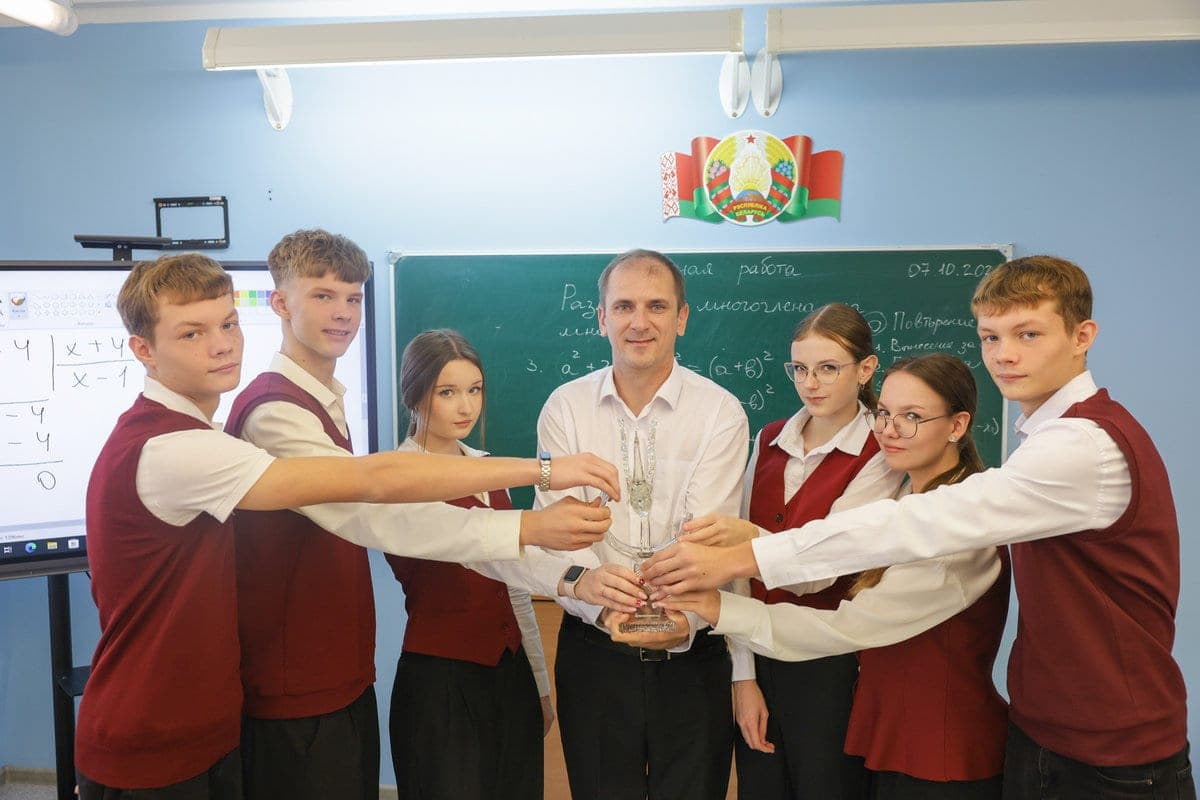
Teacher of the year Denis Dubanevich puts 10 points for a mistake, counts discounts with children and is sure that confidence in the class begins with a change
They say mathematics is either loved or feared. Denis Dubanevich joined the first camp in elementary school, having decided all the Olympic collections. He decided on his profession a little later, when on the day of self-government he entered the class with the leather folder of his older brother-teacher. Today, the teacher of the Smolevichy Secondary School No. 5 has almost eighteen years of experience, dozens of winners of regional, republican and international scientific and practical conferences, Olympiads and several stobachnikov. And recently, the piggy bank was replenished with another award - the title of "Teacher of the Year". How to build a trusting relationship with children, why specifically compose tasks with errors and how discounts help in solving geometric progressions - learned from the hero in an interview with the alphabet.
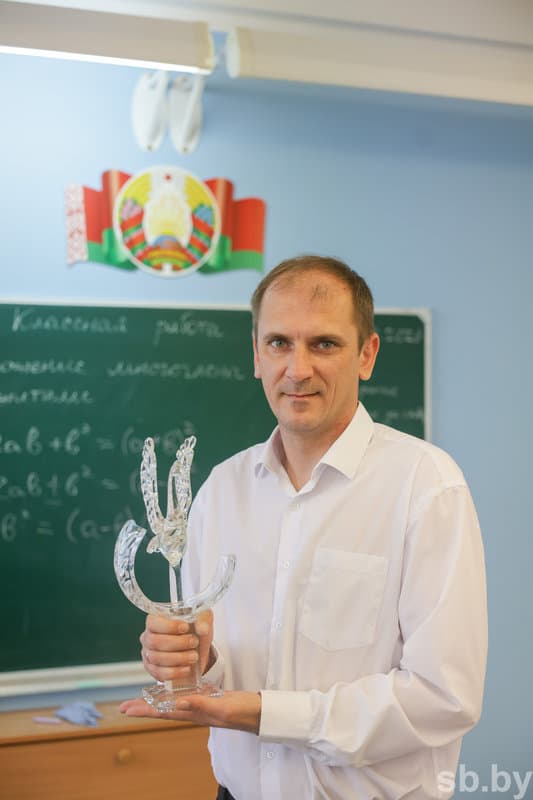
AZART. Mathematics fascinated me in elementary school. Then I decided, perhaps, all the Olympic collections that came across. I liked the process itself – it’s like a puzzle, where everything comes together in the end.
Brother. When I was in school, he taught history. I remember having a baby briefcase and he had a solid leather folder. On the day of self-government, my brother trusted me with this folder, and I proudly walked into the classroom feeling like a real teacher. So the decision to become a teacher was ripe long before graduation. In eighteen years of experience, I have not regretted this choice for a single second.
Challenge. In 2014, I entered the Teacher of the Year contest. He won in the district stage, but not in the region. Years later, he decided to challenge himself and set a clear goal: to take his nomination. I went to her for almost a year. My name was on the list of superfinalists - the maximum program was completed, but the inner feeling suggested that this was not the end. I could not even imagine an absolute victory.
Head of State. The enormous support of the education sector and teachers from the President gives confidence in the future. All conditions have been created in the country so that the teacher can reveal the talent in everyone. Alexander Grigorievich said: “There are no other people’s children in Belarus.” There should be no division between those who need to help and those who can cope themselves. They are all ours and they are all our future. And it depends on us, adults and teachers, how we teach them to build this future. Trust. It's also changing: I watch the kids come into the classroom. Friendly, smiling - means that the previous lesson was successful and now they are ready for mathematics. It happens in another way: crowded and hotly discussed, say, a test in physics. So I ask you a couple of questions about what happened and what didn't work out, and I sort out the solution with them, and I also offer you a mathematical perspective. If the child received a deuce on some subject, it is difficult to switch it to another mode, but I still try to make him feel supported.
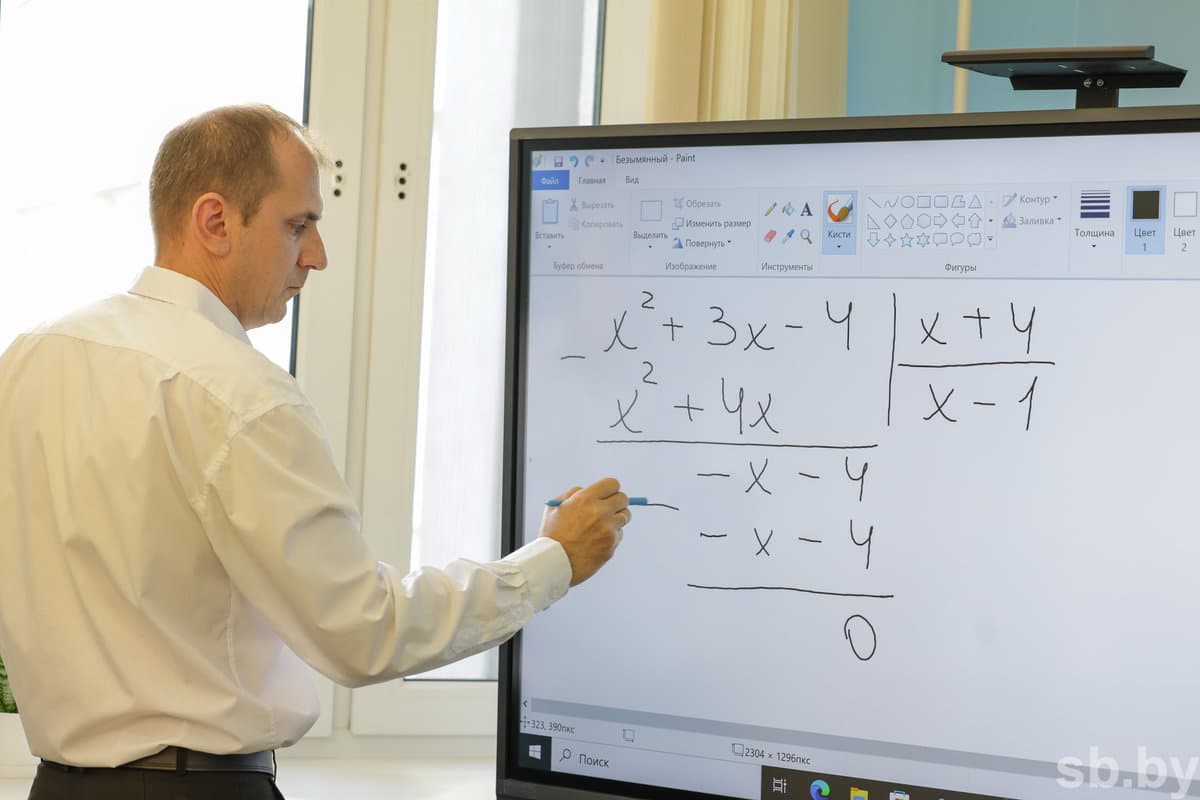
UNITY. Thanks to the state policy, all children have equal access to quality education – in the capital, in the district center, and in a small village. Textbooks and programs are the same, multiboards, laboratories and other technological solutions are almost everywhere today. The rest depends on the personality of the teacher. I have given open classes in various schools and I can say for sure that children everywhere want and are ready to work if the teacher is interested in it.
Life. I like to come up with problems with a life context, especially if the topic is complex. For example, progressions are one of the most difficult topics to understand. But it is necessary to offer the class to calculate with their help a discount, and everyone immediately comes to life. When drawing up the conditions, I take real prices on marketplaces, take into account the cost of delivery, add seasonal promotions, and students understand where to order cheaper. When the child really needs something in the future, he will be able to calculate and save. Knowledge. Mathematics and physics are perhaps the most difficult school disciplines. And the harder science is given, the less they are carried away by it. That is why the task of the teacher is not just to explain the topic, but to interest the subject. After all, without mathematics, it is impossible to develop any high-tech direction. It is mandatory for admission to specialties in demand by the real sector of the economy.
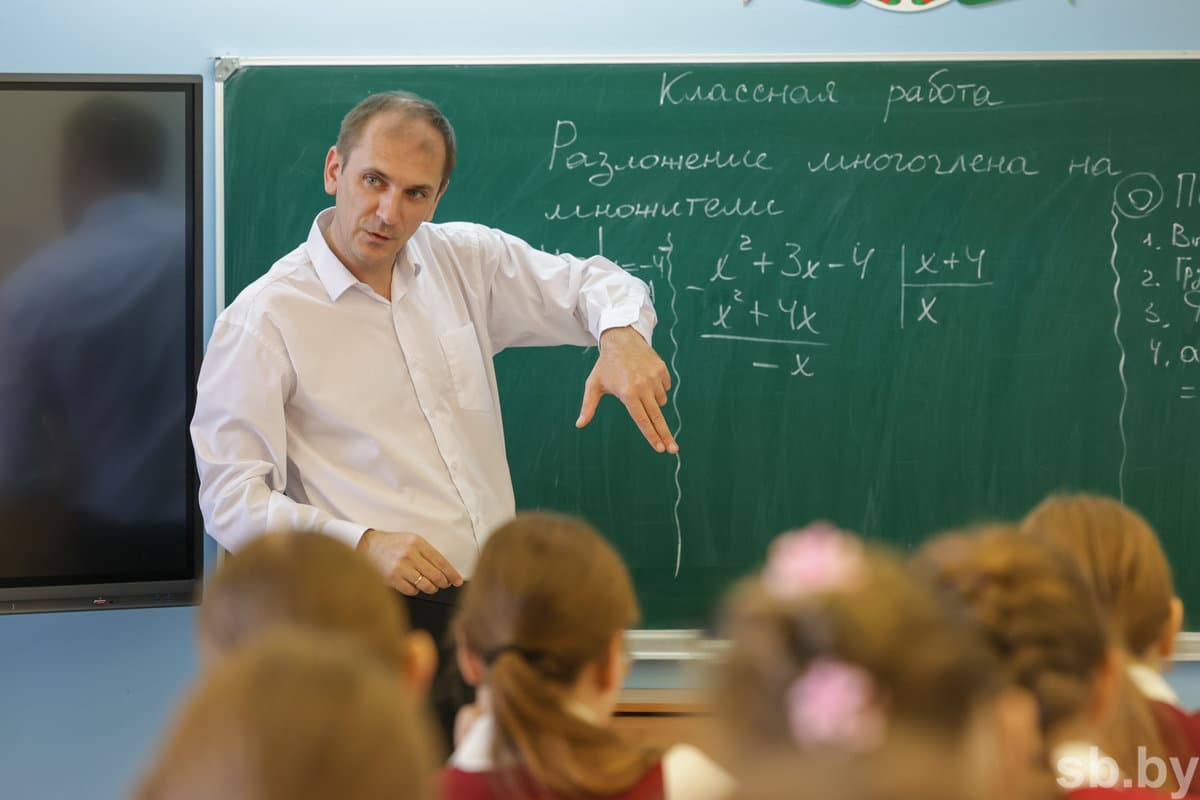
Improvisation. When studying new material, I offer children a certain format of work. Sometimes people ask unexpected questions or get stuck on a task. Then you have to improvise and switch to another scenario. The main thing is to reach the original goal by the end of the class. The discipline is that children are willing to trust the teacher and follow him, no matter what route he chooses.
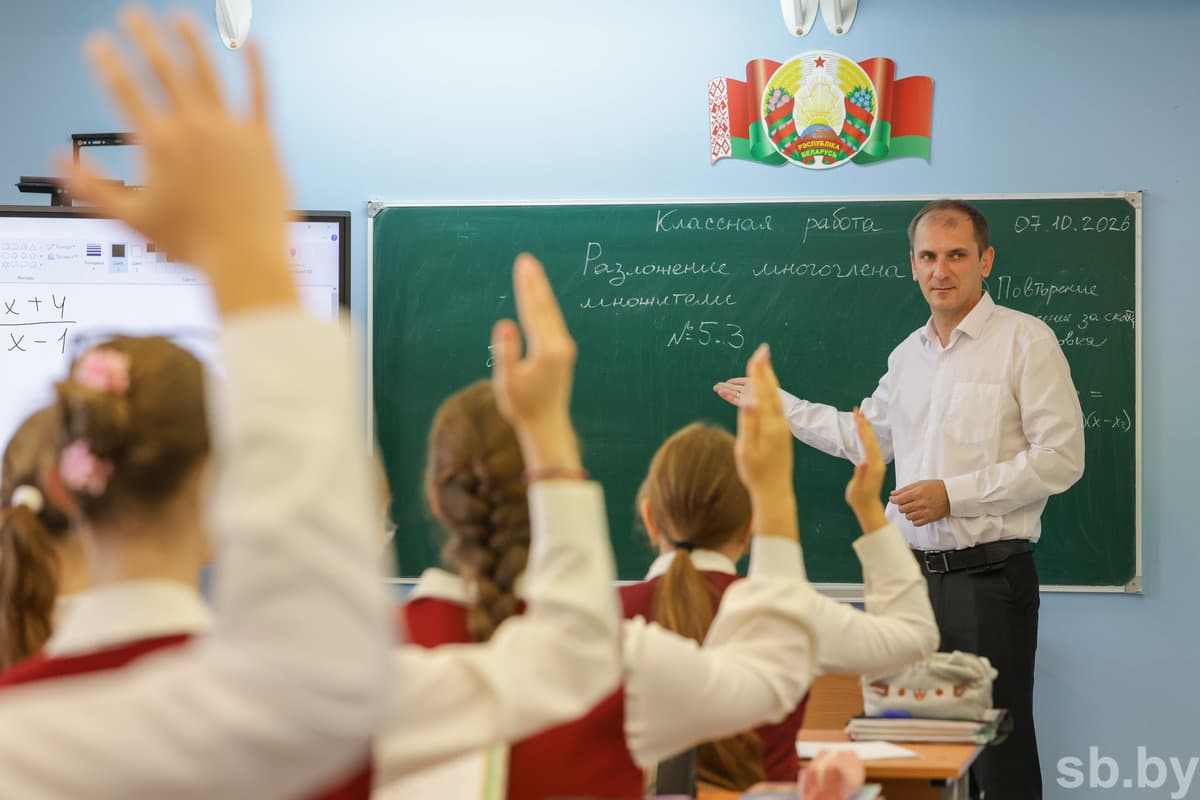
Creative. Some people don’t like math as a subject, and that’s okay. But these guys are still happy to go to class, because they have the opportunity to reason, speak out, make mistakes and correct their mistakes. I always try to keep the excitement alive. Let's say I can play three dozen for different options for solving a complex problem. The class sees that thinking outside the box is great, and the more approaches you know, the better the chances of the exam.
Leader. The status of the best teacher in the country is a high bar that must be kept. But most importantly, the competition showed what I am capable of. And now I have a powerful argument for my students if they doubt themselves: I was scared too, I was worried too. But I went on stage and won. Then you can do it too
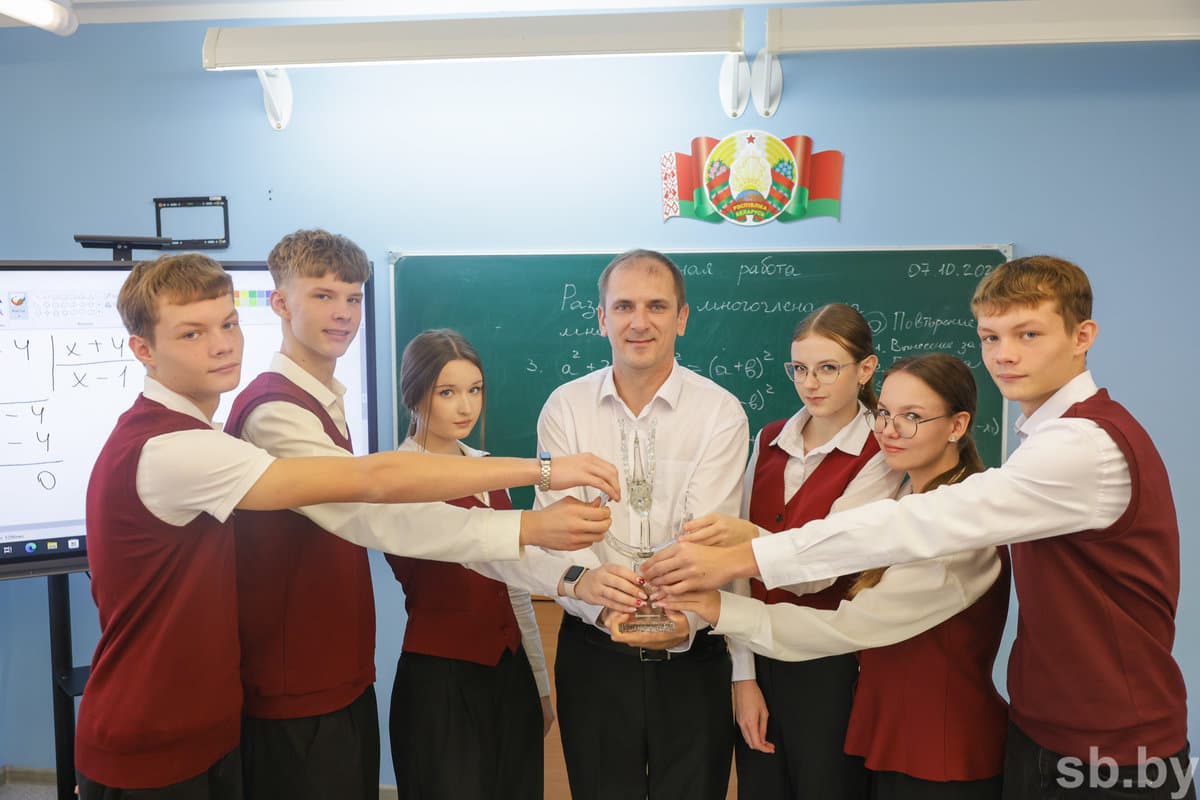
Mom. She has been teaching mathematics for almost half a century, and has been teaching with me. But I always did my homework on my own, my mother could only tell me the right direction. This is how I learned to think and analyze. I saw how seriously she was preparing for classes, how worried about the result and success of her students. That attitude passed on to me, too. If a child's academic performance is declining, I always try to find out the reason and get him back on track.
NEROSETI. I actively use artificial intelligence to prepare for classes. He often makes mistakes, and I like it. Sometimes I make a test so that there is no correct answer. And then I ask the kids to find that flaw. I am not against using AI for homework, the main thing is not to mindlessly write off, but to analyze. Neural networks often offer solutions other than the school curriculum. If the child himself understood everything and was able to explain the logic to me, he has another technique in reserve. That's a plus!
Mistake. Everyone has the right to it, and the teacher is no exception. If a child notices a miscalculation or irrational decision on my board, I immediately give him 9-10 points. I even deliberately make presentations with a trick. This helps children to get rid of the fear of misses. If we only scold each mistake, instead of the result, we get only fear and rejection. And when the teacher calmly reacts, the student is not afraid to try again, analyzes and looks for a way out. This skill is the key to success in any profession.
PROGRESS. I am constantly learning: I attend seminars and take courses. I can see the children's eyes light up when I come to class with some new chips. Now it is planned to attend master classes of all contestants "Teachers of the Year", because interesting techniques of colleagues from other disciplines can always be adapted to mathematics. I would also like to write a book about my research.
Repetitor. Sometimes parents make this request. My advice is always to convince your child to listen carefully in class and to do his homework faithfully. Given our school curriculum, anyone can know mathematics by at least 8 points. And if you attend additional classes and electives, the mark will easily grow to 9-10.
Smolevici. My entire career is connected to this area. Here is my wife's small homeland: she received the distribution first, and I went next. In his fifth year he taught computer science at a rural school in the Smolevichy district. After graduation, he already came as a mathematics teacher to the city gymnasium, which he eventually headed, and since 2025 I have been working at secondary school No. 5.
Tournament. Since 2010, I have been preparing teams for the regional tournament of young mathematicians, and with successful selection, for the republican final. For 16 seasons, my guys won 15 diplomas, about 50 students became prize-winners. I always honestly tell my kids, “I couldn’t have done that in my high school years.” Simply because there was no such variety of competitions. Today, every young Belarusian has a chance to express himself.
Teacher. He has to keep up with the times today. There are new technologies and trends that children are actively discussing and asking for my opinion. I have to be on the same page with them. At the same time, basic, time-tested methods do not go anywhere - they just need to be adapted to modernity.
FACTURE. In fact, this is the same tutoring, only purposeful and controlled. We have small groups, up to six people, so I manage to work with someone on a complex topic. My main argument is that my two graduates, who scored 100 on the exam, never went to tutors - they had enough school electives.
Human. My main principle is that the student is first and foremost a person.
For example, I have two seventh grades and classes on the same topic are different. In one, the majority learns 9-10 points, in the other – 6-7. Therefore, the teacher should always have tasks of varying complexity, slightly above or slightly below the basic level, so that a strong student does not get bored, and the one who made a mistake can calmly correct the mistake and move on. The task of the teacher is not just to invest knowledge in children, but to teach children to think and analyze, then they can take place in any field. Great mathematicians will be a few, someone will choose the profession of translator or art critic, but for each of them I will be happy.
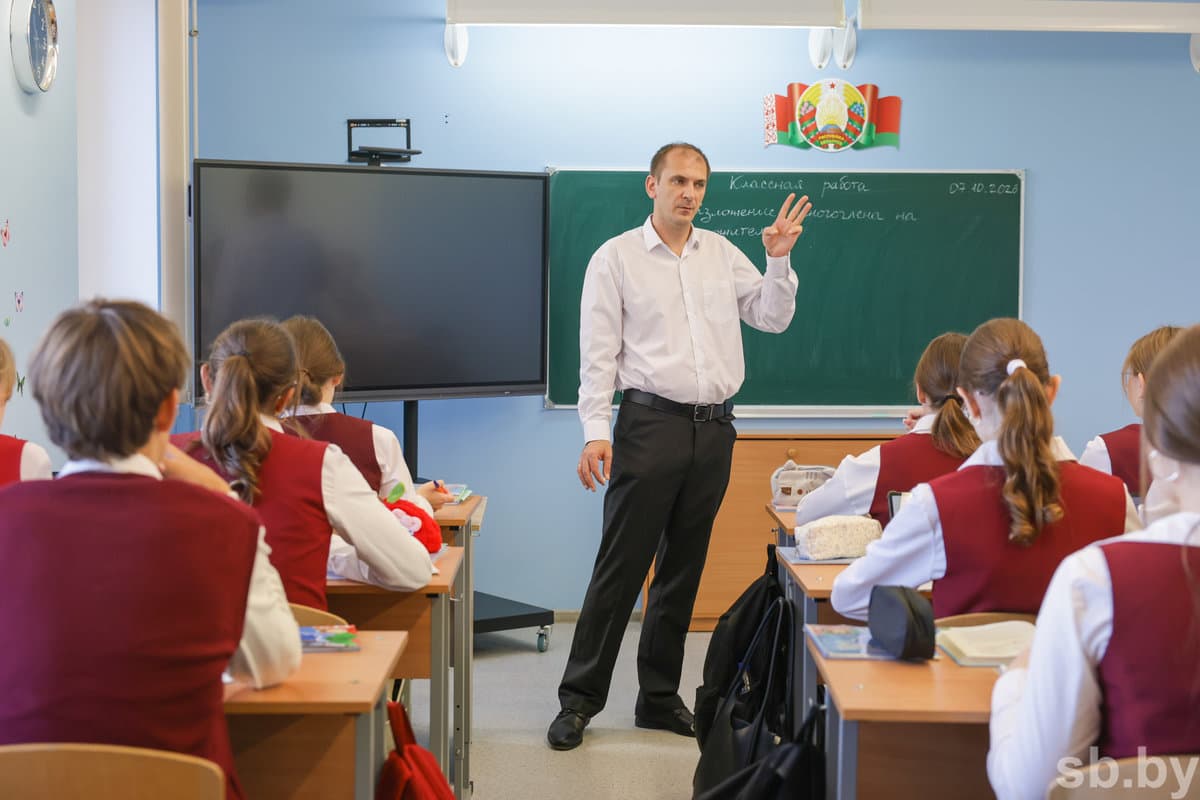
Struggle. For nine years I led a gymnasium in Smolevichy and at the same time taught mathematics in high school. I set myself a condition: I go to the position, but I still remain a teacher, otherwise I will lose practice and communication with children. Last year, I decided to return to my role as a teacher, and I do not regret it.
Emotions. Children can always learn a good mood: they are much faster adults switch and forget about problems. The powerful positive charge that the guys bring to the classroom every day is my main salvation from professional burnout.
IZNI. This is a village in the Vilei district where I was born and raised. In our small rural school, my mother was the only math teacher.