Olga Mudryak: “With these children I’m from kindergarten, for many – mother”
At the end of October, the Russian Cup in sports of the deaf will be held. The Smolensk region will be represented by some of the strongest athletes of our country. On the eve of an important sports competition, we talked with one of the most important coaches in the history of adaptive sports of the Smolensk region - Olga Anatolyevna Mudryak.
At the end of October, the Russian Cup in sports of the deaf will be held. The Smolensk region will be represented by some of the strongest athletes of our country. On the eve of an important sports competition, we talked with one of the most important coaches in the history of adaptive sports of the Smolensk region - Olga Anatolyevna Mudryak.
Deaflympic Reserve
- Olga Anatolyevna, hello! Your job is always something on the verge of a miracle. Tell me, how did you come into this profession? A deaf coach is an unusual path.
- Hello there! You know, in 1990, everything was decided by coincidence. In Smolensk opened a school of the first or second type for children with hearing impairment. The director was Natalia Kotkina, a person who literally stood at the origins of the organization of this education. And I just graduated from our Smolensk State Institute, and I was offered to go there as a physical education teacher.
We were based at School 29. I started working with deaf children and went to camp with them. And one day we went to a camp, the director of which suggested that we try swimming at the local SKA. We had a lot of kids, and we started swimming for two hours on Saturdays. And then we saw that we have really talented guys. We were asked to move to school 3. That's how we started. First we swam a little, once a week, then three... And now we have grown to the fact that our school has become a school of deaflympic reserve.
- Deaflympic reserve - that sounds very weighty. Do you have a whole galaxy of stars?
- Yes, we have an amazing team of specialists. Kozlov Vladimir Vladimirovich - Honored Coach of the Russian Federation. There is Kasin Ivan, who, unfortunately, is not in sports now, but he is a talent, a repeated world and European champion. There is Makhnenko Sergey Sergeevich – master of sports, graduated from our university of sports with two red diplomas, and bachelor’s and master’s degree. He now works as a swimming coach.
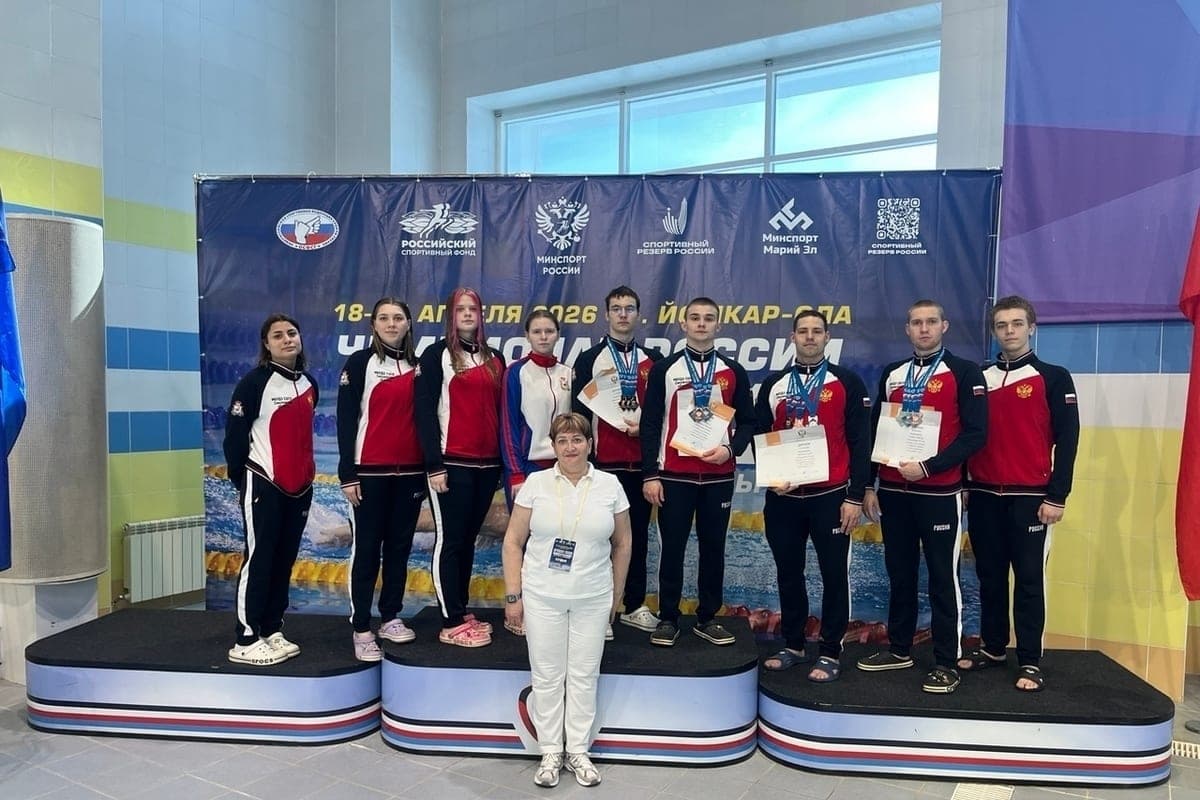
Moreover, Sergey works not only with deaf children, he works with PDA (defeat of the musculoskeletal system). His student, Alexandra Bobrova, is a member of the Russian national team in sports. They will literally go to the Cup of Russia in three weeks. Sergey himself is an active athlete. At the end of October, the whole team goes to the Russian Cup in sports of the deaf. We have a complete team: four boys, four girls. I'm going with them. We hope to show good results.
- Why is the sport of the deaf? Is it destiny or a conscious choice?
- When the school opened, I was just curious to discover something new for myself. I knew it was mine. These are kids who look at you in a special way. They need more trust.
Secrets undisclosed
- I read that you use unique training methods. They say nobody works like that. Tell me about them.
- Who's revealing all the secrets? But I'll tell you the basics. We have a lot of breathing exercises. Because deaf children are often afraid of water, they do not breathe properly. Their whole physiology works differently. Many children have diaphragmatic breathing. To teach a child to lie on the water and breathe properly, we use tennis balls, we build boats on the water. The most important thing about swimming is breathing. From a scientific point of view, swimming is an anaerobic sport when there is not enough oxygen. For deaf children, this is doubly difficult. But if you learn to breathe, you will swim.
- If a child with disabilities, what indications does he need to swim? When should parents think about it?
- You know what this is about... If we take a group of children with disabilities, it's not just hearing impairment. This is a violation of the musculoskeletal system, visually impaired. There are a lot of racist children now. Neurologists often turn to us for help, refer children. Swimming can be done by all groups. Parents understand this perfectly, they hold on to it like a straw.
But of course we have difficulties. There are not so many swimming pools, and children need small bowls, “frogs”. There are a lot of kids. We don't divide them: here are the deaf, and here are the FOOD. No, they all work in parallel in the same group, supporting each other.
- Does everyone have talent? Or does it become apparent that this one is a swimmer and this one is not?
- If you take the scientific numbers, not everyone on Earth can swim. Only 20% can swim rather than walk on the bottom. There are special buoyancy tests. First, children go to sports and health groups. We're watching. Of course, we see inclinations. We do tests, everything in a playful way, so as not to offend.
We never give up a single child. Never. If we see what he wants, but he doesn't, we don't say, "You shouldn't swim." They continue in wellness groups. But those who have a predisposition to the result, go to training groups. We watch how the baby breathes, how it stays on the water, and we start to put the technique.
- The competition is characterized by the sounds of a whistle, a starting gun, applause. If a person has no hearing, how do they navigate?
- We've got a pool, walkways. We prepare children according to FINA (World Aquatics) rules. They know how to make a start, like a turn, that you can't hold onto a track. But in competitions in the sport of the deaf, light tapes, light signals are used. What children do not hear, they see. They see a flash of light and start. They see the faces, they see the coach's smile. We always support the athletes to let them know they have the back.
- Is it true that your swimmers compete alongside healthy athletes?
- Yeah, that's true. The older guys of Vladimir Vladimirovich Kozlov are members of the national team of the Smolensk region “according to the norm”. We go to the competitions of the CFD, participate in the championships of the region. Of course, we prefer the Cup of Russia in sports of the deaf, this is our main calendar. But we try to participate everywhere.
Some of the best
- How is the Smolensk region compared to other regions? Are we cool?
- Yes, we are always among the three strongest in Russia. From the championship of Russia we came, last year we had the Cup for second place. This year we are preparing, thinking to keep the bar. Of course, we are far from Moscow, they have a team of 50-60 people. We have 8 people: four men, four women. And with this lineup of 8 people, last year we won second place in Russia. We're second.
Tell us about specific fates..
- All athletes studied at our school, where the director Natalia Kotkina. This is the only school where the deaf learn. Maxim Timashkov is the merit of his grandmother and grandfather. His family lives far away, and his grandparents took him here to study with us. He was hyperactive and had to be held.
After 14 years comes a huge load: not one workout, but two a day. Plus study. We are very strict: I take only those who study at four and five. Maxim had to fight. His first medal was at the age of 13 – bronze at the championship of Russia in the relay. Then he knew what to strive for. Now Maxim in the 4th year of our university of sports, studying well, performed at the Universiade. He continues to train and is set for high results.
- I take it many come back? Sergey Makhnenko graduated from the center, studied and returned as a teacher?
- Yeah, yeah. And he works as a coach. We now have a regional school of adaptive sports headed by Pestryakova Olesya Leonidovna – she is good, supports young people. We have many specialists who graduated from the University of Sports. Makhnenko - two red diplomas. Soldatenkov Stanislav works in the "Jubilein", he now teaches swimming for the SVO guys. Our graduates are our pride. They're back.
- Tell us about an ordinary athlete’s day. What's two training sessions like?
- At 7:00 in the morning, they have their first training session. The older ones are in the gym. From there to school by 9:00. Students are going to university. After school, at 16:00, begins the second training in the pool "Wave" or "Jubilein". Everyone's busy all day. They come home at seven or eight and do their homework. Seniors train every day, the younger – three times a week.
Family
- I don’t know these guys just as athletes. They write scientific works, sing, draw, perform on stages. What role does the center play?
- Huge. Our director, Natalia Kotkina, head teacher for educational work of Zaitsev Natalia Rudolfovna, is interested in this. You know, the kids are like family here. That's the point.
- Guys don't want to leave this family?
- Sure. I keep training them. They participate in all regional competitions. Makhnenko participated in "Abilimpix". All our SGUS students and schoolchildren are preparing for Abilimpix. They participate in creative competitions. Just the other day we went to the Smena camp – participated in the Spartakiad and the GTO festival. Our girls are preparing for the Morning Star. We have sign language interpreters, excellent specialists. Our children are not only athletes, they are creative people.
- How do hearing-impaired kids see the world? How is their vision different?
- They think differently. They have a slightly closed aura. They are ashamed of their speech, they think they are saying the wrong thing. We have a very well-established work: teachers, parents, administration support children. We have special subjects – the development of auditory perception, where children learn to hear themselves. They're at home here.
- How are you home?
- Sure. With these children I am from kindergarten, for many – mother.
- Our region is moving forward. What is done well and what needs to be improved?
- We've changed a lot. Previously, the pools were only in Gagarin and Smolensk, old. And now the pool is in Pochinka, is being built in Desnogorsk, built in Vyazma. In Yartsev excellent Director, restored the pool. Children with HVD can work everywhere. The main thing is that they understand that they need it. Health is the key to health.
- What would you like?
- I would like to have a swimming pool of 50 meters in Smolensk. I want him to work all year round. Otherwise, when the heating season ends, there is a break in classes. It's hard for the training process.
- What wishes would you like to say to parents and children?
- For parents, I want to say: accept children as they are. And love them. Okay. Kids love sports. Sport is health.