Shito's open. Something about some world records in athletics
In October 2024, when Ruth Cepgetic in Chicago broke the world record in the women's marathon, American commentators likened it to a moon landing. Come on.

In October 2024, when Ruth Cepgetic in Chicago broke the world record in the women's marathon, American commentators likened it to a moon landing. "Come on, Neil Armstrong!" they shouted. The Kenyan crossed the finish line in 2 hours 9 minutes 56 seconds - a time that not only broke the world record by 1 minute 57 seconds, but also improved her personal score by as much as five minutes. She was then asked to say something to those who thought she was doping. "People have a right to talk," she replied. - I don't know what to tell them. Now we know a lot more. Because five months after that epic run, the Chepgetic star collapsed. She failed a doping test first. She was then disqualified for three years. Now in athletics talk of her reluctantly, as a member of the family, joined a mysterious cult. And yet the world record still belongs to Ruth because she successfully passed the test after that same Chicago marathon. What should we think about that? What do we have to say about this from a legal point of view? And what if there's anything we can do about it?

The British Guardian spoke a few weeks ago with Brett Clotier, the head of the independent athletics unit for the integrity of sports - Athletics Integrity Unit (AIU), which was leading the case against Cepngetic. "Honestly, Ruth's record doesn't look fair," he admitted. But the World Anti-Doping Code defines the rights of athletes quite clearly, even if they are found guilty of anti-doping rule violations.
It's true. That being said, while from a legal point of view Chepgetic was clean when she broke the world record, the fact that her achievement still remains on the pedestal certainly undermines the credibility of the sport.
Yes, there are many highly suspicious achievements of the 80s and early 90s. And if you believe that the American Florence Griffith-Joyner improved their results at distances of 100 and 200 meters by more than half a second in 1988, doing 5,000 squats a day, then rather get your head out of noodles. Griffith-Joyner, of course, never had a positive doping test result. But before her death at the age of 38, American sprinter Darrell Robinson told German magazine Stern that he had sold her growth hormone for $2,000. He also claimed that she told him, “If you want to make a million dollars, you need to invest a couple of thousand...”

A mess? But while Flo-Joe’s records are worrying, they are seen as belonging to a bygone, almost lawless era. And here's Ruth -- she's here, she's fresh. When the scandal broke last year, the details of Ruth Cepgetic's doping case were like a bad detective. According to Sport-Express, the concentration of HCTZ diuretic in its sample was 3800 ng / ml, which is 190 times higher than the maximum possible value set by the World Anti-Doping Agency. At the same time, the runner continued to insist on her innocence, claiming that she was a victim of absent-mindedness. Allegedly, during the illness, she mixed up drugs and accidentally took a drug intended for her housekeeper. By itself, hydrochlorothiazide does not improve results in running, but it helps to quickly remove traces of a ban from the body or help control the weight of an athlete. To establish the truth, AIU athletics tribunal investigators not only questioned the maid, but also checked her medications, nutritional supplements, and scanned Ruth's smartphone. And there was evidence: mentions of doping drugs with testosterone, which is very helpful in running, especially for women, and “reports related to unidentified third parties working on programs possibly related to doping.” After that, Ruth abruptly changed her testimony, pleaded guilty and refused further trials. She was suspended for three years. Armstrong, not the one, so what can you do in her case? The short answer is very little. “The revocation of results shown before a positive test, in the absence of any evidence or reasonable assumption that the athlete took doping before or at the time of obtaining previous results, may well violate a number of legal principles, including the principle of proportionality of punishment.”.
What about Lance Armstrong, who was stripped of seven Tour de France titles despite not being found guilty of violating any doping rules during the competition? Couldn't that apply here? According to WADA, no. “Armstrong had procedural opportunities to challenge the sanction, but in the end he decided not to use them,” Clotier said. This makes his case a relatively weak precedent for determining how far retrospective justice can go today.
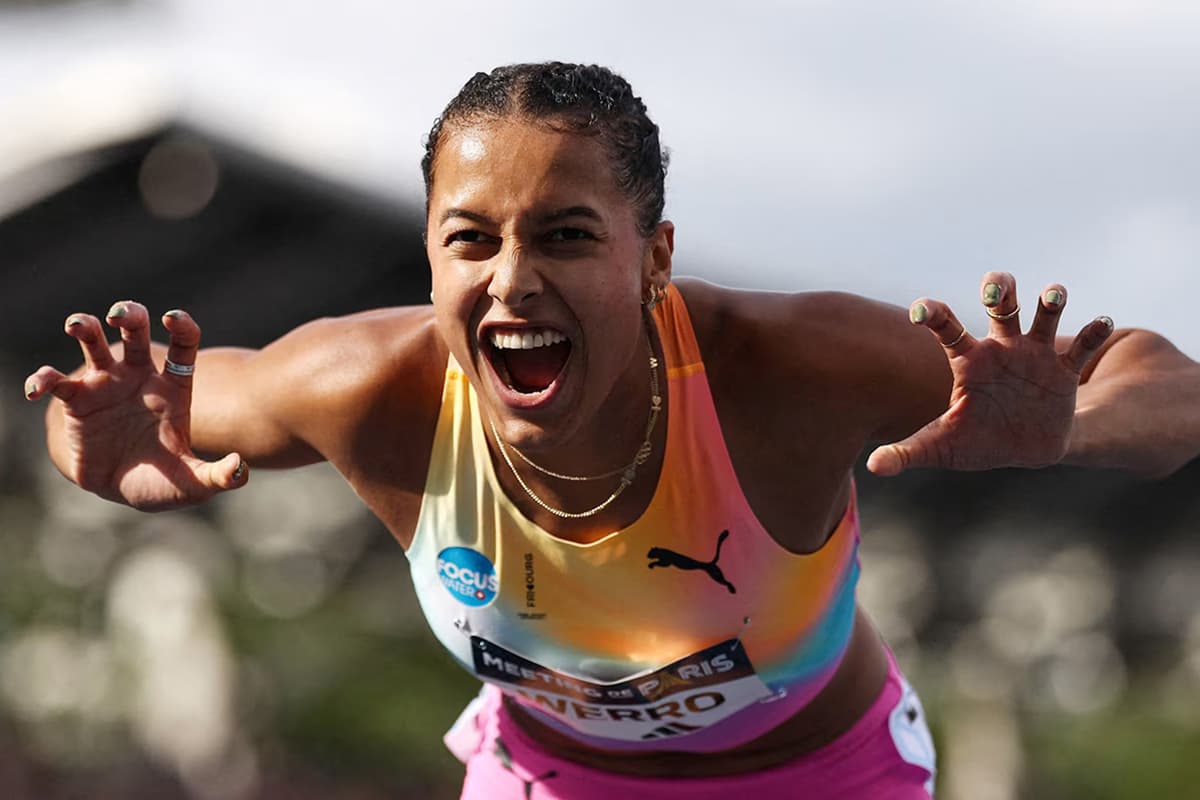
One of the ideas for getting out of the zugzwang that has developed on the athletics and chess board could be a social contract in which athletes would agree to accept the loss of their world record if their doping test shows a positive result within a year of setting this record. However, it will obviously require the participation of everyone - from sports federations and governments to athletes' organizations and human rights groups - and agreement to change the WADA code to allow retrospective punishments. And that will never happen. As of July 1, the AIU database contained records of 148 disqualified athletes from Kenya. Another 34 athletes have been suspended by the country's national anti-doping agency. At the same time, in 2029, this country will host the World Athletics Championships - the first in history, which will be held on the African continent. During the track and field season of 2026, the main intrigue remained whether 22-year-old Swiss Audrey Verro will be able to break the oldest world record in athletics. On July 26, 1983, the legendary Czechoslovak runner Jarmila Kratokhvilova ran 800 meters with a time of 1 minute 53.28 seconds. Since then, only a few have come close to that achievement, but Verro this year managed to run in 1 minute 53.98 seconds - and this is the third result in this distance. Doping tests of Yarmila Kratokhvilova always gave a negative result, the fact of using prohibited drugs has never been proven. At the same time, the athlete was regularly accused of using steroids because of her very developed muscles, male body type and late peak shape (she showed the best results at 26 years old). The athlete herself and her coach explained this physique and endurance by the hardest training (lifting huge weights, thousands of kilometers of running) and a specific diet, including meat and lard.

Vladimir Dmitriev,
infong@sb.by
Photo from open Internet sources