Vietnamese experience: from cheap consumer goods to modern technology n
Once this country lay in ruins, barely fighting off aggression from the most powerful power on the planet. This is Vietnam, which we have long associated with...
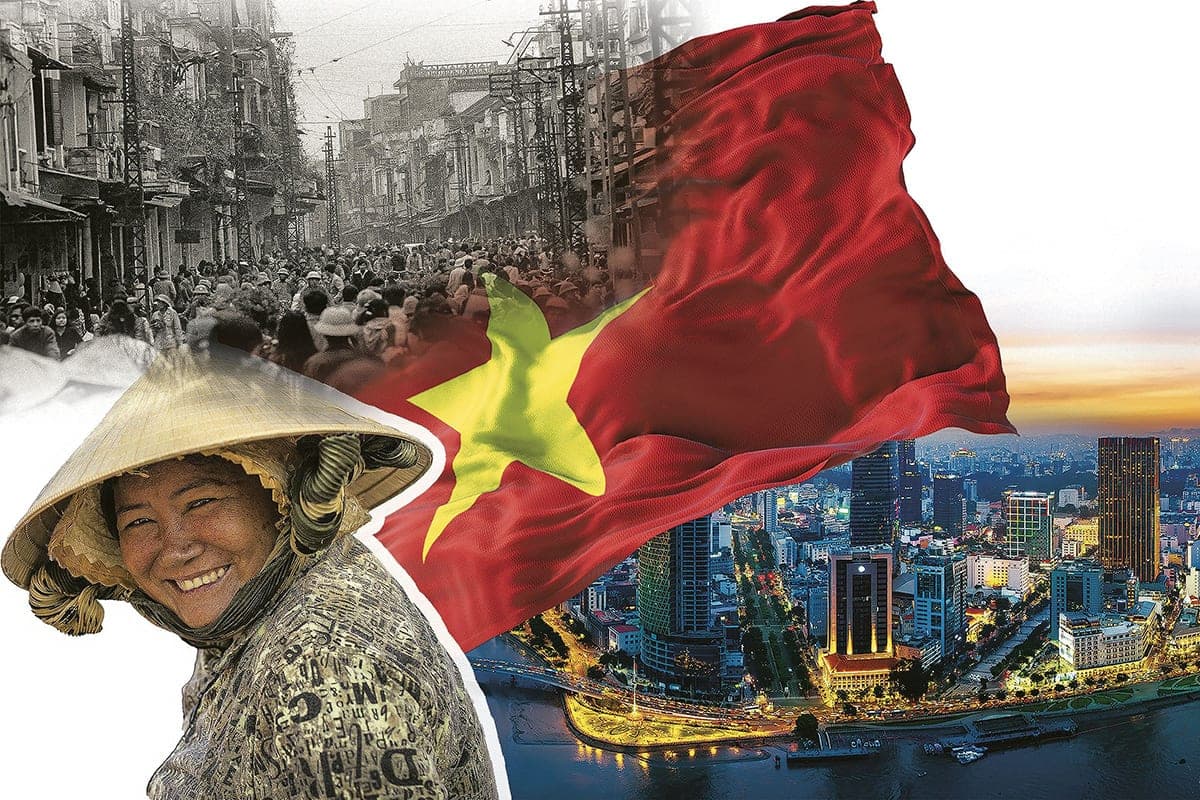
Once this country lay in ruins, barely fighting off aggression from the most powerful power on the planet. This is Vietnam, which we have long associated with war, cheap factories and streets full of bicycles and mopeds. After the war with the United States, the country was poor, isolated and almost completely destroyed. And today, the largest world companies move their factories here. The country is becoming one of the key industrial centers of Asia and is increasingly moving from cheap assembly to its own technologies. Now it has its own artificial intelligence, giant data centers, smart cities and global technology corporations. Can Vietnam become one of Asia’s new key economic and political centers?
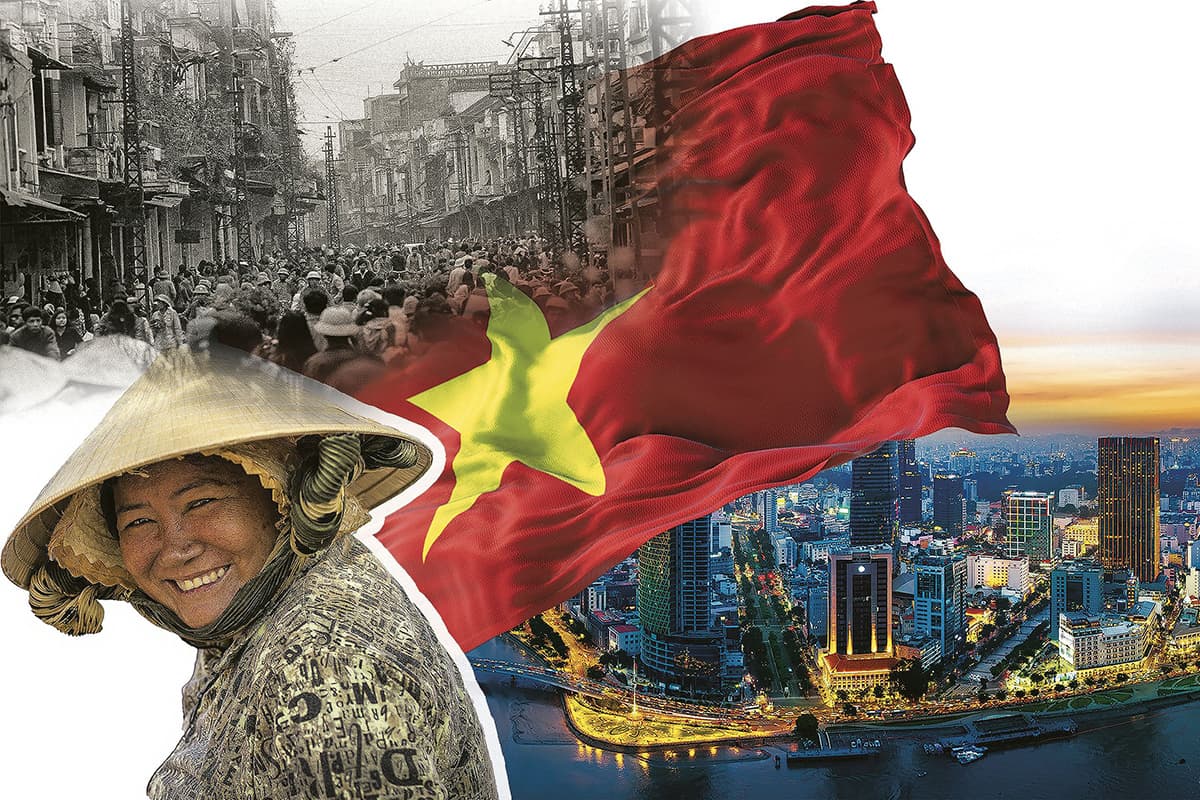
The post-war impasse of 1975, the capital of southern Vietnam, Saigon: the last American helicopters in a hurry fly off the roof of the embassy, and into the city enters the Communist tanks from the north. The southern state disappears, and after a year, the north and south will officially unite into one country. The Communists got everything they fought for for decades: no French, no Americans, no Southern regime. Vietnam is united again - this is an absolute victory. But as soon as the military smoke dissipated, an unenviable picture opened before the winners. It was not a country, but a giant construction site after the bombing. Decades of war have destroyed roads, bridges, towns and villages. Millions of people have been killed, injured or forced to flee their homes. Large areas remained mined. North and South have become accustomed to living as two different countries. In the north, the socialist economy was built for decades, and in the south, there was a market, private business and completely different rules of life. But now the country is one. The Communist leadership decides to impose a socialist model on the whole country: nationalize factories, ban private trade, drive farmers into collective farms, and transfer prices and distribution of food under the control of the government. The southern economy is beginning to crumble: entrepreneurs are winding down businesses and going into the shadows, and goods are disappearing from the shelves. The state distribution system is getting worse and ordinary people are gradually switching to the black market. In the 1980s, Vietnam finds itself in an absolute impasse: factories are without raw materials and components, food is not enough, and endless lines of cards are lined up on the streets. Moreover, Vietnam manages to get into two new wars at once. First, he sends troops into neighboring Cambodia to demolish the mad Khmer Rouge regime, and then there is a conflict with China, and yesterday’s ideological allies become enemies in the blink of an eye. By the mid-1980s, the local currency was depreciating at a catastrophic rate, and inflation soared to an insane 700% per year. Deficiency is becoming a permanent norm. But the authorities are beginning to notice that in the south, where the authorities allow businesses and peasants to step back a little from the planned economy, the result suddenly appears: production revives, goods return to the market and people begin to make some money. What was officially considered wrong worked better than what was considered the only true thing. Market mechanisms were not invented in the silence of the cabinets; they were simply suggested as the only way to make the system work. Vietnam built a victorious economy and found that it could not feed the victorious country. Therefore, strange as it may sound, it is a fact that in order to preserve socialism, Vietnam had to go to what only yesterday seemed treasonous state - to allow capitalism. The obvious is that incredible agriculture comes to life instantly, and Vietnam, from a country that was almost starving yesterday, is becoming one of the largest rice exporters in the world in a matter of years. There are private shops, small factories, foreign money. Poverty is beginning to decline at an unprecedented rate. In the end, something incredible happened: both the party saved its power and the economy revived. But now Vietnam faces a new challenge: to grow further, a poor and yesterday isolated country was no longer enough just to allow private property. They needed technology and huge investments. The biggest money and the biggest markets were, of course, in the hands of its historical enemy. But the US, as always, was pragmatic: the old adversary was now more profitable to draw into the global economy than to keep isolated. So the Americans gradually lifted the trade embargo that had strangled Vietnam for years. Then the two sides restore diplomatic relations and sign massive trade agreements, and in 2007 Vietnam became a full member of the WTO, and the unthinkable begins. U.S. corporations, once associated exclusively with war, no longer carry bombs to Vietnam, but contracts, investments, and industrial equipment. Western brands enter the country, and American supermarkets are filled with sneakers, clothes and appliances labeled Made in Vietnam.
As the country gets richer, wages inevitably rise and people’s living standards rise. But for the country's model as an assembly shop, it's a death sentence. After all, there will always be a poorer country in the world: Bangladesh, India, Africa, where the worker will agree to stand on the assembly line for less money. Yes, cheap labor has made Vietnam richer, but now, to continue its development, it must stop being cheap. And now the ruling party faces the most difficult question in modern history: how to turn someone else’s assembly shop into their own technological power? In 1986, the Congress of the Communist Party of Vietnam is convened, and the party leadership makes a historic turn, confirming the course for renewal. Of course, it was in tune with the processes that took place then in the USSR, when Secretary General Gorbachev initiated the famous perestroika. But Vietnam did not stage a political revolution, as it did after Gorbachev’s abdication in the USSR, did not demolish monuments and did not abandon the Communist Party. He just completely rewrote the rules of economic life. The peasants were given the right to manage the harvest, private business ceased to be a crime, and prices were finally allowed to float freely. But most importantly, foreign capital was allowed to enter the country for the first time. In the end, Vietnam did not abandon communist ideology for the sake of the market. Moreover, paradoxically, he organized the market to save it, and the effect was overwhelming. By the way, if the fanatical Party dogmatists of the highest rank had not prevented the Soviet Union from developing along the same path, it is still a big question which country would be the first economy in the world today.
OPINION
Vadim Gigin, Deputy of the House of Representatives of the National Assembly, Director General of the National Library:
- Where is the real pulse of the global industry today? Where are the new technological standards of humanity? These are East and Southeast Asia. The giant region has long and irrevocably ceased to be just a world factory of cheap consumer goods, turning into the main indisputable economic driver of the whole planet. Today, he has the intense attention of the entire civilized world. Trillions of investments flow here, global interests of superpowers intersect and collide. And the fact that sovereign Belarus is present in this bubbling, strategically important point not as some timid, casual beggar in the backyard, but as a long-standing, predictable and absolutely understandable partner is a direct merit of our long-term diplomatic strategy of the President. Asian capitals are well-remembered who selflessly helped them lift the shattered industry of the last century, whose highly skilled specialists built the first factories, dams and trained local engineers. This solid Soviet backlog, carefully preserved, multiplied and deeply modernized by sovereign Belarus, today opens the doors to many of the highest offices in Beijing, Hanoi, Yangon, Jakarta and beyond.
shamko@sb.by