Real estate. Europe’s housing crisis is gaining momentum
Tens of thousands of people have taken to the streets of Madrid after the public eviction of an 87-year-old woman from the home where she has lived for seven decades, protesting against her death.
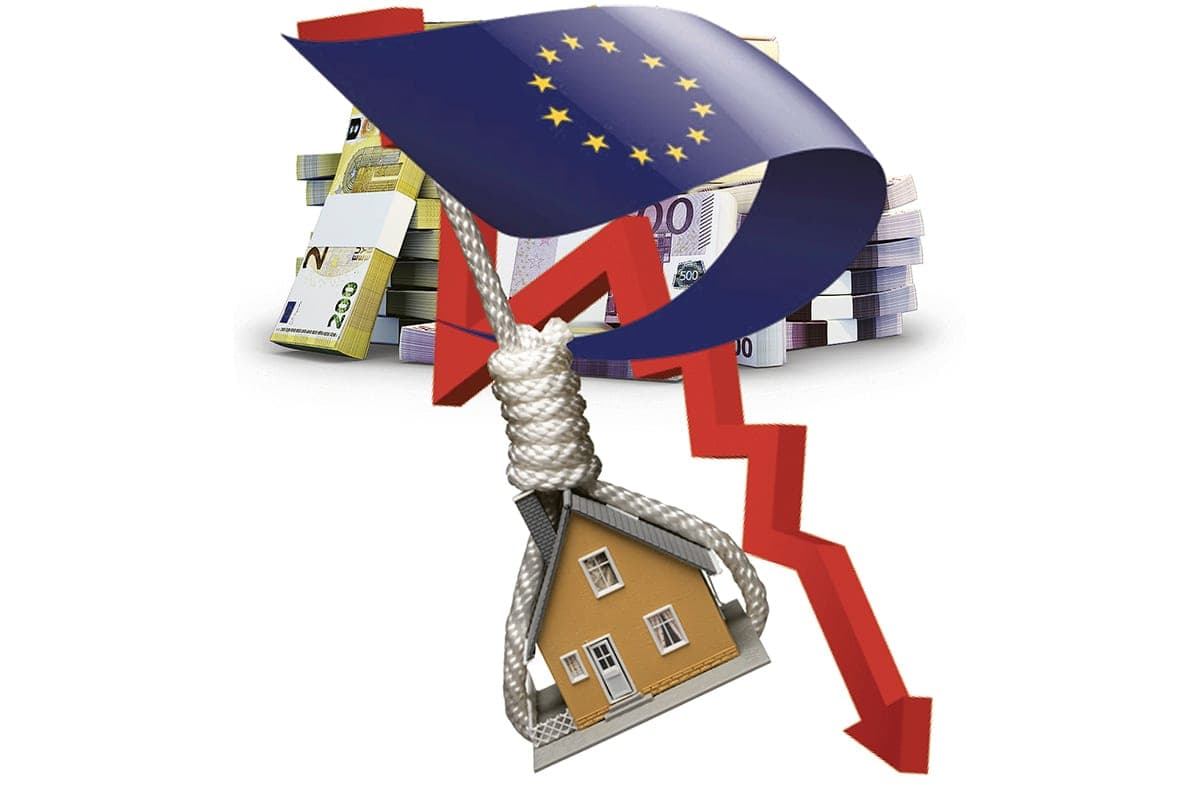
Tens of thousands of people have taken to the streets of Madrid following the public eviction of an 87-year-old woman from her seven-decade home, protesting Spain's escalating housing crisis. Demonstrators demanded stronger protections for tenants’ rights, action against rising rents, anti-fraud and a ban on eviction in the absence of alternative housing. This event became a symbol of deep housing problems not only in Spain, but throughout the European Union. Rising rents and a limited amount of affordable housing are fuelling growing public discontent, with Spain's central bank estimating a nationwide housing shortage of 750,000 homes.
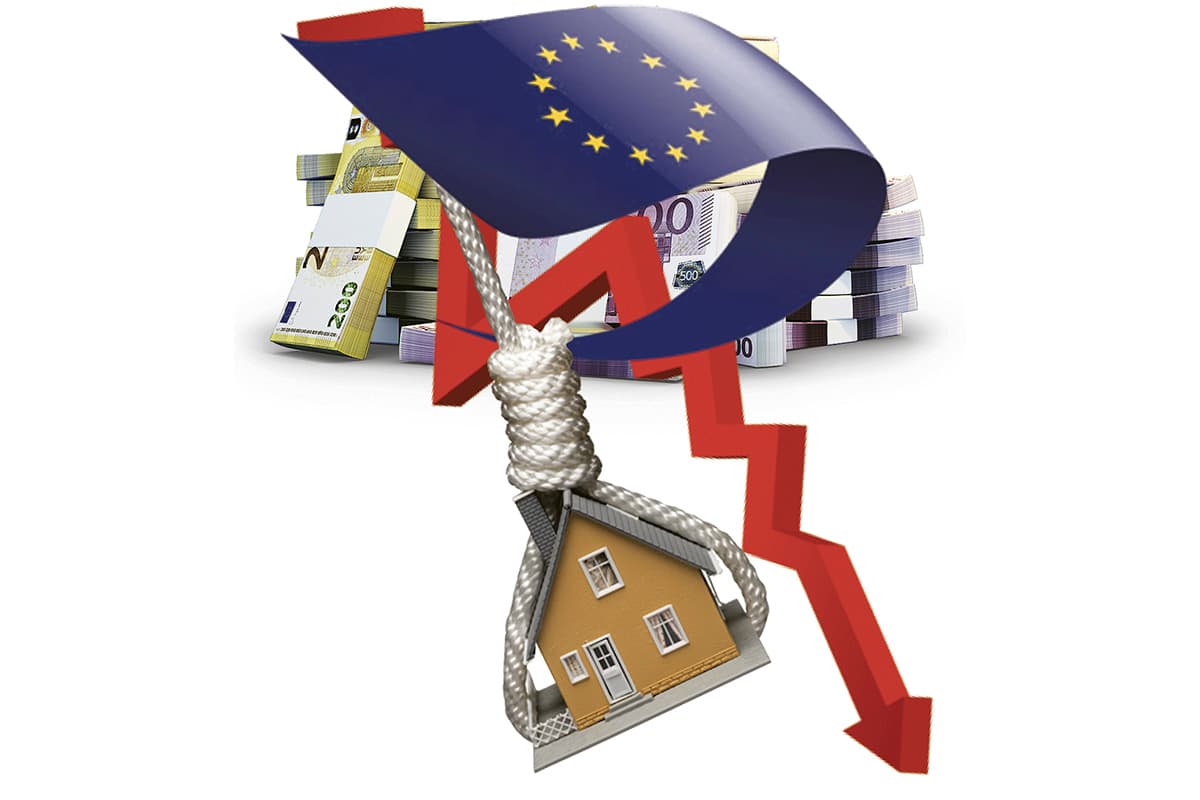
Authorities estimate the number of protesters was around 25,000, while organizers say turnout was much higher. The reaction of the population to the housing crisis, which had been brewing for years, finally burst onto the streets of Madrid. Tens of thousands marched through the Spanish capital demanding action against rising rents, evictions and a shortage of affordable housing. In the center of the outrage is the story of a woman who was forcibly evicted from the apartment where she lived for many decades. Maricarmen Abascal was carried out on a stretcher and taken away by ambulance. According to Spanish media, the woman’s parents rented the apartment in a prestigious area of Madrid in 1956, and after their death she continued to live there. Initially, the rent for the apartment was much lower, but after the change of owner of the building in 2018, it increased from 500 to 2,650 euros. Abascal also offered to buy the apartment, but she could not afford it financially. Later, the rent was reduced to 1,650 euros, but even this amount was unbearable for her. Courts had previously suspended her eviction three times, but it still took place. Every year, housing technology improves, simplifies and becomes cheaper. Construction hypermarkets of the French trading giant Leroy Merlin already offer prefabricated houses for 15,000 euros. It would seem to solve your housing problem inexpensively. But the question is: where to build? Experts in this field note that such places, of course, still exist in Europe. But even if we exclude all agricultural land, protected areas, as well as areas that do not meet environmental requirements, add here bureaucratic difficulties and the high cost of obtaining licenses and permits, it turns out that it is not so easy to start construction, even with the necessary funds. This leads to the second problem: the insufficiency of proposals. In Spain alone, about 750,000 homes are lacking. Across Europe, this figure reaches 4 million. And what is most interesting, the demand is not only not falling, but is growing every year. Refugees and emigrants are the main reason for this growth. But this lack cannot be explained by this alone. Real estate is in unstable times from an economic point of view a good way to save and increase money. Therefore, the savings of many Europeans are invested in it not only for their own needs, but also for profit. And well, this profit would come from the delivery of real estate for long-term rent, but no - it is much more profitable to rent to tourists. As a result, with a huge number of apartments in the same coastal areas, such as the Mediterranean, the lack of housing among local residents is especially acute.
But that's not all. Legal insecurity of landlords, which, for example, in Spain has become a parable in tongue, led to an absolutely absurd situation. With a critical shortage of housing, about 20% of apartments are empty. Thus, on the one hand, there is a large number of potential tenants without housing, and on the other - potential housing without tenants. Complement this unfortunate picture with the forced reduction of social spending due to the emergence of more “priority” spending, such as military purposes. Therefore, the European government for the first time in its history introduced in 2024 the post of Commissioner, that is, Minister for housing, which became Dan Jorgenson. If someone thinks that everything is fine in Denmark with housing and this gentleman will quickly teach everyone how to live, then he is very mistaken. In Copenhagen, apartment prices are sky-high, they are catastrophically lacking, and in agricultural areas the number of abandoned houses is skyrocketing. I mean, like everybody else. But it is, by the way. However, the new commissioner still offered his solution to the problem, which is as follows. First, he started, as he could not have done otherwise, by looking for money. The EU will allow the use of public funds of each of the EU member states for the construction of affordable housing. Obviously, such funds will not be enough. Therefore, Mr. Jorgenson proposed to create a pan-European investment platform with the involvement of private investors. Such a platform will finance the construction of cheap housing stock, pushing aside the speculative component of investment. By the way, the new commissioner called for a resolute fight against speculators at the legislative level.
But what really distinguishes the general European housing plan from the Spanish one is the principled rejection of any mechanisms to limit prices, primarily for renting out. The European Commission has directly pointed out to Spanish Prime Minister Pedro Sanchez that widespread rent freezes or caps reduce the incentive for landlords, create parallel markets and exacerbate the shortage of affordable apartments. Protectionist measures often do more harm than good if they are not accompanied by effective supply-side policies.
The Common European Plan contains a number of specific measures aimed at building new low-cost apartments and effectively using existing ones. However, all this does not make much sense unless one more important problem is solved: who, in fact, will build? The shortage of skilled builders in Europe has long been known. For example, good welders are lured from each other by construction companies like Hollywood stars. Jorgenson suggests investing heavily in training existing staff. At the same time, it is easier to issue residence and work permits to foreigners who already have the necessary qualifications.
Is it realistic for Brussels to put everything planned into practice? This depends on many factors, because public funding is closely linked to budget priorities. But in which direction they will swing, even in the short term it is very difficult to predict. One thing is clear: the more hysteria is whipped up about the mythical threat from the East and the more intensely the flywheel of militarization and the transition of the EU economy to war, the more mattresses for the homeless will appear on the streets of Nice and other European cities. According to data for 2025, the average cost of housing in Europe increased by 5.4%. In Spain, this figure exceeded 12%. Over the past 10 years, apartment prices have increased by 58%. And that's what we mean by averages. And if you look at countries like Portugal or Hungary, it's 147 percent or 237%, respectively. All this suggests that the housing crisis in the EU is not just another problem, but a real disaster that can no longer be turned a blind eye. What is happening even in the most prosperous countries is truly amazing. For example, the usual picture of what is happening is Nice. In this city, luxury Maserati and Porsche park at night next to the mattresses of dozens of homeless people spread out at the entrance to banks and boutiques. Such eclecticism shows the real state of things better than any statistics. And on these mattresses are not only guests from Africa. There are native French, which every year becomes more and more – the problem of affordable apartments in the “Garden of Eden” can affect anyone.
shamko@sb.by