Aida Kaumenova: “The main thing is that I managed to remain myself”
Supporting local talent is not just sponsoring individual events
- What entrepreneurial decision was the most important for the brand not only to survive, but also to develop for twenty years?
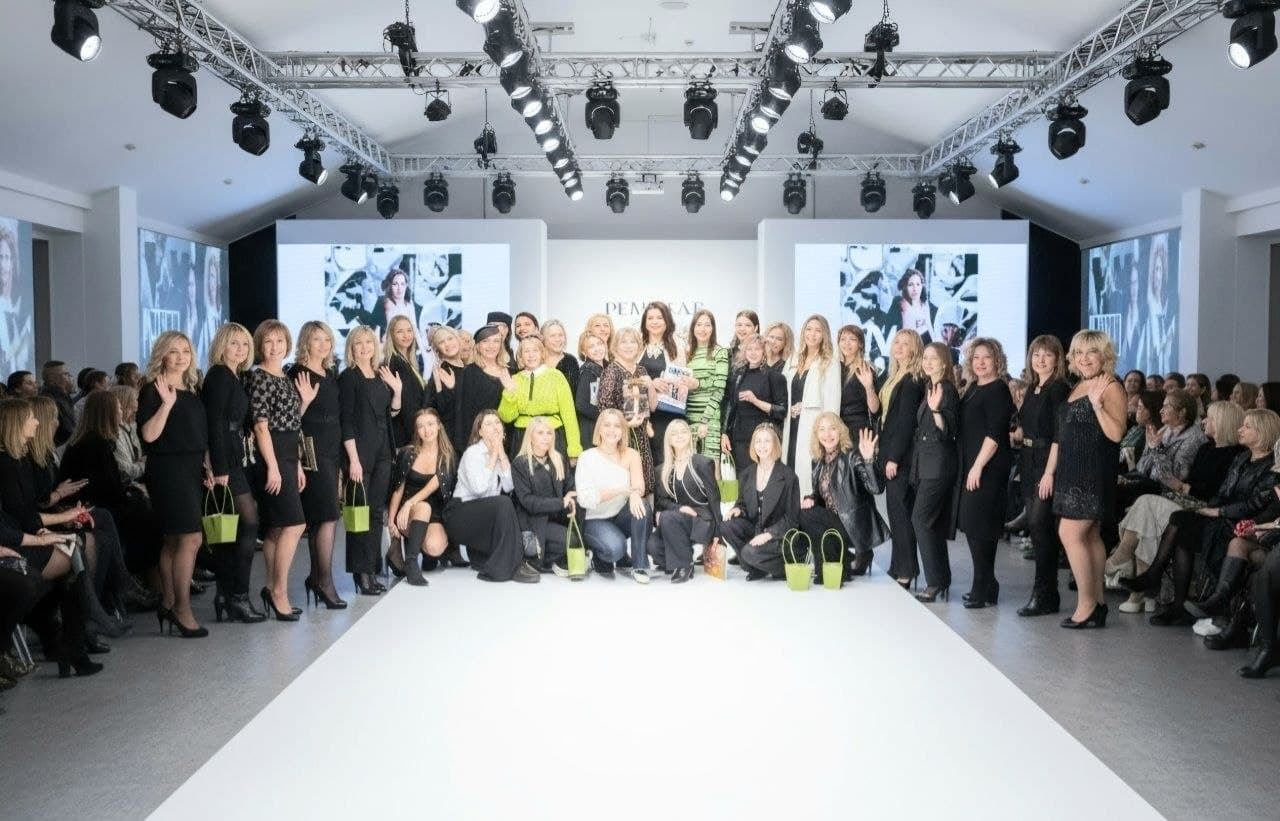
- I believe that the most important decision is to understand in time that a brand cannot rely solely on the talent of one designer. Sustainable development requires a system, a strong team and competent delegation. Everyone should do what they are really professional at. At the same time, it is important to constantly monitor the changes in the market, feel the trends and not be afraid of responsibility. In our history, there were very serious projects: in 2008, we created sports uniforms for Kazakhstani athletes for the Beijing Olympics, worked on uniforms for the National Security Committee. Over the past twenty years, we have regularly presented our collections at Kazakhstan Fashion Week twice a year. It is the combination of creative courage, discipline and team that has allowed us to grow.
- At what point did you feel like your company had become a brand?
Probably when I started noticing that people would recognize our products on the street. When the brand appeared not just an audience of customers, but a real emotional connection with people. This is a very important indicator for me. You can invest a lot in promotion and make a name recognizable, but people’s love and trust cannot be bought – they can only be earned. It was then that I realized that Aida KaumeNOVA had become more than just a designer’s name.
- What prevents Kazakh fashion from becoming a full-fledged export industry?
- First of all, we need to strengthen our position in our own market. Kazakhstan is traditionally associated with raw materials industries, and fashion is not yet perceived as an independent export destination. In Europe, the fashion industry has entire systems of production, promotion and international distribution. I have been presenting collections abroad for about ten years. Such shows give attention, new acquaintances, projects and orders. But participation in an international show and a steady presence in overseas retail are completely different things. We operate in the segment prêt-à-porter de luxe, and in terms of quality our products are able to compete with the products of famous European houses. At the same time, we have to take into account purchasing power within the country, so we cannot simply transfer the European price level to our products. For Kazakhstani fashion to become an export industry, we need systematic production support, access to international sales channels and long-term promotion.
- What has changed most in your twenty years of work?
- The most important thing is that I managed to stay myself. Of course, over the course of twenty years, I have grown older, wiser, and learned to look more calmly and objectively at many things, sometimes even from the outside. But my love for the profession remained the same. Despite the fact that we have a large professional team, I still personally participate in the creation of each collection. It is important for me to work on images, attend special fittings, create costumes for artists and theater productions. I love this creative part of my life. Perhaps the most important result of twenty years was that I learned to develop without losing myself.
- When does a national aesthetic cease to be a quote from a traditional costume and become a modern fashion?
- I’ve always thought of myself as a reformist designer. Twenty years ago, I wanted to show that national identity can live not only in historical costumes or on stage, but also in modern, everyday clothes. I felt that there was already a need for people to connect with their roots through beautiful fashion, but there was almost no such offer on the market. For me, the boundary is where the national element ceases to be perceived as a costume quote and becomes a natural part of life today. I didn’t want to take a woman back to the past. I wanted her to walk confidently into the future, keeping in touch with her roots.
- How does the international audience perceive Kazakh fashion as exotic or as an independent aesthetic?
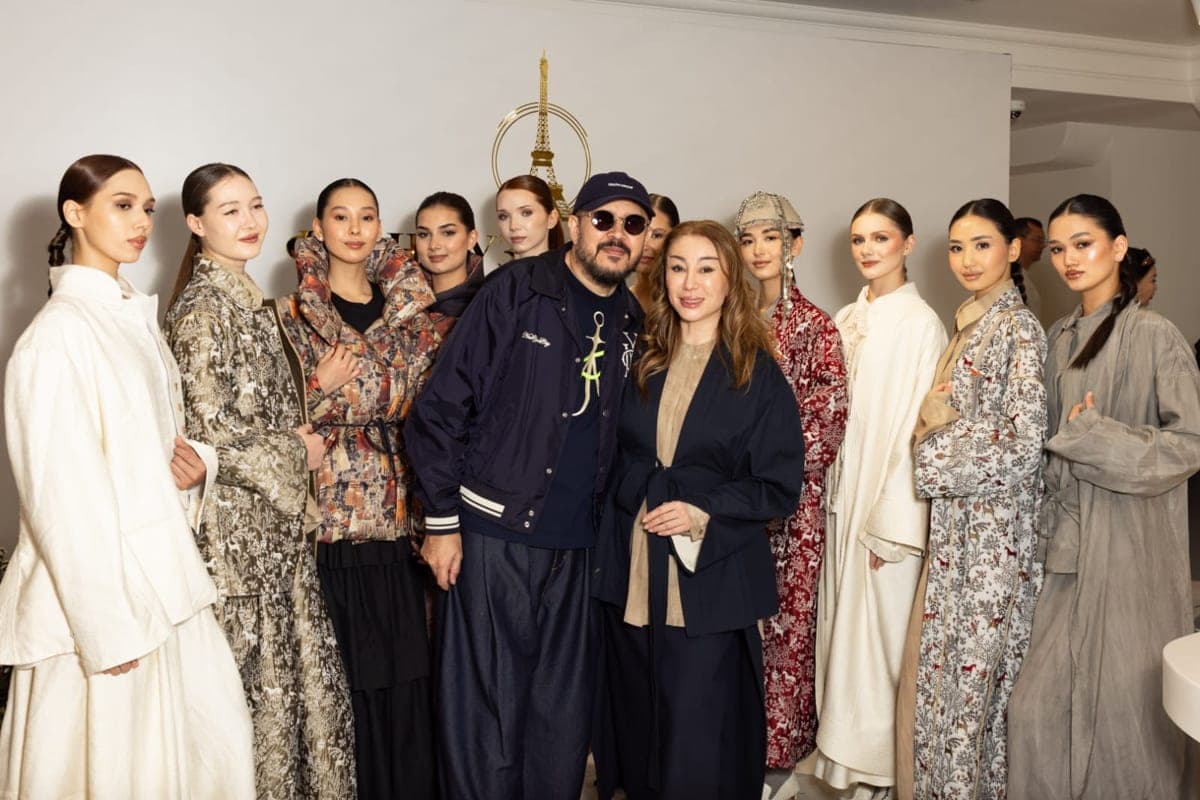
- World fashion constantly appeals to the cultures of different countries: in different periods we have seen a strong influence of Japanese, Scottish and other aesthetics. Today, there is a particularly noticeable interest in Asian motifs, and I think this coincided with the moment when Kazakhstani designers became much more confident to enter the international scene. Our recent show in Milan once again showed that modern Kazakh aesthetics is interesting in itself - through silhouettes, author's fabrics, symbols and philosophy. Often products find buyers during foreign presentations. But my goal as an entrepreneur is broader: not just to show collections abroad, but to build a permanent presence in international retail. I would love to see our products one day at Harrods in London.
- How do you assess the interest of foreign audiences in Kazakhstani fashion and prospects for entering the international market?
International interest in Kazakh fashion is growing. I see this at our shows abroad, including the recent show in Milan. Today, world fashion is increasingly turning to Asian aesthetics, and we can offer it our own modern language – our silhouettes, author’s fabrics, cultural symbols. At the same time, it is important for me not just to show the collection abroad and get the first orders, but to build a stable presence of the brand in the international market. This is the next stage of our development.
- Why is the collaboration between the Aida KaumeNOVA brand, the French House and the Nomad Century Museum happening now?
- The French House is a special place for me. Growing up in Almaty, I remember how important it was for the city: it was here that many people got acquainted with European brands, beautiful fragrances, cosmetics and a special culture of quality. This year, the French House is 33 years old and our brand is 20 years old. And I think it's very symbolic that we've come together right now. For me, it is also a recognition that a Kazakh brand with its own national identity and high quality can organically coexist with European homes. I like to imagine that we have brought to this space the subtle aroma of wormwood from the Kazakh steppe - a special character and a new cultural note among European luxury. And the exhibits of the Nomad Century Museum help to further emphasize the brightness of the national image.
- What does the French House buyer get from Aida KaumeNOVA?
- First of all – the opportunity to assemble a truly individual wardrobe in one space. The buyer, who is used to the quality of well-known world brands, can now supplement his image with a product with a Kazakh national identity, without abandoning the usual level of performance. Our clothes are perfectly combined with European clothes: they do not argue with it, but add character and cultural accent. I like that the national aesthetic becomes not a separate occasion for dress, but a natural part of modern style.
- Why did you decide to present the collection in the French House, and not only in your own boutique?
- For me, it's not a choice between my own boutique and another space. This is an opportunity to expand the presence of the brand and introduce it to a new audience. The French House is a place I have known and loved for many years. There is a culture of quality European things. I am interested that next to them the buyer will see modern Kazakh design of the same high level. Our champagnes and other products are organically combined with the European wardrobe, and the collaboration itself allows the two aesthetics to enhance each other.
- How did you determine which items of Aida KaumeNOVA can coexist with the international brands of the French House without getting lost in their background?
- First of all, of course, these are our chapels. I believe that today the champagne has long gone beyond exclusively national costume and has become a full-fledged element of modern wardrobe. In recent years, it has so organically fit into the everyday fashion of Kazakhstanis that today I can safely call it a basic thing that should be present in the wardrobe of everyone who values style and their own identity. Chapan is an amazingly versatile product. It can look solemn and luxurious, but it is perfectly combined with modern clothes: classic pants, jeans, dresses and products of famous European brands. That is why it was quite natural for me to imagine champagnes in the space of the House of France. They are not lost on the background of international brands, but, on the contrary, give the image a special character, individuality and that very national highlight. In my opinion, modern luxury lies not only in the famous name on the label, but also in the ability to express your individuality through clothes. Chapan today is not just a tribute to tradition, but a modern classic with the Kazakh soul.
- How can Aida KaumeNOVA be of interest to the French House? What, in your opinion, does the retailer get from the emergence of the Kazakh brand?
- I believe that no matter how successful and recognizable a brand is, it always strives to develop, expand its audience and strengthen its position in the market. French House is a company with a long history, a strong reputation and an established audience. But even such successful companies always have room for new ideas and opportunities. This is where I see the value of our collaboration. Fashion house Aida KaumeNOVA brings to the French House a new aesthetic direction, a fresh trend in which modern fashion harmoniously combines with the Kazakh national identity. This is not just an expansion of the range. This is a new visual sound, a new aesthetic that enriches the existing space of European luxury and makes it even more interesting and multifaceted. Thanks to this cooperation, the French House has the opportunity to attract the attention of an additional audience – people who are close to the national culture, who value identity, individuality and a modern view of traditions. And our regular customers, in turn, discover new opportunities and new brands. I am convinced that the right collaboration is always built on the principle of win-win, when both sides not only complement each other, but together become stronger. We bring together two aesthetics, two audiences, two stories, and thereby expand our influence and create new points of attraction for customers. For me, this is the philosophy of modern partnership: not to compete for attention, but to combine your strengths, create new value and move forward together.
- You work in a segment where clothing costs significantly more than the mass market. What is the customer willing to pay a Kazakhstani designer for today – for name, design, fabric, handmade, idea or national component?
- Clothing has always been a way of expressing yourself. Through it, a person broadcasts his character, status, outlook and attitude to life. Choosing a Kazakh designer, he gets something more - the opportunity to express his belonging to the culture of his country, to become part of its modern history. There is a lot of work behind each of our products: author’s design, quality fabrics, thoughtful design and, of course, national identity. All this creates a special value of the product. But I wouldn't agree that designer clothes have to be unaffordable. We consciously develop several product lines - from basic and more mass products to exclusive models. For example, you can buy a T-shirt for 28 thousand tenge or a jacket for 190 thousand tenge. At the same time, there are unique products, the cost of which is determined by the complexity of execution and the volume of manual work. Thus, we enable people with different financial capabilities to become part of the aesthetics of our brand. The most important thing that our customers pay for is quality. For me, this is a matter of principle. Today, there are many brands on the market, including relatively young ones, which set prices much higher than ours. But over the course of twenty years, I’ve learned to look at pricing not only through the eyes of a designer, but also through the eyes of an entrepreneur who understands the real possibilities of their customer. At the same time, it is important to understand that the cost of each product is a full-fledged production: taxes, salaries of employees, mandatory deductions, credit obligations, the purchase of fabrics and accessories abroad. All this forms a cost below which it is impossible to fall without compromising the quality and sustainability of the business. Therefore, I always strive to find a reasonable balance between the high value of the product and its availability. For me, real luxury is not an inflated price, but the quality, aesthetics and meaning that a person gets for his money.
- How much has your customer changed in the last 10-15 years?
- Over the years, the attitude to clothing with a national identity has changed significantly. When we started, I wanted to show that national motifs can be part of modern day fashion, not just holiday costumes. Today, champagne has become a familiar and very harmonious element of the wardrobe: it is worn with jeans, pants, dresses, combined with products of international brands. I see this as an important change: the consumer is more and more confident in expressing his identity and connection with culture through clothing. Quality remains crucial for our customers.
- What is the main problem of the Kazakh designer today: production, fabrics, personnel, financing, sales, marketing or the lack of a full-fledged domestic market?
- I wouldn’t say that designers have one problem. In any business, there are always issues that need to be addressed. The fashion industry is no exception here. Of course, there are difficulties with production, personnel, financing. But I believe that a lot depends on how well the entrepreneur is able to build their system of work. Over the past twenty years, I have learned one important thing: Business sustainability is not determined by the absence of problems, but by the ability to solve them professionally. Today we have already formed a strong team, work processes have been built. And this allows us to move forward confidently, despite the difficulties that inevitably arise in any business.
- What kind of specialists are currently lacking in Kazakhstani fashion?
- First of all, these are specialists of a narrow profile: designers, technologists, professional tailors. There is a certain paradox here. On the one hand, there are really few good specialists. On the other hand, the fashion industry market itself is not yet large enough to provide them with the same variety of jobs as, for example, lawyers or financiers. As a result, there is a shortage of personnel, especially when it comes to high-level specialists. But I want to note that over the past twenty years we have managed to form a professional and stable team. People are willing to work with us because they know our reputation. We always strive to build honest, transparent and legally competent relations with employees and partners, to fulfill our obligations. I am convinced that the reputation of the employer is as valuable a capital as the reputation of the brand itself. And in the long run, it helps to attract and retain strong professionals.
- How serious is copying design ideas and protecting intellectual property?
- For me, this topic is very relevant, because we personally faced a massive copying of our author's prints. I admit, at first it even made me laugh. I thought, ‘Wow, you could copy Chanel and you could copy Aida KaumeNOVA!’ To some extent, it even seemed like a kind of recognition of our success. But when copying began to acquire a mass character, and our author's designs began to reproduce and sell, devaluing the work of designers, I realized that it is impossible to treat this with humor. We got lawyers involved and started tracking these cases systematically. Our copyright prints are legally protected and we take intellectual property matters very seriously. After all, behind every drawing, every fabric, every design decision is intellectual and creative work. This work must be respected and protected. I believe that for the development of Kazakhstan’s fashion industry, it is very important to form a culture of respect for authorship. You can be inspired, but it is unacceptable to appropriate other people’s ideas.
- What advice do you keep following after all these years?
- My father gave me the most important advice many years ago when he helped me decide on my career. Today, after twenty years in the fashion industry, I think of it with great gratitude. My dad is a real strategist. He was able to look far ahead, to see perspective where others might not have seen it. And today I understand how fateful his participation in my professional choice was. Sometimes one wise piece of advice, given on time, can determine the direction of your life. I am eternally grateful to my father for helping me find the work that I have devoted so many years to and that I still truly love.