From “Difficult childhood” to “Marmelazka”: the widow Pristavina told about the unknown debut of the writer
October 17 marks 95 years since the birth of the writer, public figure, laureate of the USSR State Prize Anatoly Pristavin (1931-2008)
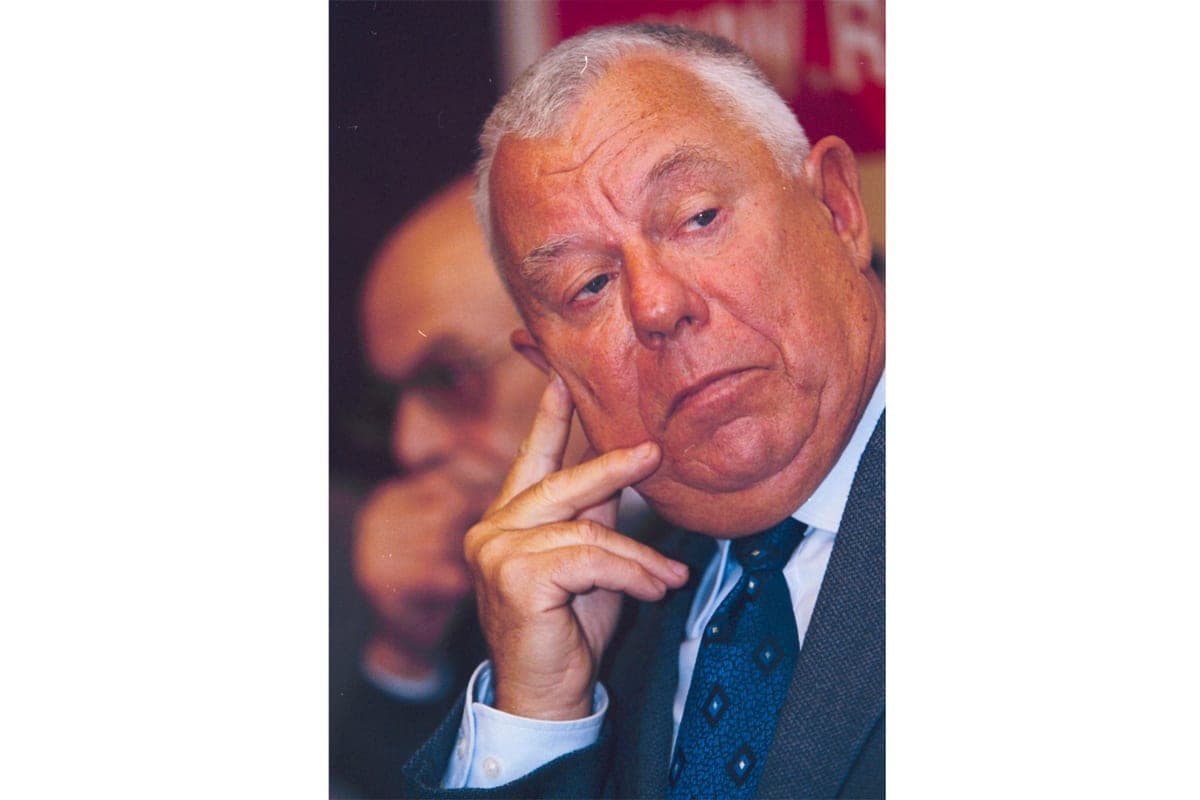
It is difficult for a modern reader to imagine what it meant to be published in a magazine with a circulation of 400 thousand copies during the years of Khrushchev’s “thaw”. This is the case when the young writer had the right to expect “to wake up famous”, but in the case of Anatoly Pristavny led to national fame “the second debut” – already perestroika. And it took place not in "Youth", the circulation of which reached in the era of Gorbachev space three million, and in the "Banner", each number of which was printed in the amount of no more than half a million pieces (on the Network there is another figure - 280 thousand). Nevertheless, the story “The Golden Cloud Night” immediately fell into the stream of re-releases, translations and film adaptations, in parallel with this, readers discovered the “rest of the Pristen”, so that he immediately received worldwide fame.
And it all began with a few pages of the magazine for Soviet youth, the issues of which for 1958 and 1959 and the current edition, and network "pirates" were only partially digitized. And since the authors of reporting and anniversary articles and posts in social networks dedicated to Pristavin are lazy to go to the library, in dozens of publications, including respected federal media, it was claimed that the young prose writer published a series of stories “War Childhood” in “Youth” for June 1958.
In fact, it all happened exactly one year later, and the name was different - "Hard Childhood." In the biographical notice to the cycle of “little stories” it was reported that their author “since ten years lived in an orphanage.” From fifteen he began to work as a student of a technician. Without interruption he graduated from the evening aviation college. From 1954 to 1956 he served in the army. In the orphanage, Anatoly began to write poetry. Since 1951, they began to appear in the district press. In 1954, Anatoly Pristavin entered the Gorky Literary Institute. He has been writing stories recently. Printing for the first time.
We ask Marina Yurievna: is it possible to guess from these piercing miniatures about the inhabitants of an orphanage, losing their fathers on the fronts of the Winter War and the Second World War, robbed by a fat manager and warmed up by railway chiefs “in order”, that their author is a future great master?
- Absolutely. Valentin Kataev, then the chief editor of “Youth”, called them “small masterpieces of Pristavina”, publicly speaking, it seems, at the Congress.
— Anatoly Ignatievich was married twice, so please help me to understand the chronology: what exactly was created and printed with you, what text can you say — we saw it, and we found it?
- When we accidentally met in the House of creativity of Dubulti near Jurmala, I did not know that there is such a writer Pristavin, although I worked in a major Soviet publishing house, near the Kremlin. He has been divorced for ten years and in literature for many decades; therefore, “The Soldier and the Boy”, the story “Seliger Seligerovich”, “Bird”, the novel “The Town” – this is before. It was published little, it was vilified for friendship with dissidents, but the samples of prose I have named are beautiful: they show the Writer.
But he had little time for literature classes: he worked all the time either as an electrician, then as a janitor, or as a bomber to support his family. Everything else was later: we married, raised our daughter Masha, but also helped his older children, with his daughter Daria went to Koktebel in the summer. I even once sold my grandmother's jewelry to pay Dasha for tutors. When his son was married, he helped his grandchildren. They came to visit with their mother - ironically also Marina. And the prefix, too.
As for the books, the first one I read was "Block ..." in the manuscript: I reprinted it on the typewriter "Erica" after the banner edits. Reprinted at night, working in the daytime publishing.
When I was written on a great creative upsurge “Cukushata, or Complaint Song to Calm the Heart” – this story was translated by Nabokov’s granddaughter Antoinet Rubish and published in France, as well as in a German translation in Germany. Next – “My faraway carriage”, “Ryazanka”, “Quiet Baltic”, “Drunk Heart Syndrome”, fairy tales (many different), “The first day is the last day of creation” (a documentary story about the war). And most importantly – “King Montpensier Marmelage the First”. Last novel.
It's not a fairy tale. Not a military childhood. There is a novel in the novel, the story of the fugitive deacon Kotoshihin, whose skeleton is exhibited at the university in Sweden, and the story of the modern writer Sokolov; there is the House of Creativity in Koktebel, and the love story ... What a joy that he managed to finish this novel, but I was already preparing for publication. “Ryazanka”, by the way, was released in Sweden, and fairy tales – in Germany, where they were waiting for success.
A couple of days ago, at the awarding of Sergey Shargunov “Yasnaya Polyana” for the novel “Popovich”, the issue of the non-identity of the author as a biographical person and the author as the creator of a work of art was again discussed. If “Blue ...” is an autobiographical story, how much fiction is in it, and how much life truth?
“Cloud...” is pure artistic prose. It is based on the suffering experienced during the evacuation of the orphanage to Chechnya. But there was no twin brother in reality - there was a friend. But the above-named “The first day is the last day of creation” is written about itself: there everything is in the first person and documented. In particular, how Anatoly met the Victory.
- After our first conversation, on the 90th anniversary of Pristavin, you sent me a weighty volume of his letters, diaries and memoirs. Like probably thousands of other readers, I first read Pristavin’s poems in it, and not the early ones, but the late ones
The poems included in the collection were written in 2005.
- What do you know about those who first appeared in the local press? Have you seen newspaper clippings, or perhaps Anatoly Ignatievich read or quoted them by heart?
- He never mentioned poetry, never read it, never kept it in an archive. I guess he thought it was bad. New poems were written by him and immediately removed in the folder "Everything that is dear to me" - therefore they survived.
- In the first edition of selected folder materials, you vowed to print these poems someday. It turns out that since they entered the second edition..
- Yeah, you're right, you broke your vow. But only in part. I have never given it to other publishers or included it in other books. And here's a reissue of the same. It would be sad to take something away.
- What is the difference between the 2009 and 2020 versions of “All that is dear to me”?
- The collections are no different. Only the text of "Dedications." Imagine that Anatoly was right when he wrote that some people who were friends would start writing and doing nasty things. So some of them had to be removed. One wrote a rare nastiness just to hypane on the name, the other stole our money... It's a matter of life.
- The 90th anniversary is over, we are on the equator, the 100th anniversary is coming - is it possible to hope that the monument to Pristavets in Russia (or abroad, regardless) will still be?
- You know, colleagues looked obliquely at Anatoly during his lifetime: successful, young wife, harchi Kremlin ... The truth here is only about his wife: the harch was not seen, the work in the Commission on pardon under the President of the Russian Federation was public. I don’t know who would be bothered with the monument.
And from the state, too, the look was a little oblique: who needs it with his mercy, sits, forgives rapists (not true!), and the people crave the death penalty. We buried him at our own expense, and many thought that it was a state funeral. Nobody believed that I myself paid for everything on Troekurovsky: the plot, the stone, the wake. However, a close friend of Anatoly, the military, sent an honor guard, which touched me very much.
But you say monument. The street in Ingushetia was named, yes, thanks to the then President of the Republic Murat Zyazikov.
- And what ended the plans to install a memorial plaque in Grozny?
- I don’t know about Chechnya, I don’t know (although the plot of “Tuchka...” is the subject of deportation of the Ingush and Chechen peoples). - I.V.
- All right, but in a small homeland in Lyubertsy, are there so many famous countrymen among the townspeople that they can forget about Pristavny?
- The house of Pope Anatoly near Moscow has long rotted, his sister has died. It seems that in one of the libraries in Lyubertsy made a stand
- Not much, to be honest. In this case, Anatoly Pristavin continues to live in his books – this is the most reliable form of posthumous existence. And film adaptations.
- In Moldova, there were young guys who wanted to make a film based on the story “My Car is far away”. They wrote me a heartfelt letter. The former republic is drowning in Russophobia, and there are real heroes.
- In the most voluminous published collection of works by Pristavin - five volumes. Do you expect the canon to expand in the coming years? Is an eight-volume, ten-volume, possible.
Anatoly was a very modest man. Once he told me that he would not like any meeting: they say that he is not Chekhov and Dostoevsky. But I have a different opinion, so I have prepared a five-volume book. I asked Igor Volgin to write a preface; my editor was amazing, Tatiana Chursina, if it wasn’t for her, it wouldn’t have worked out. Again, you won’t believe it, but I swear that not only did I not receive the fee, but I also gave a huge sum (the car sold) to save the project.
As for the most complete collection of works, my answer is: no, even if they were persistently offered. A book of chosen prose is the best option these days. The only thing that oppresses me: then the rights to “Marmelage...” were not yet free, and this novel did not enter the collection. Then I released it with my foreword, but still my soul hurt. For the anniversary, I was preparing a reissue of the paper version of the last novel and fairy tales, but everything fell through. Not fate, then.
Instead of an afterword
On November 22, 1997, Pristavin published on our pages the polemical material “Did Ivan Bunin Know About Anatoly Chubais?”, which almost thirty years later should be considered exclusively as a historical document. But something else is important: in fragments from diaries published after the writer’s death, entitled “A kind man sometimes seems stupid,” Anatoly Ignatievich spoke very complimentary about the “MK”. Writing an article “in defense of Chubais” because “these TV faces, especially the Communists, sobbed,” Pristavin called Izvestia in November 97. The then editor-in-chief Vasily Zakharko became (quoted) "something to say about the editorial board in three days, about a large volume ..." I immediately moved to Komsomolets. Anechka Kovaleva showed Gusev (Paul Nikolaevich, editor-in-chief of MK). - I.V.) right in the corridor, and from the wheels went to the room.”.
The default was eight months away, but Pristavin believed that only Chubais “could save Russia,” believing that everyone around him was as honest as himself. But most importantly, he defended, by his own admission, the country and our common future.
The foundation for a critical attitude to the Soviet past for Pristavin was the words of Ivan Bunin, uttered in 1924 before compatriots-emigrants in Paris. The writer then said that before the revolution "there was Russia, there was a great house, razed of all scarcity, inhabited by a huge and in every sense powerful family, created by the blessed works of many, many generations, sanctified by worship, the memory of the past and all that is called cult and culture." It was. But a new formation of brigands who had been in Russia “for a long time” came, “shatuns, rebels against everyone and everything, sowers of all falsehoods, unrealizable hopes and swarms” (this is already an excerpt from “Cursed Days”) and staged a “Russian revolt” with the resulting “unheard-of fratricide”.
The man who could prevent a repetition of 1917 in 1997, Pristavin saw Chubais. But archival articles need to be able to read, in vain in decades. And then the ray of attention, distracted from the moment, falls on another quoted Bunin quote - about the rulers of the past, among whom were saints, and "builders of a high, albeit rigid fortress" (that is, quite authoritarian leaders). Both the first and the second were entitled to fight - according to Pristavyn - "with all sedition and bloody disorder." The thought is the most that neither is Russian, sane, consonant with the formulas of the state system given to us by Pushkin, Gogol and other writers, among whom Anatoly Pristavin took his place.
The widow of the writer Marina Yurievna Pristavina, by the way, recalls: when Boris Yeltsin died, and the first president was buried in the Cathedral of Christ the Savior, to her husband, already seriously ill, but continued to work hard, came television with questions: what, they say, Boris Nikolaevich did well for Russia. He replied, “I have chosen a successor.” And what