Memory and spiritual search
This project is a study of how artists of different generations turned to the invisible: memory, faith, ritual and finding a connection with what was forced out of everyday life of the XX century
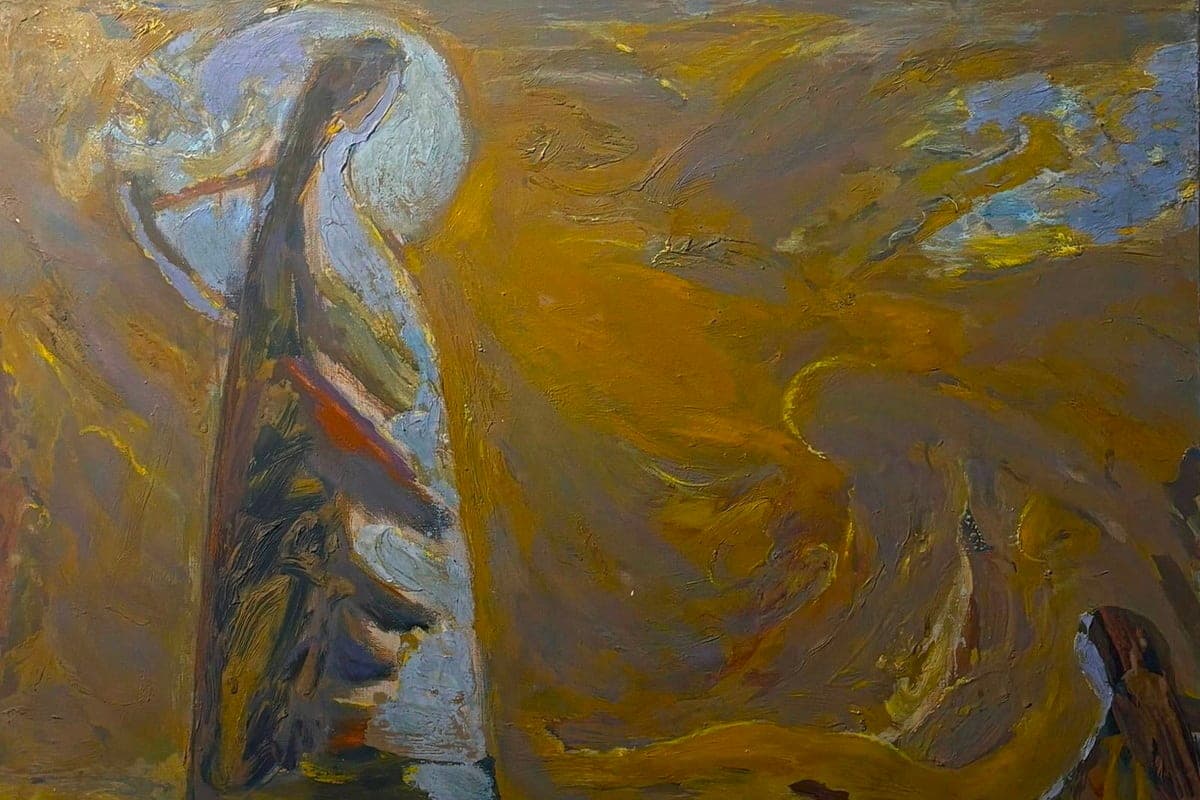
The exhibition is based on the appeal to Sufi practices, shamanic traditions and other forms of spiritual knowledge that have existed in the culture of Central Asia for centuries. For contemporary artists, this appeal is not so much an attempt to restore a lost past as a way to ask questions about one’s own identity, memory and place in the world.
The word "zhol" in the name of the exhibition in Kazakh means "path" and sets the main optics of the exhibition. The path here has no end point: movement, return, search, and constant rethinking. In this sense, spiritual experience appears not as a ready-made belief system, but as a process – individual and at the same time related to the history of the whole region.
From the end of the Soviet period to the present, interest in pre-Soviet history, traditional beliefs and cultural memory gradually became part of the artistic language of Central Asia. What has long been perceived as a relic of the past, or remained outside the official cultural field, re-enters the art space in a new context and through the personal experience of artists.
The way of the artists themselves suggests to look at this movement not as a return to the past, but as a search for a path between the past and the present. In the works of famous authors, ancient symbols coexist with modern artistic practices, memory with imagination, and individual search with the collective experience of the region. The exhibition becomes a space where art turns to the spiritual not for the sake of an answer, but for the opportunity to continue the path.
Big names are represented in this project: Abdrashit Sydykhanov, Almagul Menlibayeva, the art group “Kizul Tractor”, Moldakul Narymbetov, Bakhyt Bubikanova, Gulnara Kasmaliyeva and Muratbek Jumaliyev, Khan Mengyun and other artists.
The curator of the exhibition was Maryamgul Esken.
The exhibition explores why Sufi practices, shamanic traditions and other mystical teachings have attracted several generations of artists from Central Asia and how this interest has changed from the late Soviet period to the present. Sufism came to Central Asia many centuries ago and had a noticeable impact on the culture of the region. During the Soviet period, religious and spiritual practices were pushed out of public life, but by the late 1980s and especially after the collapse of the Soviet Union, artists’ interest in pre-Soviet history, traditional beliefs and cultural identity increased dramatically. Turning to forgotten or forbidden layers of culture has become a way for many to reconnect with the past and find their own artistic language. One of the key figures of this search was Abdrashit Sydykhanov, in whose work Sufi philosophy, other spiritual teachings and ancient images of Turkic culture are intertwined. The exhibition presents his work “Korkyt-Ata”, created in 1994 and dedicated to the legendary Turkic thinker and musician Korkyt, whose quest for immortality and the image of a wanderer are consonant with the idea of a spiritual path.
Members of the legendary Shymkent group “Kyzyl tractor” were among the first to turn to the study of shamanistic rituals and dervish practices. Already in the early 1990s, they created performances, experimenting with creative forms and exploring the special expressiveness of the steppe space.
Modern artists continue this conversation in a different historical context. In the Dhikr video by artist Han Mengyun, commissioned in 2025 by the first Bukhara Biennale, the starting point is the search for folk songs that once accompanied weaving and other textile crafts in Uzbekistan, as the sound composition grows closer to the ecstatic rhythm of the Sufi dhikr - ritual commemoration of God through repeated repetition of prayer formulas.
In this powerful visual project, paintings, photographs, videos and textile works by artists of different generations from Central Asia and China are formed into a single multi-layered space of reflection. Thus the spiritual quest becomes one of the end-to-end narrative lines, and the path becomes a metaphor for the continuous movement between past and present, personal memory and collective experience, visible and invisible.
The exhibition will run until November 15, 2026.