Poet from the Urals Konstantin Komarov: “I would leave the name of the Sverdlovsk region alone”:
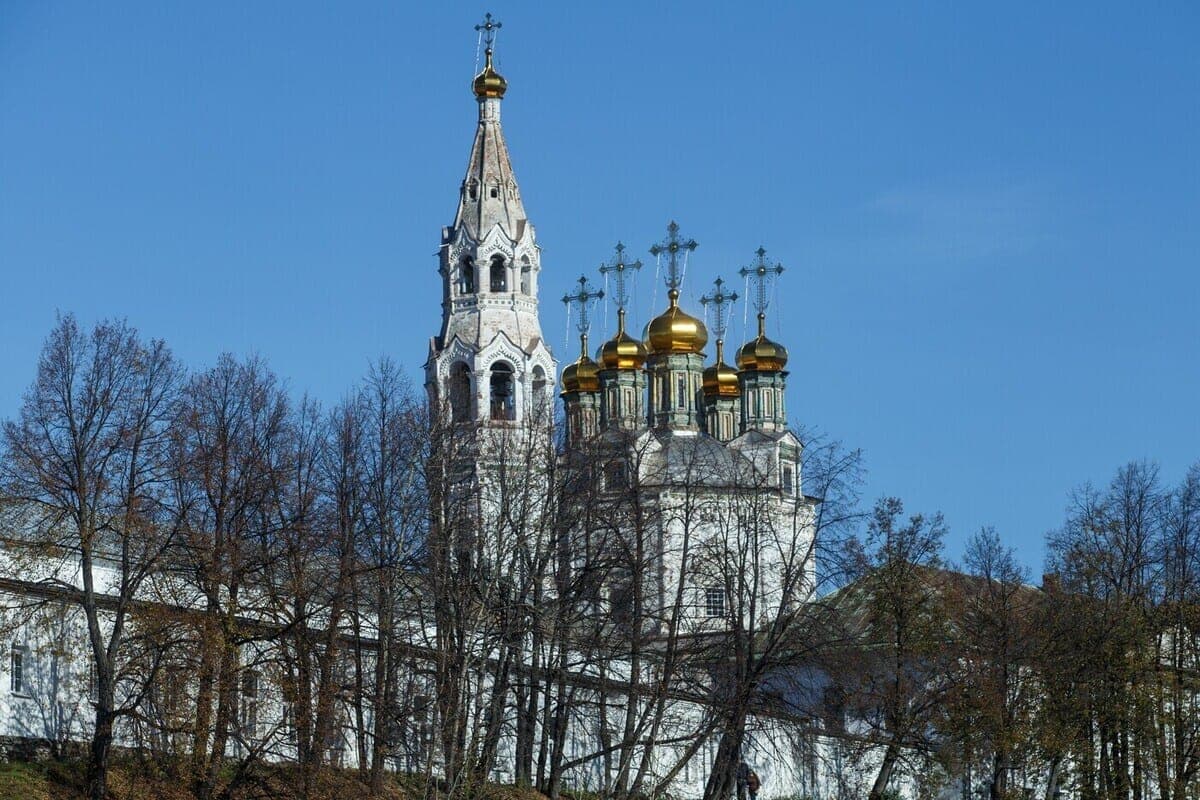
In early November, Metropolitan Evgeny of Yekaterinburg and Verkhotursk spoke in favor of renaming the Sverdlovsk region, arguing the need for regional rebranding by the fact that “the current name is associated with the shed blood and sin” of regicide
However, the writers who were born in the “capital of the Urals” interviewed by MK did not support the change of signage. Thus, the well-known poet and literary critic Konstantin Komarov, who only recently moved to Lipetsk, suggested leaving the name of the region alone "purely for pragmatic reasons":
This whole process is cumbersome and bureaucratically difficult, it requires considerable budgetary funds, which can be used more urgently today. In addition, for the average Urals, Sverdlov is just a cute bronze uncle opposite the Ural University. And the word “Sverdlovskaya” phonetically sounds capacious, dense and whipsy (in contrast to the long lexeme “Yekaterinburg”). It is in harmony with the "drill" conveys, as it seems to me, something Ural, deep, nutritious. So pragmatism and phonetics are for the region to remain as it is.
In turn, the poet and editor-in-chief of the project “Points” Alla Pospelova (reporting adamantly in her biography that she was born in Sverdlovsk – without specifying the modern name in parentheses) approached the issue politically. For me, the current name is associated with lines from Alexander Tvardovsky's poem "Beyond the distance - the distance": "The Urals are the supporting edge of the power, its miner and blacksmith" (recognized as the official slogan of the region, - I.V.). The name of Nicholas II is not marked by anything outstanding in history, I personally think of the bloody coronation, the shooting of people coming to him with icons, two lost wars, stagnation in the economy, the robbery of the state by his relatives and closest associates, Jewish pogroms. You can continue indefinitely, Pospelova said. “The murder of citizen Romanov with his family is not an honorable event for the Urals, but by no means the most significant. It is not necessary because of this to arrange any actions with renaming, - this opinion is shared by our interlocutor.
Also, Andrei Sannikov, one of the founders of the Ural Poetry School, states that the Sverdlovsk region was established during the Great Patriotic War, its “biography” is beautiful and courageous:
Let the Empire, the USSR and present-day Russia become a single uninterrupted history for all of us, we have no right to consider some of its epochs “pleasant” and others “ugly”. Popular unity means unity not only with those living in Russia today, but also with all generations of our people.
Still, the rest - the poet does not doubt - will cause a "scratch" on several occasions: "the walking Latvian Catherine the First, who approved the idea of Degenin to name the plant Ekaterinburch, the German man-murderer Catherine the Second, who assigned the plant the status of a city. And St. Catherine of Alexandria, who was a young princess, that is, the golden youth of antiquity.
Based on three opinions, it is difficult, of course, to get a full picture of the mood among the writers of former and current Yekaterinburg. However, many of those whom our correspondent invited to speak, “voted with their feet”, refraining from participating in the controversy. It is possible that from fears that their words may fall under the definition of “insulting the feelings of believers.” But the dead are certainly beyond judgment, according to a well-known Roman saying. And then it should be remembered that in 1998, in the seventh year of the existence of the returned name of Yekaterinburg, Boris Ryzhy in the canonical poem, laid in the foundation of the foundation of world fame, wrote about the “fairy-tale Sverdlovsk”, in 2000, in a lyrical self-portrait, he spoke about the poet “living in Sverdlovsk”. And there are dozens of such quotations, while the EKB is mentioned point by point in several “export” poems addressed to the outside, non-Ural world: “Petersburg friends”, “Friendly message to A. Kirdyanov”, “America of Quentin Tarantino”.
Researcher T.A. Arsenova, who set out to establish the proportions of the presence of Sverdlovsk and Yekaterinburg in the poetry of the famous countryman, testifies to the emergence of a poetic reality “Sverdlovsk of Boris the Red” and no other – this is the power of poetry acting in spite of manifestos, decrees and government decrees.