Stirlitz on stage: a conversation with a legend in the language of modernity
The premiere of the play “Seventeen Moments of Spring” at the Modern Theatre, held on Saturday, is an event deliberately doomed to close attention and inevitable, I would even say merciless comparisons
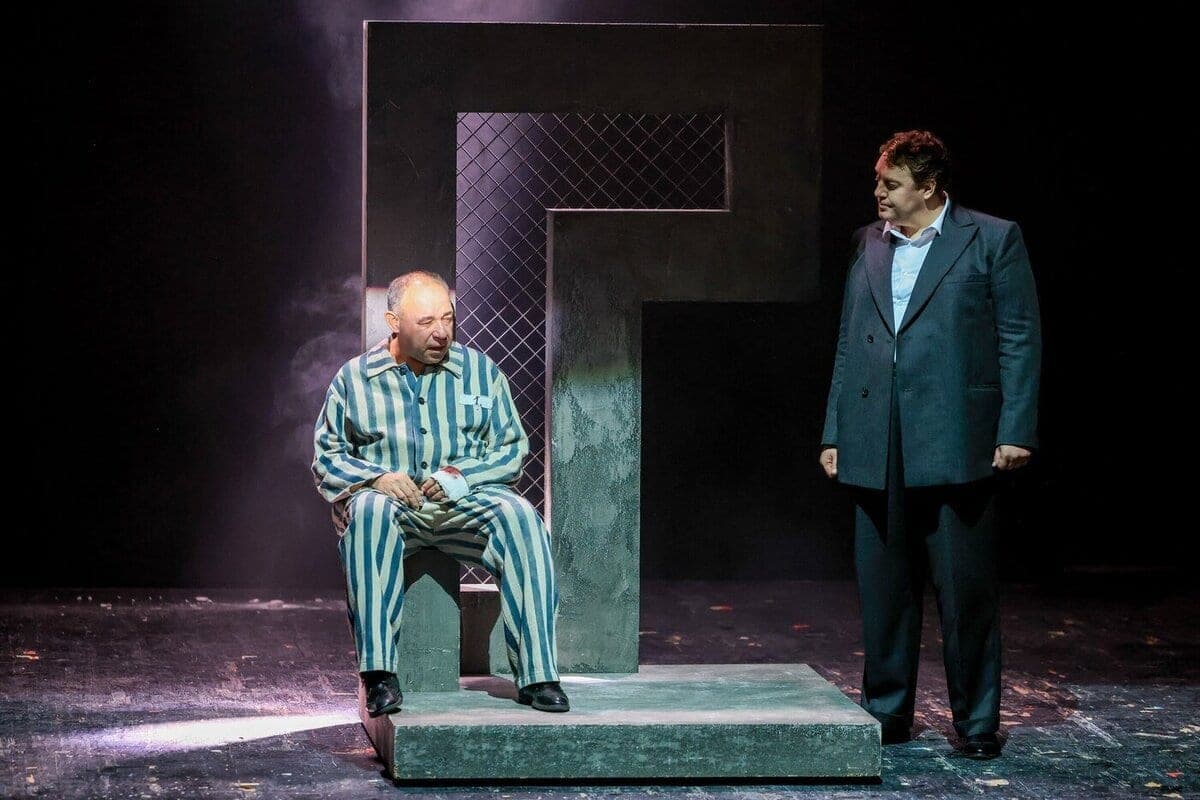
The performance amazes from the first minutes, offering not just a staging, but a complex metaphorical construction. It's "theater in the theater." The action begins with a piercing and eerie scene: in the front rows of the stalls sit Nazi officers in impeccable tuxedos and butterflies. They are spectators of their own history. This aristocratic gloss is not accidental: the elite of the Third Reich, even at the end of the empire, whispering to each other about the inevitable defeat, continued to feel like the upper light. The idyll of this spectacle is interrupted only by air alarm sirens.
A separate and most acute question is the image of Stirlitz. The shadow of Vyacheslav Tikhonov, whose laconic, “tight” and infinitely ironic scout became a textbook standard, hangs over the stage with a heavy load (by the way, the premiere was visited by the daughter of the legendary actor). The viewer is used to this Stirlitz. But Grymov is breaking this canon. His Stirlitz is non-standard, he is devoid of the usual Tikhonian intonation, he is different, let’s say, in some places even very vulnerable. This is a challenge to the audience’s memory: before us is not an icon, but a living person of unsportsmanlike build, carrying on his shoulders an unbearable load of loneliness.
Let me remind you that in the work of Semenova Stirlitz is the champion of Berlin in tennis.
Timekeeping in four hours (originally it was supposed to be three actions, but then the performance was compressed to two) is the second challenge to the viewer. To fit the epic Semenov canvas in a standard two and a half hours would probably be simply unrealistic. A huge gallery of characters unfolds on the stage: there are twenty-nine male roles only, and the image of each must be spelled out. So that the viewer does not get confused in the intricacies of Abwehr’s intrigues, the actors often turn to each other, naming full regalia and names. This is an extremely important dramatic technique: it helps to navigate the plot (which is important even for those who have forgotten the original source) and creates the effect of protocol accuracy that is so characteristic of a military machine.
But perhaps the main visual achievement of “Modern” is innovative scenography. Super-modern, technological and, according to rumors, very expensive scenery turn the scene into a living organism. Especially impressive is the way the new multimedia equipment solves scenes of meetings, interrogations and trips. Light, video projections and dynamics create a cinematic effect, blurring the boundaries between the theater scene and newsreel. Of course, fans of the film “17 Moments of Spring” again and again will compare the film adaptation with the production. And the result is clear in advance. But Grymov promises to improve the performance.