War and Peace by Victor Turov. 90th Anniversary of the Classic of Belarusian Cinema
The history of the cinema of the twentieth century is impossible to imagine without Viktor Turov - one of the most subtle, piercing directors, who gave birth to the Belarusian land. ...
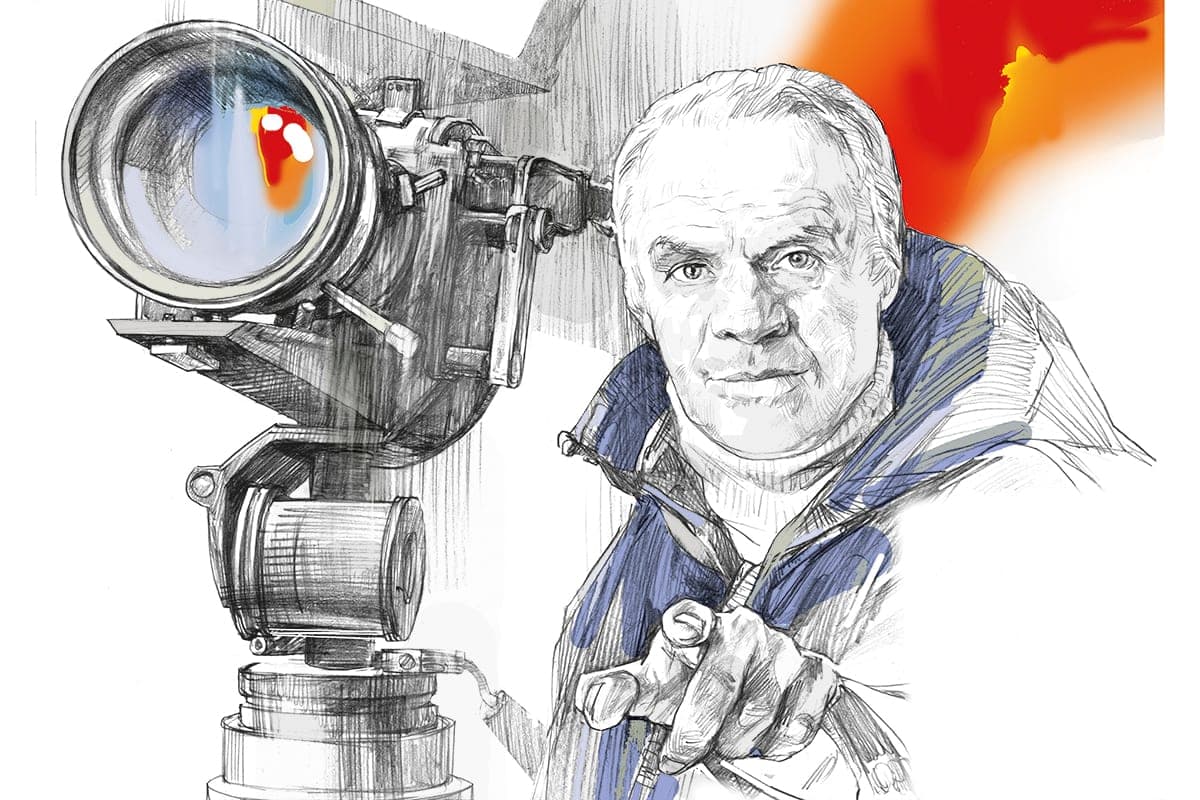
The history of the cinema of the twentieth century is impossible to imagine without Viktor Turov - one of the most subtle, piercing directors, who gave birth to the Belarusian land. Moreover, Turov and his films are an outstanding phenomenon not only for Belarus, but also for the entire giant advanced Soviet cinema, as well as world cinema.
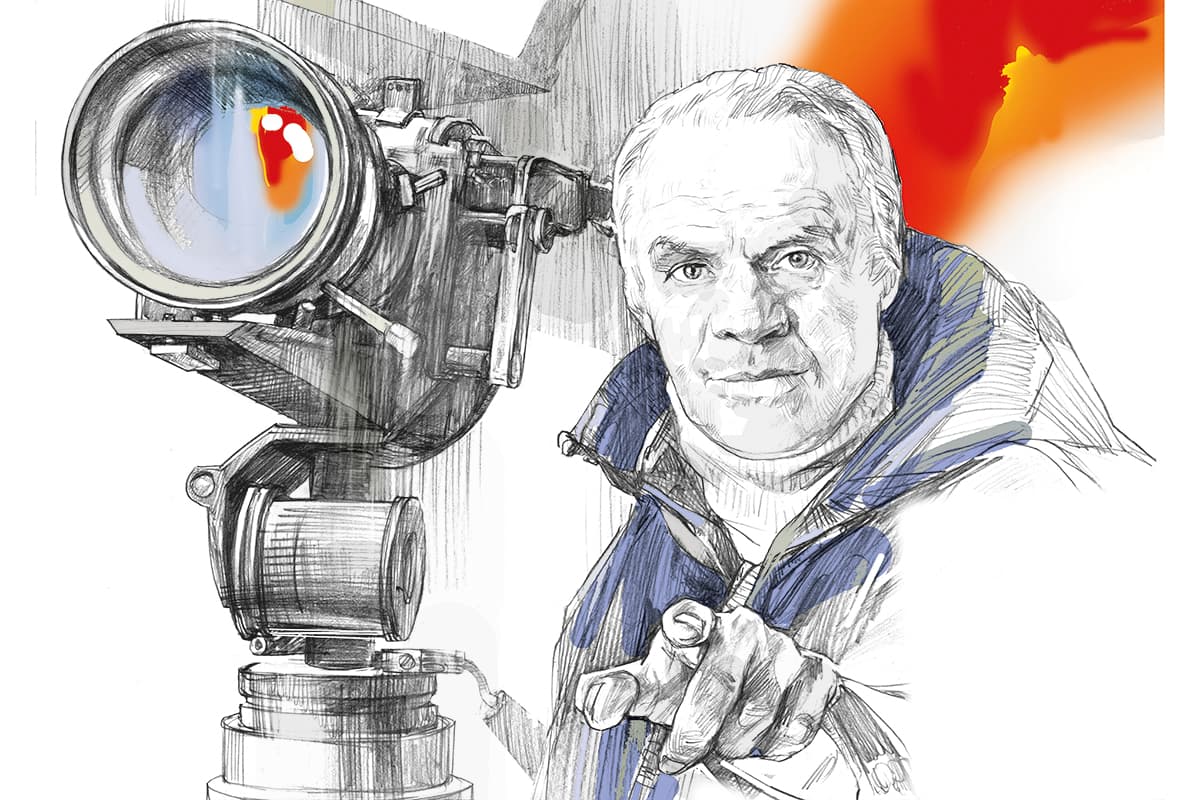
Viktor Timofeevich Turov was born on October 25, 1936 in Mogilev. When the Great Patriotic War began, Vita Turov was only five years old. His childhood memories are bombings, countless dead, whose bodies remained lying right on the streets, inhumans in Nazi uniforms and peaceful people, the most ordinary, for whom time has determined death, for whom a daily feat lasting several years.
The father of the future director Timofey Antonovich organized the evacuation of civilians, but his loved ones to send away from the front line and did not have time. He went underground, mother Maria Isayevna was left with two children - Vitey and two-year-old sister Svetlana. They met for the first and last time in the winter of 1942, when his father decided to take a chance and visit the family in the village. But the remaining families of party workers were closely watched. And at night, when Timothy Antonovich came to his relatives, they were waiting for him. The grave of his father, killed by the Nazis in the Pechersk forests, Viktor Turov could not be found. He said, I just know he's in the nearby woods somewhere. Shot and buried. And the old master, speaking about this years later, barely held back tears. I remembered how a mother who visited her father in Mogilev prison once returned with a package in which there was a transmission, and a coat soiled. Women who learned about the death of their relatives, with their hands tried to dig the frozen ground of the common grave in the hope: what if someone the enemies did not shoot?
The orphaned family returned to Mogilev, but already in 1943, Maria Isayevna was rounded up: she was suspected in connection with the underground and together with her children were taken to Germany to a family concentration camp (yes, there were such). Baraki, liquid balanda, a German school, in which from childhood they brought up free labor, teaching them to understand the speech of the masters. Once, when her mother was stolen to work, the camp chief beat 8-year-old Vitya to death for some small thing. He survived – miraculously, by God’s providence, whether the boundless maternal love nourished the boy, somehow and with difficulty began to get up on his feet only a few months later. There, in a concentration camp, he contracted tuberculosis. Surely it was these deprivations, beatings, hunger and old diseases that affected peaceful life: Viktor Turov was destined to live only 60 years. However, to do over the years as much as others can not.
In 1945, they traveled all over Europe for six months. Hoppy spring, Victory, war is over! Tuberculosis and the consequences of brutal beatings Turov was treated in a military hospital in the Soviet zone. I went to school in the fall. He was talented and the teachers noticed it. It was during his school years that he became seriously ill with cinema: cinema was the most important part of post-war life, for each film in the cinema went a dozen times, literally memorizing by heart.
And after school, Turov went to VGIK, although the family reacted to the idea without enthusiasm - cinema did not seem serious. He refused from the acting faculty: I decided that with my scars and skewed face after being beaten in a concentration camp, I am not suitable for a movie. What an artist! I chose the director's one. The interviewer asked about his age – he was only 18 years old. Directing - and rightly - tried to take older, yet the profession requires life experience. A young front-line soldier would be accepted willingly - the war has passed, and here, in fact, a boy ... But something not at all youthful, obviously, felt in this guy the legendary Alexander Dovzhenko, who was gaining his first and only course that year. Together with Turov in his workshop were those who were destined to go down in the history of cinema: Larisa Shepitko, Otar Ioseliani, George Shengelaya ... “Perhaps the most important thing that Dovzhenko tried to instill in us was boundless respect for people; any manifestation of arrogance or arrogance towards a person was immediately and angrily suppressed by them,” Viktor Turov recalled. From the first steps in the cinema, he had a desire to tell about the trace the war left in his life, in the life of his peers, in the fate of the Belarusian people. Much has already been filmed about the combat achievements and feat of the Soviet soldier: those who themselves held a rifle returned from the fronts. And about the feat — quiet, daily — of those who did not resign themselves to the occupation and continued the struggle, about childhood, scorched by war, about the perseverance of wives and mothers could only say one who learned and went through all this himself. “It seems to me that they suffered, survived no less than the fighters on the frontline,” the director said. It was very difficult for a soldier in the war. And yet he had a country behind him, and his feat was a natural extension of military duty. And now imagine how much strength, moral torment, how much courage it took from an ordinary woman to decide on the slightest gesture of resistance: to share bread with the partisans, to hide a prisoner, to hand over a leaflet. After all, the price for all these “sins” was one – death, and the mother risked not only herself
The theme of war and peace was devoted to his short work “The Star on the Buckle” based on the story of Yanka Bryl, in which Georgy Zhyonov played. Then continued in the film “Through the cemetery”. In 1965, this film, based on the novel by Pavel Nilin, at the V Film Festival of the Baltic Republics, Belarus and Moldova in Tallinn received a diploma of the II degree, and Turov and actor Vladimir Martynov, who played the boy-guerrilla Mikhas, received prizes for his debut. In the magazine “Art of Cinema”, the name of Viktor Turov was mentioned among the most promising young Soviet directors next to the names of Elem Klimov and Vasily Shukshin. Years later, UNESCO included this film in the list of the best films about the war. The war in which Viktor Turov’s childhood burned down and which caught up with him, reverberating with a long and bitter echo.
The next film, “I come from childhood”, released in December 1966, is one of the most important works of the director, which contains memories of the first years of peaceful life and wounds left by the war. The script was written by a peer - poet and playwright Gennady Shpalikov, the operator was another peer - Alexander Knyazhinsky. The children of war decided to tell about themselves what did not let go of each of them, lived and hurt in memory. In this film, one of her best roles was played by Nina Urgant. And Knyazhinsky advised Turov to invite Volody Vladimir Vysotsky to the role of tanker, with whom the director for many years was connected by a strong friendship. Turov recalled that the actor who will play the tanker has already been appointed, but Vysotsky asked: “Vitya, take me for the role.” I will not let you down. It was for this film that he wrote his first war songs. Something entered the picture completely, something fragments - "Height", "Brother's Graves", "Stars"... “Belarusian film critics did not accept my picture: in the newspaper “Litaratura i Mastaztva” it was twice destroyed...” – recalled the Director. The film festival of the Baltic republics, Belarus and Moldova in 1967 put everything in place: Turov received the award for best director, Nina Urgant for best actress.
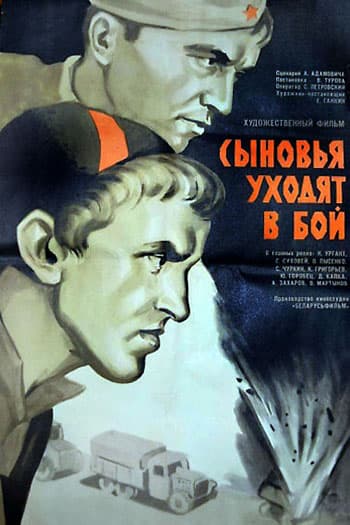
The next work was the film adaptation of Ales Adamovich’s Partisan Dilogy. Continued their cooperation with the young director Nina Urgant and Elizaveta Uvarova, appeared in this film young Ekaterina Vasilyeva and Alexander Demyanenko, who was at that time famous throughout the USSR Shurik. Vladimir Vysotsky again composed songs, together with Marina Vladi came to the shooting in Novogrudok and brought new: “Storks”, “He did not return from battle”, “Song about the Earth”, “Sons go into battle”... On the first film "War under the roofs" Turov and Adamovich worked with excitement, the second - "Sons go into battle" - severely cut censorship scissors. The writer’s daughter Natalia Alexandrovna said: The authors were blamed for the fact that they did not fully show the leadership role of the party in the formation of the guerrilla movement. It really wasn’t in my father’s novel or in the movie. They portrayed it as a spontaneous popular movement that began on a human and spiritual level, and it was true.” Neither the partisan Adamovich, nor the past concentration camp Turov could go against themselves and the war for the film refused to varnish. Therefore, especially the second picture left a trace of disappointment in the director’s soul: what he wanted and could say, he was simply not allowed, a lot was thrown away, and he had to collect the picture from the fragments of the former plan. “Turov is by nature a lyricist and will never become an epic,” the critic commented confidently on the result.
In search of a cure for the soul, the director turned to the classics: suddenly for everyone he undertook to film Turgenev, and chose far from the most popular stories from the “Notes of the Hunter”. And he made a beautiful television film “The Life and Death of a Noble Nobleman Chertopkhanov”, for which he was awarded the prize for best director at the All-Union Festival of Television Films in Tashkent. Further in the focus of Turov’s attention is peaceful life: in 1974 he shoots a two-part film “The Time of Her Sons”, which gathered 8.6 million viewers at the box office, in 1976 – the acute social drama “Sunday Night”. In 1979, the film about paratroopers “Reference Point”, which became the leaders of the Soviet box office: 15th place and 22.5 million viewers. For this picture, the songs were again written by Vysotsky, and performed by Marina Vladi.
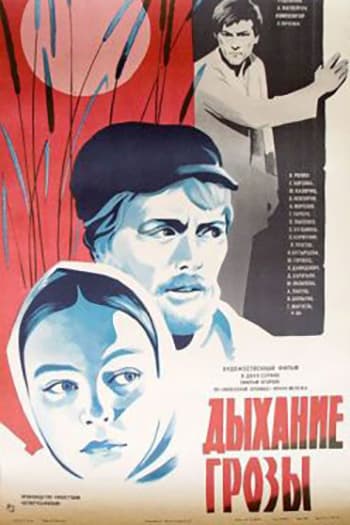
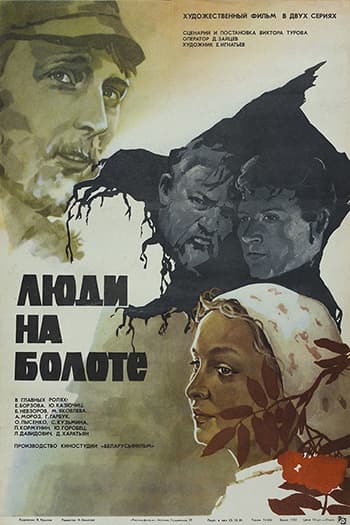
It seemed that the director moved away from global themes, but in fact it was a period of slow maturation, because the next years of Viktor Turov were given to work on the film adaptation of Ivan Melezh’s “Polesssky Chronicle”. The film “People in the Swamp” was shot in 1981, “Breath of a Thunderstorm” – in 1982. The director could not and did not want to recreate the difficult and meager life of the 1920s and 1930s in the picture, he was much more interested in human feelings, mental anguish, troubles and sorrows - and love towering above them. “We shot a kind of cinematic ballad about Belarus and its people, so we decided to abandon small, creeping plausibility in the name of truth in the main thing,” said Turov. Yes, in the life of Poleshuks there was a clay floor, and chicks, and black work, but today to shoot a picture of the “dirty” of life would be at least strange. The story of the beauty of the nation, its pure and healthy moral foundation, required clear colors, which we used in our picture. The film “People in the Swamp” in 1984 was awarded the State Prize of the USSR. Turov worked until his last days, at the end of his life he cherished the idea to return to his childhood memories and make a film about the spring of 1945, about how happy the victorious soldiers and prisoners released from concentration camps were, something that forever stuck in memory. He even came up with the name “Fiesta of 1945”, which was supposed to convey this sense of universal joy. Alas, to begin this work, which occupied all his thoughts, did not have time. On October 31, 1996, just a few days after his 60th birthday, Viktor Turov completed his earthly journey. Unfair and painfully early. By leaving us your beautiful films. Every time Victor Turov talks about his profession

You cannot become a director once and for all, armed with a diploma of VGIK and the theory of Eisenstein or Dovzhenko. The right to each subsequent film, the director must win his last work, bearing in mind the huge responsibility to the studio and the audience. Not only the film Director stood at the origins of the theater-studio actor
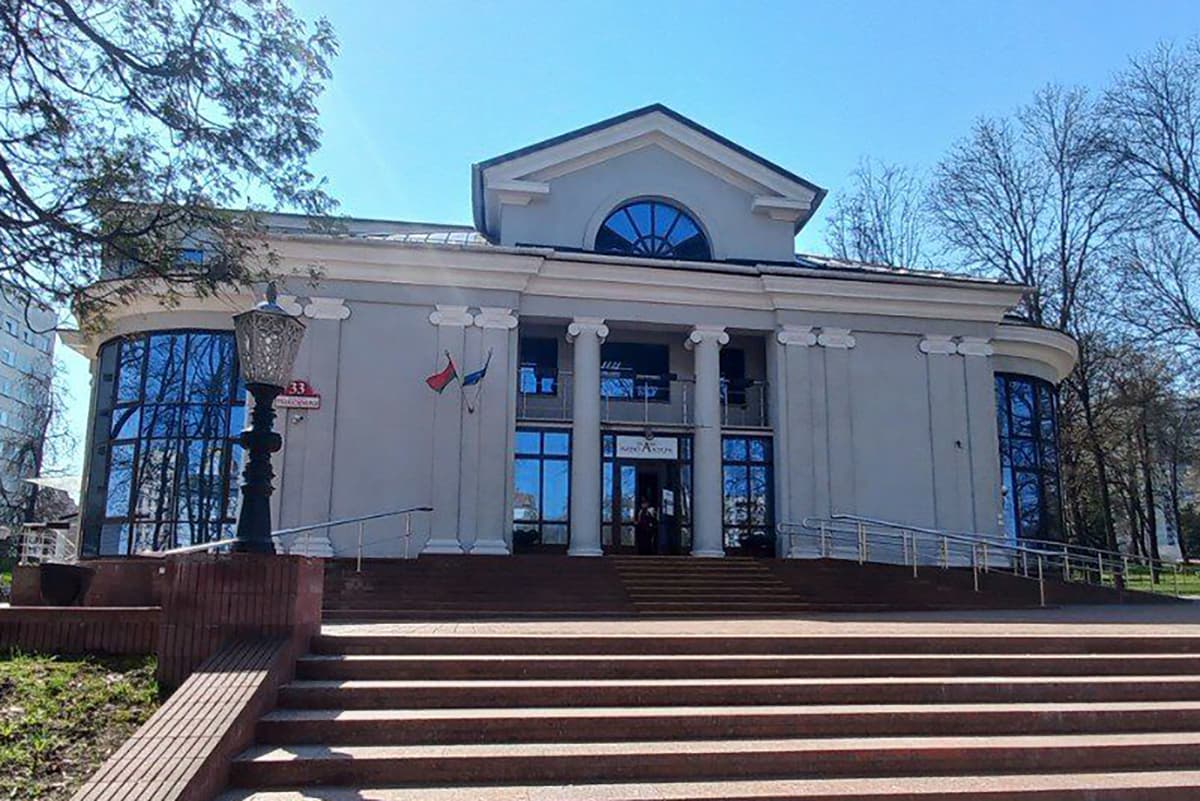
“The father managed to initiate the creation of an acting group at Belarusfilm, which could become the basis of the Theatre-Studio,” she wrote in her book Viktar Tura. Maistar Belarusiankaga is the daughter of director Elena Turova. At the end of the 1970s in the House of Cinema (now the Church of Saints Simon and Helena) the premiere of the play “Duck Hunt” staged by a graduate of the Higher Directorial Courses Valery Anisenko took place. With this production, and began the biography of one of the most popular theaters in Minsk today – the Theatre-Studio of the actor.