How Marketplaces Help Russian Companies Sell Abroad
Marketplaces are becoming one of the key export channels. The national project "International Cooperation and Export" helps at all stages of access to foreign sites - from placement in a showcase to promotion
Marketplace is not just a new sales channel. The company needs to go through a full-fledged export route: choose a market, prepare goods, set up communication with customers. The national project “International Cooperation and Export” helps to solve these problems comprehensively: ready-made trade showcases, selection of sites, training and promotion of goods are available to Russian exporters.
What electronic platforms are given to exporters
In the first half of 2026, Russian industrial non-resource non-energy exports (NNE) amounted to $58.8 billion - 3% more than a year earlier, the head of the Ministry of Industry and Trade Anton Alikhanov said in September at the Eastern Economic Forum. One of the key channels of foreign sales is electronic platforms.
The main advantage of marketplaces is to reduce costs and simplify the export of small and medium-sized businesses (SMEs), says Maria Gyrich, researcher at the Gaidar Institute’s Best International Practices Analysis Laboratory. Platforms can provide access to foreign buyers, payment acceptance, promotion, logistics and returns – a specific set of functions depends on the country and model of cooperation. This is especially important for producers who supply small batches of consumer goods: they do not always have to build their own infrastructure in the destination country.
However, access to the site alone does not solve all problems. Associate Professor of the Department of International Business of Plekhanov REU Anastasia Prykladova recommends that when choosing a sales channel, take into account the target audience, the shelf life of products, storage and transportation conditions, the need for warranty service and additional services. These characteristics determine how a particular platform suits the business.
That is why support for e-commerce in the national project “International Cooperation and Export” is associated with other tools for the development of foreign sales, say the Russian Export Center (REC, part of the VEB.RF group). Entrepreneurs are helped to search for foreign partners, undergo certification and licensing, participate in exhibitions and business missions, place goods on global marketplaces and promote products. Manufacturers can use these measures at different stages, from checking demand to developing a permanent supply chain. Most of the support measures are available on the platform of “State Services of Foreign Trade” (“My Export”).
How the National Store Model Works
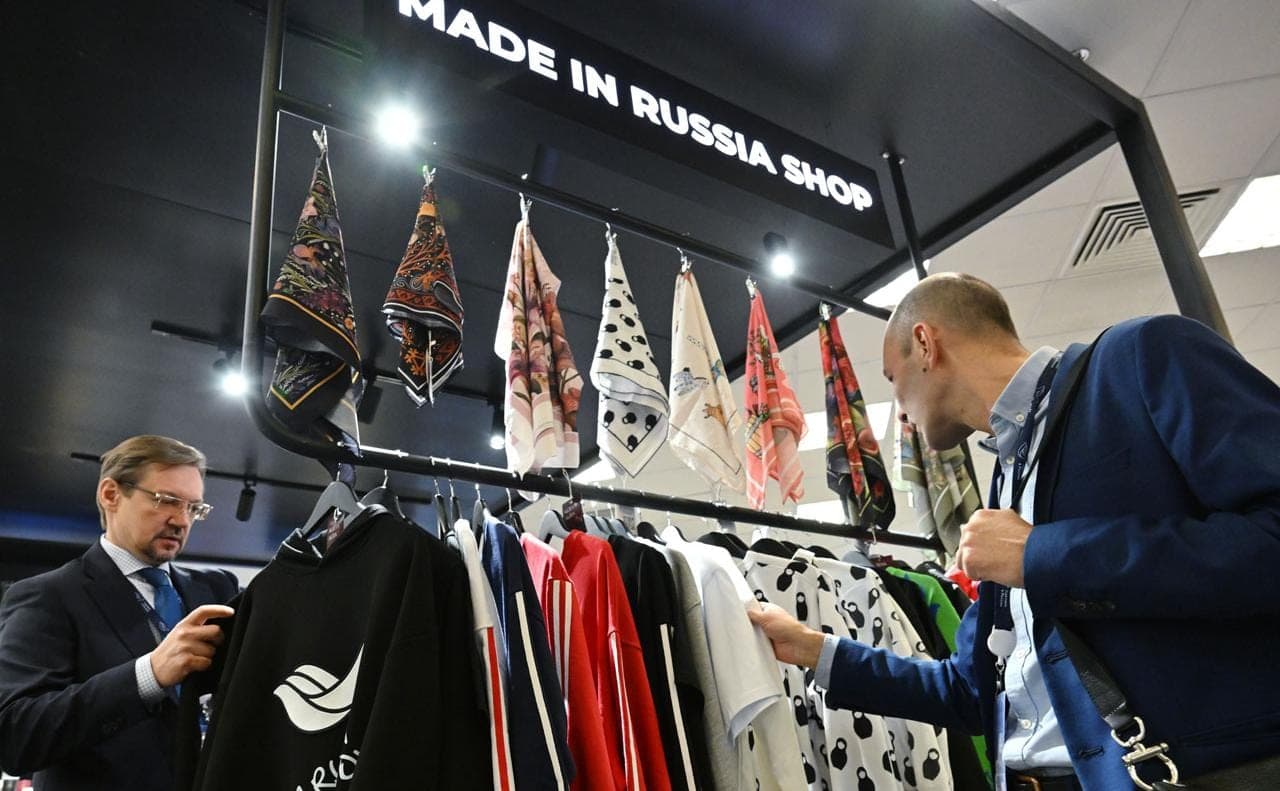
One of the main tools of export support was the program of national stores “Made in Russia”. It combines collective stores and showcases with Russian goods on international and national electronic trading platforms. The network of the program has 50 stores on 21 marketplaces and operates on the franchise model with accredited partners of the REC. In national stores "Made in Russia" placed more than 3,5 thousand items.
Alexey Murzenok, managing director for international trade at the REC, said that by the end of 2025, national stores operated in nine countries, including China, Vietnam, Uzbekistan and India. Among the sites with which the program works are Taobao, JD.com, Douyin, Tmall, Uzum, Lazada and Shopee. According to the expert, the stores present products of more than 850 Russian manufacturers.
This model allows exporting companies not to create their own infrastructure. When directly entering the foreign market, explains Alexey Murzenok, the manufacturer may need a local legal entity, a seller's account and its own logistics scheme. In the program of national stores, some of these tasks are solved by accredited partners of the REC. They provide the output of goods to the platform, promotion and implementation within the chosen delivery model.
So began, for example, the entry of the group of companies "Belev Pastil Manufactory" on the Chinese market. Natalia Belyashova, Development Director of the company, says that she got acquainted with the REC e-commerce program in 2018 at the forum in Novosibirsk. After that, the manufacturer decided to try to enter the Chinese market through the program of national stores “Made in Russia”. As part of the program, the company prepared commodity cards, organized certification and delivery of a small first batch. According to Natalia Belyashova, it was thanks to this project that the company entered the Chinese market.
But even with a ready-made storefront, it is important to determine which products and market to enter. To do this, on the platform of "State Services of Foreign Trade" ("My Export") there is an online service for selecting marketplaces. Its base includes 240 sites, and the selection of suitable options takes about three minutes. The service analyzes the product and the target country, offers options and makes an individual roadmap. It has already been used by 5,000 companies.
As Alexey Murzenok explains, the algorithm takes into account the code of the commodity nomenclature of foreign economic activity, shelf life, logistics and characteristics of sites, and then the capabilities of the exporter himself: budget, online sales experience and readiness to export products. The result is a personalized strategy with recommendations for adapting the product, opening an account, organizing supplies, promoting and calculating the starting budget.
What tools help you achieve good sales
The next step is to make the product visible to the buyer. A separate support block for the national project is associated with promotion, including live broadcasts, during which the viewer can immediately place an order, the REC reports. The Export Center uses this format with popular bloggers in China, Thailand, Vietnam, the UAE and Turkey, and attracts Olympic champions and local stars.
The scale of this tool is illustrated by the Russian-Chinese online festival “Made in Russia”, held from 1 to 4 September 2026 on the sidelines of the Eastern Economic Forum. During the festival with the participation of Chinese blogger Dandan (Yang Rongxin), Russian goods were sold for more than 1 billion rubles. The coverage of its seven-hour broadcast exceeded 30 million people. In total, over 130 Russian companies from more than 50 regions participated in the festival, representing more than 250 commodity items - from sweets and drinks to cosmetics and souvenirs. These results relate to a specific campaign, not the usual level of sales of an individual vendor.
According to Alexei Murzenk, attracting opinion leaders and ambassadors to live broadcasts on Chinese platforms has become one of the main drivers of sales growth in national stores. At the same time, the format of acquaintance with the product should take into account its features.
For the manufacturer of foil balloons "Agura", for example, it is important to show not only the product, but also the result of its use. Marketer of the company Valeria Voronkova says that the brand relies on reviews, demonstration of balls in work and advertising integrations from aerodesigners - specialists in festive design: the finished composition helps the buyer to assess the color, shape and possibilities of using products.
According to Valeria Voronkova, Agura products are presented today in Kazakhstan and Belarus, and the company conducts sales through marketplaces and distributors. The effectiveness of promotion is assessed by coverage and involvement, transitions to sellers, sales dynamics of individual items and repeated orders. For seasonal goods, this is of particular importance: production, delivery and advertising must be coordinated in advance with the calendar of holidays, graduations and weddings.
Promotion support is also in demand when developing markets with an unusual consumption structure for the producer. Natalia Belyashova says that Belev Pastil Manufactory develops sales in Uzbekistan, where there is its own tradition of producing sweets. The company’s products are presented in the national store on Uzum, and publications with the participation of bloggers help to acquaint the local audience with the range.
Why a manufacturer needs a quality mark and how to build it into an export strategy
Promotion on electronic platforms is associated with the program and umbrella brand “Made in Russia”, created by the REC within the framework of the national project. To join the program, the company must undergo voluntary free certification of its products. Certificate holders can apply the program logo – “bird” in the colors of the Russian tricolor to goods. As of October 2026, more than 34 thousand domestic goods and services have already been certified. Program participants have access to information, marketing and PR support, assistance in finding foreign buyers and organizing negotiations.
Anastasia Prykladova believes that the collective showcases are especially noticeable products with pronounced national characteristics - food, cosmetics and handicrafts. An example of this positioning is the brand of decorative cosmetics Russian Beauty Guru (RBG), founded by beauty expert Natalia Rakoch. According to the company, its range contains about 80 items, and the collections are inspired by the architecture, nature and cultural heritage of Russia. Among the names are “Black Moscow”, “Russian Nud” and “Treasures of Russia”.
Today, RBG products are presented at Wildberry and Ozone in the CIS countries, but the export strategy is not limited to marketplaces. With the support of REC, the company participates in international exhibitions as part of collective expositions, including Beautyworld Central Asia in Tashkent. After Moscow Beauty Week in December 2023, an agreement was reached on deliveries to India, where products appeared in stores of the Godrej Group and Plum Goodness chains.
Similarly, it combines sales channels and “Belev Pastil Manufactory”. According to Natalia Belyashova, the company has its own legal entity in China, so it directly tracks sales, margins and turnover. In other countries, products are sold by partners and distributors. With the assistance of the Export Support Center of the Tula region, the manufacturer participates in exhibitions and business missions: in 2026 the company was represented at the collective stand “Made in Russia” at UzFood in Uzbekistan.
How to get support and build a supply economy through digital channels
You can apply for support for e-commerce through the platform “State Services of Foreign Economic Zone” (“My Export”). Part of the cost of promotion and administration is subsidized by the state. To prepare for work in digital markets, educational support is provided: more than 130 conferences and webinars are held annually with the participation of representatives of marketplaces, where they analyze the rules of sites and practical examples.
You can choose an international exhibition on the same platform. In the Events section, events are sorted by country, type and industry; registration is also available for participation in collective expositions with state support. REC assumes part of the costs of preparing a collective stand, logistics, organizing a business program and meetings with potential partners.
Support, meanwhile, does not eliminate the need to calculate the supply economy. Maria Giric calls shipping costs one of the main barriers to e-commerce. Anastasia Prykladova recommends predetermining the customs procedure, the procedure for payments and revenue accounting, and discussing emerging issues within the framework of consulting support of the REC. Natalia Belyashova advises to start with the analysis of demand, choice of country and specific product items, comparing the demand for the product with the length of the logistics route.
Discussion of further development of export instruments will continue at the international export forum “Made in Russia”, which will be held on November 16 at the National Center “Russia” in Moscow. Among the stated directions are digital channels of international sales, financial infrastructure and export development of SMEs.