
Diesel deal between Moscow and Washington: many advantages and a number of pitfalls
The agreement on the organization of supplies of Russian diesel fuel to world trading platforms, concluded during personal negotiations between Vladimir Putin and Donald Trump, temporarily eclipsed the events around Iran and the Strait of Hormuz
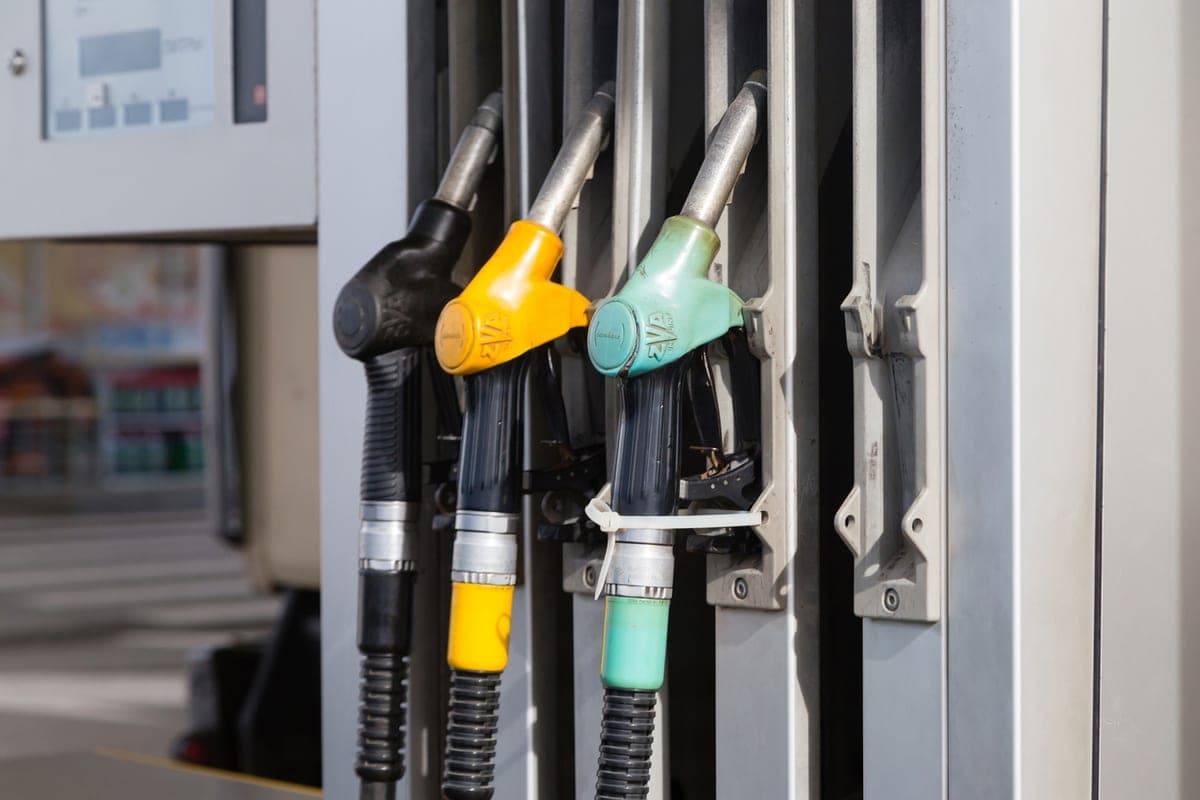
The first who willingly began to share the details of the “diesel deal” between Moscow and Washington, was Donald Trump. According to the American president, Russia will send 300,000 tons of diesel to world markets as soon as possible, another 500,000 tons will be delivered during November, and after that in December and possibly in early January 2027, global consumers will receive another 1 million tons of demand and currently scarce fuel.
However, it seems that Trump is still running ahead, since the first batches of Russian oil products will arrive to foreign buyers no earlier than by the end of October – the parties will first have to agree on the “commercial details” of the agreement, for example, the cost of fuel.
Meanwhile, the implementation of the agreements reached between Donald Trump and Vladimir Putin is in full swing: the Office of Foreign Assets Control of the US Treasury issued a general license for the export of Russian diesel until April 7, 2027, and the government of our country partially lifted the moratorium on the export of petroleum products, allowing 500 thousand tons of fuel to be sent abroad. According to Deputy Prime Minister Alexander Novak, domestic diesel fuel exports may return to pre-crisis levels of 3-3.5 million tons by the end of the year, which will allow Russia to regain the “legitimate” 10% of the global diesel market.
According to the Deputy Prime Minister of the Russian Federation, the license of the US Treasury allows you to settle issues on freight and insurance of export consignments transported along international sea routes. Although this year the production of diesel engines was lower than planned, since historically our country produces twice as much diesel as it consumes, there is still a surplus for foreign supplies - "even taking into account repair work on individual installations." Moreover, Novak is confident that the result of the deal with the Americans will be not only an increase in oil refining, but also an increase in the production of “black gold” at domestic fields.
Trump is full of positive emotions. “This is a big deal. Our country will receive a very large amount of fuel. And, frankly, I am grateful to President Putin, the American leader said.
According to Vladimir Chernov, an analyst at Freedom Global, the agreement is economically beneficial for both Moscow and Washington. “Russia gets an opportunity to increase exports and loading of refineries, and the United States is interested in reducing the cost of fuel, on which the costs of carriers, farmers and prices for goods depend,” the expert believes.
Europe can also benefit from the decline in world prices, says Denis Astafiev, head of the fintech platform SharesPro, although this does not guarantee quick cheaper gas stations, since the retail cost of fuel largely depends on taxes, logistics and margins.
Meanwhile, argues Arthur Leer, president of the Association of Exporters and Importers, the "diesel deal" entails a serious political context. “In fact, we are talking about another step to lift sanctions, and as an isolated solution, that is, within the framework of a dynamic model, when restrictions are removed in stages,” the expert said.
This assessment is confirmed by the actions of Trump, who on October 16 put on pause the application of a number of restrictive measures against Russia, approved in September and providing for additional duties of 500% on goods from Russia and 100% on goods of countries included in the top five buyers of Russian oil and gas, as well as countries most actively purchasing our energy resources.
At the same time, according to domestic experts, one should not overestimate the positive attitude that may arise against the background of the alleged warming of relations between Russia and the West. “It is too early to consider the agreement a guarantee of a full recovery of exports,” said economist Viktor Mangazeev. The additional supply can reduce tensions in the global market and restrain wholesale prices.” However, real additional volumes are needed to further reduce the cost of finished motor fuel and primarily diesel on international commodity exchanges, and a simple redirection of fuel from one buyer to another, specifically from Asian to European buyers, will give a much smaller effect.
The increase in refining will not necessarily lead to a comparable increase in oil production, since first plants can use oil that used to be exported.
At the same time, if foreign shipments of diesel will grow faster than the production of petroleum products in the country, which will be accompanied by regular stops of refineries for unscheduled repairs, then there may be a risk of a certain shortage of diesel in the domestic market and rising prices at Russian gas stations.
Praise for the U.S.-Russia “diesel deal” is facing obstacles in America itself, with a number of U.S. congressmen seeking to challenge the agreement. At the same time, many European leaders are dissatisfied with these agreements and do not want to give Russia the opportunity to fully unleash its energy potential, Chernov explains. Therefore, our country needs to increase exports as fuel production increases, maintaining the necessary supplies to domestic consumers and creating winter fuel reserves. If these conditions are met, a general shortage can be avoided, but price increases cannot be completely excluded, since more profitable exports can push up domestic wholesale prices even with sufficient production.”.
