
Grown with a soul: how in the Kletsky district clean and lay apples for the winter
It's a hot time in the gardens. Here the collection of apples is completed, which in autumn and winter will provide Belarusians with vitamins. We learned how to make an Apple...
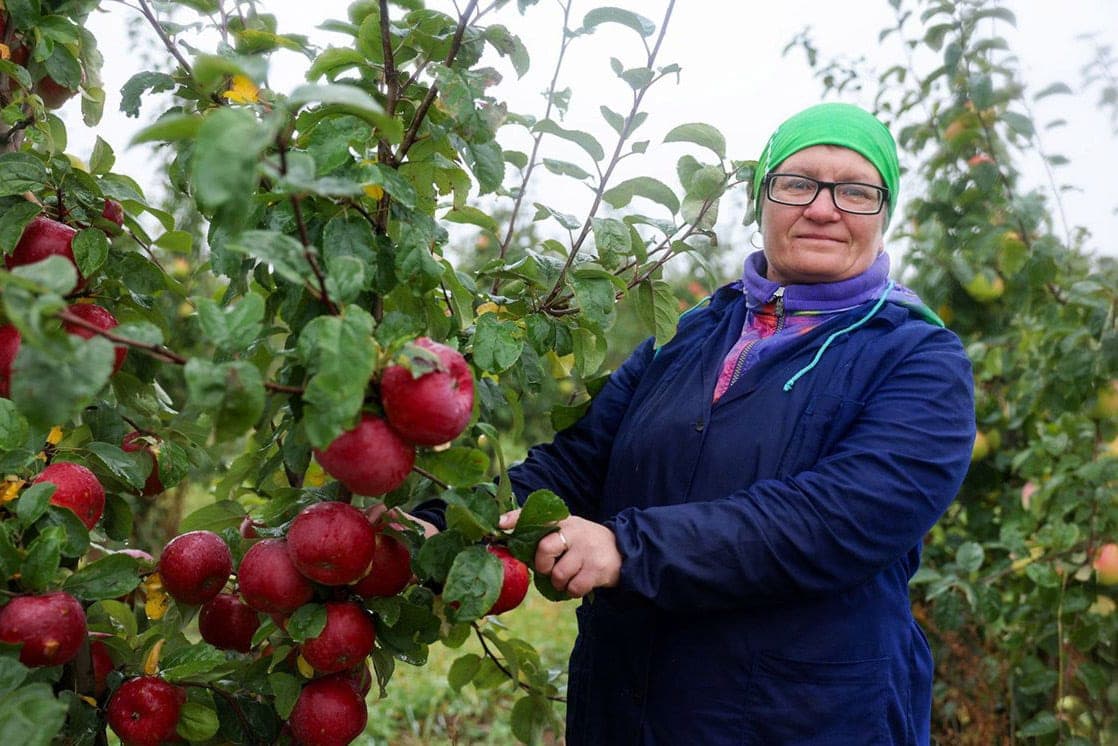
It's a hot time in the gardens. Here the collection of apples is completed, which in autumn and winter will provide Belarusians with vitamins. We learned how the “apple conveyor” works at the agricultural unitary enterprise “Kletsky-Agro”, why professional gardeners treat trees as children, how many tons of juicy fruits have already been laid in modern storage facilities of the stabilization fund and why manual labor here cannot be replaced by any robots.
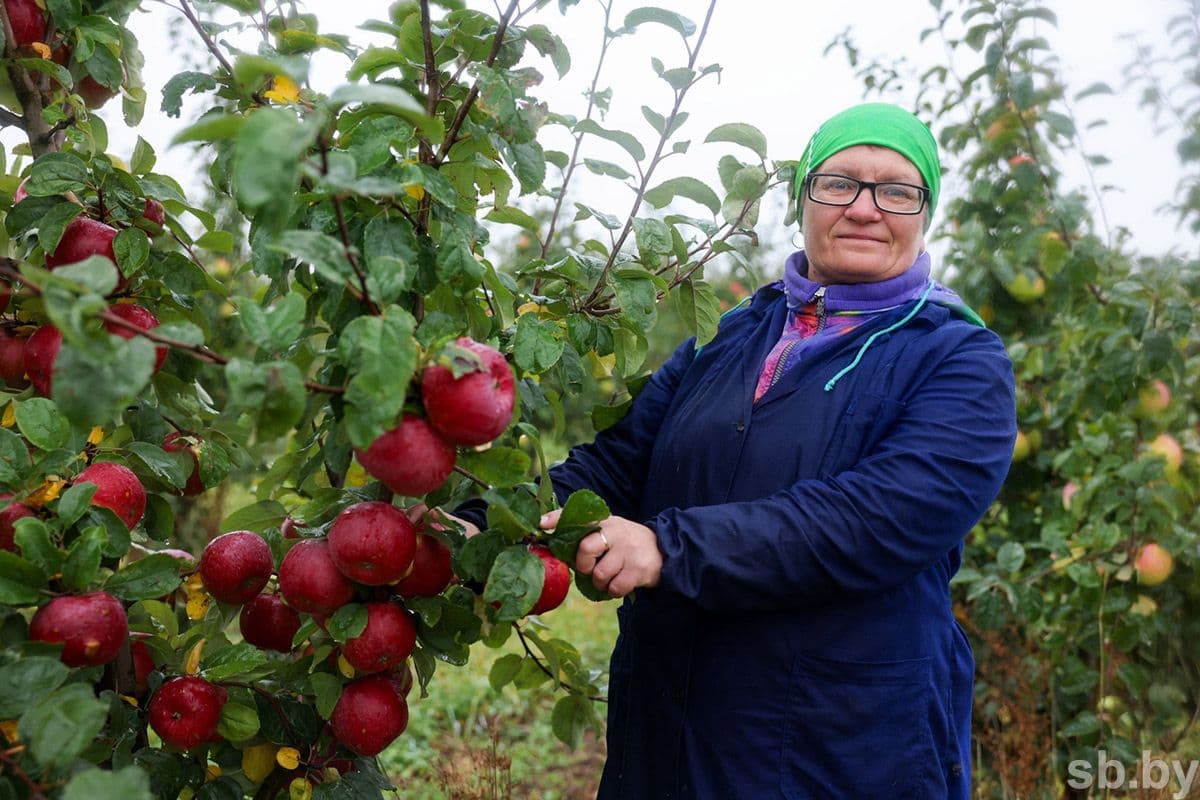
Industrial cultivation of fruits and berries has long been the hallmark of the Kletsky district. The total area of intensive gardens in Kletsky-Agro is 150 hectares (plus another 9 hectares are allocated for blueberry plantations). The main array of fruit-bearing trees is concentrated in the village of Pankratovichi.
The varietal portfolio is dominated by lean late autumn and winter varieties “aidared”, “Belarusian raspberry”, “Belarusian sweet”, “anabel”. The flagship is the famous "imant" - 30 hectares are allocated for this variety.
About how the cleaning is arranged, says agronomist-gardener Alexander Romashka:
- We are constantly updating and renovating the garden. We keep the area unchanged - exactly 150 hectares. Last year, for example, 11 hectares of old trees were uprooted and as many new ones were planted. In a harvest year, the garden gives up to 100 centners per hectare. This season we plan to take the bar of a thousand tons. About a third of this volume will go to winter bookmarking in storage, the rest - for recycling. We mainly work with the domestic collection - we grow about 15 varieties. We send apples and apples not of the first class to our partners - to the Red Food Factory and the Gorodeysky Sugar Plant.
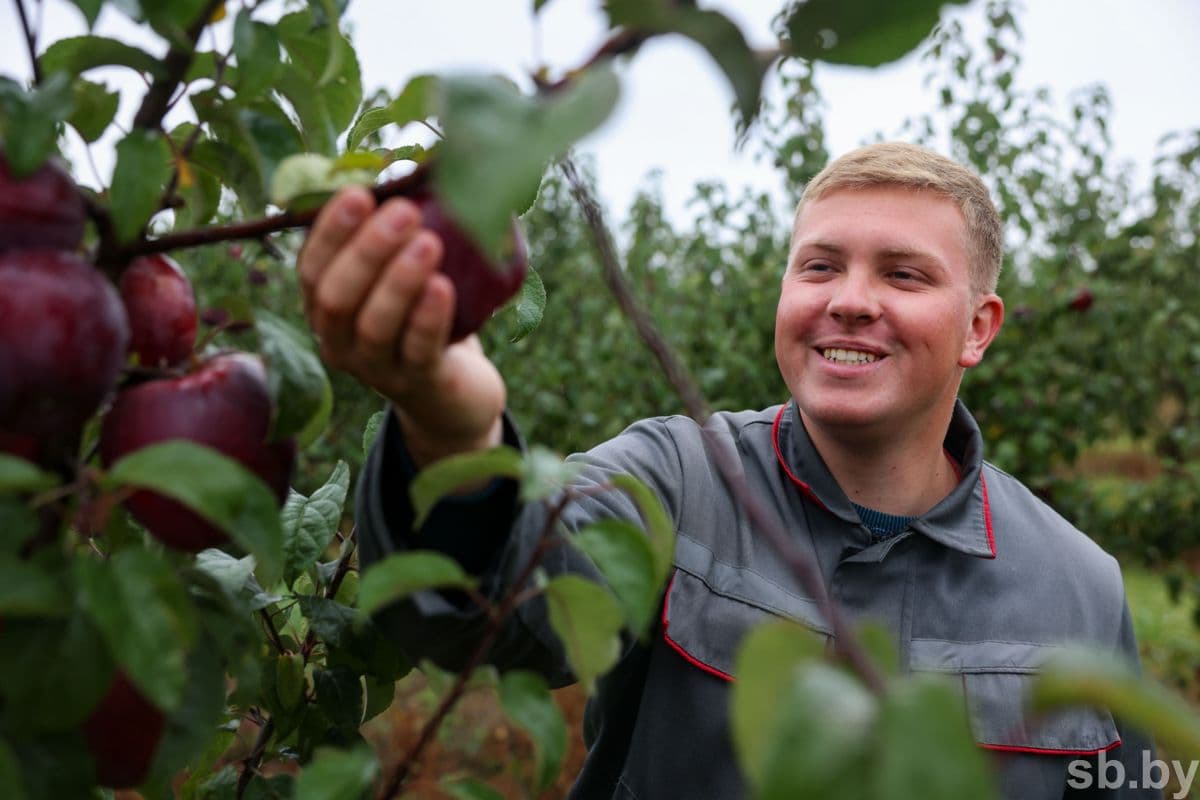
Summer varieties immediately go to retail chains. Autumn is divided roughly equally between the counter and recycling. But winter is the basis of the stabilization fund. Only the first grade is deposited. They sell products from the storage through fairs or under contracts with a large retailer.
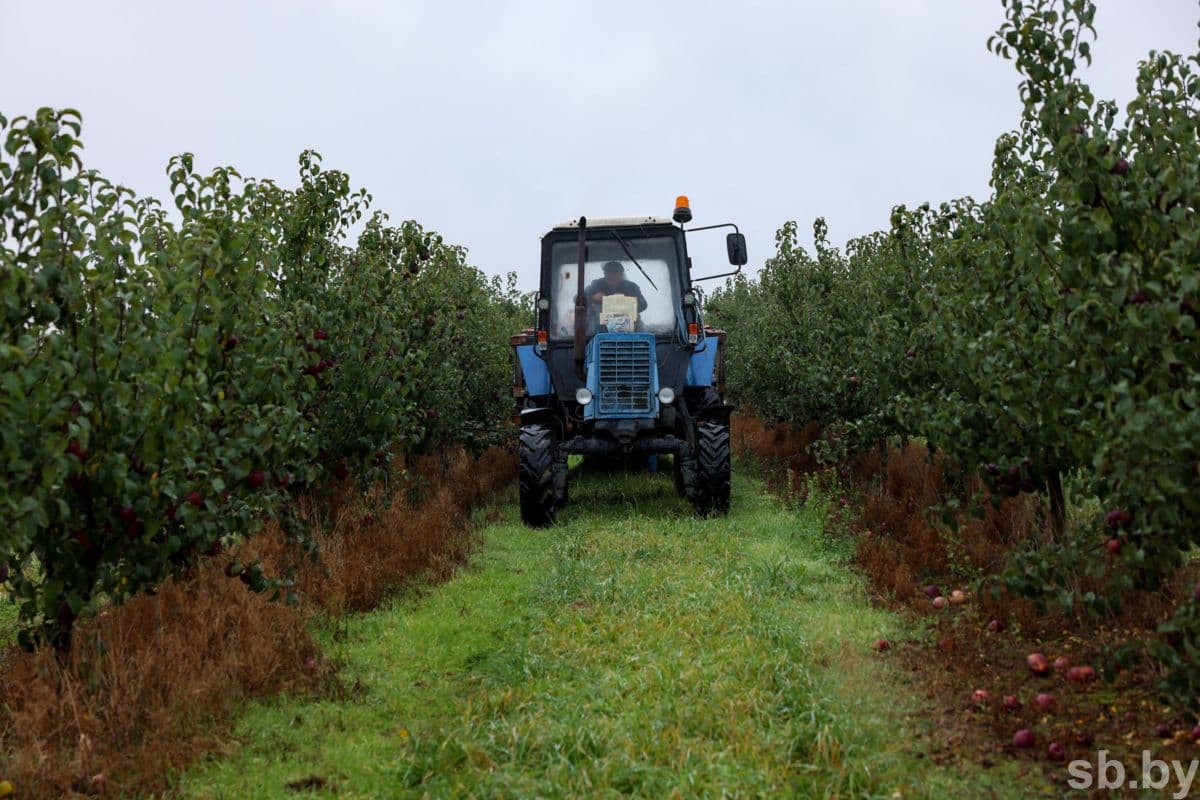
- Our garden is designed for manual labor. Trees are cut strictly to 2.5 meters, so collectors do without stairs. The cleaning technology is fine. A tractor with a container ship for 10 seats moves in between rows. One container can hold 230 to 250 kilograms of apples depending on the size of the fruit. Workers collect apples in buckets and carefully, holding their hand from above, so as not to damage the fruit, pour them into containers. The tractor makes up to five flights per day to the weight and warehouse. The yield of the first grade per circle is about 30-35 percent, the agronomist shares details.
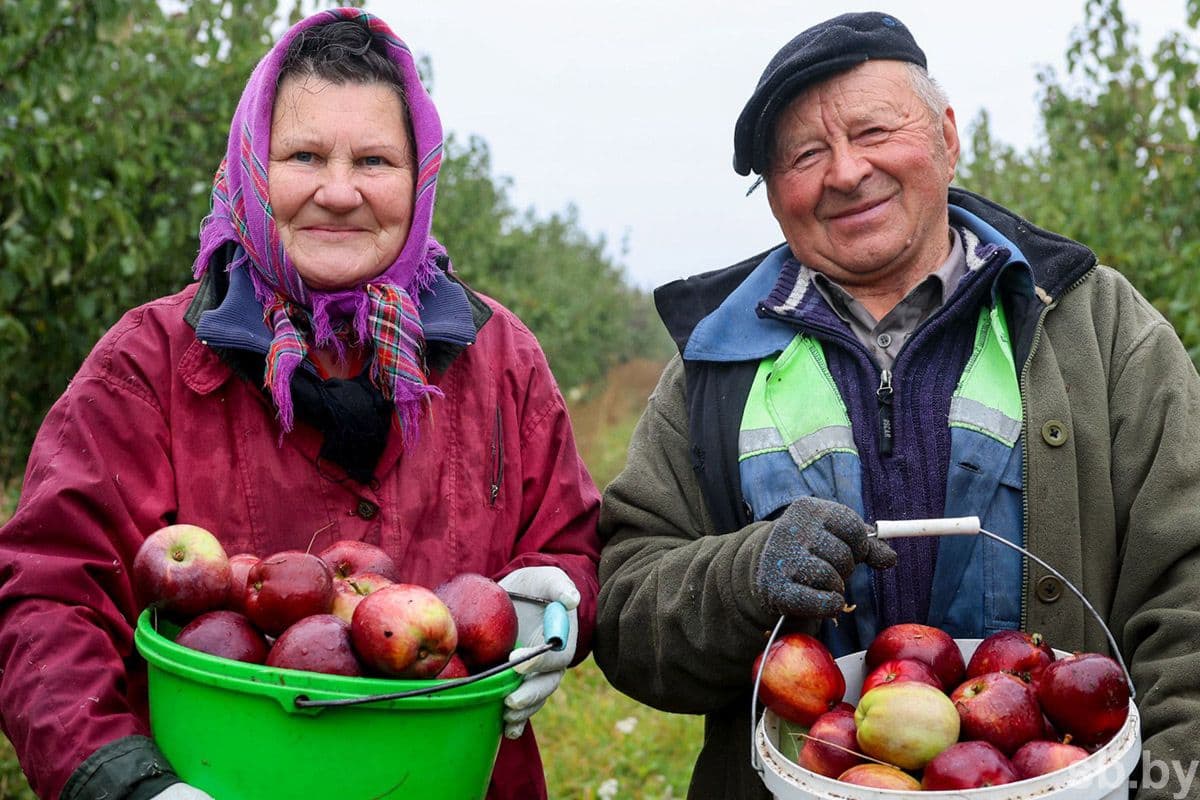
The staff of the horticultural brigade is 12 people, they work all year round. In winter, when there is pruning, people are carried by a bus, and in the season all workers independently move around the garden on personal electric scooters. It's very mobile. Of course, in peak cleaning on their own can not do. The Executive Committee helps to attract people from factories, from educational institutions plus six dumpling pensioners. As a result, 50-60 assistants still work daily in the garden with the brigade. On average, a trained person collects about 600 kilograms of apples per shift, and advanced workers give up to 700.
Of the equipment, in addition to the usual MTZ-82, use a powerful sprayer. Under pressure of 8 atmospheres, it treats two rows of trees from pests and diseases. The weeds in the rows are mowed by a tractor mower, and the trunk circles are mowed by workers with gasoline jeans.
The tastes of Belarusian buyers are traditional: the varieties are mainly sweet and sweet. The flagship of the winter bookmark is the “imant” variety: a dark purple sour-sweet apple that lies perfectly. Another 18-20 percent of the area is given under bright red “Belarusian sweet”. There are enough apples in the country, there are many gardens for farmers and other farms, but in its district, Kletsky-Agro remains the largest producer.
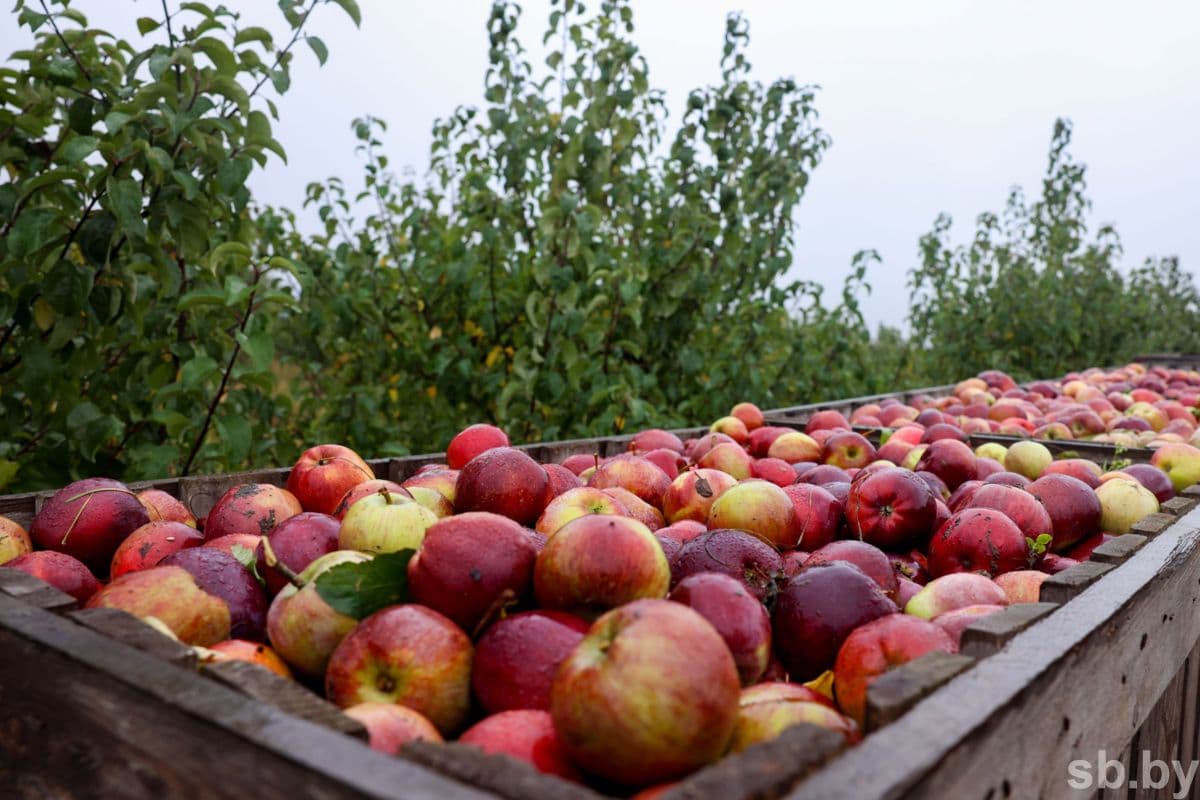
Own storage can accommodate up to 600 tons of fruit and vegetable products. Right now, filling the bins is in full swing. 360 tons of apples of autumn-winter varieties have already been laid in specialized chambers for winter storage. In total, the plans of gardeners of the farm to send for a long winter 450 tons of selected fruits of an ideal presentation. Strict control of temperature and humidity will allow the supply of fresh dessert apples in retail chains and stabilization funds until April.
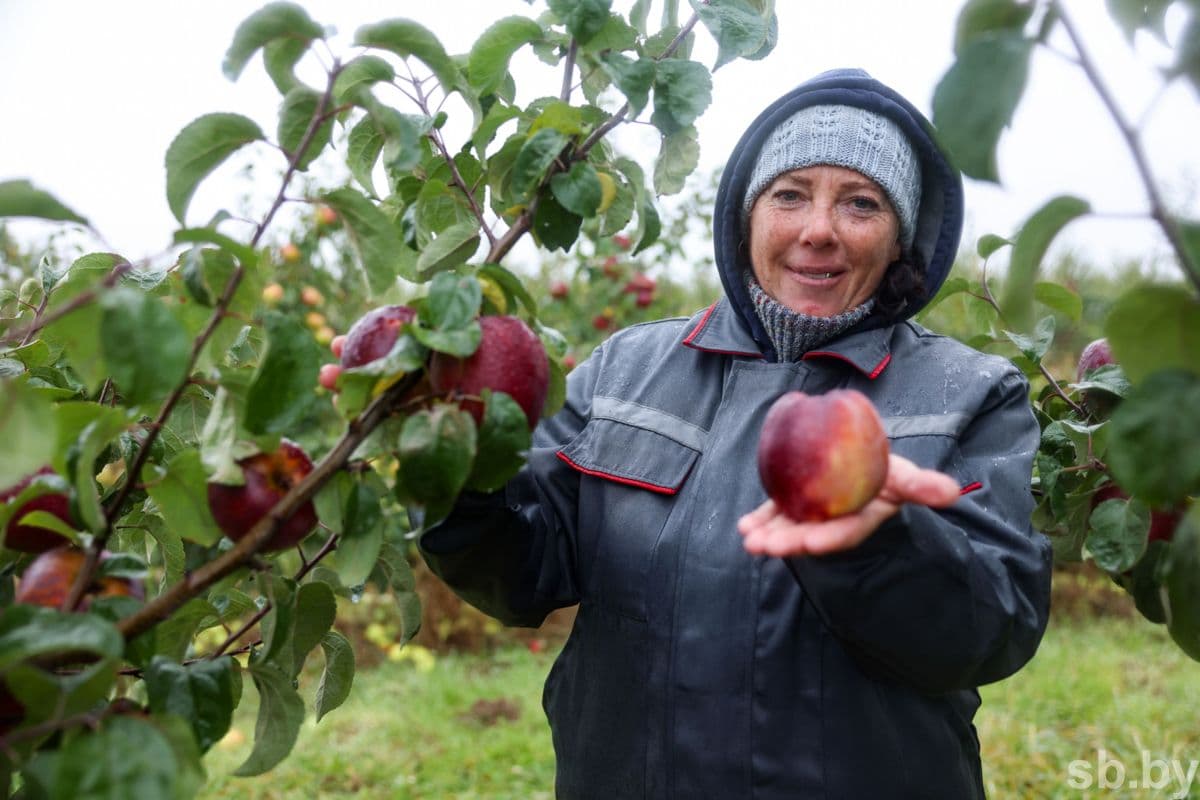
A round year in the fresh air and with vitamins The main backbone of the year-round brigade is women. Men in the household are often trusted with hard physical work and mechanized processing, but delicate, almost jewelry care for trees is a primordial feminine element.
Svetlana Degtyareva has been a gardener here for more than 20 years. Before that, she worked in animal husbandry, but admits that the land and the garden in the end won, tied to themselves tightly.
- You need to stick your heart to this place, Svetlana shares. We have a completely new task every season. In winter, in the cold and snow, we are on pruning. In the spring, vaccinations and posture begin, then weeding. In summer we collect blueberries – our “black gold”. Work in the open air is not easy: in a day and get wet, and freeze, and in the heat you evaporate. But when there is real interest, the difficulties recede. The previous boss always told us: “You have beauty here: all year round outdoors and with vitamins!” That's right.
The profession of a gardener is creative, requiring great patience and tenderness. The tree feels the hands, so the most important stage - the winter formation of the crown - does not tolerate rush.
- Pruning is not just approached, thoughtlessly ticked the branch and went on, Irina Chesnokova enters the conversation. You have to think about every movement of the secator. You look at the branch and calculate how the tree will behave next year, what result it will give, how it, God forbid, not to break and not to hurt. You follow every apple tree like a child. Men often do not understand this delicate, maternal relationship to the tree.
It is no wonder that the professional habit of gardening is carried home. Most of the workers live in rural areas and have built their own plots. At the same Irina Chesnokova, 16 acres were given for a home garden, where each apple tree was grafted and grown with its own hands.
Blueberries are “black gold,” and apples are our “round gold” and colorful, Olga Timovets smiles. - We all have our favorites. I, for example, love the "imant" for its noble sourness. And the winter "anabel"! Each apple is a mystery, revealing its true taste at a certain time. The fruit must lie down, mature, gain softness. Although many people like to pick it directly from the branch hard, so that the juice splashes at the first bite.
The harvest near Kletsk comes to the finish line. And while these careful women’s hands remove the last poured fruits from the branches, it becomes clear that the secret of local production is not only in modern technologies and strict calibration, it is in the love and maternal care with which they meet every spring and see off every autumn. So, long winter evenings on the tables of Belarusians will always be juicy fragrant apples grown with a soul. The main source of daily revenue - milk May 2026 was a turning point for the economy. The former agricultural branch of Kletsky was reorganized into an independent SUE Kletsky-Agro with an administrative center in the agro-town of Zubki. During the reorganization, the lands and capacities of the Lazovichy-Agro branch were added to it. This strategic consolidation made it possible to significantly increase production capacities, land fund and livestock.
The successful combination of industrial fruit growing with two other powerful areas was told by the chief economist of the enterprise Anna Kirilchik:
Anna Kirilchik. The enterprise has 7,309 hectares of land (arable land – 5,962 hectares). Grain and legumes occupied 1636 hectares (gross harvest - more than 12.5 thousand tons with an average yield of 76.1 c / ha, in some areas - up to 100 c / ha). 1760 hectares were allocated for corn, and 1120 hectares for high-margin winter rapeseed (shaft - more than 4.6 thousand tons). The remaining areas are occupied by forage crops. The plan for sanage is fulfilled by at least 94 percent.
The main source of daily income is milk. The total herd of cattle has 7042 heads (including dairy cows – 2530 heads). With the release of the flagship MTK "Sadovaya" under construction at full capacity in 2029, the breeding herd is planned to increase to 3600 heads. The farm daily delivers 59 tons of milk (the average yield from a cow is 23.3 kg per day), while 95 percent of the raw materials go extra for processing in OJSC Slutsk Cheesemaking Plant.
There are 400 employees. At the disposal of farmers 53 tractors, including energy-saturated MTZ and machines with autopilots for sowing, 27 trucks, 10 grain harvesters and 5 forage harvesters.
slav@sb.by
