What nails can tell us about our health
Doctors do not tire of repeating: nails are not just a “platform” for a manicure, but an important diagnostic indicator. But are there always white spots, yellowness or...
Doctors do not tire of repeating: nails are not just a “platform” for a manicure, but an important diagnostic indicator. But do white spots, yellowness or ribs always indicate terrible diseases? Let's figure out where the myths are, and where the reason to sign up for a specialist. And will help us in this senior lecturer of the Department of Dermatovenerology and Cosmetology with a course of advanced training and retraining of the Belarusian State Medical University Marina Tsedrik.
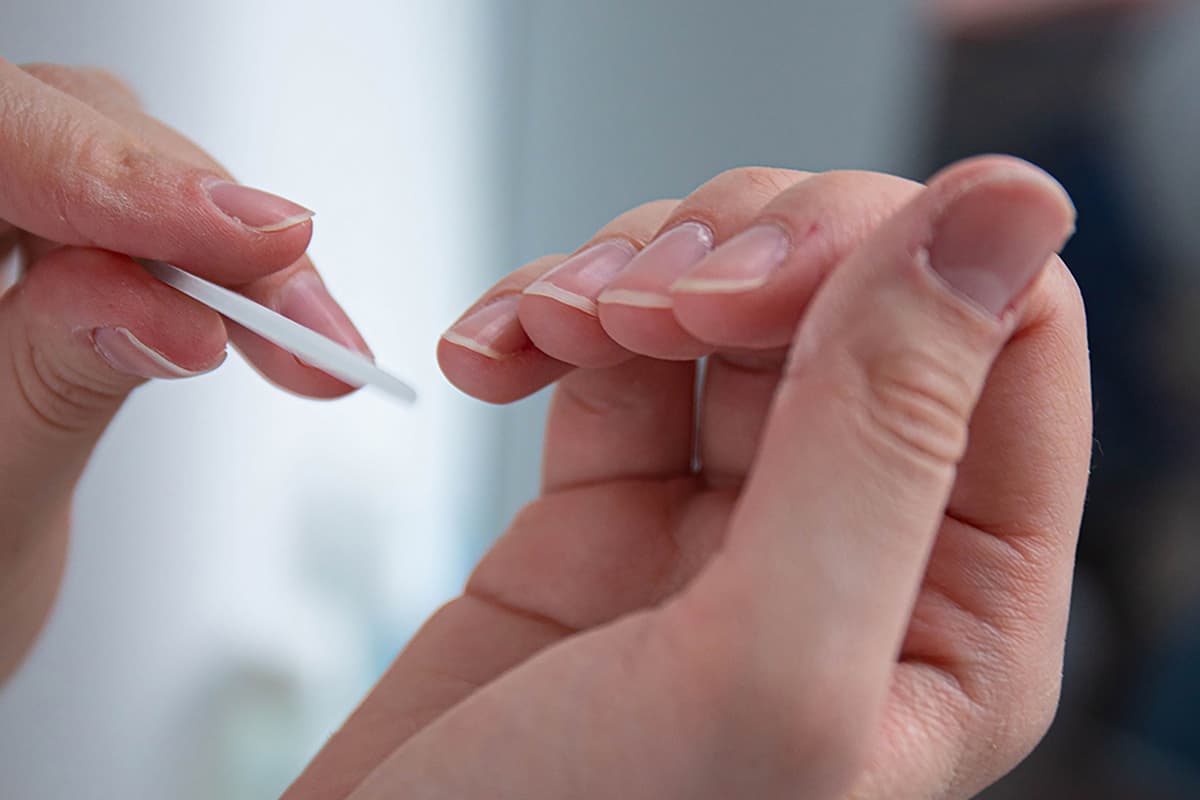

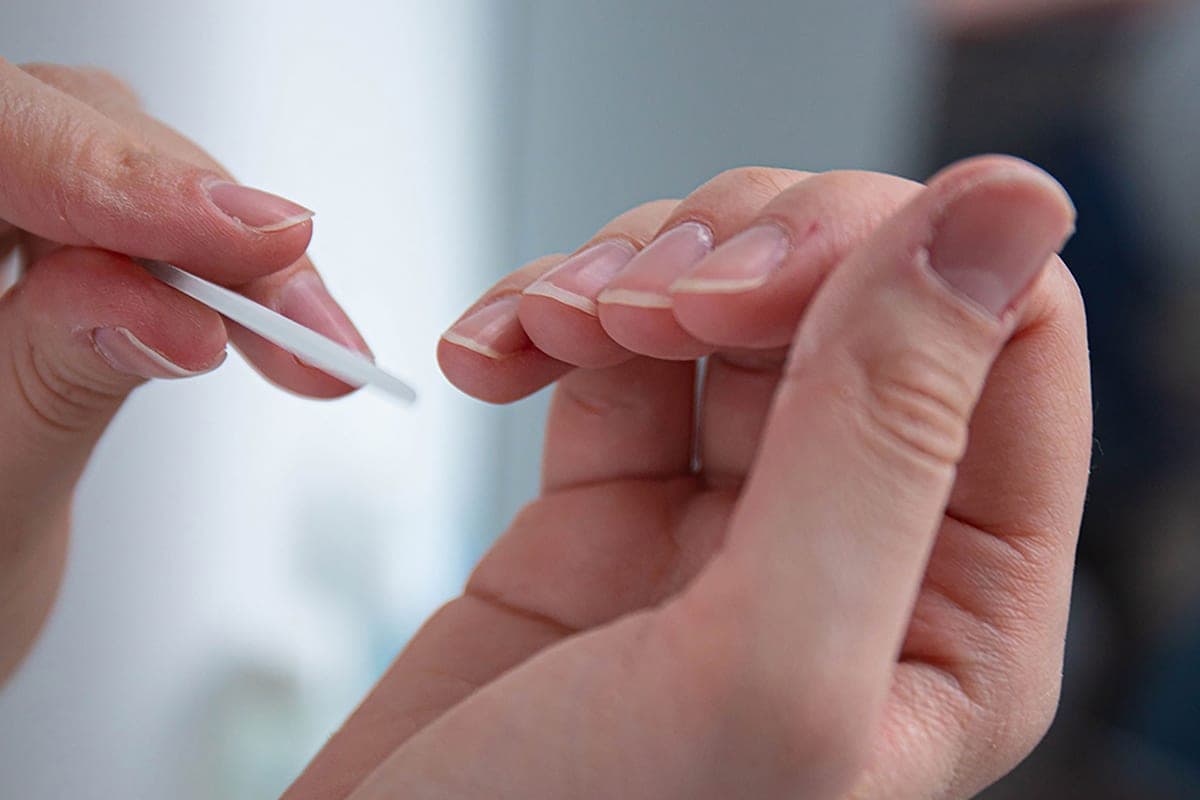
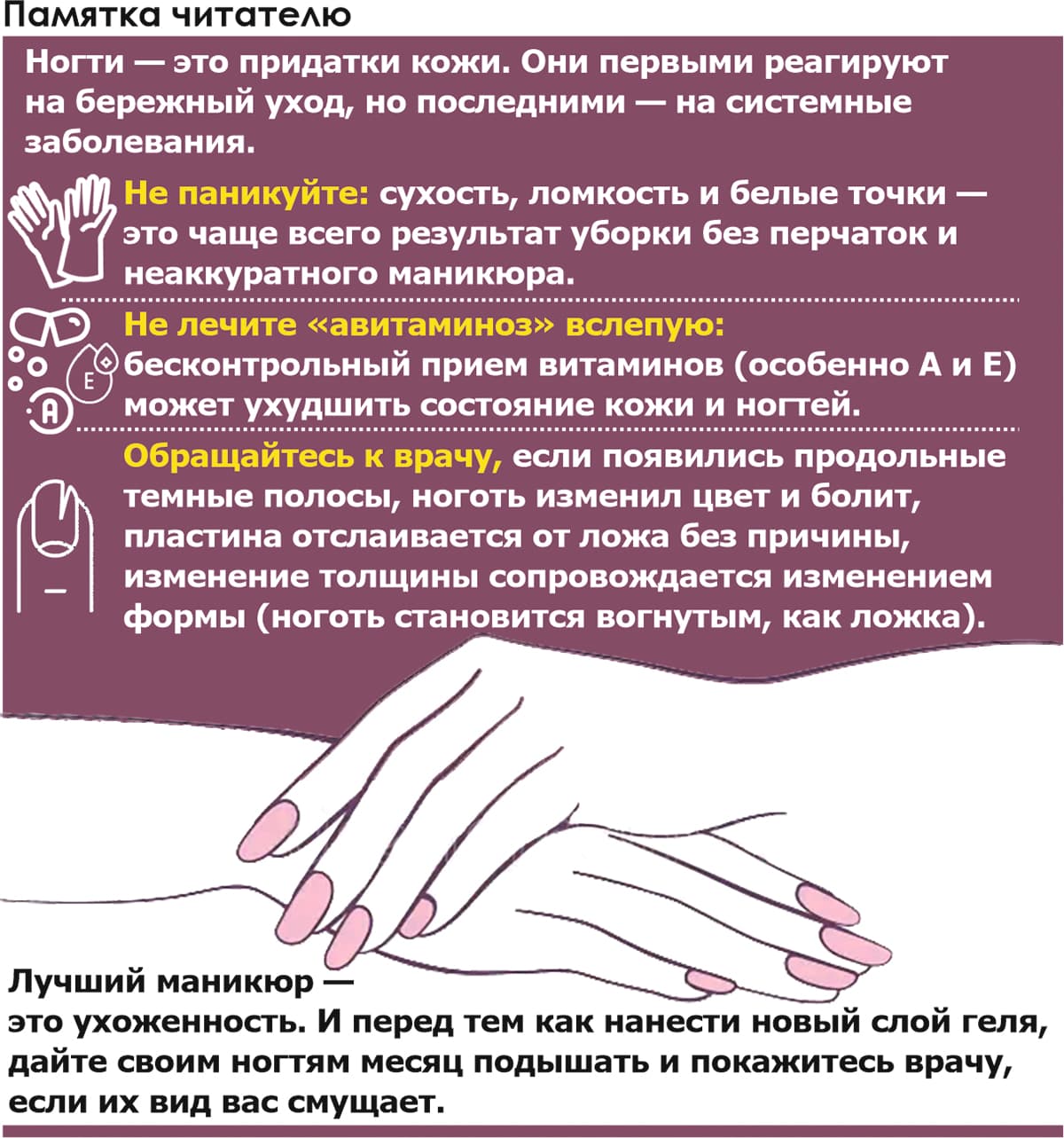
- A healthy nail plate should be flat, slightly shiny and have a pale pink color. This is due to the transmission of capillaries through transparent keratin. But the ideal is rare. Light longitudinal ribbing is a variant of the age norm, not a disease. It is important to understand the key thing: not every defect of the plate is a distress signal of internal organs.
- If the nail suddenly deteriorated, then its owner has liver problems or, possibly, vitamin deficiency?
- It's one of the most enduring myths. In fact, up to 80% of nail problems are not related to the liver or vitamin deficiency, but to external factors. For example, with the influence of aggressive household chemicals (you can not underestimate the consequences of washing dishes with special products without gloves!), with mechanical injuries (the habit of biting nails, too rough puncher during manicure), with frequent use of gel varnishes and acetone, as well as with fungal infections, which are a local disease, not a consequence of a weak liver.
However, there are times when change cannot be ignored. Consider the most frequent complaints of patients. Thin, brittle, layering: diagnosis or cosmetics? Onychoschisis (splitting) and onychorexis (fragility) are the scourge of modern women. If the nails are dry, break on the slightest obstacle and resemble tissue paper, in 90% of cases, a deficiency of moisture and lipids is to blame. The nail was simply dried with a varnish removal liquid, formaldehyde or cold air.
- When is the problem with internal organs?
- If you actively care for your hands, use gloves and oils, but the plate remains brittle and at the same time there are accompanying symptoms (hair loss, pale skin, weakness), you should take tests. Most often, this indicates iron deficiency (anemia) or disruption of the thyroid gland (hypothyroidism). Sometimes the lack of B vitamins and zinc is to blame, but in developed countries, vitamin deficiency, which can break nails, is less common than banal overdrying.
Color palette alertness – Yellow nail, perhaps the most common aesthetic claim. And the first suspicion falls on smoking or love for dark varnishes without a base.
- The pigment actually eats into keratin. But there is a term “yellow nail syndrome”. This is a condition in which the plate becomes thickened, cloudy, yellow-green and stops growing. What's the danger? True yellow nail syndrome in 50% of cases is associated with diseases of the respiratory system (bronchiectasis, pleurisy) or the lymphatic system. If you notice that the nail has changed color not from the outside (this is easy to check by bleaching it with citric acid), but from the inside and it is accompanied by swelling of the legs or chronic cough - a visit to the therapist is a must.
What to do if the nail plate has become blue or purple? See if you're cold. If not, it is a signal of hypoxia (lack of oxygen). Reason to check your heart and lungs.
The greenish tint of the nail most often indicates that you have a Pseudomonas bacillus, which has settled under the exfoliated artificial coating. This is treated topically, but requires removal of the gel and sanitation.
Particular attention should be paid to the brown or black color of the nail. If you haven't hit your finger, it's a warning sign: the vertical brown stripe can be a hematoma, or maybe a melanoma (cancer). Therefore, immediately go to an appointment with a dermatologist!

- The thing is that over the years, the growth of the nail plate slows down. This is a normal physiological process, like wrinkles. Due to the slowdown of cell renewal, the nails become thicker, lose shine and acquire a grayish hue. But here lies the trap: the same thing happens with fungal lesions (onychomycosis). How do you tell? Age-related changes usually affect mainly the toenails, are symmetrical and are not accompanied by itchy skin. The fungus, as a rule, begins with the edge: the nail crumbles, white masses accumulate under it, an unpleasant smell appears. If in doubt, microscopy of the nail plates will solve the diagnostic problem in 15 minutes.
- In our childhood, the appearance of white dots on the nails of the older generation explained as follows: these are the consequences of SARS, stress or lack of zinc.
- Scientifically, these white dots are called leukonychia, and in 95% of cases they have nothing to do with the transferred diseases. The true cause is trivial - microtrauma matrix (root of the nail). Remember when you aggressively pushed back the cuticle, hit your finger, or just bit your nails a month ago. The spot does not appear immediately, but as the plate grows (about 6 weeks on the hands). The connection with the transferred viral infections is really traced, but indirectly: during the disease, a person can unconsciously injure the nail bed or against the background of intoxication, keratin synthesis is temporarily disturbed, which makes the nail fragile to the slightest pressure. This is not a specific symptom, and it is not necessary to treat “immunity” due to one point. Pay attention only to the total whitening of the entire plate - this may indicate a protein deficiency or kidney problems.
- Long-term coating and extension of nails are firmly established in the life of modern women. How safe are these procedures?
- Long-term coating is contraindicated categorically or temporarily if you have fungal infections, since the coating creates a greenhouse effect and the fungus multiplies with triple strength. “Cloaking” the problem with a gel means losing the nail. It is also impossible to perform both of these procedures in the presence of onycholysis (detachment of the plate from the bed): a cavity is formed under the gel, where water enters - an ideal environment for bacteria. Categorically contraindicated long-term coating and build-up with allergies to acrylates - this condition is manifested by itching, redness of the skin around the nail, and in severe cases - Quincke's edema.
Temporary restriction should be observed during the period of chemotherapy or with severe hormonal failures, since at this time the nails become too fragile and the mechanical pressure of the polymer can lead to the removal of the plate.
It is also undesirable to use gel varnish for hyperthyroidism (thyroid disease): the nails “go away” faster than they grow, the coating is poorly maintained and injures the bed when detached.
lvk@sb.by