Rise to ом90 or fall below ом80: what will happen to the dollar in October
After a noticeable weakening in the summer, the ruble stabilized near the .84 per dollar mark in September. Whether this trend will continue in October and what factors will affect the exchange rate next month – read the article
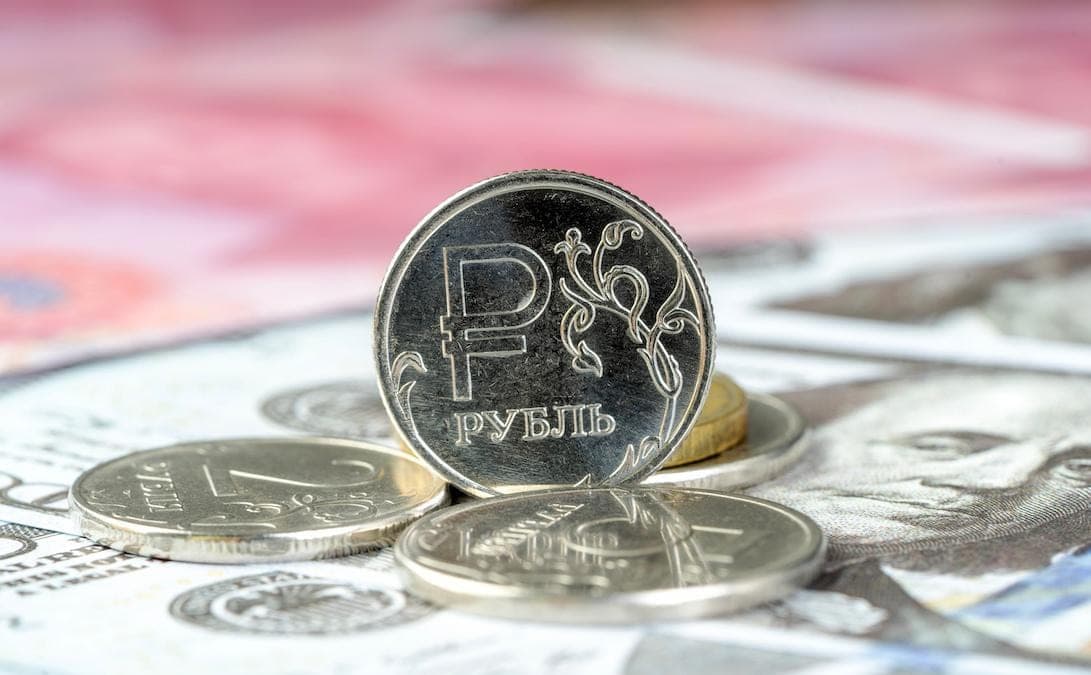
The weakening of the ruble, which began in May from around е71, continued in September and reached е86.9963 per dollar at its peak on September 3. However, closer to the second half of the month, the situation changed, and the ruble began to gradually strengthen against the major world currencies. On the weekend of September 26-27, the Central Bank set the official dollar exchange rate at the level of 84.3414, the euro rate - 95.8709, the yuan - 12.5355.
The main reason for the strengthening of the ruble in the second half of the month is the rise in oil prices, which resumed in July and intensified in early autumn, said Vashchelyuk, a senior analyst at the First Criminal Code. Export revenues enter the domestic foreign exchange market with a lag of one to three months, so the effects of rising oil prices in July began to manifest themselves only in September.
Yuri Kravchenko, Head of Bank and Money Market Analysis at Veles Capital Investment Company, adds to the listed factors of ruble support the reduction of foreign currency purchases within the budget rule, as well as the Bank of Russia keeping the key rate at 14%.
“RBC Investments” asked the experts what main factors will affect the ruble in October 2026, as well as what range they expect next month.
What factors will affect the ruble exchange rate in October
1. Balance of exports and imports under sanctions restrictions
The current account surplus in July 2026 amounted to $ 1.7 billion compared to $ 1 billion in July 2025, follows from the data of the Central Bank. The regulator pointed out that the increase in the indicator compared to last year is due to the outstripping growth of exports of goods compared to imports. The current account surplus in the period from January to July also increased from $ 21.5 billion to $ 33.9 billion due to an increase in the value of exports of goods.
The trade balance continues to support the ruble exchange rate, said Alexander Dzhioev, head of the macroeconomics and stock market group of Alfa Capital. The expert notes that the sanctions act on the foreign exchange market in two directions: on the one hand, they can complicate exports, logistics and international settlements, increasing the period between the physical delivery of goods and the actual receipt of export revenue. On the other hand, the restrictions limit the possibility of import and capital movement and thus limit the demand of Russian companies for foreign currency, Dzhioev explained.
Yuri Kravchenko adds that the foreign trade factor has a delayed impact on the foreign exchange market, so in October, the ruble will largely be supported by the conditions prevailing in August-September, primarily high oil prices and the associated volume of export revenue.
Natalia Vashchelyuk agrees with this opinion. According to the expert, the September rise in oil prices may lead to an additional strengthening of the ruble in October. Exporters will return the proceeds to Russia and change it into rubles.
2. Sales of foreign exchange earnings by exporters
Presidential Decree No. 771, signed in October 2023, was originally introduced to stabilize the dollar (reaching га100) and increase the transparency of the foreign exchange market. The original version required companies to credit at least 80% of foreign exchange earnings to accounts in Russia, and sell 90% of this amount, but during 2024 the requirements were mitigated, reducing the mandatory enrollment threshold to 40%.
In May 2025, the decree was extended until April 30, 2026, but in August, the standards for the mandatory sale of foreign exchange earnings were zeroed due to the strengthening of the ruble and the stabilization of the liquidity situation.
Kravchenko of Veles Capital notes that foreign currency sales by major exporters have been relatively low in recent months. However, in October, this factor may become more favorable for the ruble, since the increased oil prices of previous months with a lag will affect the receipt of export revenue and the supply of foreign currency, the expert believes.
“However, the actual sales of foreign exchange earnings may be affected by sanctions restrictions, changes in the settlement infrastructure and other factors that complicate foreign trade and foreign exchange operations,” he adds.
According to Dzhioev, the supply of currency will remain one of the key factors supporting the ruble in October. At the same time, the growth of export revenues will not immediately be reflected in the domestic market due to the increased timing of foreign trade settlements. Given the increase in oil prices in August-September, the supply of currency in October may gradually recover, but this process is likely to be moderate.
3. Currency operations of the Central Bank and the Ministry of Finance
The Ministry of Finance in the period from September 7 to October 6 daily buys foreign currency and gold in the equivalent of е2.5 billion. Previously, the agency bought currency for у6.5 billion per day.
In parallel with this, the Bank of Russia in the second half of 2026 daily sells currency in the equivalent of е0.58 billion against е4.62 billion in the first half of the year (a reduction of almost eight times).
Thus, net currency purchases under the budget rule amount to ного1.92 billion per day.
Chief analyst of Sovcombank Mikhail Vasiliev expects that from October 7, net purchases of the Ministry of Finance in the framework of budget operations will increase to ,7-8 billion per day from ,1.9 billion. “This increase in purchases will reflect higher export revenues due to higher oil prices,” he said.
Vashchelyuk of the Criminal Code “First” admits that the Central Bank and the Ministry of Finance can increase purchases of foreign currency within the budget rule, which will also somewhat restrain the strengthening of the ruble. At the same time, in 2027, the cut-off price in the budget rule will be reduced from $59 to $50 per barrel, which may affect the expectations of foreign exchange market participants and contribute to some weakening of the ruble this year. In this logic, the state against the background of high oil prices will direct its super profits to buy currency for the NWF.
Head of the analytical department of Digital Broker Natalia Pyreva also believes that the volume of net purchases of currency in October may grow relative to September, which will put moderate pressure on the ruble.
However, if the net volume of foreign currency purchases in October will increase, the pressure on the ruble will only be short-term, says Yuri Kravchenko.
“Fundamentally, the mechanism of currency transactions within the framework of the budget rule should compensate for the impact of changes in oil prices on the domestic foreign exchange market. At the same time, in the short term, the actual balance of demand and supply of currency can significantly deviate from this logic under the influence of time lags, peculiarities of calculations and infrastructure restrictions, the expert explained.
4. Central Bank rate
Kravchenko notes that the factor of high rates in the economy continues to support the ruble exchange rate, although its influence gradually weakens as monetary policy easing. According to the expert, the preservation of the rate and a tighter signal of the Central Bank in September temporarily suspended the weakening of this factor, but in October, the market will be important not so much the step on the rate, as the accompanying signal of the regulator.
Dzhioev believes that the rate affects the ruble mainly indirectly. Due to various restrictions, the channel of foreign capital inflows works weaker, so the impact of the rate on domestic demand is more important: high rates restrain consumption, investment and demand for imports, and also make ruble savings more attractive, the expert explained.
Natalia Vashchelyuk in the baseline scenario expects that at the October meeting, the Bank of Russia will keep the rate at 14%.
5. Oil prices
The oil factor has a positive effect on the ruble, as the cost of Russian Urals in September rose to $ 100 per barrel against the backdrop of the tense situation in the Middle East, said Dzhioev of the Criminal Code “Alfa-Capital”. At the same time, the expert notes that for the foreign exchange market, not only the current value of oil quotes is important, but also the time lag between the price increase and the receipt of revenue.
Vashchelyuk estimates this delay of one to three months, so in October export revenues should be significant against the background of relatively high oil prices in August-September. This factor, according to Vashchelyuk, will contribute to the strengthening of the ruble.
“Oil prices will largely depend on developments in the Middle East. In the baseline scenario, we expect their gradual decline, but this factor will significantly affect the foreign exchange market with a delay - in November-December, she adds.
What will happen to the dollar in October 2026: forecasts of experts
Yuri Kravchenko, Head of Bank and Money Market Analysis at Veles Capital, said: In the baseline scenario, we expect the average official dollar exchange rate in October to be close to 84.5–85. This level implies the preservation of the current combination of interest rates, foreign trade factors and the supply of currency in the domestic market. At the same time, a further increase in the premium for geopolitical risk may lead to a weakening of the ruble – in this scenario, the exchange rate may shift to the area of й90 per dollar. Natalia Vashchelyuk, Senior Analyst at First Management Company: In the baseline scenario with a gradual decline in world oil prices and stable geopolitics, the dollar may be in the range of 80–85, the yuan – 11.9–12.7, the euro – 91–97. If oil prices remain high (about $100 per barrel of Brent or higher), it is possible that the dollar may return to the range of 70-80. In case of strengthening of country geopolitical risks and lower oil prices, the dollar exchange rate may move to the range of х85-90. Alexander Dzhioev, Head of Macroeconomics and Stock Market Group of Alfa Capital Management Company: In the baseline scenario in October, we expect stabilization of the situation on the foreign exchange market. The dollar, according to our forecasts, will be mainly in the range of 80-85. Natalia Pyreva, head of the analytical department of Digital Broker: “We expect a range of 82-88 per dollar.” Mikhail Vasiliev, chief analyst at Sovcombank: “We believe that in October the ruble will trade in the range of 82–87 per dollar, ,12.2–13 per yuan and ,94–100 per euro.” Alexander Potavin, analyst of the financial group Finam: In October, the dollar will be in the range of 82-87. The euro exchange rate, respectively, we expect in the range of 94-101, and the yuan - 12.2-13.