Taxes of individuals: terms of payment, what and up to what date to pay
On December 1, the Russians end the deadline for paying taxes on the basis of a notification from the Federal Tax Service. But there are incomes that individuals must declare themselves, then the obligation to pay the tax arises before July 15. All details in the article
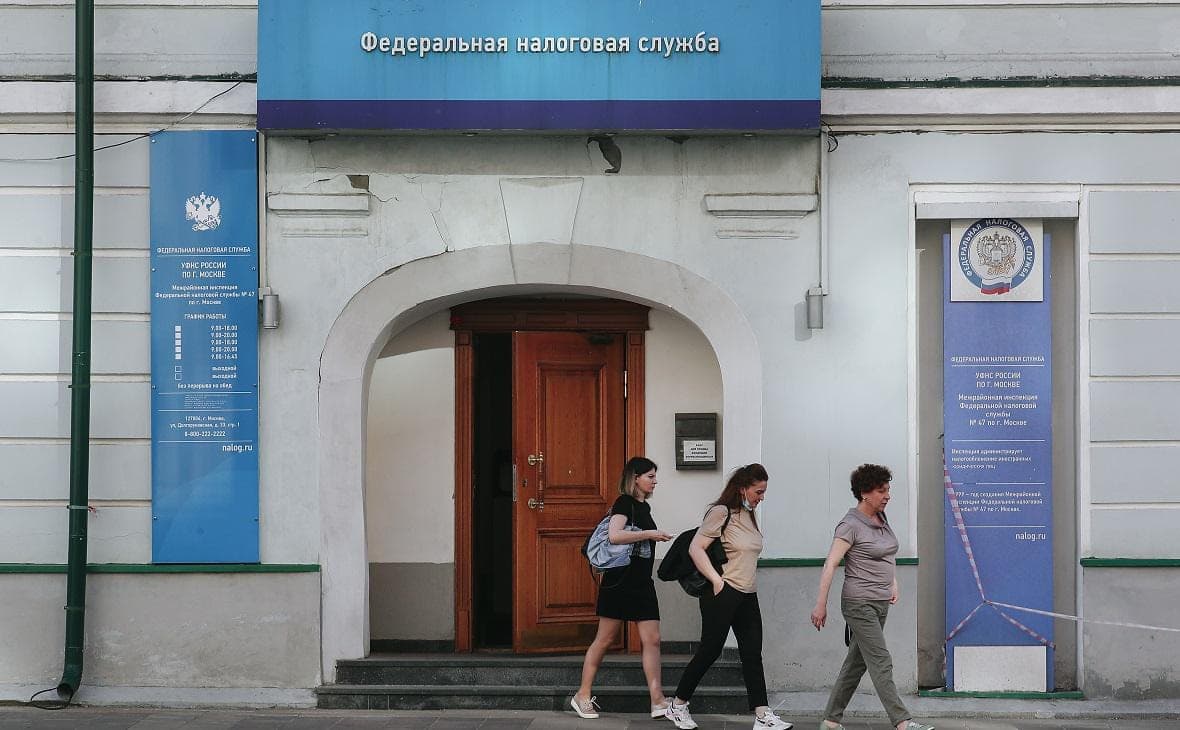
What taxes do individuals pay
All taxes paid by individuals can be divided into three main groups.
1. Personal income tax
Personal income tax (ITF) is the main type of direct taxes. Calculated as a percentage of total income of individuals less documented expenses. The rules for calculating and paying personal income tax are enshrined in Chapter 23 of the Tax Code of Russia.
As a rule, personal income tax is paid by tax agents, for example, employers, but in some cases, the income declaration and the obligation to pay the tax are imposed on citizens themselves.
Direct payers of personal income tax are the following categories of individuals:
persons who are tax residents of Russia (actually staying in Russia for at least 183 calendar days for the next 12 consecutive months); persons who are not tax residents of Russia, in case of income in Russia.
Since 2025, Russia has a progressive scale of personal income tax rates. The specific rate depends on the type of income and the amount of annual income. For residents of Russia, the basic scale looks like this:
13% - for part of income up to .2.4 million per year; 15% - over .2.4 million to .5 million; 18% - over .5 million to .20 million; 20% - over .20 million to .50 million; 22% - over .50 million.
2. Property taxes
Property taxes of individuals are a group of mandatory payments that citizens pay to the state for ownership of certain property. The rules for calculating and paying property tax are fixed in Chapter 32 of the Tax Code.
This category includes three taxes:
Property tax of natural persons. It is paid by the owners of real estate: residential houses, apartments, rooms, garages, parking spaces, unfinished construction objects and other buildings and structures. Land tax. It must be paid by land owners. Transportation tax. It is paid by the owners of cars and other vehicles registered on them.
3. Professional Income Tax (VAT)
Professional Income Tax is a special tax regime for self-employed citizens and individual entrepreneurs who work independently, without employees.
It has been operating in Russia since 2019 as part of the experiment, which was extended until December 31, 2028. It is regulated by Federal Law No. 422-FZ of November 27, 2018 “On conducting an experiment to establish a special tax regime “Tax on professional income” and Article 18 of the Tax Code, which is devoted to special tax regimes.”.
The rate depends on the type of client:
4% when working with individuals; 6% - with legal entities and IP.
If the income for the year exceeds ый2.4 million, the right to apply the NAP is lost, and you need to switch to a different tax regime.
Tax calendar of the individual: what taxes must be paid
April 30 – filing a declaration 3-NDFL
Income tax in some cases withhold when paying income to citizens tax agents. For example, the employer usually withholds personal income tax from the salary, a Russian broker from operations on a brokerage account. Information about the withheld tax a person can see in his personal tax office. But you need to inform yourself about some income: for example, from renting housing to another individual without applying a tax on professional income (NPT), selling property or a share in the company, if there is no exemption from declaring, as well as from selling cryptocurrency, said Elena Krasnoperova, an expert of the Association for the Development of Financial Literacy, the founder of Nalogika.
Citizens must independently calculate the amount of tax and submit to the tax authority a declaration on personal income tax on the form 3-NDFL. So, for income received in 2026, you need to file a 3-NDFL declaration no later than April 30, 2027, and pay the tax no later than July 15.
To obtain a personal income tax deduction, the declaration can be filed at any time throughout the year. At the same time, a taxpayer who declared both income subject to declaration and the right to tax deductions in a tax return is obliged to submit such a declaration within the prescribed period - no later than April 30.
You can complete and submit a declaration through:
service "Personal account of the taxpayer for individuals"; the program "Declaration"; in paper form in person, by mail or MFC.
It is not necessary to provide a 3-NDFL declaration in cases where the tax is paid on the basis of a tax notice.
July 15 – payment of personal income tax on the declaration of 3-NDFL
July 15 is the last day for timely payment of personal income tax, calculated and reflected by taxpayers in the declaration on Form 3-NDFL for the previous year.
The tax is paid independently, that is, without notice from the tax authority, by depositing the amount into a single tax account (ENS). You can divide the payment into several parts, but you need to pay no later than the deadline. It can be paid in the services of the Federal Tax Service “Personal Account of the Taxpayer for Individuals” and “Payment of Taxes and Duties”, as well as through “State Services”, a bank or branches of “Mail of Russia”.
In case of late payment of tax starting from July 16, penalties will be charged based on 1/300 refinancing rate of the Central Bank for each overdue day of payment of personal income tax.
november 1 – deadline for receiving tax notice
A tax notice is a document from the tax authority that tells you what taxes to pay, for what period, in what amount and up to what date.
Starting from August 1, 2026, notifications are sent electronically to all users of the State Services portal, with the exception of taxpayers who sent notifications to the tax authorities about the termination of obtaining documents using the State Services portal.
The notification shall contain the following particulars:
objects of taxation; tax base; tax rates; amount to be paid; term of payment of taxes; details for payment of taxes by single tax payment (UNP) - QR code, bar code, ID, bank details.
If the tax notice cannot be transmitted in electronic form through the personal account of the taxpayer for individuals or the portal "Public Services", it is sent by registered mail. As well as the taxpayer has the right to receive a tax notice on paper in any tax authority or in the MFC on the basis of an application.
Notification comes no later than 30 days before the due date - December 1. In 2026, the Federal Tax Service reported that until October 10, 69.9 million tax notices were placed in the personal account of taxpayers, in the personal account on the State Services or sent by registered mail if taxpayers do not have access to these services.
December 1 – payment of property taxes and personal income tax
December 1, the deadline for the payment of property taxes and personal income tax on the tax notice.
As a rule, the notice contains information about taxes for the previous year:
transport, land, property of individuals, personal income tax.
Personal income tax will be specified in the notice, for example, if income is received in the form of interest on deposits, the tax was not previously withheld by the tax agent, income is received in the form of winnings from participation in gambling.
You can pay taxes in different ways:
through the "Public Services"; in the personal account of the taxpayer; in the bank's mobile application using the QR code from the notification; in the bank according to the details.
28th day of each month - payment of NAP for self-employed
The self-employed are required to pay a monthly professional income tax (VAT). The amount of tax payable appears in the appendix "My tax" no later than the 12th day, and the total term of payment no later than the 28th day of the next month. At a weekend or holiday, the period is postponed to the next working day.
The first payment after registration will be later: for example, when registering in October, the tax for October and November is paid in December. Accrual up to с100 inclusively transferred to the next tax period, said Krasnoperova. Tax is calculated from income, not from profit: expenses do not reduce it. A single deduction of ов10 thousand is provided: until it is spent, 3% and 4% are actually paid, respectively. This is not a payment to the card, but an automatic tax reduction, the expert added.
When receiving payment for services, a self-employed citizen must independently form a check through the My Tax application. At the same time, the amount of tax does not need to be considered by itself, it is determined by the tax authority - this process is automated. Information about tax and payment is reflected in the mobile application “My tax” in the tab “Taxes” and in the web version of the mobile application in the tab “Accruals”.
“In order not to miss payments, you can link the card and separately enable autopayment. I advise you to check that the write-off has passed. If there are no new incomes, the new NAP is not accrued, but the old debts remain, Krasnoperova added
In addition, self-employment can be combined with an employment contract. But payment for services from the current employer or former, if after dismissal has not passed two years, it is impossible to tax the NAP, continued Krasnoperova. “Salaries, interest on deposits and the sale of personal property are also not included in the NAP; they are subject to separate personal income tax rules. Personal taxes on property, land and transport are retained if there is no exemption or benefit, she explained.
What happens if you don’t pay taxes on time
From November 1, 2025, the indisputable debt of citizens without the status of IP, the Federal Tax Service can recover extrajudicially, including from bank accounts, after the procedures provided for by law, so it is important to monitor notifications and settlements with the tax, the expert warned Krasnoperova.
For delay, daily penalties are charged: for an individual, 1/300 of the current key rate. That is, if today the Central Bank rate is 14%, then the presence of tax debt costs the taxpayer 17.04% per annum, she added.
“If it is not possible to deal with the accrual before the due date, I recommend, if financially possible, replenish the single tax account with the required amount, taking into account other obligations, and continue to find out. Payment does not deprive the right to challenge the calculation. However, the law does not oblige to pay the disputed amount in advance: according to the prescribed procedure, an application for recalculation or a complaint can be filed, and the disputed amount is excluded from the balance of the ENC for the period of the dispute. Undisputed charges should be paid on time, the ARF expert continued.
According to Krasnoperova, the most reliable approach is to plan tax expenses in advance: assess future payments and set aside a part of the income for them during the year. "Such tax planning helps avoid unexpected loads, penalties and the need to seek a last-minute reprieve," she advised.
Is it possible to pay taxes in installments or receive a deferment
Yes, there is a possibility. Article 64 of the Tax Code provides for a deferment of up to one year and installments of up to three years: when deferred, they pay later in one amount, when installments are paid on schedule. But this is a separate procedure, and not the ability to independently transfer the payment, said Krasnoperova.
“The natural person must confirm the basis provided for by law: for example, a property position that excludes a lump sum payment and show that it will be possible to pay later. As a general rule, security is required: collateral, surety or bank guarantee. Deferral or installment is valid after the entry into force of the decision of the authorized body. The statement itself does not postpone the payment period and the accrual of penalties does not stop, Krasnoperova explained.
According to the expert of ARFG, there is no automatic write-off of tax debt in three years. "The law establishes the terms of recovery, but to recognize the debt as hopeless and write off it, grounds under Article 59 of the Tax Code are needed, for example, a corresponding judicial act," she added.
Andrey Lokis, Special Adviser to the Pen & Paper Bar, listed the cases where a delay or installment may be granted:
the individual suffered damage as a result of a natural disaster, a technological catastrophe. On this basis, interest is not accrued for the period of deferment or installments; there is a threat of the appearance of signs of insolvency (bankruptcy) in the case of a one-time payment of tax. On this basis, interest is accrued for the period of deferment or installments based on a rate equal to 1/2 of the key rate of the Bank of Russia, which was in effect for the period of deferment or installments; the property position of an individual (excluding property that cannot be recovered) excludes the possibility of a one-time payment of tax. On this basis, interest is also accrued for the period of deferral or installments based on a rate equal to 1/2 of the key rate of the Bank of Russia, which was in effect for the period of deferral or installments; a one-time payment of the amount of tax payable according to the results of a tax audit is impossible. Changing the term of payment of tax is possible only in the form of installments. Interest is calculated based on the rate equal to the key rate of the Bank of Russia, which was in effect during the period of the installment.
According to Lokis, no deferment or installment is granted, in particular if:
a criminal case has been initiated against the taxpayer on the grounds of a crime related to a violation of the legislation on taxes and fees; the taxpayer is going to leave Russia for permanent residence; insolvency (bankruptcy) proceedings have been initiated against the individual; the case (cases) on a tax offense and the amount of arrears, the non-payment of which was the basis for such consideration, and (or) the amount of the fine provided for by the Tax Code for such an offence exceeds 10% of the amount specified in the application for the provision of a tax offense or deferral in 100 thousand cases, and also in the cases listed.
The main thing about taxes of natural persons
All taxes of individuals can be divided into three groups: personal income tax (from income), property tax (tax on property, land, transport) and NPD (tax on professional income for self-employed). April 30 – filing a 3-NDFL declaration for the previous year (for income that must be declared independently). To receive deductions, this period does not apply - the declaration can be filed throughout the year. July 15 – payment of personal income tax on the declaration of 3-NDFL. From July 16, penalties are charged (1/300 key rate for each day). November 1 is the deadline for receiving the tax notice. From August 1, 2026, notifications will be sent electronically to all users of Public Services, unless a refusal is filed. December 1 – payment of property taxes and personal income tax on notification. 28th day of each month – payment of NAP for self-employed (the amount appears in the appendix “My tax” until the 12th). From November 1, 2025, the Federal Tax Service can recover indisputable debts of individuals without the status of individual entrepreneurs extrajudicially, including from bank accounts. For delay, daily penalties are charged - 1/300 of the key rate (at a rate of 14% it is about 17% per annum). Article 64 of the Tax Code provides for a delay of up to one year and installments of up to three years, but this is a separate procedure with confirmation of grounds and security (pledge, surety, bank guarantee).