
Ludomania in the family: how to behave to parents
"Mom, I lost. Lend me some money! An adult child-ludoman is no longer under the control of parents, a schoolboy who can be deprived of pocket money as a edification.
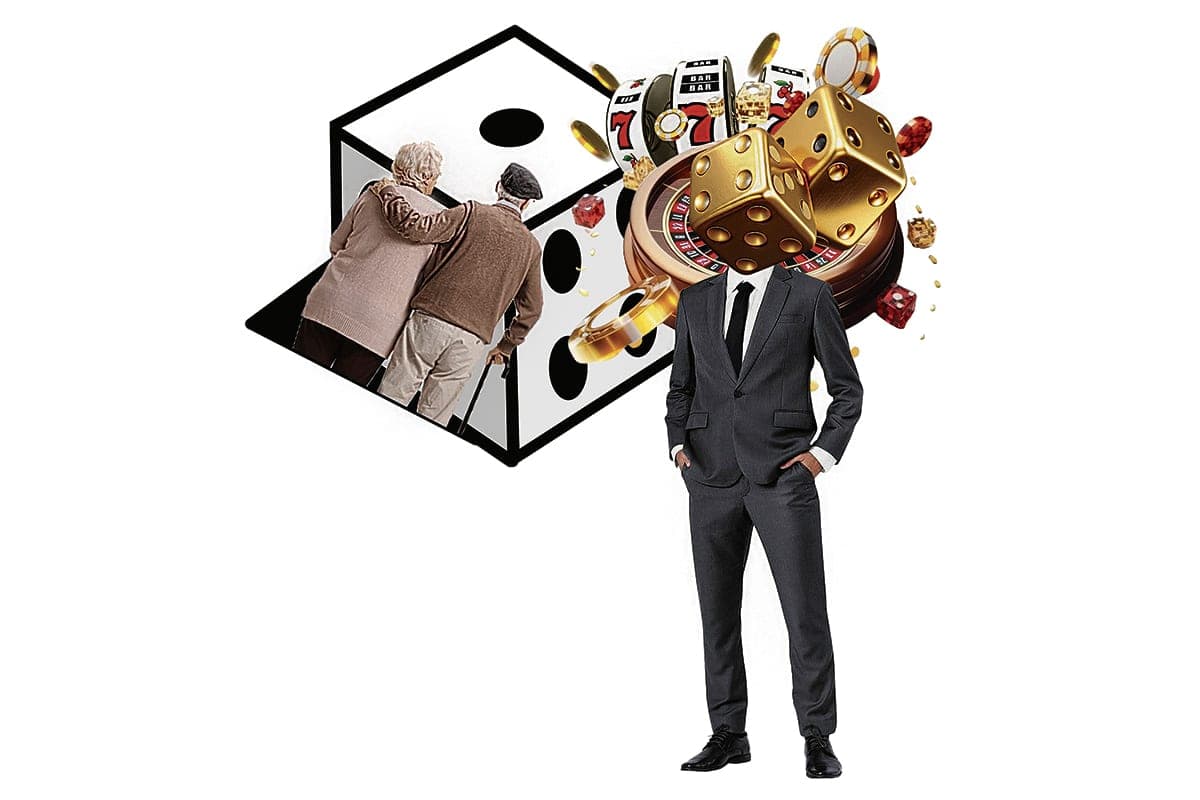
"Mom, I lost. Lend me some money! An adult child-ludoman is no longer under the control of his parents, a schoolboy who can be deprived of pocket money, take away his smartphone or forbid him to use social networks. An adult child has every right to hang out in an online casino, place bets and dispose of his finances as he pleases. In the modern world, gambling has become part of popular culture. But what happens when passion turns into addiction? Time seems to be winding back: the grown-up child again turns out to be in the role of a child, and mothers and fathers – in the role of those who save, correct the consequences and plunge headlong into codependent relationships. How do we break this cycle? We talk with a practicing psychologist, Gestalt therapist Anastasia Troinich.

Predictable boundaries by Anastasia Dmitrievna, imagine this depressing situation: parents realize that they have raised an irresponsible son (or daughter), who does not know how to handle money and at the same time has a gambling temperament. What rules of relationships within the family in this case will be most effective?

- First of all, it is important to change the view of the current situation: we are not just an irresponsible adult who does not know how to handle money, but a person who has formed an addiction to gambling. This is a situation where a person continues to play, despite the negative consequences associated with finances, relationships with others, work and their own psychological state. Therefore, attempts to solve the problem solely by persuasion or prohibitions, somehow to shame will not give the desired effect. This condition requires professional help and has nothing to do with simple weakness of character or lack of willpower.
It is important for parents to understand that they cannot force an adult child to stop playing, but they can stop supporting an environment in which the negative consequences of their play are constantly compensated by the family. This is the boundary between help and rescue.
The most effective parenting position in this situation is: “We love you and are ready to help you get treatment for addiction, but we will no longer fund gambling and decide the consequences of your actions for you.” This means refusing to pay off debts for an adult child, refusing to give money under the promise “This is the last time”, refusing to take out loans or make financial commitments.
It is important that this does not turn into punishment or demonstrative rejection. The border should be calm, clear and predictable. For example: We will not lend you money. If you need help with treatments, foods or other necessities, we will discuss this separately.” That is, parents do not refuse help, but its form changes. And this is a fundamental difference, because financial “rescue” only supports dependent behavior: a person does not face the consequences of his addiction, which means that he does not have to change anything.
- If it is the encounter with reality that can become one of the factors inducing a person to recognize the scale of the problem and ask for help, how can this be achieved? Leave your child (even if he is in his 30s) without food, shelter or treatment? Let's be honest: no adequate parent would do that.
- No one wants to go to extremes. We are talking about something else: parents should not become those who every time eliminate the financial and everyday consequences of gambling. For example, if an adult child loses a certain amount, the mother and father should not borrow money for him, repay his loan or give away their own savings. They may say, “We understand that it is difficult for you now, and we are ready to help you find a specialist, deal with treatment and think together about how to solve the situation. But we will not repay your debt.”.
The second important rule concerns financial transparency. If an adult child lives with parents, it is necessary to agree who is responsible for what, as well as on the consequences of violating agreements: what expenses the son or daughter pays independently, what general expenses exist, what happens to the payment of housing, food, utilities. It is better to discuss such rules in advance, rather than at the time of another conflict or request for money.
The third rule is that it is much more productive to talk not about morality and willpower, but about the consequences and the need for treatment: “We see that you cannot stop on your own. Let's look for a specialist who works with gambling addiction.”.
It is also important not to wait for the person to fully acknowledge the problem. Parents can seek professional help on their own, even if the adult child refuses. Help is needed not only for the person with an addiction, but also for his relatives who daily face the consequences of gambling behavior. From a psychological perspective, what are the most common mistakes adults make in trying to help a ludoman child?
- When parents try to solve a problem by force, pressure or intimidation. They can shout, humiliate, shame: “You are already an adult, what do you not feel ashamed of?”, “You are just weak-willed!”, “Take yourself together!” But remember, shame and stigma are not treatments for addiction. They only make the problem worse. A person may already experience feelings of guilt and shame, and the intensification of these experiences by itself does not form the necessary skills to stop gambling behavior.
The second mistake, as we mentioned above, is to keep saving. For example, the son lost his salary and called his mother: “I urgently need 500 rubles, otherwise there will be problems.” The mother gives money because she is afraid of serious consequences. The result? After a while, the situation repeats itself. Help is to support a person in seeking treatment, to be there during an emotionally difficult period. “Rescue” is to regularly give up your material resources, pay off its debts, take out loans or come up with explanations for others.
When parents cease to constantly eliminate the consequences, responsibility gradually returns to where it belongs - to the adult. It's not cruelty or giving up a child. Instead, it is an opportunity to stop living in his place and leave him room for his own decisions and their consequences.
The third mistake is to believe promises rather than act. "He said he would never play again," "He swore it was the last time," "He promised to get the money back after paycheck." Promises can be sincere at the time of conversation. But the desire to change is not enough. It is much more important to look at whether specific actions have appeared: seeking professional help, financial restrictions, abandoning gambling behavior, identifying and working with factors that support the game, developing coping skills and preventing relapse.
The fourth mistake is to forget about yourself. Parents of a person with ludomania often live in constant anxiety: check accounts, wait for a call, fear another debt, hide the problem from relatives, take on financial obligations of a son or daughter. As a result, the entire family system suffers. It is important for mothers and fathers to have their own support, maintain their own financial boundaries, and not let one adult’s dependency gradually determine the life of the whole family.
FROM SOCIAL NETWORK BLOODING
“The brother suffered from gambling for many years. After each quarrel, his father vowed to get him out of the apartment. But my mother rushed to protect the blood: “Only over my corpse!” In the end, nobody did anything. Over time, these threats have become part of everyday home noise. Screaming, ultimatums. Two hours later, they call for dinner. Ask if there is money for travel... This continued until his brother lost the apartment in the casino, the one in which the three of them lived. Father's heart attack, mom's cancer on stress. The shamed moved to live with me - in a half-way house, where I huddled with two sons. I didn't accept my brother. I set a condition: first treatment, then we will talk
lvk@sb.by


