
Where does the house live, and who is the cat Maxim? NAS professor told about Belarusian folklore
Professor of the National Academy of Sciences of Belarus Tatiana Volodina has been collecting authentic Belarusian fairy tales for decades. In an interview with ...

Professor of the National Academy of Sciences of Belarus Tatiana Volodina has been collecting authentic Belarusian fairy tales for decades. In an interview with the correspondent of the Minsk-Novosti agency, she told why in the age of artificial intelligence they remain the most important school of life.
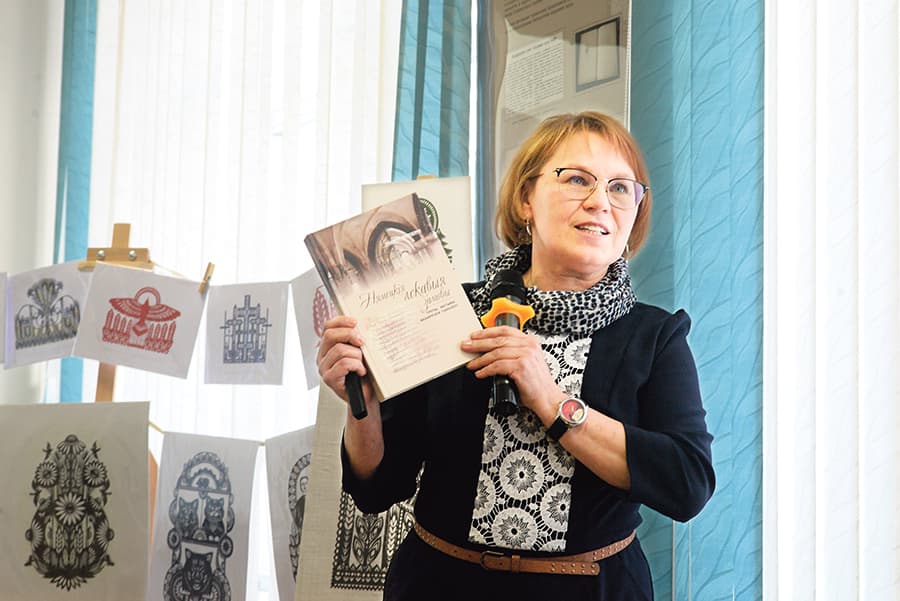
Work, hobbies and life
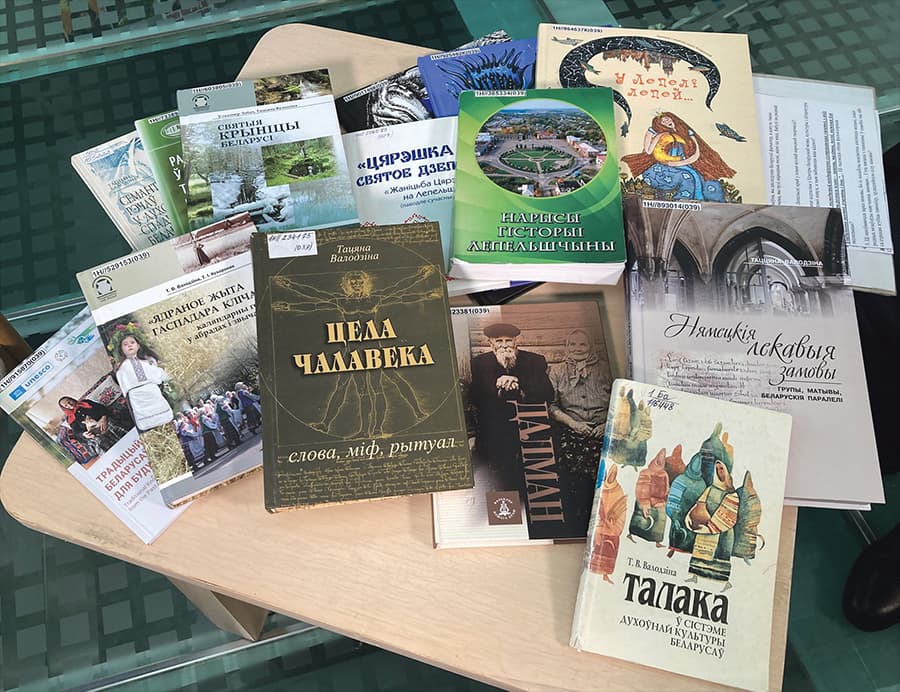
- I was born in the most beautiful place on earth - the village of Sushe Lepelsky district of Vitebsk region, - says the head of the department of folkloristics and culture of the Slavic peoples of the Center for Research of Belarusian Culture, Language and Literature of the NAS of Belarus, Doctor of Philology, Professor Tatiana Volodina. — After graduation, she entered the philological faculty of BSU. During my studies at the 1st year I was lucky to become a participant of a scientific student seminar on ethnolinguistics under the guidance of Nikolai Antropov. I was struck by the surprise and admiration with which the urban folks were analysing the traditional rural culture in which I grew up and its subtle reflection in language. As a student, I realized that I wanted to study Belarusian folklore. After graduation, she came to work at the Institute of Art History, Ethnography and Folklore of the Academy of Sciences. I work here, going from junior lab assistant to department head. She defended her PhD and doctoral dissertations: the first was devoted to the system of spiritual culture of Belarusians, and the second to the mythopoetic ideas of our people about man.
The interlocutor admits: for her, folkloristics is at the same time a job, and a favorite hobby, and the whole life. She considers expeditions to the regions of Belarus the most valuable and inspiring in the profession. Due to rapid urbanization, many small villages have disappeared from maps. But even in the early 2000s, Tatiana met unique people - 1915-1920 years of birth. They survived the Civil and Great Patriotic Wars, and then restored the republic from ruins. Today, the elderly are mostly the post-war generation. And yet each trip to the outback brings amazing meetings with talented folk dancers, singers, masters of embroidery and weaving, healers and original storytellers, communication with whom helps to better understand the mental code of the people.
Domestic guardian
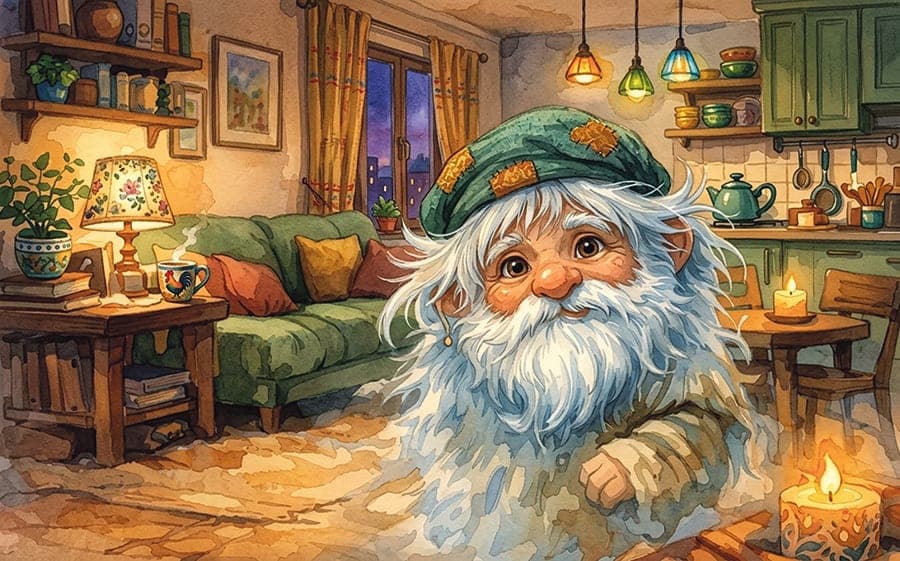
- In the north-east of Belarus, it is considered that the house is the main patron of the hearth, the professor explains. It gives the owners the strength to cope with the daily troubles, and takes away from them troubles. In Vitebsk district there are beliefs that a good spirit especially favors children. For example, he looks after the baby so that he does not fall out of the cradle, does not hurt and is not injured while the parents work in the field or on the farm. There is no need to talk to an invisible patron or ask for anything. It is manifested in accordance with the behavior of household members. Domova loves order and cleanliness, but categorically does not tolerate scandals, profanity and mutual reproaches. He does not like the knives left on the table for the night. When people begin to quarrel, riot or breed dirt, the guardian spirit declares itself: knocks, howls and even pinches careless owners at night. If they do not, the house will leave. His place may be taken by an evil spirit that will not help. Therefore, if you want to enlist the support of the guardian spirit, maintain peace and harmony in the family, and periodically leave treats for him on the table or stove, in particular milk, candy and cookies.
- In the Network, there are often stories about how people heard at night the cry of a housekeeper, which the former owners forgot or abandoned when moving. In such a situation, the old people advise to tie an old paw to the string or take a broom, stretch it on the ground around the threshold and thus invite the guardian spirit to his new home. They say that after performing this simple ritual, crying instantly stops, and the broom becomes heavy, as if someone really sat on it.
- Such beliefs and ethnographic plots are still alive among the people today, confirms Tatiana Vasilievna. Moreover, according to legends of residents of the northern regions of Belarus, the patron has a special relationship with pets. The cat is the only creature in whose guise the guardian spirit can openly appear to man. That is why respect for this animal our ancestors perceived as an integral part of the worship of the invisible master. However, it is important to understand that traditional folk culture is extremely rich, plastic, variant and determined by a particular locality. Each district has its own laws: what is sacredly observed in one territory, in the neighboring can be rejected.
According to the interlocutor, the image of the house and its perception in different parts of the country are very different. In the Minsk region, the north of the Vitebsk region, Mogilev region and in part of the Gomel region, he is considered a good patron of the house and the owner of housing. They leave the spirit for the night. Recently, during an expedition to the Dribinsky district, a local pensioner showed folklorists a shelf behind a curtain near the oven, where she regularly leaves candy for an invisible assistant. But in the Kamenetsky and Maloritsky districts of Brest region, the house is considered a dangerous evil spirit - an analogue of a devil or a walking dead person, whom they try to expel as soon as possible from their homes.
Screw me!
- In the courtyard of the XXI century with ultramodern technologies and scientific discoveries. But dig deeper and it turns out that people believe in omens, conspiracies, evil eye and other irrational things. What, in your opinion, lies the secret of the amazing survivability of ancient beliefs?
“Science has not fully revealed the phenomenon of the influence of the subtle world on people,” says Tatiana Volodina. No one was able to substantiate and real examples of healing after the help of healers. Perhaps this is one of the key reasons for the persistence of the population’s belief in supernatural forces. But the most surprising thing is that such notions now exist in cities, and among the highly educated population. Many young people, even working with AI, often see the cause of their troubles in the irrational sphere and turn to witch doctors and sorcerers. I am convinced that there is a subtle mental world. This layer of folk culture is unusually rooted in the depths of human psychology. Its phenomenon has yet to be studied in detail by future generations of psychologists, doctors and other specialists.
Brother Cat in Boots
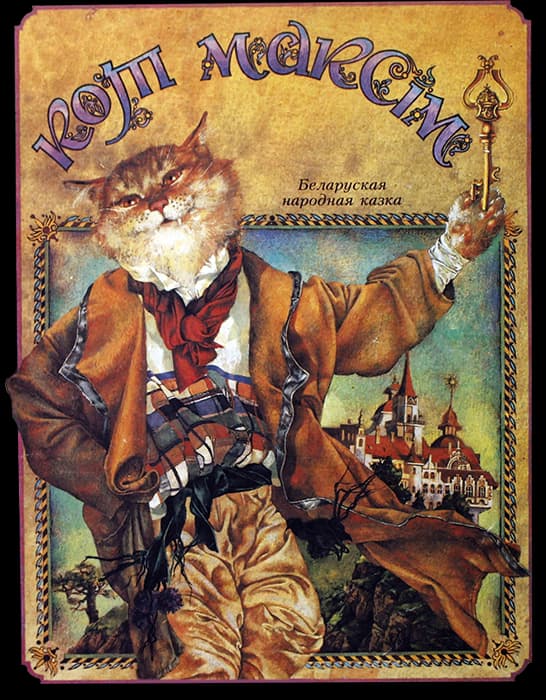
But such an area of Belarusian folk culture as fairy tales, scientists of the National Academy of Sciences of Belarus have been exploring for a long time and successfully. Experts have found many striking intersections with the stories of folklore of other countries. For example, our enterprising and intelligent cat Maxim is an analogue of the famous Cat in Boots from the classic French collection of Charles Perrault.
- What is the unique Belarusian fairy tale?
- It teaches us that life is far from a celebration and entertainment. Fate constantly presents the heroes of magical stories with severe trials, and they are not always with a happy ending. In real life, people also face injustice and hardship. Therefore, when confronted with good, with evil and with the unknown, we need a set of correct, proven patterns of behavior. When a child in a playful way gets acquainted with such situations, he actually passes the most important school of life. Everyone needs to learn from childhood to cope with their own fears, grief, sudden joy and other strong emotions. Thanks to folk tales, we get invaluable psycho-emotional training. Unfortunately, modern boys and girls almost do not read books, mostly watch cartoons. However, vivid animation should not replace folk tales, which were originally created for oral perception through live speech and listening. In this format, special mechanisms are involved. For this reason, we post audio recordings of authentic fairy tales on our academic website.
And in order to support and popularize this direction, since 2017, the Academy of Sciences has annually held the International Forum of Researchers of the Belarusian Fairy Tale and Mythology. It is constantly led by Tatiana Volodina.
- At one time, the former chairman of the Presidium of the National Academy of Sciences of Belarus, academician Vladimir Gusakov personally proposed holding fairy tale forums and Belarusian folk costumes within the walls of our institute, the professor recalls. The first experience was so successful that the Academy decided to make the event traditional. Today it includes not only the scientific part, but also a children's contest of storytellers of the Belarusian fairy tale. The final of the creative competition takes place at the forum in the NAS, where the winners are awarded with memorable prizes from sponsors. There are also folk storytellers from villages that we met during ethnographic expeditions. City children look at them with surprise, apparently not assuming that there are any more.
Lessons from Baba Gali
- The oldest of our storytellers is Anna Belousova from the agro-town Stolbun of the Vetkovo district of the Gomel region, which the villagers call Baba Galya, the interlocutor shares. We met about 10 years ago on an academic expedition. After this meeting, I purposefully and repeatedly visited her. Baba Gala is now about 100 years old, the venerable age takes its toll. She did not have the physical strength to heal, although before she was sent for help from different parts of the republic. She's a very religious person. He is well aware of biblical stories and talks about them as events from life. She learned her secrets from texts that appeared to her in her dreams. All her attitude is woven from deep folk wisdom: how to care for the garden, properly cook food, meet guests. It is possible to write a full-fledged textbook on ancient Belarusian culture. But the most striking thing in the mind of Anna Belousova is the desire for harmony with the subtle world. Usually, modern man builds a rigid hierarchy of ideas about being, where God and the saints are at the top, dark forces are on the opposite side, and between them are the spirits of ancestors. However, listening to Baba Galya, you understand that these characters in her perception are real and coexist with people living outside the artificial tiers. The mother of God can appear to them, as well as the house. In her eyes, they are equally significant, just everyone is responsible for their direction. According to Anna Belousova, a person must be able to build respectful relations with the invisible world when everyone supports each other. It is not known when and from whom help will come.
As Tatiana Volodina notes, Baba Galya believes that a good housewife lives in her house. She also believes that under the guise of an ordinary tired stranger, the Lord himself is able to enter the house. The researcher admits that after deep conversations with this wise woman, she herself began to treat those begging on the street differently. Each case can be a test of mercy and humanity.
Home, to the origins
- I have visited many countries on business trips, the interlocutor says. But I am going to rest only in my native village, I spent all my holidays there. This is my place of power. Now the children have grown up, there are no parents, and trips to a small homeland give a great opportunity to retire and work creatively. When you return from the garden or the lake and sit down at the computer, you think differently than in the bustle of the city. Physical work on the ground is also important. I'm not planting a vegetable garden to save money, although I thought it was important in earlier years. For me, this is an opportunity to plunge into the natural cycle of renewal, when with the arrival of spring, buds peck on trees and birds return from warm countries. There are a lot of flowers growing on my property. And just going from Minsk to Lepel, I feel joy. As a person who is especially keen and close to his heart on the issues of preserving the Belarusian language, I like to talk with the last native speakers of the local dialects. They still speak like their ancestors. To hear such a lively and pure speech is infinitely pleasant.
Photo from the archive of the interlocutor and from the Internet, the illustration was generated using AI


