
How to protect the skin of the face and hands from cold and wind: tips of a dermatologist and a selection of creams
Dense creams with ceramides, Vaseline and oils will help preserve the skin barrier. Dermatologists advise to apply protection in advance, do not wash with hot water and do not forget about gloves.
With cooling, the skin of the face and hands becomes more vulnerable: frost, wind, dry air in the rooms and frequent hand washing destroy the protective barrier. Belarusian dermatologists advise to switch to more dense means with ceramides, oils and vaseline, apply them in advance and do not forget about gloves.
What happens to the skin
In autumn and winter, cold air and wind increase the evaporation of moisture from the surface of the skin. At the same time, heating dries the air in apartments and offices, and frequent hand washing and the use of antiseptics further deprive the skin of protective lipids.
As a result, the skin can become dry, tightened, flaky, sensitive to cosmetics. In the cold, redness, irritation, cracks in the hands and exacerbation of couperosis are possible.
How to look after your face
In the morning before going outside, use a tight protective cream, not a light moisturizing fluid. In its composition, it is desirable to look for ceramides, squalan, niacinamide, hyaluronic acid, glycerol, oils, petroleum petroleum, lanolin or waxes.
Dermatologists recommend applying this cream 30-40 minutes before going out into the cold. If applied directly in front of the street, moisture from the product can cool and increase skin irritation.
Pay special attention to the protruding areas - the nose, cheeks and chin. With strong wind and frost on them, you can additionally apply a dense barrier cream or cold cream.
In the evening, use a more nutritious cream to help restore the lipid barrier after a day in the cold.
How to Protect Your Hands
Hands suffer especially strongly in winter: they are often washed, treated with antiseptics and exposed to the wind. Dermatologists advise washing hands with warm rather than hot water, using soft cosmetic soap and applying cream after each wash.
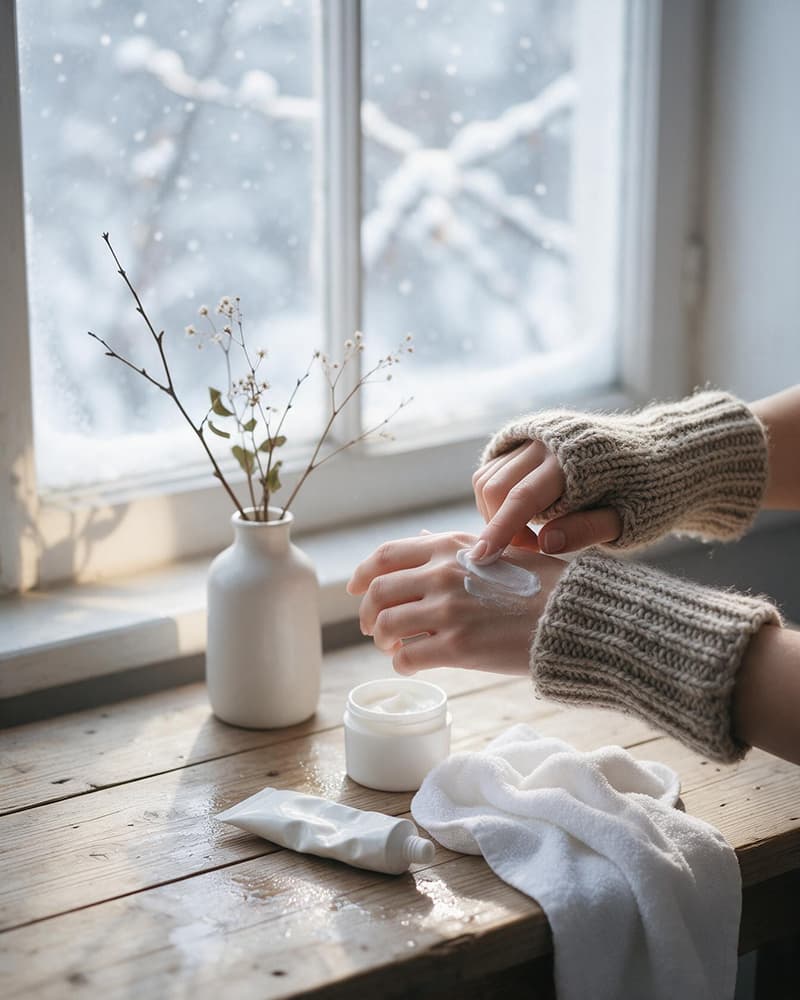
For the street, choose a dense cream with oils of shea, carite, avocado, jojojoba or almonds. Panthenol, vitamin E, allantoin and zinc oxide are also useful.
In the cold, wear gloves or mittens. Jacks retain heat better, and leather products additionally protect from the wind.
What's better to avoid
Do not wash with hot water: it increases dryness and can provoke couperosis.
Do not use aggressive scrubs, products with acids, alcohol and sulfates if the skin is already irritated.
Do not apply moisturizer immediately before going out into the cold.
Do not cover your face with a scarf: the fabric accumulates moisture from breathing, which in the cold can turn into ice.
Do not forget about SPF: the sun reflects off the snow, so protection is needed on sunny winter days.
Using a scarf to protect the skin is not the best solution, Svetlana Yakubovskaya, the creator of the dermatological brand of cosmetics Vasha cosmetics, is sure.
“You have to breathe in a scarf and the skin underneath quickly becomes moist. Suddenly the phone rings, and the man pulls the scarf to his chin to answer the call. As a result, wet skin is in the cold and wind. The condensate evaporates and draws moisture from the skin instead. In addition, the appearance of irritations and rashes due to the friction of the scarf against the skin is not excluded. Especially if it is a problem, said the expert.
Which means to choose
For the face suitable creams with ceramides, niacinamide, squalan, glycerin and hyaluronic acid. For hands, it is better to choose denser formulas with Vaseline, oils and panthenol.
Svetlana Yakubovskaya advises to act ahead: as soon as the heating season begins, include balm or lip oil in the care.
“These products work better than regular hygienic lipstick. Often it has a primitive composition and is suitable only for those who do not have problems with the lips. If they are often flaky, covered with cracks and crusts, balms or oil will help, the dermatologist noted.
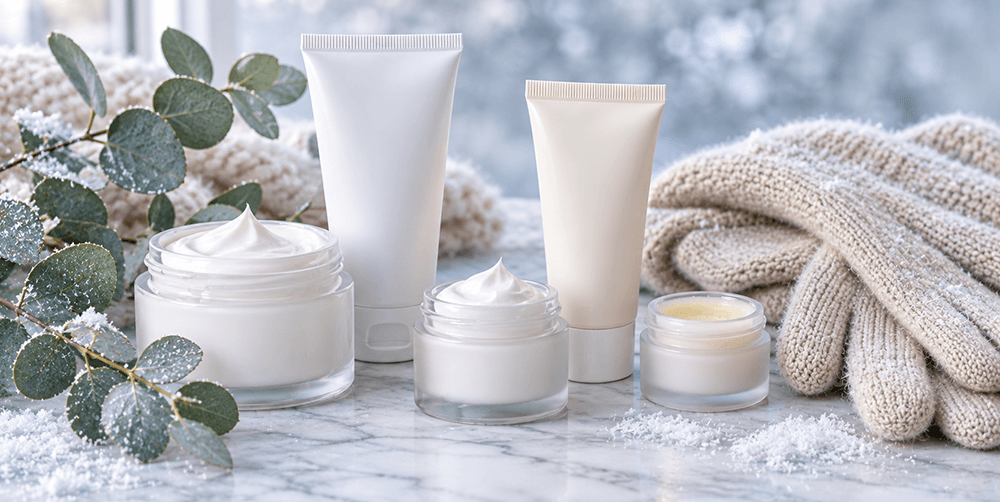
For normal and dry skin, you can consider CeraVe Moisturizing Cream - a dense cream with ceramides and hyaluronic acid. It is suitable for the face, body and hands, retains moisture well and can be used as a basic care during the cold season.
If the skin is sensitive, prone to irritation and redness, pay attention to La Roche-Posay Lipikar Baume AP+M. It is a dense balm with ceramides and niacinamide, which helps to restore the protective barrier and reduce the feeling of discomfort.
For very dry skin, prone to peeling, Bioderma Atoderm Crème is suitable. The cream contains moisturizing components and helps maintain the barrier function of the skin, but with severe dryness, a denser texture may be required.
La Roche-Posay Cicaplast Baume B5+ is often used to recover from ventilation and irritation. It is a panthenol balm that is suitable for areas with peeling, microcracking and irritation, but does not replace a daily moisturizer.
For irritation and microtraumas, you can also consider Avene Cicalfate+. It helps soothe the skin and support its recovery, especially if redness and peeling appear after the cold.
To protect against wind and frost, denser means with Vaseline, lanolin, oils and waxes are suitable. Among them are Nivea Creme, Weleda Skin Food and dense cold creams. Such textures create a protective film and reduce moisture loss in the cold.
Neutrogena Norwegian Formula, La Roche-Posay Cicaplast Mains and CeraVe Moisturizing Cream are handy for every day. They are best applied after each wash and use of an antiseptic to prevent skin drying.
If the hands are very dry, there are cracks or peeling, you can try Bepanthen Derma, Eucerin UreaRepair Plus 10% or Avene Cold Cream. The first two options are more suitable for intensive recovery, and Cold Cream – for protection in frosty and windy weather.
When to See a Doctor
If peeling does not pass, the skin itches strongly, wetness, cracks, swelling, painful cracks or a rash appear, it is better to contact a dermatologist. Self-medication with dense creams can temporarily reduce dryness, but does not replace treatment for dermatitis, eczema, or fungal lesions.
Read also:
Does laser hair removal and Botox cause cancer: a dermatologist's response
Retinoids and pregnancy: what are the dangers of acne drugs and how to avoid risks – says the doctor
The dermatologist explained how to take care of the skin after 50 years
Photo: Pixabay


