Teacher of the Year of Belarus Denis Dubanevich – about the “digit” in the lessons and students-zoomers
On Friday, it became known the name of the winner of the competition of professional skills of teachers “Teacher of the Year of the Republic of Belarus”. The owner...
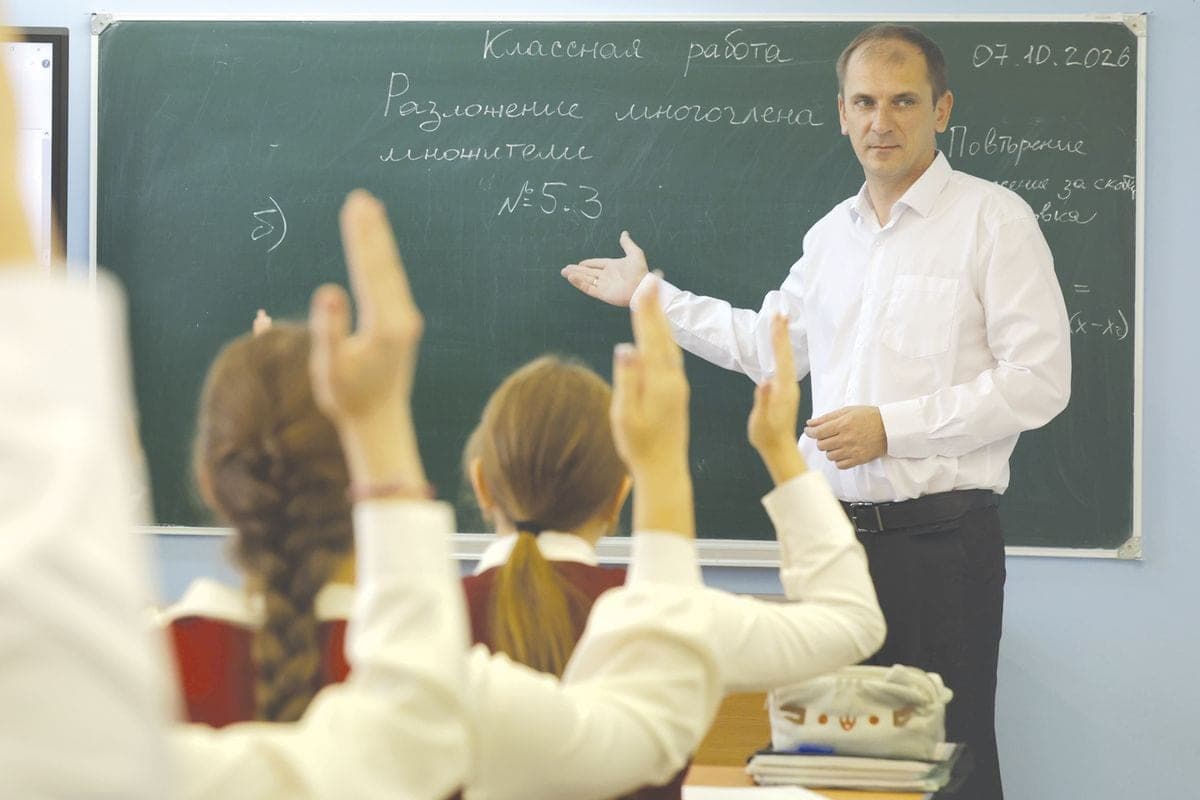
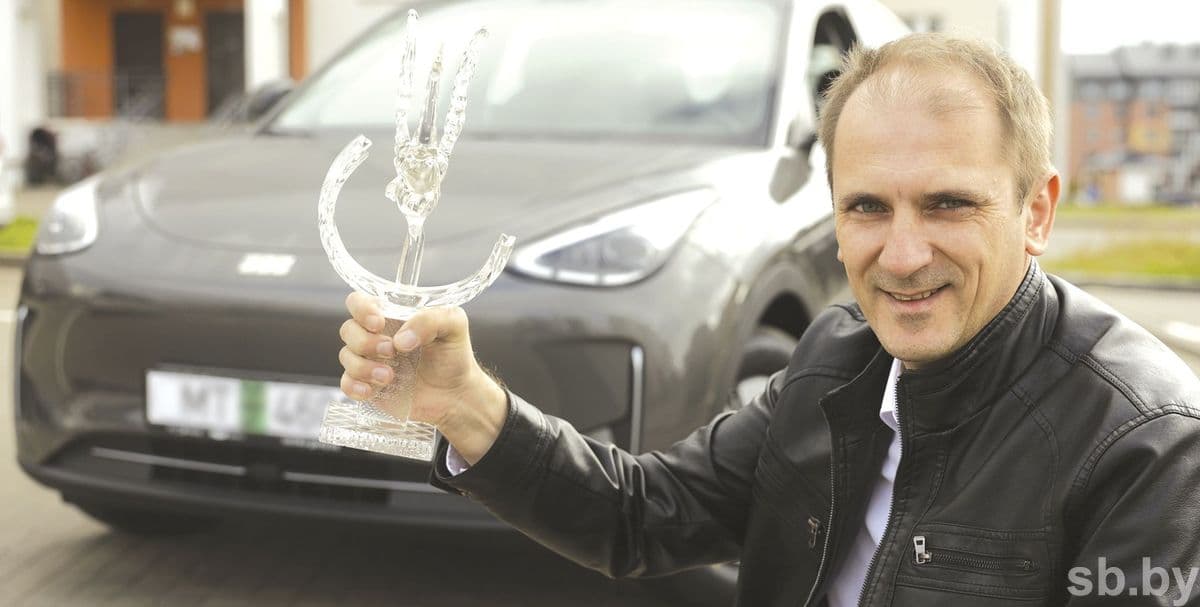
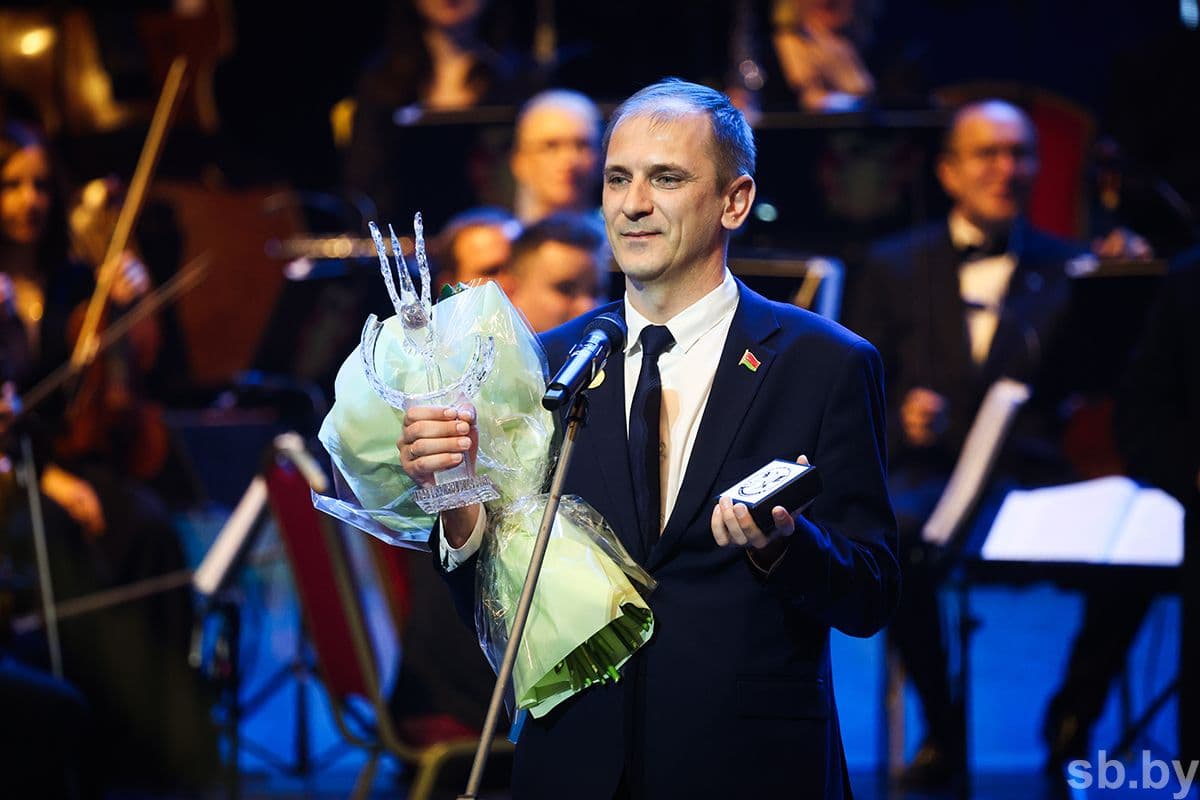
On Friday, it became known the name of the winner of the competition of professional skills of teachers “Teacher of the Year of the Republic of Belarus”. The owner of the “Crystal Crane” and a new car was a teacher of mathematics of secondary school No 5 Smolevich Denis Dubanevich. We talked to him about the “digit” in the classroom, students-boomers and the fight against emotional burnout.
- After the contest, he and his wife went home. It so happened that a little over a month ago we bought a car on credit so that I could be more mobile while preparing for the competition. The wife is especially happy to replenish the family fleet: now everyone will have their own transport.
- What brings you to pedagogy?
I owe the choice of profession to my mother, a mathematics teacher with 50 years of experience. She was able to build a lesson so that even the weakest student could understand a new topic. I had no chance of not knowing mathematics. I have solved almost all my mother’s collections of tasks, including for the Olympiads. And in high school, during the days of self-government, under her supervision, for the first time in his life he conducted a lesson. I remember walking into class with a note in my hand. The leather folder for him was borrowed by his older brother Andrei, who, by the way, also chose a pedagogical path. He taught history, and now directs the Krivich Special Vocational and Technical School of a closed type.
- Do you discuss work issues at home?
- Sure. When we get together: my mother, my brother, me and my wife (she is a teacher of Belarusian language and literature) – it reminds me of a small teacher’s council.
- Should a child have an innate ability to do mathematics? Or will a talented teacher pull anyone out?
- It is clear that not everyone will become a mathematician and will know algebra by 10 points. Someone can only do four. But even in such a situation, it is important that the subject continues to be liked. This is probably our main task - to create such conditions in the lesson that any student was comfortable and interesting. When I meet graduates of previous years, I often do not remember what mark they had on my subject. For me it is much more important that they are happy to see me, say hello, smile.
- Do you ever feel bad when able students come unprepared, lazy?
- In such cases, I am more offended for the child. I try to explain that if you do not learn to cope with laziness now, it will serve him badly as an adult. And the older you get, the harder it is to change your habits.
- What compliment is your work particularly ingrained?
- This year, at the regional August pedagogical conference, I met a former student who was distributed home to the Smolevichy district. She said, "Your lessons have sent me to a teacher's school." And her words moved me a lot.
- Do you use digital technology in your classes? Or are you one of those for whom there is nothing better than chalk and chalk?
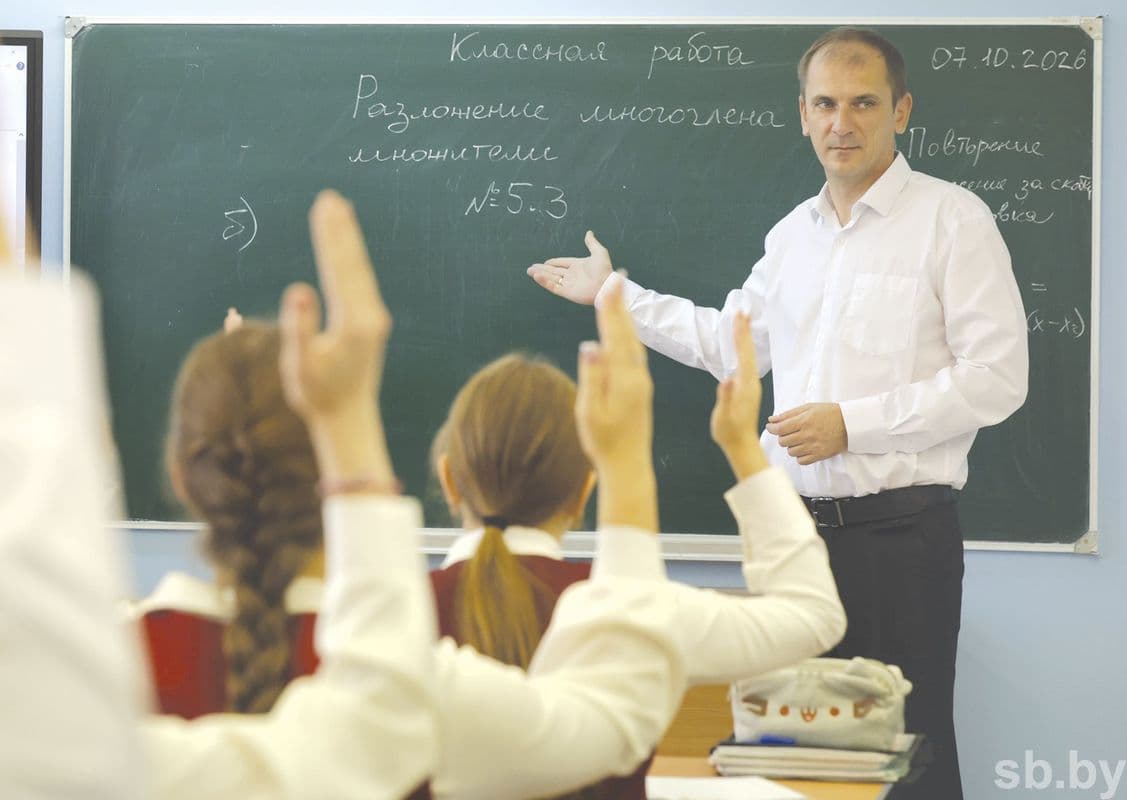
- I'll use it. But at the same time I am sure that it is too early to abandon chalk and board. The technique does not allow improvisation, and chalk and board - without problems. With their help, you can do anything: draw a graph, impromptuly come up with and solve the equation. This is important, because you never know where the students' questions will take you. Let me give you an example. When we were going through the concept of parallel planes in geometry and functions in algebra, one student asked the question: “Is there such a thing as parallel functions?” I tried to explain it to her at the blackboard, then we came back to the question after class. As a result, all this resulted in research work, which received a diploma of the III degree at the regional conference and a commendable review at the republican one. And also, solving problems at the board, children learn to reason and analyze aloud - this is also important.
- How to motivate young people to enter pedagogical universities and colleges?
- Much has already been done in this direction. In recent years, the number of pedagogical classes in the country has increased significantly. This positive trend is also felt in our Smolevichy district. Future graduates are given the opportunity to feel like a teacher at school, when they study psychology and pedagogy on electives, when they can spend almost all day in the role of a teacher. Having plunged into this process, students begin to understand whether this profession suits them or not. It's very good practice.
- There are statistics that teachers more often than other specialists face emotional burnout. Share life hack: how do you cope with fatigue and stress?
- I consider myself an emotionally resilient person, and this quality helped me a lot in preparing for the Teacher of the Year contest. It was not easy: not everything was as good as I wanted, there were many sleepless nights. When it seemed that I could not cope, I analyzed what was happening, threw away the unnecessary, the unimportant and focused on the main thing. Sometimes, of course, I was psychologically tired. But it was spotty and not long. As experience shows, in such moments you need to devote more time to rest or hobbies. I like to take a jigsaw and cut something out of wood. Or just to solve problems — it calms me, too.
- Would you like to take a week off after the contest?
Nope. It was important for me to get back to the classroom as soon as possible. I missed the school atmosphere, the smiles of children. And for those special moments when you see in their eyes interest, excitement and desire to work.
- Doing homework with AI?
- Of course we do. I'll always be great at work done with artificial intelligence.
- Write to the teacher late at night: "What did you ask?"
- More like a rush. There were no such cases in my practice. But sometimes pupils write late in the evening before a competition or an Olympiad, if they suddenly have questions while preparing. In such cases, I always answer.
- Forget the name of the student?
- Stroke. But when new classes come in, you can confuse names. But I try not to let this happen: it hurts children.
- Honestly admit, “I didn’t have time to check your work today,” instead of coming up with a more serious excuse?
- Norm.
- Use Zumer words?
- Norm. It’s not always true to keep up with the new words and memes they have. If I don't know something, just ask what it means. It is normal to learn to understand our children.
derzhanovich@sb.by