
Why we get fat: endocrinologist on the causes of obesity and 10,000 steps during the day
Many are accustomed to believe that the refusal to eat after 18:00 and the usual walk is a panacea for the disease.

Many people are used to believing that refusing to eat after 18:00 and walking is a panacea for extra pounds, but in practice this is not always the case. Why is willpower alone sometimes not enough to fight weight, and what really makes Belarusians fat? These and other questions were answered by an endocrinologist, candidate of medical sciences Natalia Murashko to the correspondent of the Minsk-Novosti agency.

- The problem of excess weight is relevant all over the world, notes N. Murashko. According to the World Health Organization, 59% of European adults and almost one in three children (29% of boys and 27% of girls) are overweight or obese. Belarus is no exception in this regard. According to the STEPS study, completed in 2020, 18.9% of Belarusian adults are obese, and if you take into account people who are simply overweight, this figure reaches 53%.
Pandemic of the XXI century: the real scale
The term “obesity pandemic” The World Health Organization introduced it in 2009, when it became obvious that more than 30% of the world’s population is overweight. And in 2011, the authoritative medical journal The Lancet published a forecast according to which by 2030 the share of overweight and obese people will exceed 50%.
- This is not just an aesthetic problem, Murashko said. Obesity carries the risk of developing 27 diseases of various organs and systems: from diabetes mellitus of the second type, hypertension and heart disease to joint destruction, oncology, lung diseases, skin.
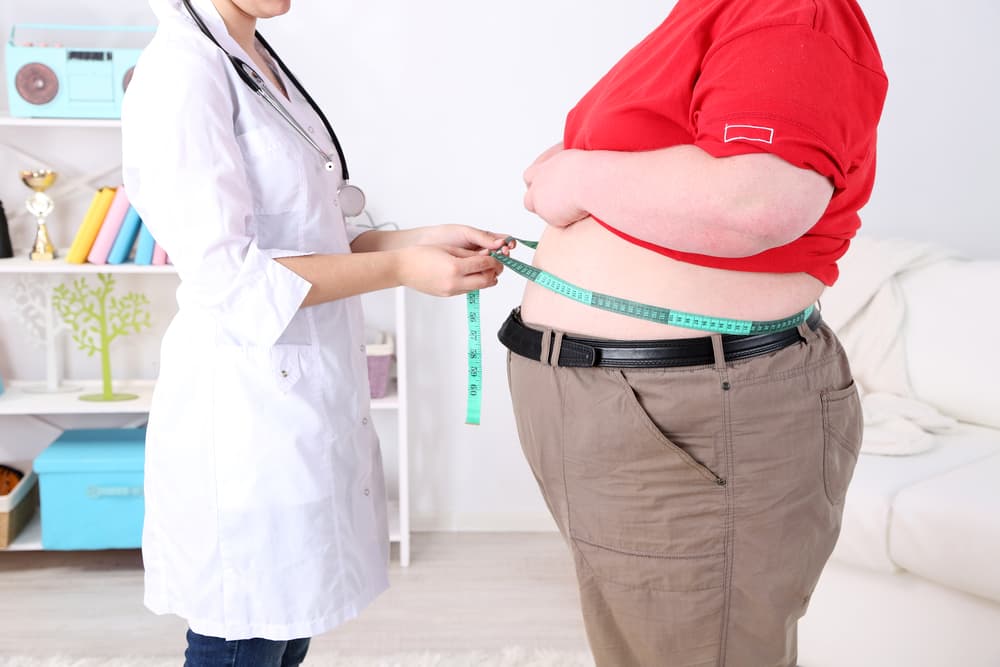
Photo is illustrative, Depositphotos.com
Obesity is a disease, not laziness
In society, it is widely believed that excess weight is a consequence of a lack of willpower. The endocrinologist strongly disagrees with this approach.
- Obesity is a chronic disease caused by a complex interaction of genetic, neurobiological, physiological, behavioral and environmental factors.
At the heart of the problem lies the disturbed energy balance, when calorie intake consistently exceeds their consumption. Special control centers in the brain are responsible for the balance in this process, but in overweight patients this system does not work properly.
Scientists distinguish two control circuits: strategic (estimation of total energy reserves) and acute (feeling of hunger and satiety in the moment). The first is responsible for the hormones leptin and insulin. Normally, they send a signal to the brain: enough energy, it’s time to slow down. However, with obesity, resistance develops: the body simply ceases to perceive these commands, and the system of protection against overeating fails.
- Why do we say that obesity is a chronic disease? Because a person with such a diagnosis, in order to maintain a normal body weight and prevent complications, has to make efforts all his life: to control eating behavior and the level of physical activity, the expert explains. Stop this effort and the weight comes back. This requires attention, discipline, so to consider obesity simply a lack of willpower is a deep misconception.
Photo is illustrative, photo magnific.com
Factors provocateur
The specialist notes that the development of obesity affects a whole range of causes.
- 1.Eating patterns and physical activity.
- 2.Sleep quality. If a person sleeps less than six hours, goes to bed late or works night shifts, the risk of obesity increases dramatically.
- 3.Stress. Prolonged emotional stress or post-traumatic experience triggers the production of stress hormones (cortisol, adrenaline). These hormones contribute to the accumulation of fat, and food is often the only available way to enjoy and “eat” anxiety.
- 4.The social environment. An aggressive, unfriendly environment around a person also provokes chronic stress.
Separately, it is necessary to clarify the role of hormones. It is important to distinguish between the mechanisms of regulation of hunger (which we talked about above - leptin and insulin) and diseases of other endocrine organs (thyroid gland, adrenal glands, gonads), dysfunction of which can contribute to weight gain. Contrary to popular belief, such disorders rarely become the true causes of obesity. Endocrinologists always exclude them in the first place, but in most cases the root cause lies in lifestyle.
How to know if it's time to go to the doctor
N. Murashko advises: if there is excess weight, at least once it is worth consulting with an endocrinologist to exclude hidden disorders and determine concomitant diseases that could develop against the background of obesity.
Focusing only on body mass index (BMI) to diagnose excess weight is not always correct, especially for athletes, pregnant women or the elderly.
- We evaluate other indicators as well, the doctor explains. One of them is the ratio of waist circumference and height. If the result is above 0.5, it is a signal of excessive accumulation of adipose tissue. The amount of visceral fat (that around the internal organs) is also important. The waist circumference of more than 80 cm in women and 94 cm in men is a reason to be wary. And values above 88 cm in women and 102 cm in men indicate a clear presence of visceral obesity.

Photo is illustrative, Depositphotos.com
The Belarusian Paradox
Many are surprised: why obesity is relevant for Belarus, where there seems to be no dominance of fast food?
- The problem is not only in food, but in the organization of life, the expert notes. Often the scheme looks like this: a person does not eat breakfast because he is in a hurry, at work he eats lunch as he should (or interrupts coffee with snacks), and in the evening he comes home tired, excited, eats the daily norm of calories and calms down in front of the TV or with a gadget in his hands, falls asleep late, gets up early. To change the situation, you need to make serious efforts and consciously implement healthy habits.
The main rules of a healthy diet
The doctor makes the following recommendations.
- 1.Mode: If you eat three to four times a day, at about the same time, the body gets used to a given rhythm and ceases to require constant snacks.
- 2.Time: Two-thirds of the food should be in the morning (breakfast and lunch).
- 3.Dinner: light, two to three hours before bedtime. The myth that you can’t eat after six turns into a more accurate rule: the last meal a couple of hours before you go to bed.
- 4.Composition: It is important not just to eat little, but to monitor what your diet consists of (to ensure a balance of proteins, fats and carbohydrates). Modern mobile applications for food tracking help in this: they clearly show not only the total calorie content, but also whether you get enough necessary substances for the normal functioning of the body.
- 5.Liquid calories: the main enemies are cappuccino, lattes with syrups, carbonated drinks and energy. Uncontrolled snacking with fruits is also undesirable: despite fiber, it is a full-fledged food with carbohydrates and calories.
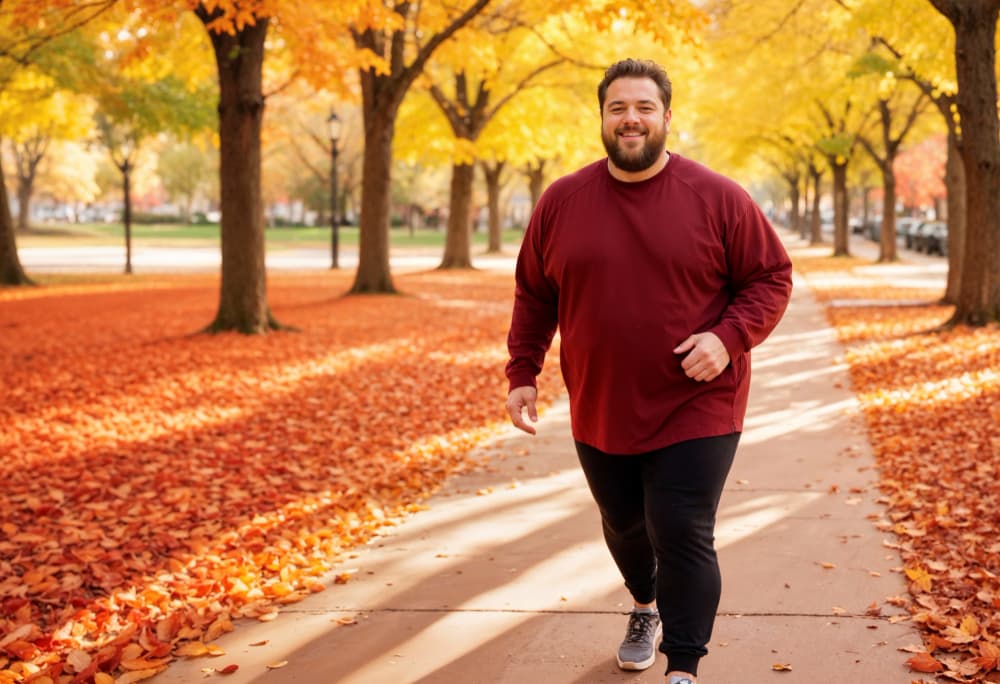
Photo is illustrative, photo magnific.com
Physical Activity: Dispelling the Myth of Steps
N. Murashko warns that the infamous 10,000 steps a day taken while moving around the office, store or home is not physical activity.
- In order for the body to effectively consume fat reserves, the movement must be simultaneous and active. An hour of movement without interruptions is the minimum. The first 30 minutes go only to warm up the muscles, and only then begins the active consumption of calories, says the endocrinologist.
Treatment and combating myths
All modern methods of obesity treatment are available in Belarus, including medical ones. Modern peptide agents (semaglutide, tirzepatide) show excellent results, but these are serious drugs that were originally developed for the treatment of type II diabetes. Using them for beauty, without a doctor's testimony - a dangerous risk, fraught with side effects (for example, pancreatitis).
N. Murashko also debunked popular myths about miracle diets. She noted that any restrictive diets give an effect only in the short term, after which the body, fearing repeated hunger, begins to store fat with renewed vigor. As for the belief about the dangers of milk for adults, the doctor explained that this is not a myth only in the case of proven lactose intolerance, and otherwise dairy products are quite acceptable in the diet. The specialist also pointed to the inconsistency of the concept of “broad bone” – in medical practice, such a term does not exist, and often this is only a way to justify the reluctance to change lifestyle. Finally, answering a question about heredity, the doctor stressed that genetic predisposition does play a role, but even in the presence of such a tendency, diet and physical activity remain key factors determining the development of obesity.


