
The Last Heretic Dies at 108: A Priest Who Never Believed in the Immortality of the Soul
Sir Lloyd Geering, a man who was tried in the XX century for denying the resurrection of Christ, and then knighted In 1967, when humanity was preparing to fly to the moon, in New Zealand, a man was tried for heresy
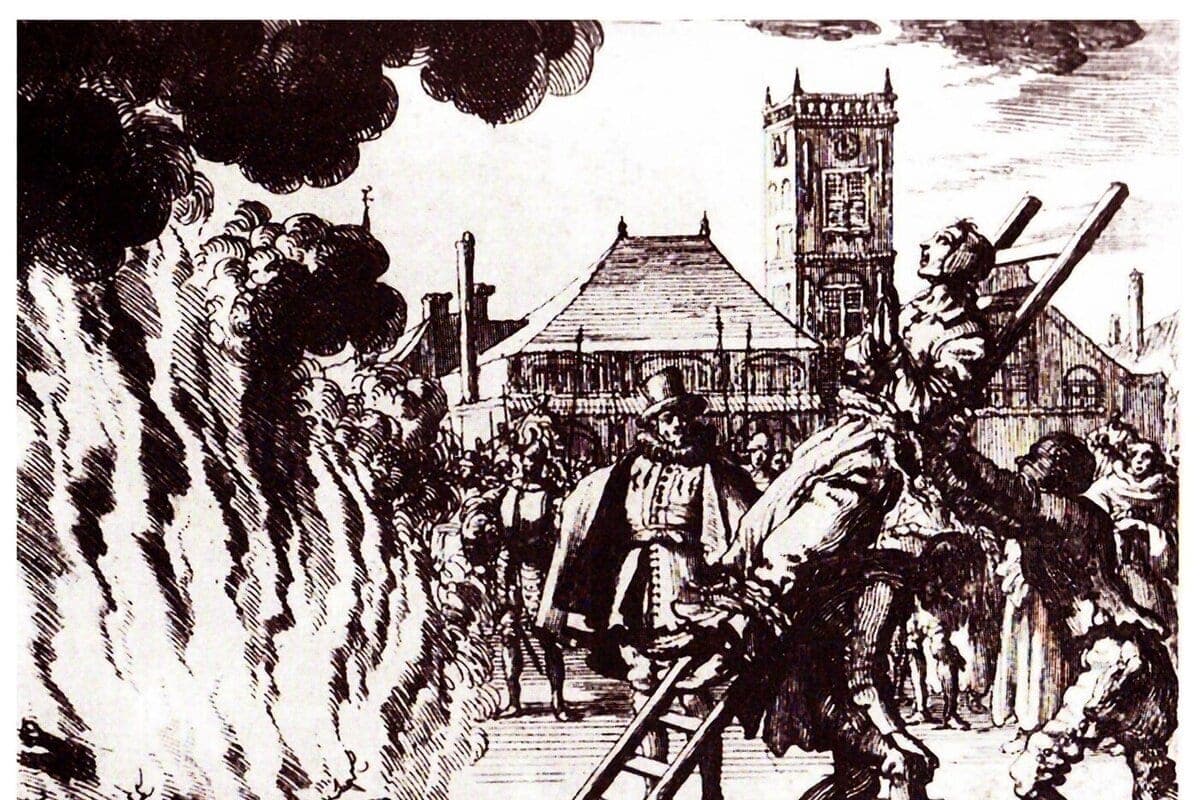
In 1967, when humanity was preparing to fly to the moon, a man was tried in New Zealand for heresy. The respected professor of theology, the Presbyterian priest Lloyd George Geering, appeared before the church court. He was accused of not believing in the physical resurrection of Jesus Christ and the immortality of the human soul.
The trial was on television. The country debated whether a person who doubts that eternal life awaits him after death could be considered a Christian at all.
Almost sixty years later, on November 5, 2026, Sir Lloyd Geering died in Lower Hutt, New Zealand. He was 108 years old. He was considered the oldest man in the country and one of the oldest in the world.
The man who denied the immortality of the soul lived more than a century. As a result, he received a knighthood, and the church, which tried to summon him to order, eventually recognized his merits.
From a village without electricity to trial for heresy
Lloyd Geering was born on February 26, 1918 in the small New Zealand town of Rangiora. Europe lay in the ruins of the First World War, and in the poor house of the future theologian there was not even electricity.
At the University of Otago, Geering studied mathematics and then theology. The future heretic did not intend to fight the church. On the contrary, he became so fascinated with Christianity that he attended worship several times on Sundays, taught at Sunday school, and in 1940 entered a theological school.
He became a Presbyterian pastor, served in parishes, taught the Old Testament at theological colleges of Australia and New Zealand.
It seems to be an exemplary church career.
But Geering wanted to understand literally everything he was told to believe.
If the Bible speaks of the resurrection of the dead, does that mean that the body does come back to life? If the soul is immortal, what is it that continues to exist after death? And why should religious assertions be freed from the questions we ask of any other view of the world?
For a professor of theology, these were natural questions. For some of his co-religionists, they were unacceptable.
In 1966, Geering published an article on the resurrection of Jesus. He argued that the gospel accounts of resurrection and ascension should not be taken as a literal description of physical events.
He then opposed the traditional notion of an immortal soul. Geering did not call for abandoning Christianity. He only proposed to understand the resurrection as a symbol of hope, and religion as a way of understanding human life, morality and relations between people.
Not everyone agreed with this.
The court that has not existed since the Middle Ages
In 1967, the General Assembly of the Presbyterian Church of New Zealand indicted Giring for doctrinal errors and violation of the peace and unity of the church.
There was a national scandal around the professor. The two-day trial was broadcast on television. In the twentieth century, the accusation of heresy was a very exciting show.
When Giring was told that his ideas were disturbing the peace of the church, the professor remarked that what the accusers called the world of the church was more correct to call it sleepiness. It is good that this dream is finally broken. He thought he had said nothing fundamentally new. Such ideas have already been discussed by foreign theologians. In Geering’s view, his opponents did not follow modern religious literature closely enough.
A letter allegedly written by Satan himself has been preserved in the university archives, thanking the professor for spreading doubt among New Zealanders. It is not known whether the author of the letter hoped to scare the theologian or just kind of joked
In the end, the church assembly ruled that the professor’s doctrinal guilt had not been proven. The charges were dismissed, the case closed. Geering was left alone and not even suspended from ministry.
Can you be a Christian and not believe in God?
Decades later, Geering recalled that the process forced him to admit that the church was man-made, and therefore had all human weaknesses.
This discovery did not destroy his interest in religion. On the contrary, he became one of the most famous researchers of modern Christianity.
In 1971, he became the first professor of religious studies at Victoria University in Wellington, where he was involved in the creation of a new academic direction.
In 2002, he published one of his most provocative books, Christianity Without God. He believed that religion could retain moral significance even when one no longer believed in supernatural events. The meaning of faith he connected more and more with how a person acts during life.
Of course, for traditional Christianity, this position remains deeply controversial. Therefore, many theologians strongly disagree with Giring.
But he himself to the last thought that he had the right to his opinion.
Three wives, three losses, and a life of a century
In the biography of Geering there were many events that could make him think about death much before he became a famous heretic. A man who spent his life thinking about death and immortality was constantly faced with the losses of those closest to him. He married three times and outlived his wives three times. Jonathan’s son died in 2024, when Giring turned 106. His relatives later stressed that Geering’s theological views were not formed only under the influence of books read. They were affected by personal loss, grief and years of work as a pastor who had to comfort others.
At the same time, Geering did not at all give the impression of a gloomy philosopher, endlessly discussing non-existence and the end of the world. He survived two world wars in the sense that he was born during the first and saw the second, the Cold War, the emergence of atomic weapons, television, computers, the Internet and artificial intelligence
He became one of New Zealand's most famous public intellectuals. He was endlessly invited to television and radio, he gave lectures, wrote books, participated in public discussions. In 2002, the General Assembly of the Presbyterian Church, which had once dealt with the charges against Geering, officially recognized his long-standing contributions to religious studies and public debate.
That is, thirty-five years later, the church actually paid tribute to the man it had previously suspected of destroying its foundations. It has become a symbol of the human right to ask questions, even if the answers are not liked by others.
In 2009, he received the knighthood. And in 2022, the University of Victoria in Wellington established a scholarship in his name for young researchers of religion.
They tried to stop him for too bold reasoning. Now students were encouraged to continue the research he had begun.
On November 5, 2026, a former twentieth-century heretic died at the Bob Scott Retirement Village in Lower Hatt.
The family said their farewell would be private and buried at the Makara Natural Cemetery near Wellington.
He lived 108 years, wrote many books, survived the church court, three marriages, world turmoil and technological revolutions.
But the main question posed by him remained without a final answer. Can a person not believe in the immortality of the soul, but remain a believer? And what in general makes a person a Christian – an unquestioning agreement with dogmas or the desire to live and act according to moral principles?


