
Maternity and Employment: International Experience for the Demographic Policy of Belarus
Maternity is not only a demographic indicator, an object of social policy or a basis for receiving benefits. First of all, it is personal, deep and in many...
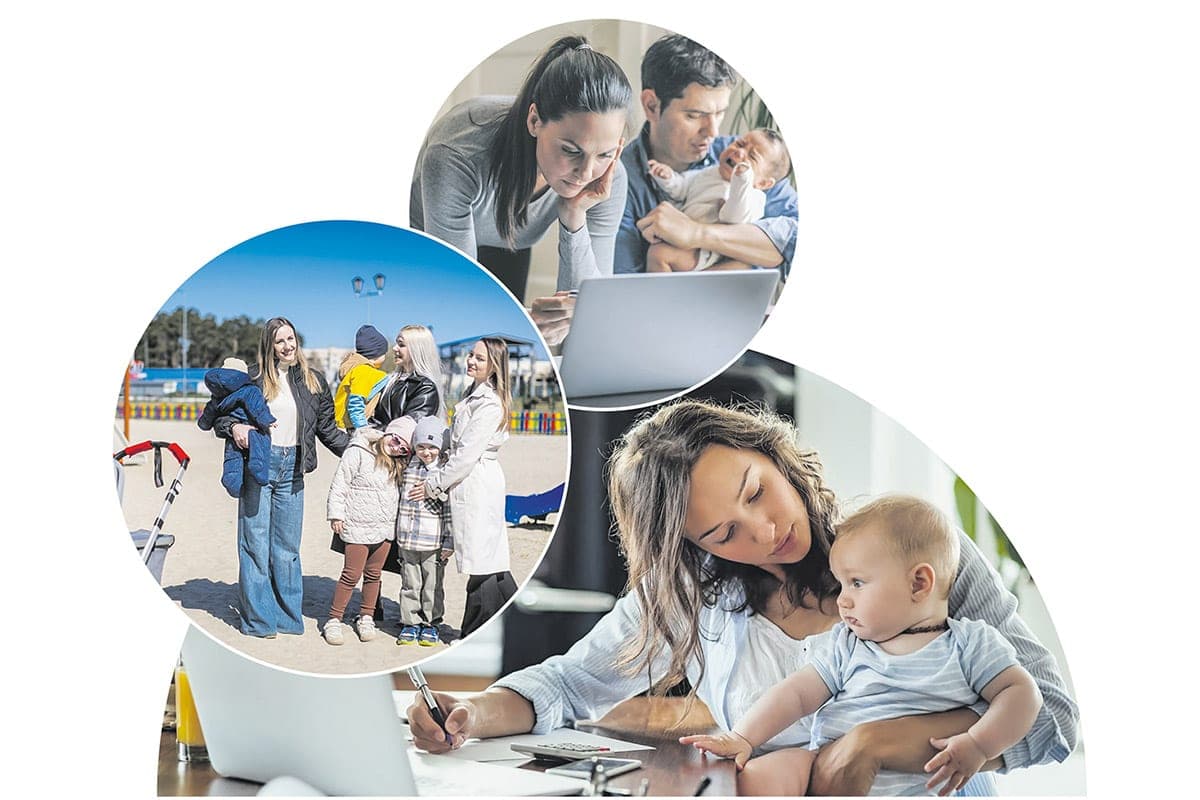
Maternity is not only a demographic indicator, an object of social policy or a basis for receiving benefits. First of all, it is a personal, deep and in many cases joyful experience of a woman, opening up new opportunities for emotional, personal and professional development. As a mother with a positive experience of parenthood, I am convinced that the decision to have a child should not depend solely on the amount of payments, benefits or material guarantees. Benefits are important because they reduce the objective risks of the family, but they are not able to replace love, inner maturity, support for loved ones, respect for parenthood and the woman’s confidence that she will not lose herself after the birth of a child.
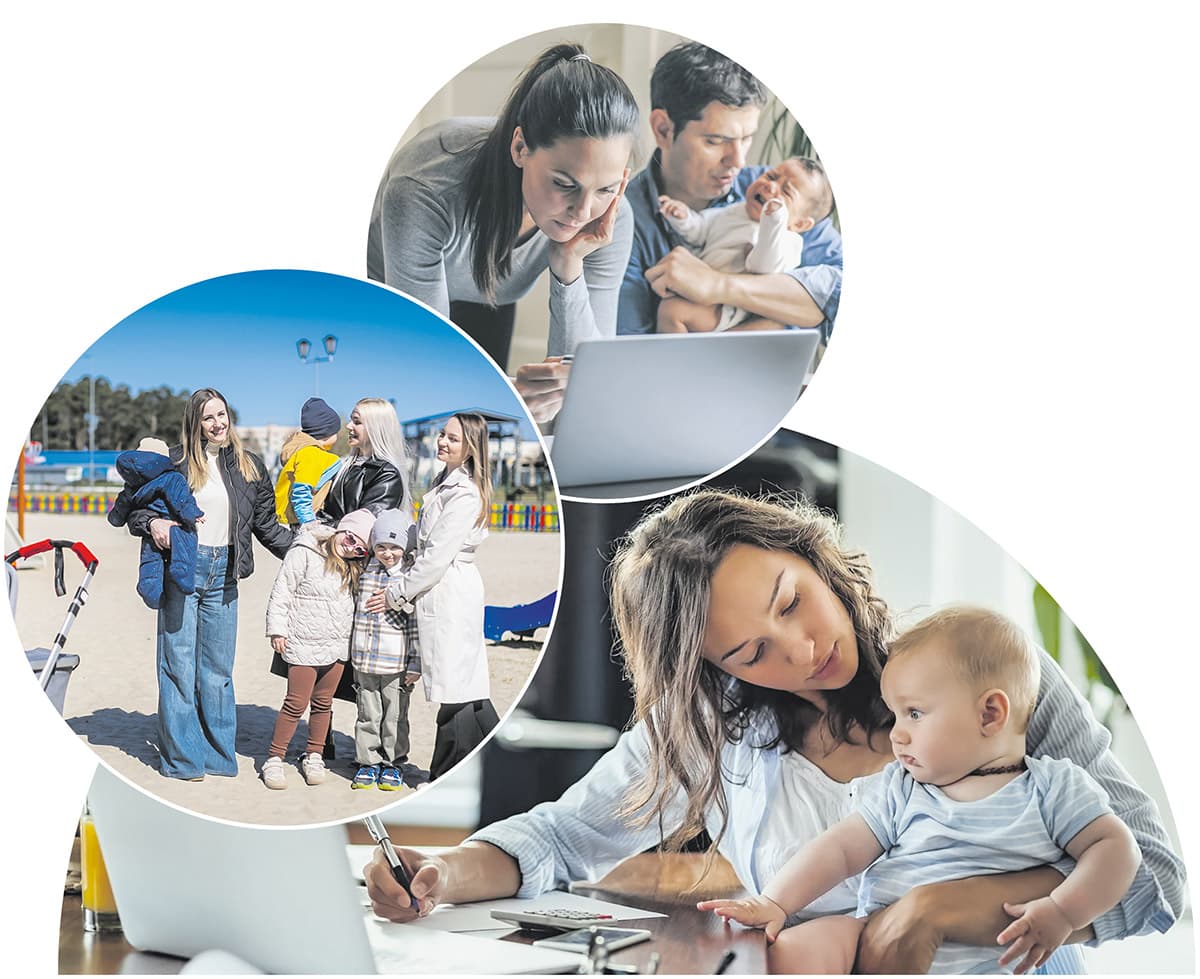
The situation of working and professionally successful women deserves special attention. In public debate, they are often perceived as a group that needs less support: if a woman has an education, a job and an income, she is expected to cope with the costs of the child. However, such a woman can be particularly vulnerable. The birth of a child is associated for her not only with new expenses, but also with a temporary decrease in income, a break in the professional trajectory, a slowdown in career growth, the risk of losing qualifications and the need to daily combine family care with a high workload. Therefore, modern demographic policy should support not the abandonment of a woman’s profession for the sake of motherhood or the abandonment of motherhood for the sake of profession, but a decent and socially recognized combination of both life roles.
For Belarus, this topic is of particular importance in the context of the implementation of the State Program “Development of Demographic Potential” for 2026-2030. The program is aimed at improving the material well-being of families, strengthening family values and preserving reproductive health, including modern technologies for the treatment of infertility and assisted reproductive technologies. The analysis of world experience allows us to identify the decisions of recent years that can be useful for the development of Belarusian policy in the interests of working mothers and families with children. Digitalisation to help Singapore shows how childbirth support, medical technology and digital services can be combined. Under the Baby Bonus system, the state provides families with cash payments, co-finances savings for the child and compensates for part of medical expenses. For the third and subsequent children, there are increased measures: an increased start-up contribution to the child savings account, support through the MediSave medical account, as well as annual LifeSG digital loans of S$1,000 per child aged one to six years.
Equally important is support if assisted reproductive technologies (ART) are needed. For citizens of Singapore who apply to government centers, ART subsidies can reach 75 percent of the cost of the procedure, and the maximum amount of assistance per cycle is S$7,700. This is an important signal to women and families: the state recognizes reproductive health not as a purely private problem, but as an area of public importance.
The idea of digital family certificates is useful for Belarus, which could partially compensate for the costs of baby food, preschool education services, medicines, sports sections, clubs and family holidays. For a working woman, this is also a way to reduce organizational costs: support should be available quickly, without excessive document circulation and multi-step confirmation of entitlement. The experience of Japan is especially important for countries where women are increasingly pursuing higher education, have skilled jobs, build professional plans and therefore postpone motherhood. In October 2024, Japan significantly expanded child benefits: income restrictions were lifted, the payment period extended until high school, and the allowance for the third and each subsequent child was increased to 30,000 yen per month.
The abolition of the income criterion is of fundamental importance. It means recognizing that a working woman with a good education and a stable income also bears the serious costs of raising a child. Such a family may not belong to the poor, but experience a significant burden due to the costs of housing, education, childcare, transport, health and additional development of the child. Universal support does not divide parents into “decent” and “not enough needy”, but emphasizes the social value of raising children.
Japan is also developing a model of family support since pregnancy: counseling, identification of needs, referral to medical, social and educational services. For Belarus, it is promising to strengthen a single clear route for a working mother – from planning a pregnancy to returning to work after parental leave. This route should include affordable nurseries, quality, convenient daycare facilities, flexible employment formats, distance work where possible, and post-skill rehabilitation programmes. Respect for the work of the mother of Hungary demonstrates a long-term approach to supporting large families through the tax system. One of the most famous measures is a lifetime exemption from income tax for women who have given birth to and raised four or more children. In addition, preferential loans are used for married couples, the conditions of which improve with the appearance of children. This experience is important not because it can be literally transferred to Belarusian conditions, but because of the logic itself: a mother with many children is seen not as a recipient of temporary assistance, but as a person whose contribution to society deserves long-term economic recognition.
In 2024-2026, Italy paid special attention to working mothers. “Bonus to working mothers” provides exemption from social contributions or cash allowance for women with two or more children. In 2025, the temporary payment option was 40 euros per month for employed and self-employed mothers with two or more children with an income of up to 40 thousand euros per year. From 2026, a more sustainable support mechanism is envisaged.
The Italian approach deserves special attention for Belarus. He directly answers the question: how to support a woman who continues to work, pay taxes, retain qualifications and at the same time raise children? One option would be additional tax deductions or social benefits for working mothers with two or more children, reimbursement for babysitting and private preschool services, and incentives for employers creating flexible jobs for parents. It is important that such measures do not become an incentive for employers to avoid hiring women with children. On the contrary, he can take some of the costs and risks. Russia is building a multi-level system of demographic support. Since 2020, maternity capital is provided at the birth of the first child (previously at the birth of the second). In 2026, its size for the first child is 728,921.9 rubles, and if the right arises after the birth of the second, third or subsequent child – 963,243.17 rubles. Maternity capital is important as a long-term resource: it can be used to improve housing conditions, educate children and other areas provided for by law.
Since 2025, the national project “Family” has been operating, aimed at increasing the number of families with children and large families. An important direction is the financing of regional programs to increase the birth rate in subjects with a total fertility rate below the average Russian level. Among the regional measures, a one-time payment of at least 200 thousand rubles at the birth of a child in a student family is allocated. This is an interesting example of the recognition that a woman can be ready for motherhood even during her studies, but need conditions that allow her not to abandon her education and not lose her professional prospects.
From 2026, Russia provides for an annual family payment for working parents with two or more children with an average per capita family income of up to 1.5 regional subsistence minimum. The mechanism involves the recalculation of personal income tax at a rate of 6 percent and the return to the family of the difference between this amount and the actually paid tax. For Belarus, the very idea is important: the labor activity of parents should not deprive them of the right to tangible support. At the same time, the criteria of need should be built so that the family does not find itself in a situation where a small increase in wages leads to the loss of a significant part of benefits. In general, the Belarusian family support policy already has a solid social basis. The next step may be a more visible orientation towards a woman who is at the same time a mother, a skilled worker, a taxpayer, a specialist and a citizen who realizes herself in different spheres of life. Benefits and benefits are needed: they make the path to parenthood less risky and allow the family to take better care of the child. But a child should not be born to close cash deficits or for short-term gain. Motherhood is a source of love, joy, inner strength and self-development, and the task of the state and society is to create conditions in which a woman can be a happy mother, preserving the right to a decent, interesting and successful professional life.
Anastasia Bobrova, demographer, economist, head of the Center for Human Development and Demography of the Institute of Economics of the NAS of Belarus


