In the Arkhangelsk region, the results of the exam in a number of subjects have improved.
At the same time, the region sets a more ambitious task - to ensure the quality of school education, in which the successful passing of exams depends less on the financial ability of the family to pay for additional classes
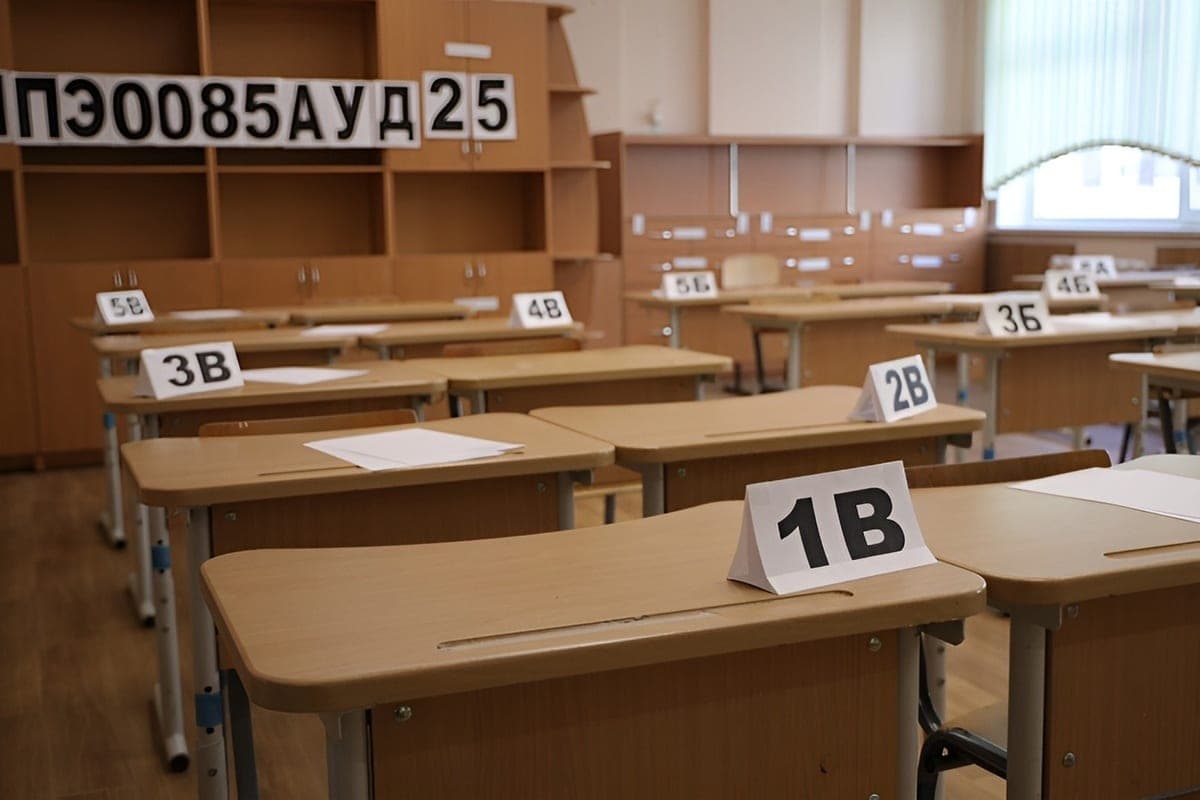
At the same time, the region sets a more ambitious goal - to ensure the quality of school education, in which the successful passing of exams is less dependent on the financial ability of the family to pay for additional classes.
In 2026, compared to 2025, the average exam score increased: in the Russian language - by 2.4 points, in history - by 3.5, in English - by 2.9. Significant positive dynamics were recorded in physics (+7.4 points), chemistry (+4.4), biology (+3.7), profile mathematics (+3.4), computer science (+2.5).
The share of results from 60 to 100 points in 2026 was 55.33%, a year earlier - 49.41%.
Sociological studies at the same time show a high demand of families for tutoring services. Most often, they are addressed in mathematics - 60.7% of the surveyed families, in English - 51.9%, in Russian - 33.2%. Next are physics, chemistry and biology. This is an important signal for the education system.
- Tutorship is a family choice, and in itself it is not a problem. The question arises when the child and parents perceive paid additional classes as a prerequisite for obtaining a qualitative result. Our principal task is to ensure that the school itself provides the level of teaching that allows the child to prepare for the exam, enter a college or university and realize the chosen educational trajectory regardless of family income, said Yevgeny Melyokhin, Minister of Education of the Arkhangelsk Region.
To do this, the region intends to analyze more deeply not only the results of the exam, but also the GPR, OGE, the staffing of schools, the equipment of subject rooms and the effectiveness of the created infrastructure, including the centers “Growth Point”.
Special attention will be paid to schools with low educational results and teaching physics. The region is implementing the project “Physics to School”, which provides for the development of the professional community of teachers, methodological support, retraining of teachers, internships and the development of network forms of education.