
Public transport is improving in Vladimir, but complaints about service remain
The head of the city Department of transport and communications Yuri Ivanov noted that the claims on compliance with traffic schedules has decreased.
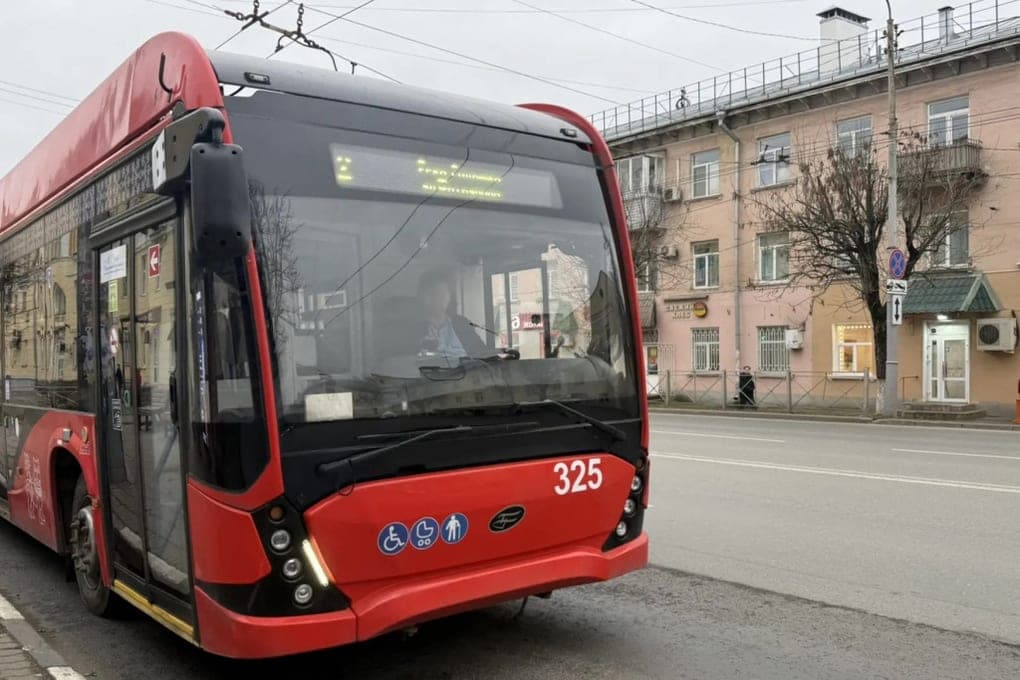
In recent years, with the support of Governor Alexander Avdeev and the regional government, the fleet of buses and trolleybuses has significantly updated. If in 2022 the average age of buses was 16 years, then by October 2026 the city bought 138 new buses, including a particularly large class, as well as 25 modern trolleybuses with autonomous operation. As a result, the average age of equipment at the municipal carrier JSC "Vladimir Passazhirtrans" decreased to 2.5 years. The production of trolleybuses on the line increased by one and a half times. The renewal of the park made it possible to launch a new trolleybus route No. 12 from Kuibyshev Street to Railway Station Square and extend route No. 5 to the 3rd Koltsevaya stop.
On the bus route No. 22C introduced a transfer rate. Passengers can transfer to any trolleybus free of charge within an hour. This experience is planned to be extended to remote neighborhoods: Bukholovo, Lunevo, Energetik, Yurievets and Forest.
In Vladimir, there are single passes for 60 and 100 trips. Beneficiaries and pensioners use unlimited travel on trolley buses and social buses. For schoolchildren and students there are special monthly unlimited tickets for trolleybus routes.
Control over the work of transport is carried out through the GLONASS system. Appropriate equipment is installed on all machines, which allows you to track each flight in real time. In the dispatch service of JSC "Vladimir Passazhirtrans" introduced new software that generates daily reports. In 2027, it is planned to connect all carriers to the system: IP Timofeev, RTS LLC, EuroTrans Vladimir+ LLC and Citibas LLC.
The head of the city Department of transport and communications Yuri Ivanov noted that the claims on compliance with traffic schedules has decreased. There are complaints about the culture of service. For example, drivers do not always drive close to the curb to make it easier for passengers to get out. There are also questions about how conductors communicate with passengers.


