
Earth floors and in-kind exchange - how peasants lived in Western Belarus "under pans"
Evening Minsk continues the Voices of History project dedicated to the reunification of Western Belarus and the BSSR. Editorial staff tell us...
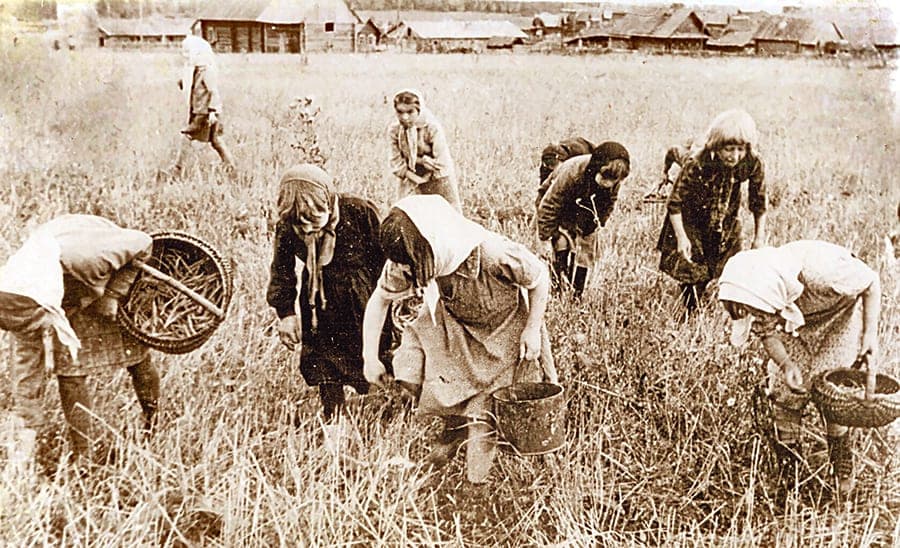

Evening Minsk continues the Voices of History project dedicated to the reunification of Western Belarus and the BSSR. The staff of the editorial office tell about what mark in the lives of their loved ones left the events of Sunday, September 17, 1939.
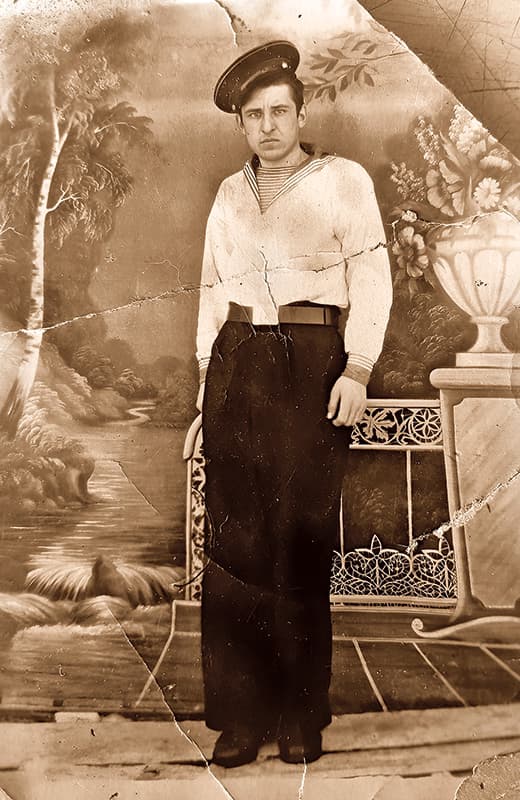
Grandfather Vladimir Sonich, 1940s
Working hands
My roots are in Western Belarus. Mother comes from the village of Redkovichi, and grandparents - from the villages of Samali in Molodechnen region and Yermolychi in Vileischyna. In the 1920s and 1930s, the average family kept various animals: cows, pigs, goats, sheep, and poultry. Of course, there were those who had herds, and those who lived without a Burenka in total poverty, barely making ends meet.
Families were large: at least five children were brought up in them. Only learn to walk – and already become household assistants, and from the age of eight – full-fledged workers on a par with adults. Most often it was they who led the village herd to graze. The family grazed all the cows of the village in turn for as many days as she had them. Girls helped around the house and in the field, guys - with hay and firewood. Everyone had work every day.
Cells and hectare
As a child, I believed that my ancestors had large landholdings. The grandmothers showed the old land: a house, a plot of 20 acres, and behind it a strip of land even to the forest. It seemed to be a lot, and it could not be handled by members of one family. Today I understand that it was the minimum to sustain life. I measured the area using a satellite map: these are land plots of 2-3 hectares. Miser in those days! The harvest was barely enough to survive the winter.
There was also a plot of "three fields beyond the forests" - most likely leased land. Commercial grain was grown there. The harvest was sold, and the proceeds went to pay rent, taxes, updating inventory and buying necessary household utensils.
To household things was especially careful attitude. On the shelves in the pantry were kerosene lamps and lanterns, coal irons. Even when electricity appeared in the village after the war, they were not in a hurry to part with them, because large sums were paid for these devices.
Distant relatives (on the line of grandfather), 1920s
Our values
After September 17, 1939, poor peasants had confidence in the future. Guys and girls were able to build their own lives, despite the lack of clothing. We came to the village council and, like a young family, asked for land – please, here is the plot, build up, raise children. Previously, in order to live separately, it was necessary to split the parent’s allotment or obey the father’s will and remain all in one house.
Schools, libraries, clubs were opened, hospitals and businesses appeared. People got the opportunity to officially get a job and have a stable salary. They had the goal of working to live better. Until 1939, they worked to survive.
Wealth
I've almost never heard from loved ones about pennies and zlotys. For them, this ephemeral substance did not exist. If they were talking about money, it was only in connection with taxes and fines: they were paid in cash. The rest was measured in animals: “Maladzechny bought bots for paralyzing”, “for millet fur .zyali cough”, etc.
Forests without trees
In our family, the great-grandfather Semyon from the village of Samali was called rich. In the early 1930s he got a job in Molodechno for the railway, where he received a good salary. In 1937 he married a fellow villager Anastasia. After the wedding, the young family purchased their own land. We put a house, farm buildings, a bathhouse. Their hut was considered one of the best in the village: it had a wooden floor. In 1937, only a rich man could afford such a household benefit. After September 17, 1939, the wooden floor appeared in almost all houses, only in the cold storage rooms remained earthen.
Grandmother said that to get "pry panah" building boards or logs was almost impossible. Local forests were mostly private property. To build a house, ordinary people negotiated with the pan and felled a large area of forest. For this work, you could take a tree down. Pan sold the commodity tree for a sawmill, and stumps and non-combat wood for wood.
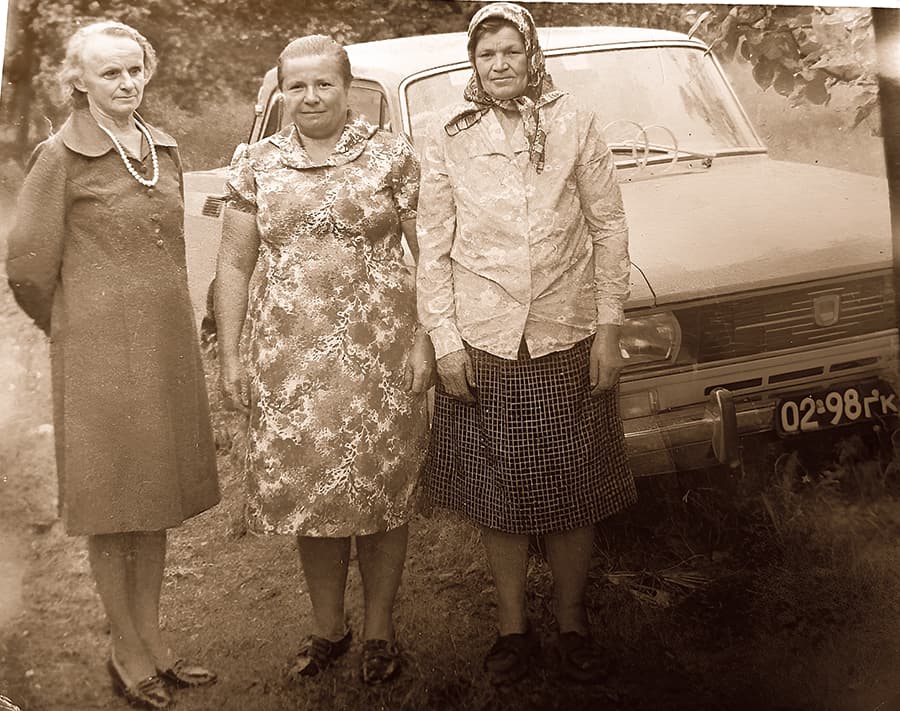
Great-grandmother Anastasia Romanovskaya (first from right), 1980s
"Runner to the shops"
I have heard and read a lot about life “behind the Polish clock”: how people had hectares of land and living things, and then, with the advent of the Soviets, they lost it. But I know for sure whose income my great-grandfather Alexei and great-grandmother Vera from the village of Yermolici, students from Poland, compared with the size of their wallet.
In the 1930s, Poles tried domestic tourism. Western Belarus was an agricultural land with almost no industrial production. There were clear rivers and lakes, green meadows, untouched forests and clean air. Poles began to go to rest from the bustle of the city on Naroch and Braslav lakes, in swamps and forest. And in our locality there was a route that my great-grandmother called “Hell Vileiki da Vileiki pa Ilii da Vilii”. Students from Poland came to Vileika and rented boats sailed through the waters of Vilia to Vilnius.
Before the beginning of the journey, Poles often hired a wagon in the village and rode around the surrounding villages. They could stop anywhere to buy milk from the locals. In the wallets rang dozens of zlotys, who spent on different whims. And most importantly, students bravely went to the store and bought matches! For a villager, it was unimaginably expensive. Learning about the interest of tourists in the region, traders inflated prices along the route. The locals could not afford to go to the store. Of course, no one has turned the price back. The villagers equipped the so-called messenger, who went to shops far from the invasion of tourists, for example, in Molodechno, and bought there immediately for everyone.
So it turned out that the poorest "Polish youth" was many times richer than our villagers
Prepared by Veronica Gramack
Photo from the author's archive


