National Bank Initiatives to Improve Financial Literacy among Youth
Olympiad for schoolchildren, competition of works on economic topics and not only: what initiatives is implemented by the National Bank to improve financial literacy.
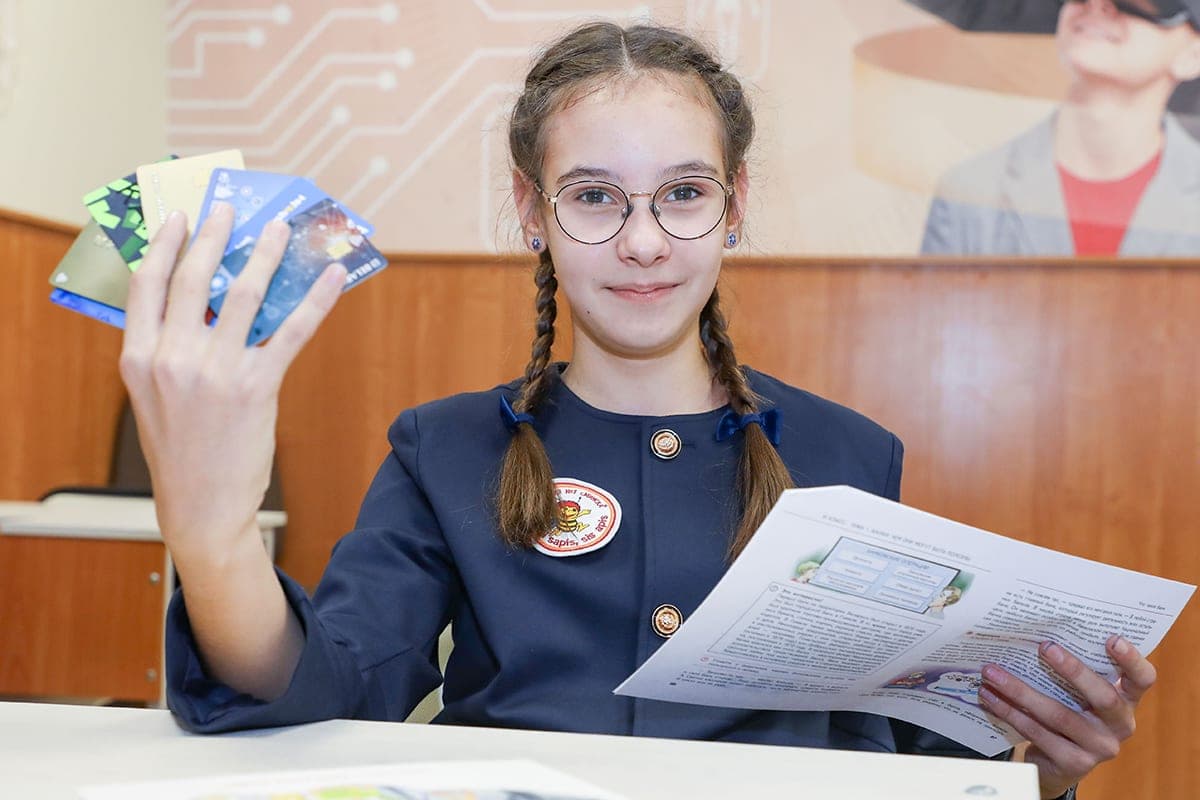
Olympiad for schoolchildren, competition of works on economic topics and not only: what initiatives is the National Bank implementing to increase financial literacy among young people
Apps for budgeting, access to financial instruments directly in your smartphone, platforms for investment – today Belarusians have all the opportunities to manage money wisely. But convenient technology is only one side of the story. For them to bring real benefits, we all need to develop our financial literacy. The National Bank is actively working in this direction in accordance with the Action Plan for improving financial literacy of the population for 2025-2030. The regulator pays much attention to the financial literacy of the younger generation.
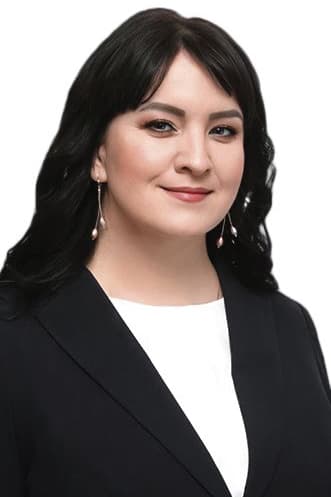
Julia Sakovic. According to Yulia Sakovich, Head of the Financial Literacy Department of the Information and Public Relations Department of the National Bank, a competition of works on economic topics among students, undergraduates and the financial literacy Olympiad among schoolchildren has been held in Belarus for more than ten years.
According to her, the main goal of the Olympiad for schoolchildren is to popularize knowledge about finance among young people and develop skills that will help children learn how to effectively manage money. At the same time, the main task is not so much control of knowledge as the formation of basic skills, the ability to rationally manage money, use financial products and services. As well as the formation of a proactive approach to ensuring their financial well-being and financial security:
The Olympiad tasks are presented in the form of tests that cover the main topics of financial literacy. Among them are personal finance, savings, borrowing, cybersecurity, insurance, taxes, financial mathematics and others, the employee of the National Bank said. It is a pleasure to note that the number of participants is growing every year. This year, about 29 thousand students from more than 2.4 thousand educational institutions from all over Belarus took part.
Yulia Sakovich stressed that an additional motivation to take part in the competition and improve their knowledge in the field of finance is a monetary award. For example, the participant who took the first place, this year will receive 2 thousand rubles as a reward, the second – 1600 rubles, the third – 1200 rubles.
The competition of works on economic topics among students and undergraduates is designed to stimulate the interest of young people in research activities in the field of economics:
- This is a good opportunity for students and undergraduates to state their research results in the expert community. The authors of the works are also awarded worthy cash prizes. Thus, the main prize in the competition of students and undergraduates is a monetary prize in the amount of 2 thousand Belarusian rubles. Competitive works, which took the second and third places, will receive 1.5 thousand and 1 thousand Belarusian rubles, respectively. In addition, all finalists are given the opportunity to practice at the National Bank.
Financial Literacy Week is an information campaign conducted thanks to the interaction of the National Bank and the Ministry of Education. It involves banks and other financial institutions, associations and other interested organizations. Every year it covers about 500 thousand schoolchildren throughout the country.

- The main traditional event of the National Bank within the framework of the Financial Literacy Week is the contest of video bloggers “Money Matters”, where participants need to make a video on the proposed topic and creatively beat it. The regulator assigns the general topics of the information campaign and prepares basic educational information in an accessible and easy-to-understand form to help children, Yulia Sakovic explained. The National Bank has created, maintains and develops the Unified Financial Literacy Portal www.fingramota.by, the main purpose of which is to help citizens improve their competencies in the financial sphere. Basic information on this topic is presented in a simple and interesting form and is designed to help people make financial decisions:
- Specialized sections for teachers and young people are allocated on the platform, where relevant information and educational materials are collected, information on financial literacy activities conducted by the National Bank, state bodies and financial organizations is separately presented. The content of the portal is complemented by interactive components, which increases user engagement.
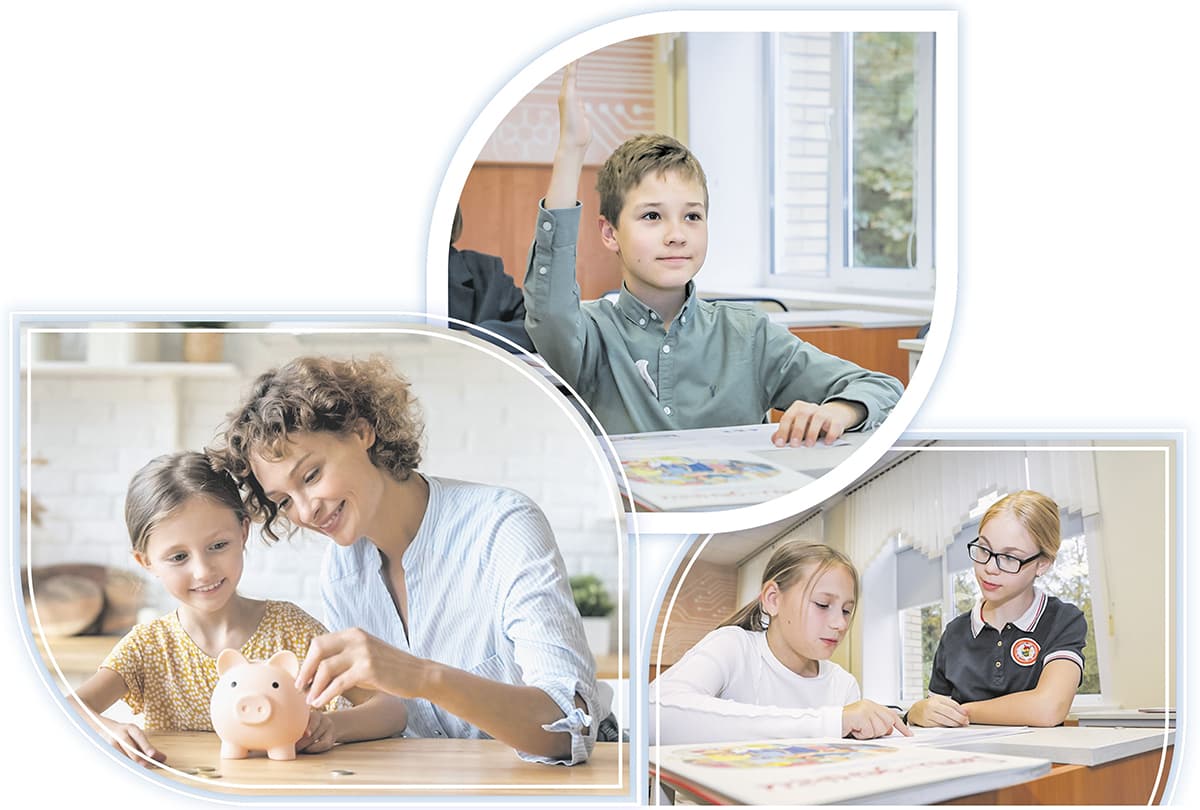
Thanks to close cooperation between the National Bank and the Ministry of Education, children can learn financial literacy in schools. Previously, educational programs of elective classes “Fundamentals of Financial Literacy” for grades 5-7 and 8-9 were developed. And there are tutorials for teachers. And this year, the light saw educational and methodical complexes for students of grades 1-2 and 3-4 - bright and colorful manuals, where in an accessible and fascinating form, together with the main characters, their peers and fairy-tale characters, children will learn the basics of financial literacy. Educational materials are stamped by the Ministry of Education and are recommended for use in the educational process.
The course is based on financial competence matrices that determine what knowledge and skills a child should have at each age stage, developed by the National Bank and the Academy of Education of the Ministry of Education.
Matrixes of financial competencies provide continuity: each subsequent stage is based on the experience already accumulated, allowing you to develop it in the next stages. This helps developers of educational programs and manuals to easily navigate among the elements of financial literacy, commented Yulia Sakovich.
The National Bank transfers two copies of each of the educational and methodical sets to all institutions of general secondary education in Belarus. Their electronic versions are freely available on the Single portal of financial literacy of the population.
In addition to the usual books, the regulator also developed a comic book “School of Superheroes of Financial Literacy”, which contains educational information and practical tasks that in an entertaining form will help children expand their knowledge in the field of finance.
In 2026, employees of the National Bank were included in the working group at the Academy of Education of the Ministry of Education and made an examination of financial literacy issues for the national study of the quality of education NIKO-2026. It is important to note that according to the results of the analysis, an increase in students’ knowledge in the field of financial literacy was recorded. Thus, the share of students who reached the above-average level this year was 53.6 percent, which is 12.8 percentage points higher than the level of NIKO-2023. At the same time, the proportion of students who did not reach the middle level decreased by 1.5 percentage points, showing an average level of 11.3. An increase in the average score for diagnostic work was also recorded. In 2026, it reached 13.45 against 12.42 in 2023.
- The increase in the average score confirms that the positive dynamics is not only structural in nature associated with the redistribution of students by level, but also manifests itself in improving the overall quality of tasks. It is important that this year, topics related to financial risks, fraud and financial security were additionally included in the assessment of students’ competencies, the NBU employee added. Explain and teach Go to Gymnasium No. 41 of Minsk named after Serebryany V.H. to learn how to prepare children for participation in the financial literacy Olympiad. Olga Ryzhankova, a geography teacher who teaches children to spend money more consciously, said:
- Students of our gymnasium participate in the Olympiad every year. This is no exception. According to the results of the gymnasium stage, three children came to the district level. Everyone has developed logic, attentiveness, and also an inquisitive mind - these, in my opinion, are the main qualities that will help to understand the tasks. But these same traits are necessary to become a financially literate adult.
Speaking about what tasks cause special interest in children, Olga Ryzhankova noted that most of all they like tasks with a plot, when conditions are presented in the form of a specific life situation. And questions related to cyber fraud, according to the teacher, the guys generally click like nuts.
- Difficulties sometimes arise with tasks where there are legislative nuances. For example, the problem of lending. It is not immediately possible to master them, explained the teacher.
Agrees with his teacher and ninth grader Mikhail Denisen, who this year took part in the competition for schoolchildren.
- For me, the most difficult thing in preparing for the Olympics was the large amount of information that had to be memorized. Solving problems and calculations for me as a mathematician was much easier, the young man shared.
When asked why financial literacy is an important skill that everyone should learn, the guy answered very succinctly, but accurately:
- Because the ability to properly manage money helps to avoid many problems in life.
Future Olympiads are nurtured by the elective in financial literacy, which is held at school for students aged 12-14 years.
- The elective program is based on the recommendations of the National Bank of Belarus. There are 14 people here this year. How's class going? We can say that from theory to practice. First, I explain the essence of economic terms on a particular topic in a simplified form, and then we solve problems with them, simulate situations that could happen in real life.
For example, someone wants to buy a new phone. We will calculate how much you need to save per month, how long you have to save and what expenses you can refuse to quickly achieve the desired purchase, said Olga Ryzhankova.
There is no doubt that such knowledge will be useful to students:
- First of all, these initiatives teach children to consciously handle money. Children begin to plan a budget, save, understand the value of money and labor. Many people do not even think about where parents get their money and how the family budget is formed. The elective helps them see that. As a result, spending becomes more meaningful, the child understands that a purchase can be abandoned for something more important. In fact, this is a good preparation for adulthood, where you need to make informed decisions and then be responsible for their consequences.
kurdo@sb.by