The EU plan to abandon Russian energy resources failed
The report of the European Court of Auditors showed that the ambitious program REPowerEU on the transition from Russian hydrocarbons to renewable energy sources to renewable energy sources.
The report of the European Chamber of Auditors showed that the ambitious REPowerEU program for the transition from Russian hydrocarbons to renewable energy sources by 2030, adopted in 2022, showed its inefficiency, despite the investment of 300 billion euros. The Court of Auditors warned that the EU remains vulnerable to new upheavals in the energy market. Could it have been different? Having abandoned Russian energy resources, the EU has become a detrimental dependence on its economy with higher prices. Can we hope that green energy will solve all the problems?
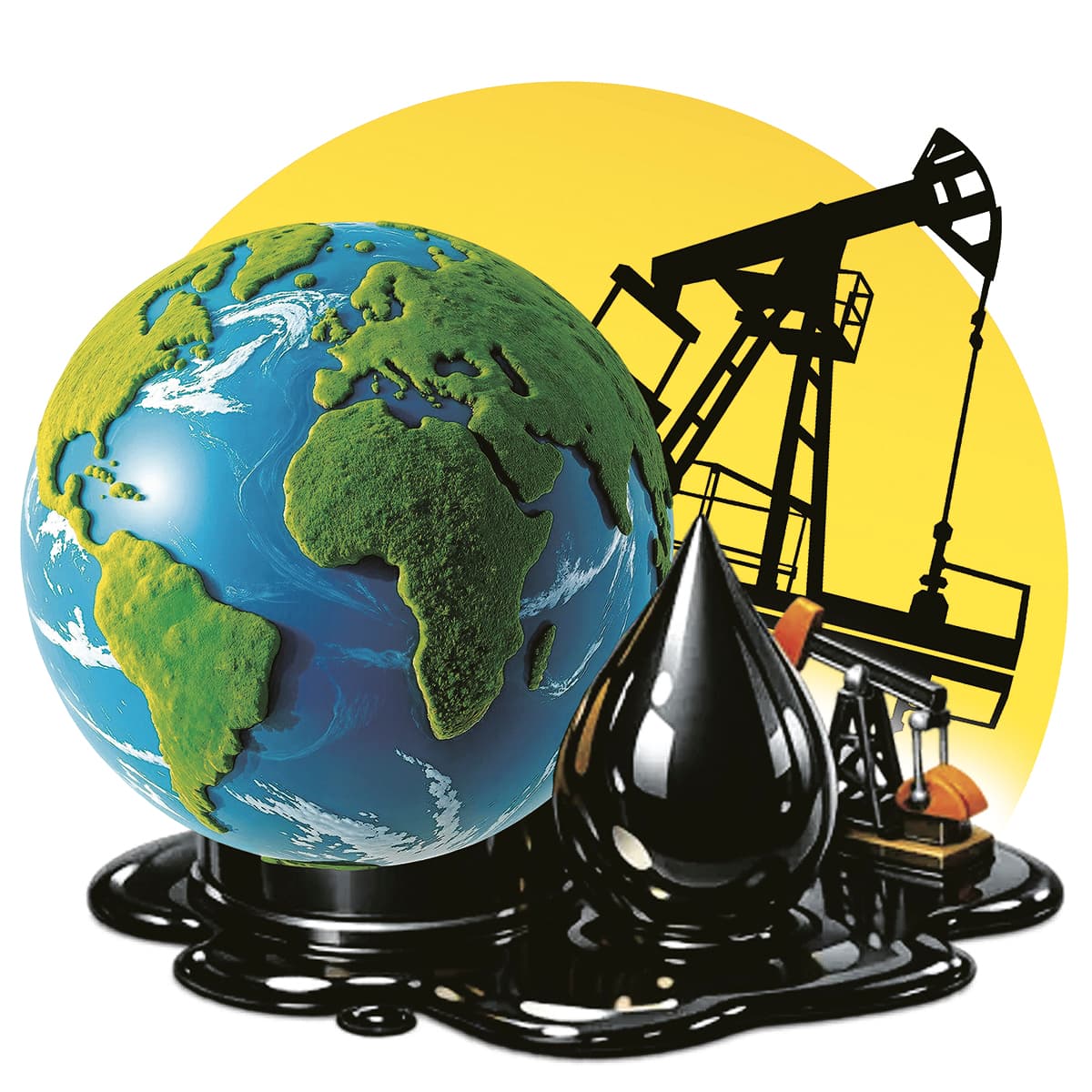
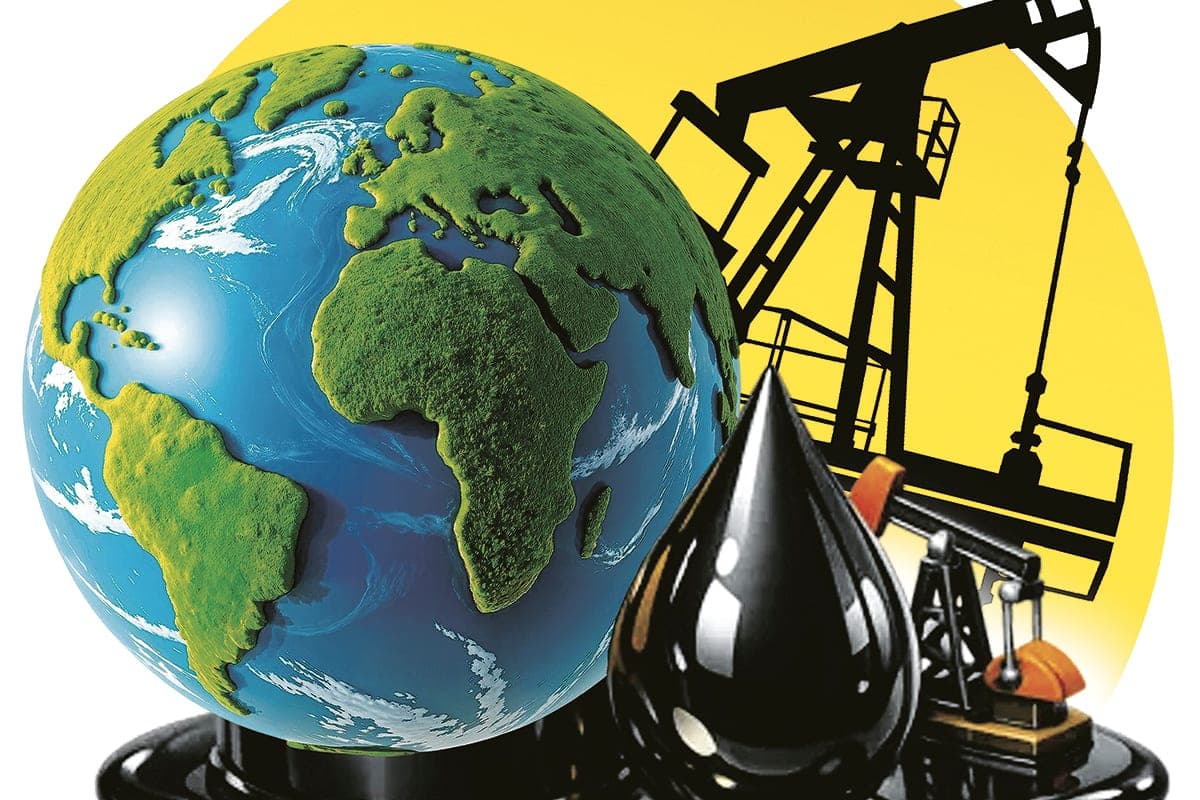
Whatever the twist, humanity will have to abandon oil very soon. We are all surrounded by her, not figuratively, but literally. The case of a mobile phone or tablet, a work chair, packaging for various types of products, soles for shoes, technical fluids and oils are all recycled oil. Every few years, the world periodically rises another wave of talk that oil will soon die, giving way to green energy, electric cars and solar panels. But this, strangely enough, does not happen. Moreover, global consumption is growing every year. Why is getting rid of oil much harder than it seems?
When ordinary people talk about black gold, they almost always mean only one thing: gasoline at the gas station. But fuel is the smallest part of oil history. After oil is extracted from the ground, it is sent to the refinery. From it, not only gasoline and diesel are obtained, but also asphalt, which covers the roads, as well as plastic, from which almost everything around is made. These are synthetic fabrics, from which most of the modern clothes, fertilizers are sewn, with the help of which crops on farmland, medicines and much more appear. Dmitry Ivanovich Mendeleev, who developed the periodic table of chemical elements, argued that sinking oil is the same as burning banknotes. What he meant was that using oil as fuel was a waste because it could make dozens of more valuable things. But modern civilization continues to act in this way, because nothing comparable in volume, accessibility and universality, humanity has not yet invented.
Today, more than half of the world’s energy comes from oil and natural gas. At the same time, the last 20 years in the world are actively installing solar panels, wind turbines and transplanted to electric cars. Conferences, agreements, emissions commitments are real, but global oil consumption is not falling. Moreover, it is growing year after year. Because the world’s population is increasing, industry is expanding, and Asia, where most people live, is consuming more and more energy. Yes, relative to the size of the global economy and its energy efficiency, oil needs less than, say, 50 years ago, but in absolute numbers consumption is growing. To understand how much the world depends on oil, just remember October 1973. The Arab countries then declared an embargo and cut off oil supplies to the United States and Western Europe. Gasoline prices have quadrupled in a few months. In the US, fuel coupons were introduced, and queues were lined up at gas stations for several kilometers. It even got to the point that people were fighting for a place in this line. Plants cut production because there was not enough electricity. Airlines canceled flights. The UK government has introduced a three-day working week to save fuel. This is not because the oil has disappeared. Supplies fell by about 7 to 8 percent, but that was enough to bring the world’s richest economies to their knees. It was then that it became finally clear that oil is not only fuel, but also the bearing structure of the entire world economy. And removing it quickly is absolutely impossible.
Now, look at what happens every time oil supplies start to frenzy: the mechanism hasn't changed since 1973. When oil prices rise, fuel prices rise and, accordingly, transportation and logistics become more expensive. And when logistics becomes more expensive, everything that comes to stores from other cities or countries rises in price. Hence the rise in prices for food, clothing, industrial goods and even utilities. This can happen if there is a war on the other side of the world. Why doesn’t green energy solve the problem? Prices for technologies related to green energy (electric cars, wind turbines, solar panels, etc.) are falling annually. But there are three reasons why green energy will not replace traditional, hydrocarbon-based energy in the coming decades.
One is chemistry. Yes, the electric motor replaces the internal combustion engine, but it will not replace the plastic from which the electric car is made. It will not replace the fertilizer with which food is grown. Electricity is energy and oil is also a raw material.
The second reason is poverty. Low-income countries, the majority of the world’s population, cannot afford a quick transition to alternative sources. For them, the main issue is not clean energy, but its availability in principle: heating in winter, cooking, lighting in schools and hospitals. When people don’t have it, talking about a solar panel sounds like an unaffordable luxury.
The third reason is tradition. Every energy crisis raises a wave of interest in alternative energy. But then oil gets cheaper, and people start buying big cars again and pouring relatively cheap gasoline into them. Interest in green energy depends heavily on the price of oil, not just on environmental beliefs. When it gets cheaper, everyone forgets about it. Oil is not going away because humanity has no alternatives, but because the transition takes decades, costs enormous funds and political will, which most governments have just before the next election. So as long as oil remains at the heart of the global economy, any shock to the energy market will immediately ricochet at the cost of living for every person on the planet. It is also the most valuable resource for three reasons. First, oil, as we have already noted, is the basis for the production of countless goods that cannot be quickly transferred to other raw materials. Second, any supply disruption would instantly accelerate inflation in the economy, as it did in 1973 and is happening right now in the Middle East. Third, alternatives to hydrocarbons provide only energy, not raw materials, as half of the oil applications do. Therefore, it is premature to write off oil, gas and hope that green and renewable energy sources can properly replace traditional ones, including nuclear ones.
DOSSHE "NG"
In China, by the end of 2030, a new system will mainly be created aimed at ensuring environmentally friendly, low-carbon, safe and efficient development of the country's energy sector. The plan is designed for 5 years (2026-2030) and defines, in particular, goals to ensure energy security, promote the green transition, increase technological self-sufficiency and improve market mechanisms. By 2030, the total energy production capacity in the country will reach 5.8 billion tons of coal equivalent. The share of non-fossil energy sources in total electricity generation should be 50%, becoming the main source of electricity. The plan also calls for faster improvement of market and pricing mechanisms adapted to the new energy system. At the same time, a unified national electricity market system should be formed. China plans to reach peak CO2 emissions by 2030 and achieve carbon neutrality by 2060.
shamko@sb.by