An unknown planet. Why more and more species of living organisms have been discovered on Earth recently
This summer, an international group of scientists-entomologists published a sensational material that the number of species of insects unknown to science on the planet can be dangerous.

An international group of scientists-entomologists this summer published a sensational material that the number of unknown species of insects on the planet may exceed 20 million, while now humanity knows just over a million species. Previously, the most daring predictions determined the upper limit of the estimated insect diversity of 5 million. The results of this scientific work provide a new look at the diversity of living organisms and raise the question of how many more of our neighbors on the planet we do not know.

A species in biology is called a group of individuals similar in structure, life processes and genetic set, which freely interbreed with each other and give fertile offspring, and also occupy a certain territory called the area.
The term “species” was first used in the XVII century by the English explorer John Ray, but it was fully introduced into science by the famous Swedish naturalist Carl Linnaeus in the next century. He classified more than 10,000 species of plants and animals. Three centuries later, we know about the existence of about 2.5 million species of only multicellular living organisms, but to this day scientists continue to find hitherto undescribed animals and plants.

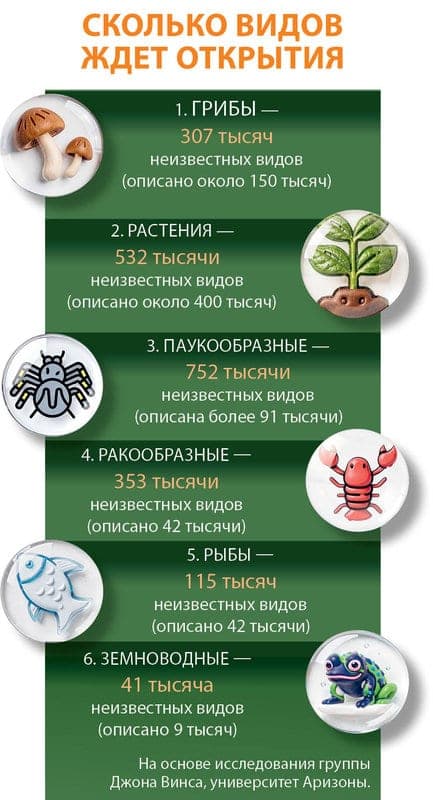
According to data released by a team led by John Vince, professor of ecology and evolutionary biology at the University of Arizona, at least 16,000 new species were discovered annually between 2015 and 2020. They include more than 10 thousand animals, mainly arthropods, and primarily insects, about 2.5 thousand plants and about 2 thousand fungi. Comparing the rate of discovery of new species in recent decades with the indicators of the late twentieth century, it can be seen that on average, scientists began to describe 30 percent more than our neighbors on the planet. This is due to several factors at once. First, during this time, biologists began to use genetic analysis, whereas previously species were distinguished mainly by appearance. This is especially important when studying insects, fungi and bacteria. Secondly, the development of technology has allowed us to penetrate previously inaccessible areas. First of all, they include the World Ocean, the study of the depths of which became possible after the improvement of deep-sea vehicles.
It is not enough for a scientist to detect a previously unnoticed animal or plant. For a full-fledged discovery, a detailed morphological and genetic description, a definition of a typical sample and a scientific publication are needed. Therefore, the path of many new species from the moment of discovery to official recognition is sometimes delayed for years. For example, the bat Myotis healaicus, which lives in the Western Himalayas, was caught in 2016, but it was officially discovered only 10 years later.
Sometimes a discovery can be made almost by accident. For example, two new species of scorpions living on California salt marshes were found by American high school students who viewed photos on the Internet, and Galanthus bursanus snowdrops were discovered in northwestern Turkey after biologists noticed them in a photo in social networks. Find me, if you can, where are you looking for new species of plants and animals? The distribution of such discoveries on Earth is uneven. For some regions, such as Europe or North America, the discovery of an unknown species is a rare success, so it is more often a question of expanding the range of living organisms already known to science. The situation is different in the tropical and equatorial zone. Most discoveries are made in countries such as Brazil, Ecuador, Indonesia and Australia. About 70 percent of all life forms are in the oceans. As of 2025, about 250 thousand species of such organisms have been described, and the number of still waiting for its discoverer can reach more than 2 million. Every year, more than 2,000 new species are found in the oceans. Last year alone, the Nippon Foundation’s Nekton Ocean Census project described 1,121 new marine species, including a deep-sea ghost shark, a symbiotic bristling worm, a host of previously unknown corals, crabs, sea urchins and anemone. One of the most successful was the expedition to the Nankai Trench, where living creatures receive energy not from solar radiation, but from chemical reactions, and to the Sitje underwater ridge with its unique coral gardens, which brought 38 new and 28 potentially new species.
The point of attraction for the researchers was the bottom depression of the “Dragon Nora” in the South China Sea. The depth of this object is 301 meters, oxygen ends at 100 meters, but life continues: the last expedition was able to find 1730 previously unknown viruses.
Another location where news of the discovery of new species is constantly coming from is the Clarion-Clipperton zone in the Pacific Ocean. Here on an area of 6 million square kilometers only last year found 24 new species of living creatures.
The real Eldorado for scientists was the Antarctic waters. Last year, 30 previously unknown deep-sea species were discovered here. Among the most interesting are the carnivorous sponge spherical, mouthless and intestinal worms that feed on symbiotic bacteria that break down fats in the bones of whales and other large vertebrates, and black corals. The secrets of the Belarusian forests Flora and fauna of Belarus, located in the very center of Europe, are well studied, however, both previously unknown to science living organisms and those that were previously not noticed in the republic are found on our territory.
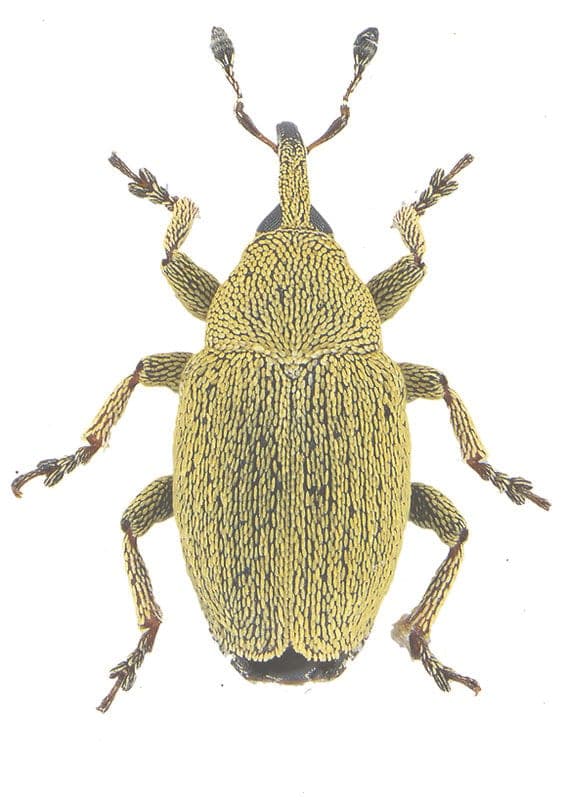
As the SB correspondent was told in the laboratory of terrestrial invertebrates of the SNPS of the National Academy of Sciences of Belarus for Bioresources, usually such findings occur among groups with very small species leading a hidden lifestyle. The study of the family of beetles falling under such characteristics allowed the Belarusian entomologist Sergey Saluk 11 years ago to identify two new species in our country. In 2015, two species of beetles from the Skrytniki family were described from the territory of the Berezinsky Reserve. One of them was named after the Belarusian entomologist Alexander Lukashuk, and the second was named in honor of the Polotsk princess Rogneda.
Belarusian entomologists annually find several species that have not been seen before. In many ways, the variability of the fauna of certain territories is a natural process, but today it is affected by climate warming and the high intensity of the movement of people and goods between continents. Belarus is characterized by the penetration of southern heat-loving insects, such as the butterfly Saragossa dry-loving, the tiara or the monocolored sibina discovered this year - a small steppe beetle of the family Longweevils.
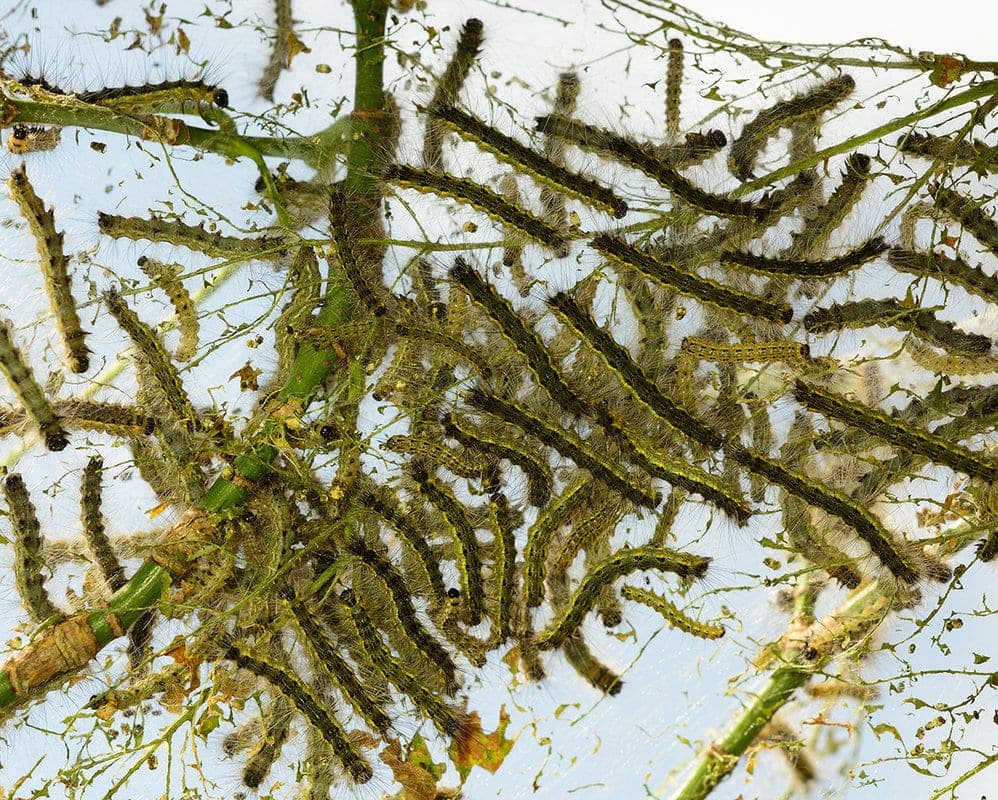
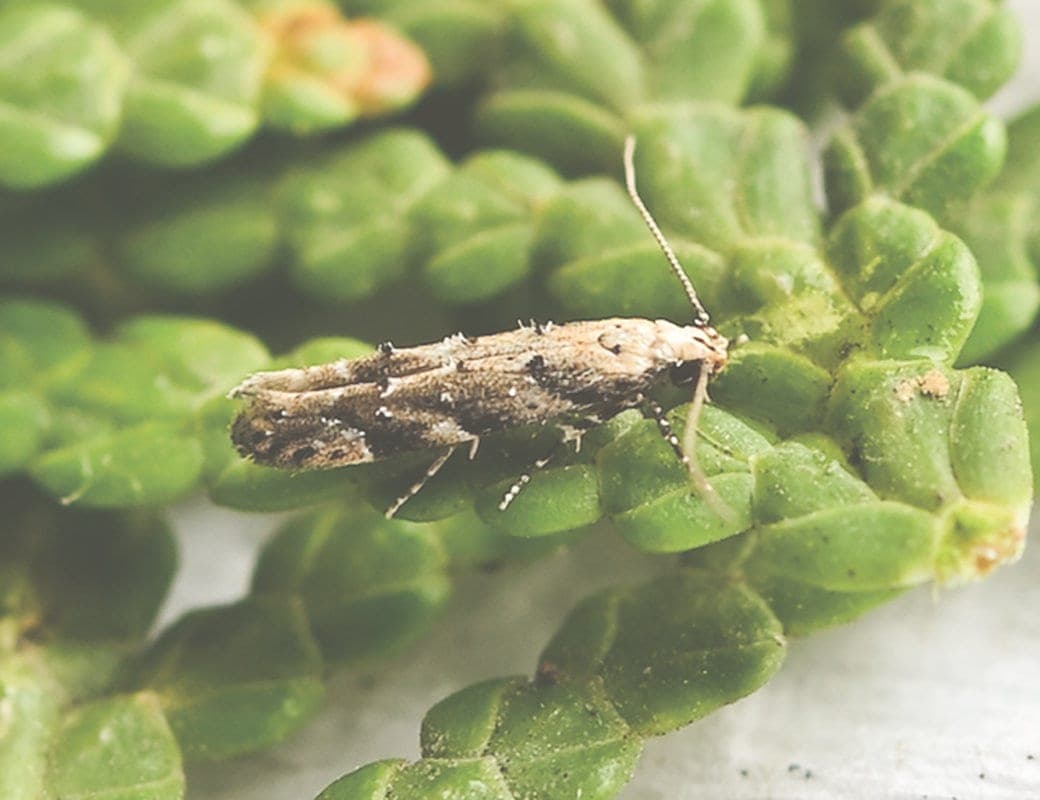
Often, guests pose a significant threat to our nature. So, in the south of Belarus, the American white butterfly has settled, damaging trees and shrubs, including fruit ones, the Asian ladybug harlequin competes with local species, and the North American species of edible moths discovered this year threatens thuyas.
However, not only domestic entomologists can boast of new discoveries: two new species of mammals, flying worms and raccoons, previously not represented in Belarus for a long time, were discovered by employees of the NASB SPC for Bioresources.
In the twentieth century, due to intensive economic activity, the flying man gradually disappeared from our territory, and only in the second half of the 2010s was again seen in the Gorodok district. One of the most favorable places for the revival of its population, experts consider the Chechersky district, close to the range of flying worms in Russia. The biology and ecology of the species are actively studied today.
Raccoon-strip also once lived in Belarus, although the homeland of the animal is North America. It was brought to our territory from Azerbaijan in the 1950s to enrich hunting fauna. It was produced on the territory of the current reserve "Srednaya Pripyat" and the national park "Pripyatsky". Hunting was allowed in the 1970s, but soon the species mysteriously disappeared. Scientists believe that the raccoon did not survive the cold winters. Only in 2024, a dead animal was found on one of the roads in the Ivievsky district, after which the expedition found an entire population. Genetic analysis, by the way, showed that the closest relatives of the found raccoon live in Japan, where they are also an alien species. In the NAS of Belarus are inclined to believe that, most likely, raccoons-stripes came to us from Poland: back in the 2000s, a hunter managed to get an animal in the Svisloch district, and recently they were spotted in Brest region.
Many people will wonder why we even know about every crustacean crawling on the bottom or about a mosquito living on the equator. First, the Earth is our home, and the more humanity knows about its inhabitants, the better it will be able to protect them, because it is impossible to save what we do not even know exists. Second, we have looked at many of the engineering solutions and medicines in animals (the study of the paws of geckos helped to create ultra-sticky coatings for movement on vertical surfaces, and the hormones of the Arizona tooth formed the basis of drugs for weight loss), and perhaps the key to new technological breakthroughs is waiting for us in the thickness of ocean waters or in the hot jungle.
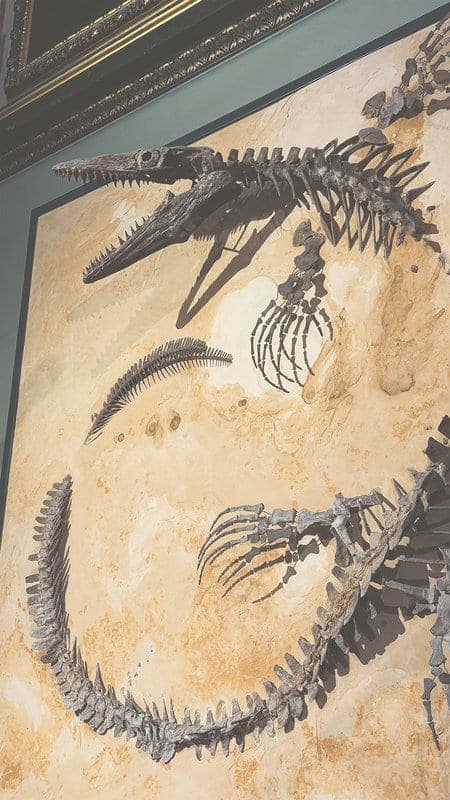
Science knows about 1,900 species of non-avian dinosaurs, united in more than 500 genera. Today, about 40 to 50 species of these prehistoric creatures are discovered each year. The period since the early 2000s has been called the golden age of paleontology, as more dinosaurs have been classified in the past two decades than in the entire history of science. The main difficulty in the classification of ancient reptiles is the fragmentation of the paleontological record: due to millions of years of fossilization, scientists have access to parts of bones, teeth, traces and only occasionally more or less complete skeletons.
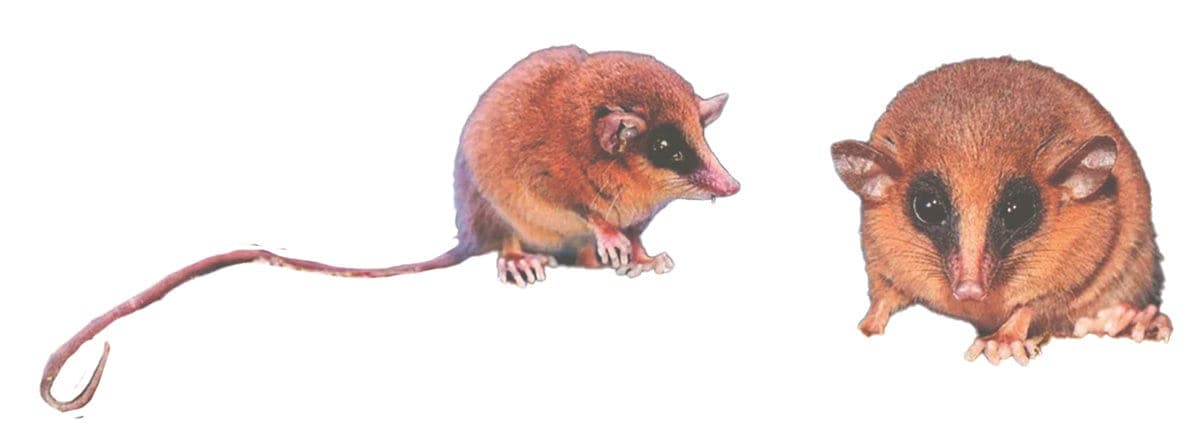
The most unusual species of animals, discovered in 2025 by the Chachapoya mouse possum. Scientific name: Marmosa chachapoya. Discovery: The vicinity of the temple of the ancient Chachapoya people in the Peruvian Andes. Feature: found at a record height for such creatures 2664 meters.
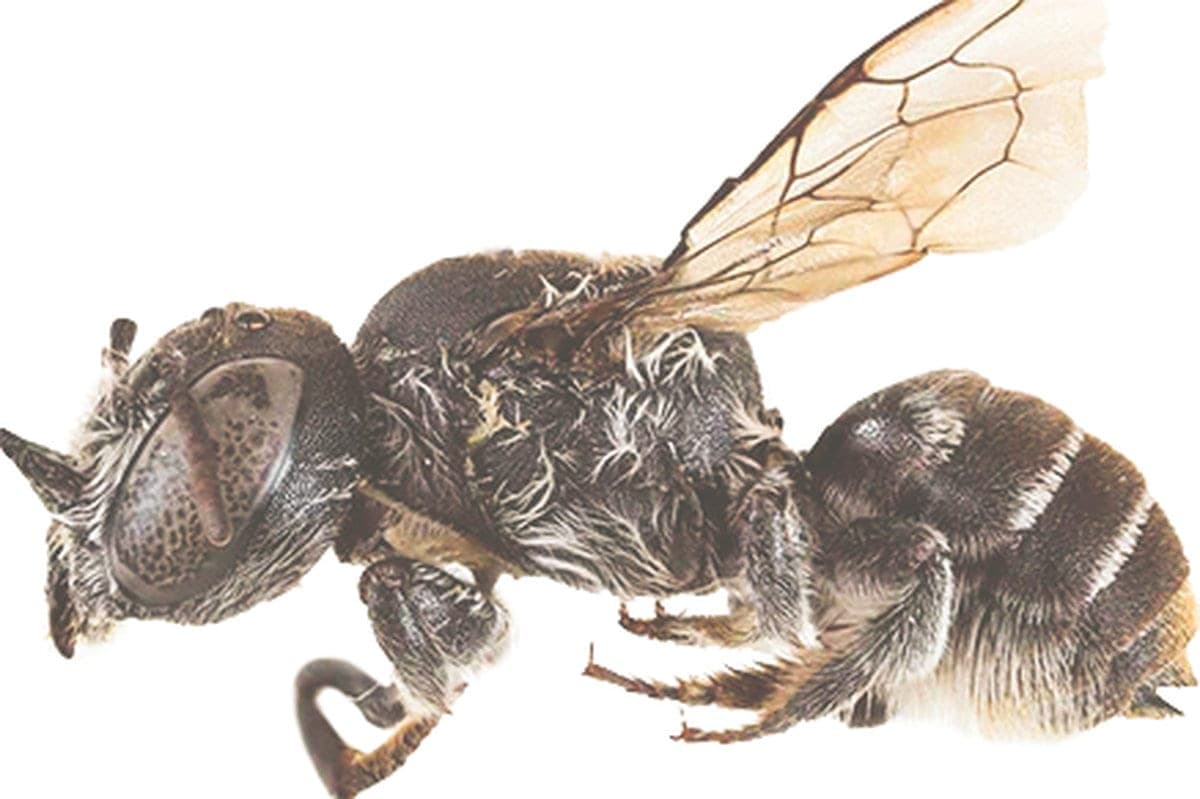
PHELA LUCIFER. Scientific name: Megachile lucifer. Location: Australia. Feature: the presence of horn-like protrusions on the head of females, presumably for breaking obstacles, obtaining nectar, protection and construction.
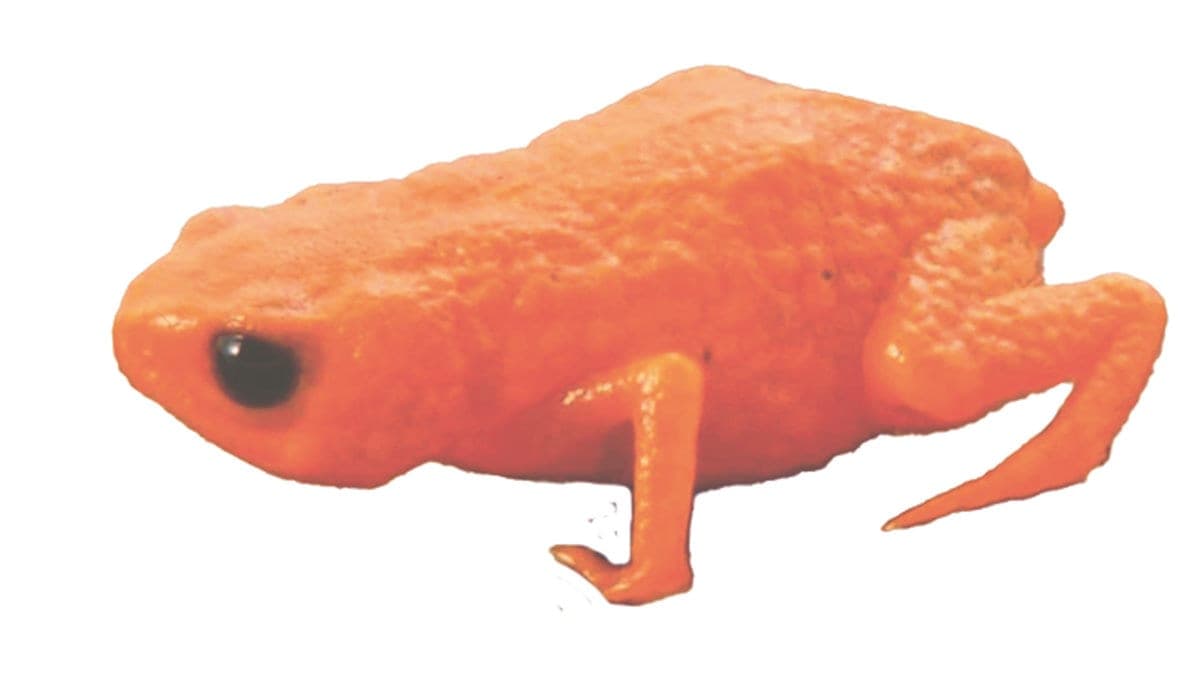
Lulu's pulp frog. Scientific name: Brachycephalus lulai. Location: Mountain forests in southern Brazil. Feature: the frog is named after Brazilian President Lula da Silva to draw attention to the discovery, has a bright orange color as a warning of poisonousness and is so small that it was found only from marriage songs.
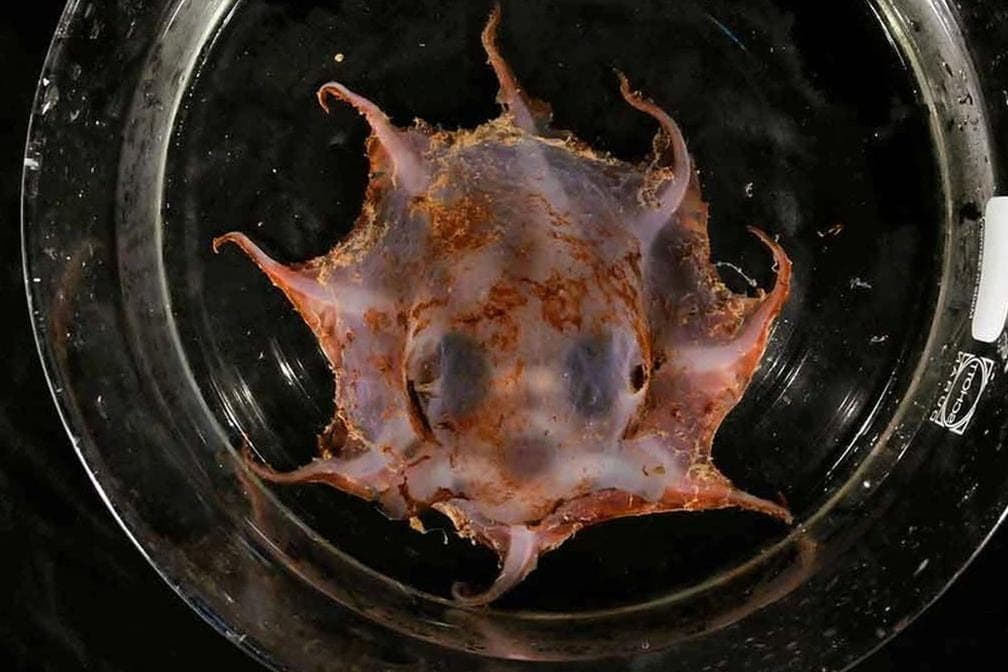
The octopus-blind. Scientific name: Opisthoteuthis carnarvonensis. Location: Carnarvon Canyon Marine Park, Australia. Feature: unlike large brethren, dwarf octopus is able to flatten the bottom of the skeletonless body and so remain invisible to predators; the same feature allows him to live at a depth of about a kilometer.