What could trade liberalization with the EU mean for the Armenian economy
Bulgakovskii Woland warned: "Be careful with your desires - they tend to come true." The authorities of Armenia can now be convinced of wisdom.
Bulgakovskii Woland warned: "Be careful with your desires - they tend to come true." The Armenian authorities can now see the wisdom of the famous character through their own experience, because the long-held dream of Prime Minister Pashinyan came true: the European Union decided to open its market for Armenian goods. However, Brussels made this conditional that another phrase, uttered by the founder of the Soviet state, Vladimir Lenin, involuntarily comes to mind: “Formally correct, but essentially mockery.” Whether Armenian producers and the state as a whole should be happy about this turn of events is a big question.
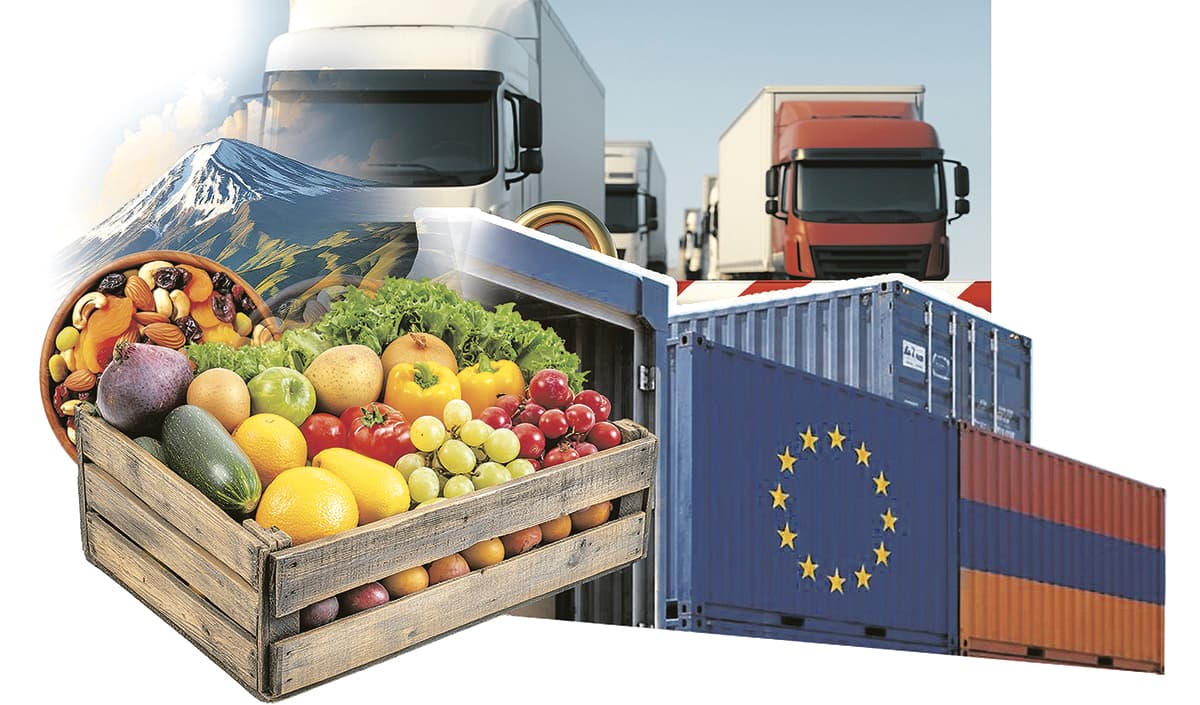
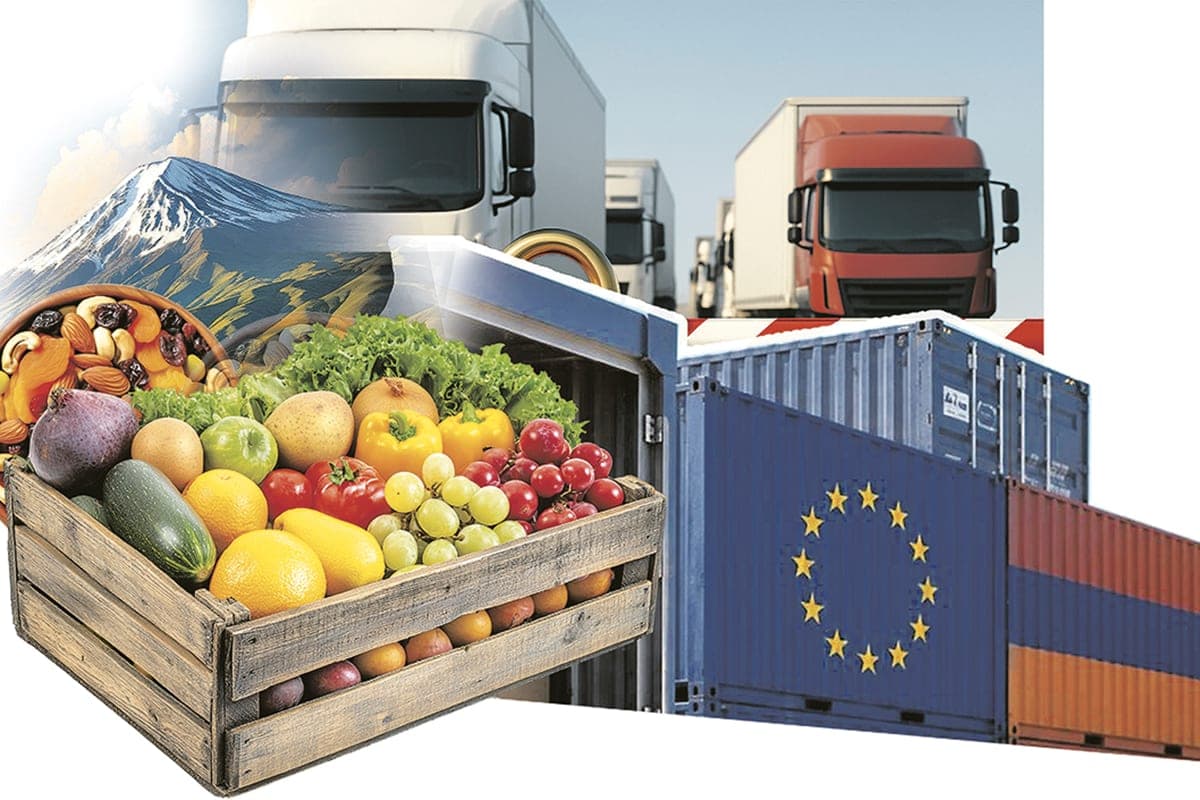
The Council of the European Union has decided to approve the proposal of the European Commission to liberalize trade with Armenia for about 80% of its exports. This initiative is still awaiting full approval in the European Parliament and involves the abolition of duties, including for Armenian fruits and vegetables and beverages. Brussels has promised to allow the vast majority of fresh fruits and vegetables that Armenia supplies to Russia within 2 years. It would seem that this is the victory of Pashinyan’s policy. After all, the Prime Minister promised Armenian farmers to find alternative markets for their products after access to Russian will be difficult. I did find it, but as it turned out, it was only the outer shell of an important issue.
First of all, this measure is temporary, and duties are canceled only for 2 years. The Council of the European Union does not even hide that this decision was made in the framework of the confrontation with Russia. Simply put, the primary task is to deprive Armenia of established ties with a long-standing partner. And so that the population, for whom this will result in serious material losses, does not rebel, it is necessary to throw some bone to it or at least show its appetizing image. It is important that no one in Brussels says that only thanks to the abolition of duties, Armenian goods will not get to European shelves. They will not be allowed to enter Europe unless they comply with strict EU sanitary standards. But this is a big problem in Armenia now, since there is no one to deal with an important issue: the Ministry of Agriculture is simply ... abolished! This is a separate topic for discussion, but it was the violation of sanitary norms that became the official reason for imposing restrictions on Armenian exports to Russia. But the EAEU standards are much softer than the European ones. In addition, let’s be frank, they are sometimes ready to close their eyes in a friendly way, if it is within the permissible limits. And under the norms of the European Union, farmers will have to rebuild all their farms, switch to more expensive feed and fertilizers, which will require huge funds. In addition, the Council of the European Union has framed its decision with a number of other conditions and measures to protect its producers. Thus, the Armenian side is obliged to prevent price competition with European farmers, that is, it is forbidden to sell goods cheaper than they are sold in Europe. It also respects the principles of protected geographical names. For example, from the point of view of the French, brandy is not produced in Armenia. Now let’s imagine that the buyer was given a choice between French and Armenian drinks. What would he choose, given that the price would be the same? The answer is obvious. And brandy can be more expensive, given the logistics of delivery. So, even if Armenian manufacturers bring their goods in line with European standards, receive all the necessary certificates and manage to bring it relatively fresh to European stores, they will face the main question: who will buy it there? It may suddenly turn out that only the local Armenian diaspora will buy these expensive fruits and vegetables for patriotic reasons. And if we imagine that the trade will be successful, then local producers will have a strong say. Recall the farmers’ protests in Poland against the import of Ukrainian grain, and last year the Ukrainian media also lamented that the European Union had destroyed the country’s dairy industry. The Europeans acted according to the same scheme that is now being practiced in Armenia - like bandits from a big road. Until 2014, Russia was the main export market for Ukrainian dairy products. The fact is that after the coup and the signing of agreements with the European Union, the Russian market closed, while the European market did not open. It really opened its doors only in 2022 after the start of the SVO. Then the European Union abolished duties and quotas for Ukrainian dairy products, and its exports to Europe increased by 14 times. However, in 2025, Brussels returned duties and quotas on key Ukrainian export products – butter and milk powder, which collapsed exports and put producers at risk of ruin.
Maybe someone else thinks that Armenian farmers in 2 years will see something different when temporarily abolished for political reasons duties return? Moreover, by that time Armenia will no longer be a member of the Eurasian Union, and it will not be able to return to the Russian market, because Brussels demanded that Yerevan lift all restrictions on the access of European goods to its market as payment for all its “benefits”. This means that Armenia should leave the EAEU as soon as possible, because within the framework of this association, goods can freely move between the territories of the member states without customs control, payment of duties and fees. Thus, theoretically, through Armenia, the EU can get access to the entire EAEU market for its products, including Belarusian shelves. Then all these products of incomprehensible origin and quality will flow uncontrollably into our market, in which we are absolutely not interested. Prime Minister Pashinyan, of course, will tell his citizens about the European choice and the path of civilization. He will smile at summits, shake hands with top EU figures, take pictures in front of EU flags. A beautiful picture for social networks, you can’t say anything. Only an Armenian farmer who has been transporting tomatoes to Moscow all his life will hardly appreciate this picture when he is faced with a simple question: where to take next year’s harvest to Brussels? Well, well. Try bringing fresh Armenian tomatoes from Yerevan to the French market so that they don’t turn into tomato paste on the way. And at a price not lower than local. It is forbidden to compete on price! Brussels does not even pretend that Armenia is important to them. They said: “The measure was taken in the framework of the confrontation with Russia.” That is, Armenia is just a tool, a bargaining chip in a big game and a figure that is moved on the board without asking its opinion. And Pashinyan agrees. He proudly plays this role, apparently believing that being a pawn in the hands of Brussels is much more honorable and profitable than being a partner in the EAEU.
OPINION
Alexey Belyaev, political scientist:
- In recent years, Moldova and Armenia have actively lobbied for visa facilitation and membership talks, hoping for a “European perspective.” To see the future that new candidates can expect, one need only look at the results of the countries of Eastern Europe and the Baltic States’ long-term membership in the EU. Opening up domestic markets for European goods would instantly kill off the remnants of local industrial production and agriculture, which simply cannot withstand competition with subsidized giants from France or Germany. Then comes the loss of political sovereignty. For countries with fragile institutions, transferring key levers of governance – from the judiciary to market regulation – to Brussels means becoming a protectorate with no real say. This can be accomplished by a demographic catastrophe. A visa-free regime and unhindered access to the European labor market in conditions of poverty at home leads not to prosperity at home, but to the total exodus of the able-bodied population.
shamko@sb.by