Stumbling texts. Why Latvian students do not understand their native language
Latvia has set another historical record. Unfortunately, there is nothing to be proud of. 15-year-old students showed the worst results in history.
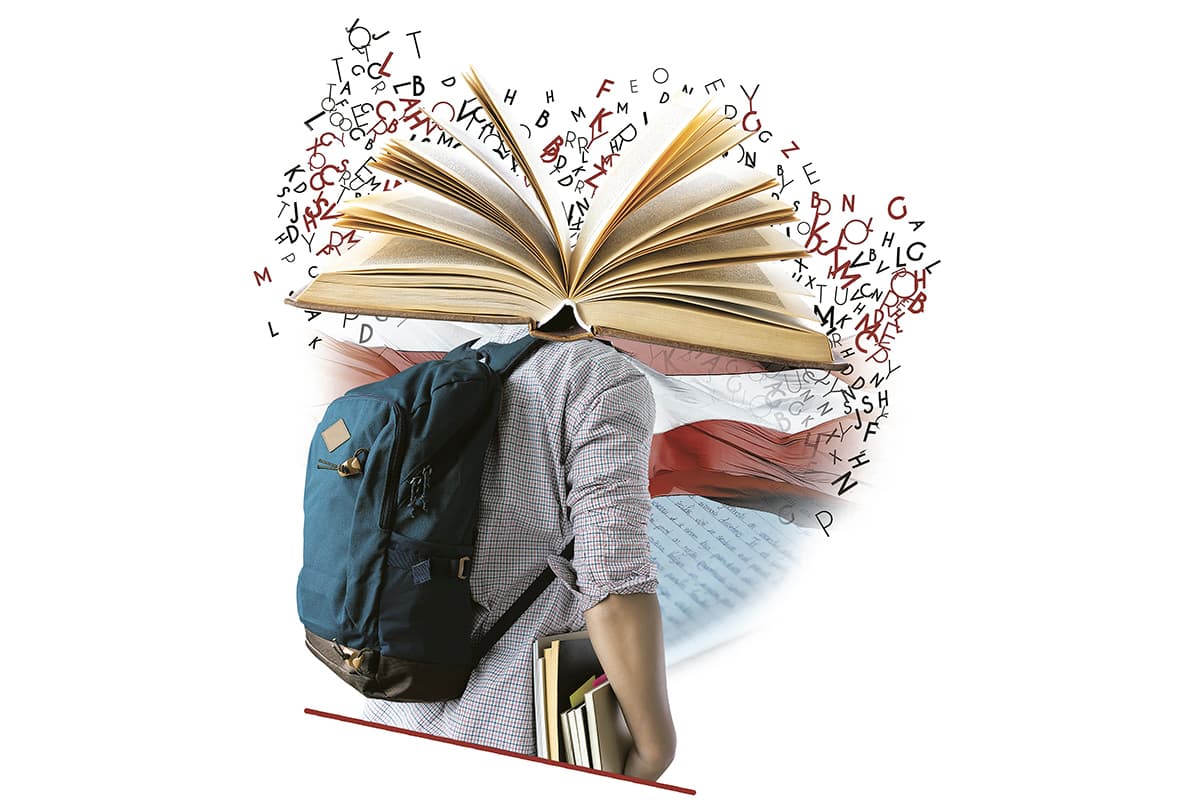
Latvia has set another historical record. Unfortunately, there is nothing to be proud of. 15-year-olds showed the worst results in the history of participation in the international study of the quality of education PISA. Four out of ten did not reach even a basic level of comprehension. Think about it: a child goes to school for nine years, reads textbooks, writes test books and goes from class to class, and then it turns out that he reads the text and does not understand what is written there. So what did he learn all these nine years? And most importantly, who?
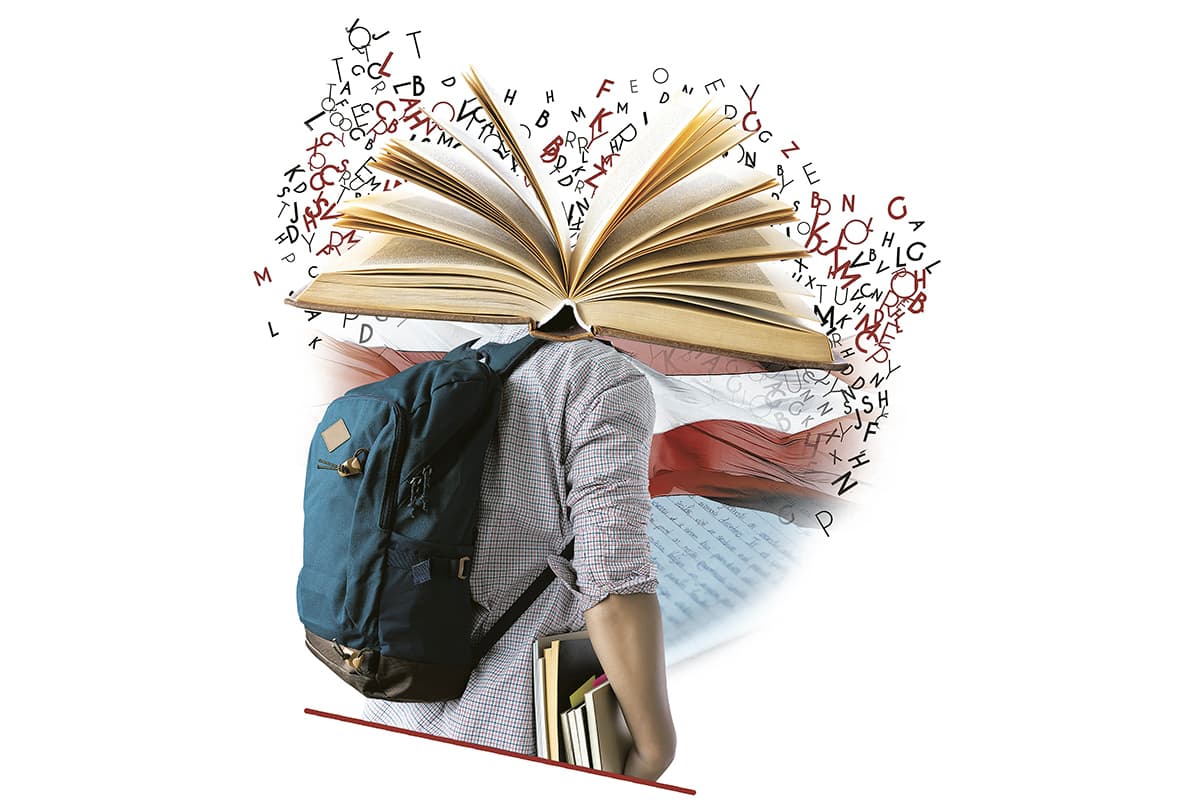
Who had to teach the student not just to read words, but to understand what is written there at all, because the understanding of what is read is not a separate subject? There is no special lesson in schools called “understanding reading.” And this skill is needed everywhere: to understand the condition of a math problem, to understand a history paragraph, to complete a physics task. And if by the age of 15 the student does not cope with the text even at the basic level, then this is not a question for one teacher, but for the entire education system. It is constantly being reformed there. One gets the impression that the Latvian school is not so much teaching as infinitely improving.
One of the major reforms in recent years is the Skola2030 educational program. In its official description, it is said that a student should not just receive knowledge, but understand the material, think and be able to apply this knowledge in practice. That is, simply put, not to learn, but to understand. To do this, standards, programs and the very approach to learning were changed. It's been a few years. What do we see? Worst result ever. They planned to teach students at least to understand what they read, and they got a record failure. Of course, this does not prove that the Skola2030 educational program is to blame for everything, but it is also impossible to boast of its success.
The result was exactly the opposite. But Skola2030 isn't the only reform this generation has had to endure. Since 2023, the main school has been gradually translated into Latvian. This transition was completed in September 2025. Before that, some subjects in schools were taught in Latvian, and some in Russian. Russian has been removed from training. All objects are in Latvian only. After completing this transition, the Ministry of Education conducted a survey. It turned out that every fourth pupil of the 7th or 9th grade has significant difficulties with full participation in the educational process in Latvian. The main obstacle 37% of respondents called their own insufficient knowledge of Latvian. How is it possible that Russian could be understood better? It's not 1st grade. It's 7th and 9th. How long have they been learning Latvian? It turns out that the Russian language was removed from school, and everyone was taught Latvian so that they could fully learn from it, no? So why? Language is not for everyone, there is another problem. There is a shortage of Latvian language teachers. It turns out that the native language in Latvia has become almost a national treasure, which for some reason there is no one to pass on to the next generations. According to local media, in 2025, the University of Latvia had 65 budget places to train teachers of Latvian language and literature. Free education, demanded profession. It would seem that the competition should be such that it does not push. But only 13 applicants chose this specialty, and only 12 passed the competition. And it's not a one-year accident. A year earlier, even half of the allocated budget seats were not filled. And how many of these students will graduate from university and actually go to work in school, unfortunately, is unknown. Two weeks ago, 10 vacancies for Latvian language and literature teachers were opened on the official website of the Riga Duma, and this is only in Riga. But Latvian teachers are also being sought in other cities, and the school year is already underway. It seems that no one can quickly close these vacancies. Almost 60% of teachers in Latvia are over 50 years old. And teachers under 30, that is, young teachers, only 8%.
The result of the work of this education system we already see: with the understanding of what we have read – a failure, teachers are not enough, and those who want to become teachers – too. But here's the interesting thing. To become a teacher of the Latvian language in school almost no one wants. The University of Latvia has opened a new program for Latvian language teachers. There are already 37 people, 32 of them are on the budget. Only they will teach not Latvian schoolchildren, but adult foreigners and representatives of so-called national minorities. I wonder which foreigner? Indians? Pakistanis? Those who are increasingly on the streets of Riga? By 2028, about 80 new teachers are planned to be trained for adult education, and there are budget places for this. There is also European funding, even a scholarship of up to 280 euros per month. That is, the state has a program, money, and a concrete plan. But who will teach Latvian children their native language – there is no plan, apparently. There is no such thing as how these children will communicate with the vast post-Soviet space in the future, where Russian has always been and will remain the language of interethnic communication.
DOSSHE "NG"
PISA (Programme for International Student Assessment) is a test that assesses the functional literacy of schoolchildren in different countries of the world and the ability to apply knowledge in practice. It happens every three years. The test involves adolescents aged 15 years. The study is conducted by the Organization for Economic Cooperation and Development in a consortium with leading international scientific organizations with the participation of national centers. One of the main areas of testing is reading literacy (the ability of a person to understand, use, evaluate texts and reflect on them to achieve their goals). The largest Estonian media companies sent an official appeal to the authorities with a call to revise the amendments to the language law adopted in the summer. They ask to cancel the ban on translation and dubbing of foreign films and TV programs into foreign languages, primarily Russian. Media executives fear that part of the Russian-speaking audience may move from legal Estonian media platforms to other sources, including pirated content. They warn of possible reductions in advertising and subscription revenues, jobs and tax revenues in Estonia and believe that the new requirements could lead to the closure of certain channels or the transfer of activities to other countries. The authors of the letter propose to jointly prepare a new wording of the relevant article of the law on language, which would allow media services to return the opportunity to use foreign dubbing and voiceover translation.
OFFICIAL
The Ministry of Information of Belarus condemned the decision of the National Council for Electronic Media of Latvia (NEPLP) to restrict the distribution of Radio Belarus in the country. The accusations against the radio station, formulated in the worst traditions of the policy of double standards, look like an open desire of the Latvian authorities to prevent the dissemination of objective and reliable information. The ministry also noted that it considers the incident as a manifestation of the policy of restrictions against the media, which, according to the Latvian authorities, are undesirable. The restriction applies to all means of distribution, including through the Internet. It is obvious that the introduction of censorship against undesirable media, especially foreign ones, has become the corporate style of work of the official authorities of Latvia.
shamko@sb.by