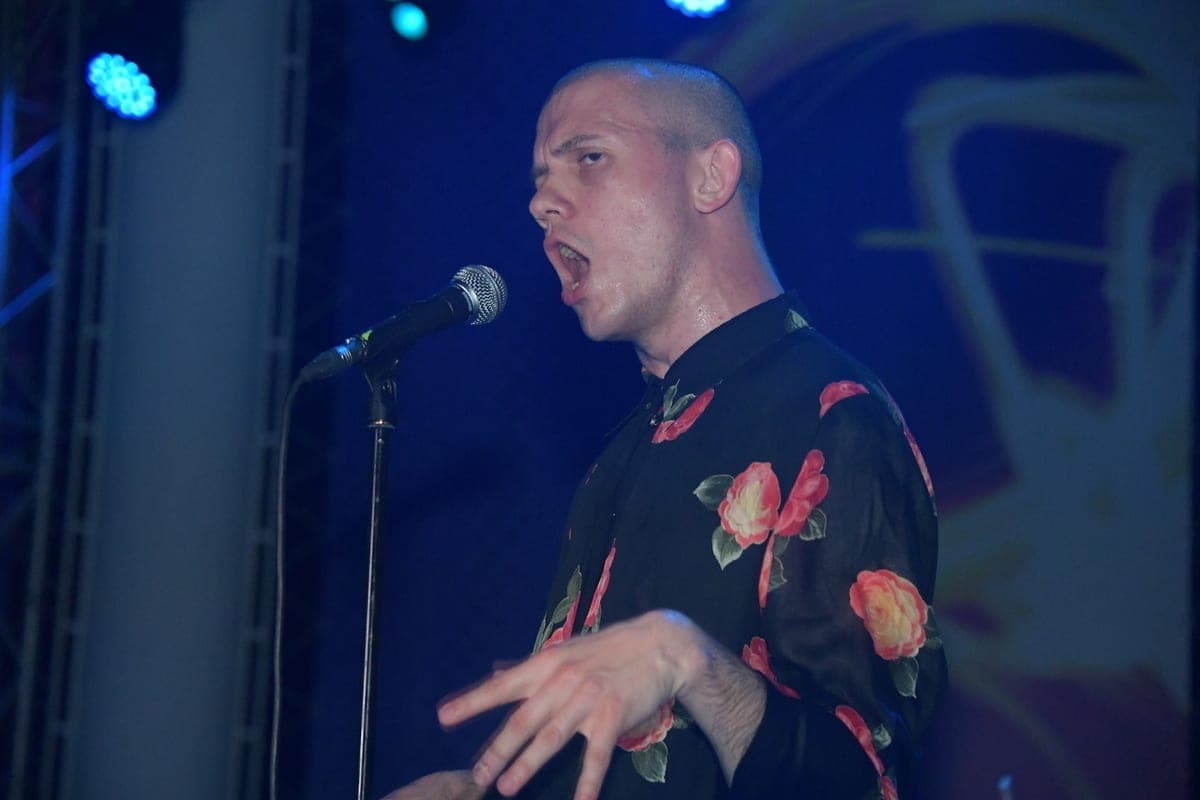
Bulat Ayusheev: “In the texts from neural networks there is no breathing and human incorrectness”
Disputes about the state of modern literature of Buryatia have not subsided for years. Some argue that the literary process in the republic has stalled, others continue to write and publish books against all odds. The person who sees this picture from the inside is a poet, prose writer, journalist, member of the Union of Writers of Russia and editor of the literary and art magazine Baikal Bulat Lubsanovich Ayusheyev.
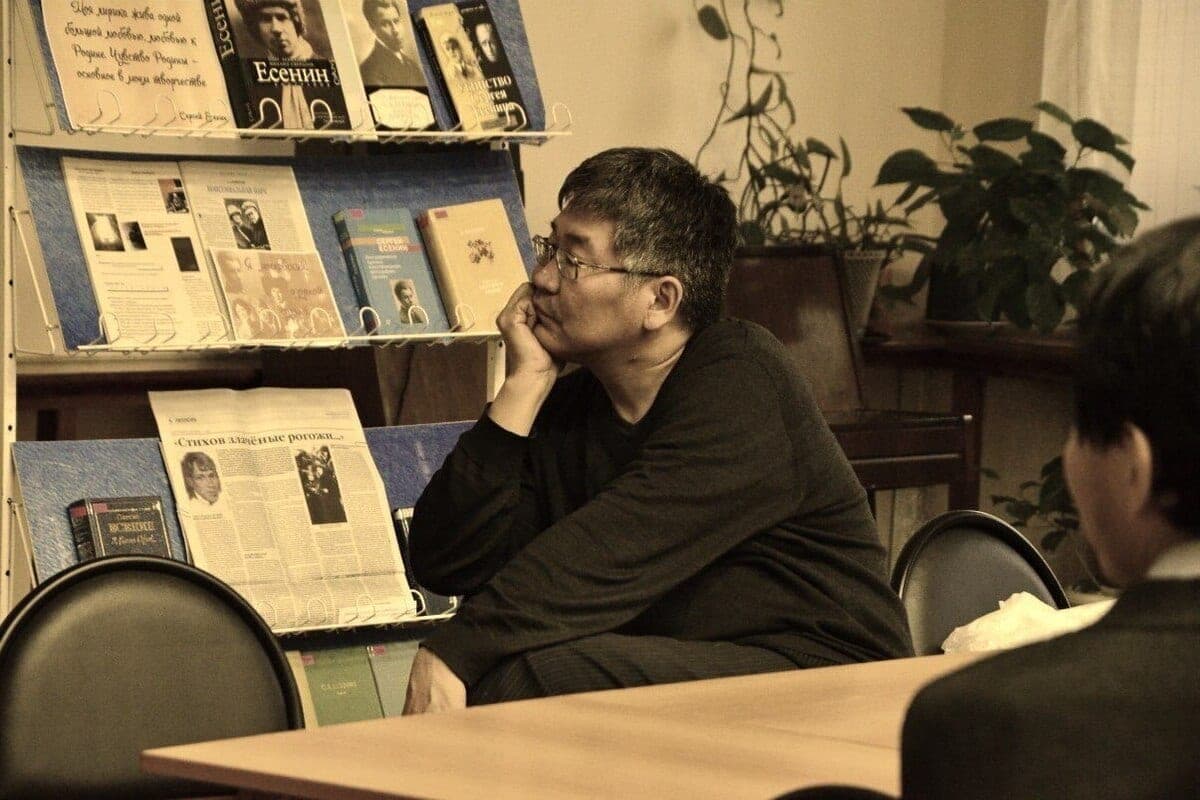
About why for ten years in the literature of the region almost nothing has changed, how artificial intelligence made editors fall in love with author’s mistakes and why the mass reader became a “mythical character”, Bulat Ayusheev said in an interview with “MK in Buryatia”.
"Not an expert."
Bulat Ayusheev daily passes through dozens of manuscripts from all over Russia and, as a member of the jury of most republican literary competitions, evaluates the works of local authors. However, he refuses to call himself the main expert on modern Buryat literature.
- I don't like the word "expert." I'm just at a point where I can see and know a little more than anyone else. I work in a literary magazine and sit on a jury. In this sense, I certainly have some observations and thoughts.
When asked what trends prevail in Buryat literature today, the editor-in-chief of Baikal answers without illusions: over the past decade, the picture has hardly changed.
- It’s hard to talk about trends because I don’t feel like something new is coming. The picture today is about the same as it was ten years ago. The genre of the novel is still in sight and, to a lesser extent, the story, although small prose contests are now held. In poetry, there are names that have taken place, and there are young authors who come and look for themselves. There is a gap between generations: young people have grown up on the Internet – we see the world differently. I can’t say that the genres have become more or less. And the main trouble as it was and remained: in the Buryat language not only few people write, but also few people read.
"Plastic literature"
The only truly new trend that every editor can feel today is the advent of artificial intelligence. And this trend causes Bulat Ayusheev serious concern.
- It's kind of subtle, but as an editor, I can literally feel it in terms of the quality of the texts that are coming in and how they change. And with fear I think: what will it lead to, what will happen next?
At the same time, our interlocutor is sure that today neural networks have not yet reached the level to literally replace the writer.
- With the work of the proofreader, artificial intelligence copes quite well. The artwork is immediately visible. In texts written by AI, there is no individuality. They are correct, literate, smooth, smart - for office work, probably good. But the very absence of a living person in them is noticeable to the naked eye. Although, frankly, many graphomaniacs have always written this way: they worked according to ready-made patterns. It seems like the text is foldable, and there is no life in it.
It was against the background of the onset of neural networks that an unexpected rethinking of the very nature of living creativity took place. If earlier it was enough for the editor that the author owns the syllable, today the author’s imperfection becomes the value.
- Now you realize that this human difference is the main value of the text. His wrongness! Unlike ten years ago, today I have become much more appreciative of author’s incorrectness, roughness, errors, typos. They feel a living man, his breath, his physics, his chemistry. When you read such a text, it is immediately available to you. What I’m talking about has long been known as style.
At the same time, Bulat Lubsanovich himself does not deny technology and admits that he actively uses neural networks in his work, like everyone around him.
- Artificial intelligence has entered our lives, it is used by literally everyone, and I am no exception. It helps in collecting information, in its processing. But the artwork is different. Perhaps here you can use AI, but not at the expense of your creativity. Not to force the machine to write for itself, but to ask it to be a kind of co-author: to suggest, guide, argue with you, throw ideas. This is a personal matter of each author, the main thing is that the text itself was written by a person.
According to the editor, the expansion of neural networks can play a positive role - to become a kind of shake-up for real talent.
- Before the reader today there is a new danger: you take the text and think – what if it is already an artificial intelligence has written? We never thought about that before. Classics will definitely be valued even higher because they are guaranteed to be written by people. But I hope this situation encourages contemporary writers to write better. If a person has a talent, he will have more incentive to write in the way that only he can, rather than give something averaged with erased, inexpressive language. Perhaps this “cardboard”, “plastic literature” will become less. Although, I think people will play with artificial intelligence for a long time - they're just getting started. For some, he is becoming a kind of therapist.
The era of satiety
Talking about technology inevitably leads to the question of how the digital age is changing the person – both the author and the reader. Bulat Ayusheev looks at these changes with concern.
- This situation is unique in that it has never happened in the history of mankind. It forms a different view of the world, and maybe another person. I grew up at a time when you had to go to the library for information, and sometimes you couldn't get it at all. Now you press the button on your phone and find out what you want. It seems to me that this directly affects the brain: some parts of it simply cease to be necessary - the same memory, for example. I am no exception: I rely on the Internet, do not try to remember anything, make it easier for the brain. But does he not atrophy from this at all?
No less dangerous is cultural abundance. When everything is available, the taste for art disappears.
- I pressed the button today, read any book, watched any movie. But I do not want to, there is a satiety. This psychological moment is simply murderous. Sometimes you think: maybe the fact that you had to make an effort to get a book, and gave rise to this keen interest? If in my time everything was freely available, maybe there would be no such craving for books and art.
We grew up in a literary-centric time, in the age of the paper book, the editor recalls. Each reader formed his own pantheon of authors, and reading was a ritual.
- Today, my whole life is on the phone. And I suspect that this ease will gradually discourage people from writing and reading, especially large, complex books. In a couple of decades, we may see less reading and writing. Or people will say, Why do I need all this great literary architecture, magazines, publishing houses? I’ll write it myself, I’ll read it myself, my friends will praise it and enough is enough.
In the Network already appear “video novels”, created by neural networks based on popular stories, a future where the reader has no place. But it is necessary to preserve the “reader person”, Bulat Ayusheev is sure, at least for the sake of physiology.
- Doctors say that reading develops the brain. Physiology is such that the brain must constantly work. Reading big books is hard, but if the brain doesn't work, it's a direct pathway to early dementia.
Bonuses for Dead Literature
One of the most frequent questions asked to the editor-in-chief of the country’s only fat literary magazine is whether there is modern Buryat literature at all?
- As long as I sit in my seat, this question comes up all the time. And I always hear a sly subtext behind it: they say, or maybe you are sitting there and hiding a lifeless body of literature on your balcony, pretending that nothing happened so as not to lose your job and some bonuses. No, it's not.
According to Bulat Lubsanović, literature is measured not by circulations, but by living people.
Literature lives not in reports, not in the offices of officials, but in the minds and hearts of people. These are specific people who write books and who sometimes manage to publish them. On the scale of Buryatia, such people are not so few. If at least one interesting novel has been published in a year, if there are good poems, this is enough to say that literature is alive. While authors write, while they are interested, until they give up creativity for the sake of earning their daily bread, everything continues. This applies to those who write in the Buryat language. Their reading audience shrinks like shaking skin, but they still write! You can't measure literature by the number of books -- what if half of them are waste paper? You have to measure by talent.
It is difficult to evaluate literature by market demand: books are expensive, and the system of their promotion requires support.
- Reading recognition in Buryatia is still there: authors who deserve it are given credit. We have recognized masters - Galina Radnaeva, Bair Dugarov. But mass demand is different: a person can write a beautiful book and not sell a single copy. The readership of the magazine is very small. Some joke that our readers are the authors themselves, although I will tell you in confidence that authors almost never read other authors. It turns out to be such a “mythical reader” – we believe that he is somewhere, but perhaps he is not.
At the end of the conversation, we asked how the novice author gets to the pages of Baikal.
- I'm always surprised by this question. It looks like this: the door is open wide, and a person breaks into it, and even offended. If the submitted manuscript did not cause a response and did not wait for publication, then the editorial board was not convinced. That's the secret. Manuscripts come from everywhere, but even on a national scale there are not so many interesting, strong texts.