Mirror Onegin: In Smolensk will show the play about the impossibility of happiness
On November 16, the premiere of the play “Eugene Onegin” will be held at the cultural and leisure center “Gubernsky”
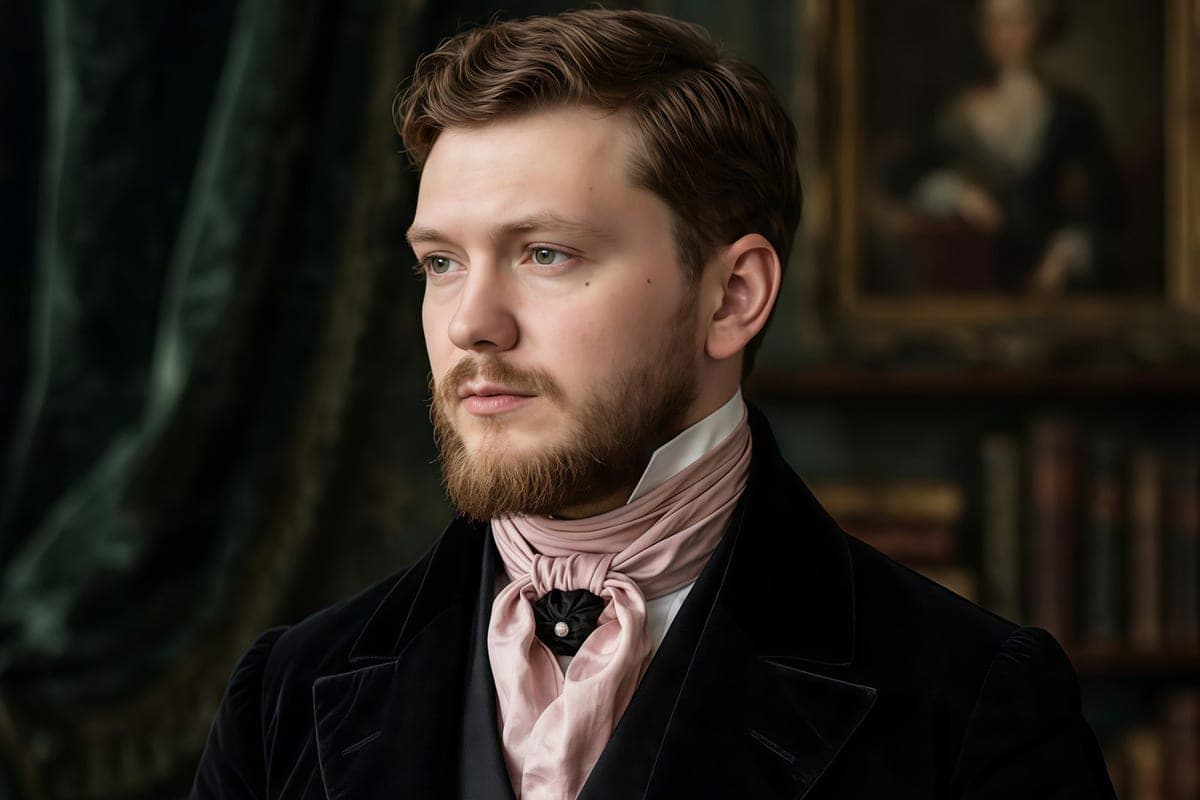
On November 16, the premiere of the play “Eugene Onegin” will take place at the Gubernsky Cultural and Leisure Center. Fragments of one life”. The actors of the People's Drama Theatre "Mirror" of the Smolensk State Medical University will perform before the Smolensk residents. About the features of the production and views on the immortal novel of Alexander Pushkin, we talked with the artistic director of the theater Sergey Sinitsyn.
It was
- In one of your previous interviews, you said that at the very beginning of the theatrical activity you had already turned to the work Eugene Onegin. What happened? Why did you decide to go back to him? Has the plan changed?
The history of the Mirror Theatre began with a philosophical circle. In 2004, the first production took place – a 45-minute play “The Passion of Onegin”. It has been 22 years, and this work has regained its relevance.
For me, Eugene Onegin became important in the eighth grade, when my mother helped me disassemble it. Not a year has passed since I read the novel again. Now I realize that I am doing this work to pay tribute to the author who shaped my worldview.
That first performance was a free experiment and only remotely connected with Pushkin’s text. We imagined that Onegin meets in a kind of ring with other heroes - after the completion of the novel. It was a reconstruction of what could have happened. The idea was born because of the open finale of the work: Pushkin left an endless space for speculation. I then wanted to bring Onegin and Tatiana, so that they finally find out the relationship, and return Lensky.
It's different today. The basis of our new production is absolute adherence to Pushkin’s verse. The plot develops in the same sequence as in the novel: the arrival of Onegin in the village, a meeting with Lensky, a duel, departure and culmination in St. Petersburg. But I think it's still a different piece. Over the years, I have changed and now I look at the text differently, trying to define my own understanding.
For me, the main thing is that everyone should have their own Onegin. There are Onegin Dostoevsky, Onegin Nabokov, Onegin Akhmatova. By the way, the epigraph that was taken for our poster – “Drama of irreparably angry hearts” – is exactly Akhmatov’s concept. “Onegin” is staged in every theater, and I try to see each version to understand how I see it.
Ultimately, this performance is an attempt to understand the issue of free will. To what extent is man the master of his own destiny and to what extent does his will determine his actions? Or are we hostages of rock? What is God’s goodness, judgment, or judgment? I remember the epigraph to the novel by Leo Tolstoy “Anna Karenina”: “Vengeance is mine, and I will repay.”.
When I discuss this with students, we always come to the paradoxes of the novel. Onegin is the protagonist, his arrival is a start, but the soul of the performance is revealed in other lines. For example, in the relationship between Lensky and Onegin or in the choice of Tatiana. Why does a romantic girl, raised on Richardson’s novels and virtues, choose not the romantic poet Lensky, who “brought the fruits of learning from foggy Germany,” but the cold skeptic Onegin?
This work is inexhaustible.
Parallelity of worlds
The novel is amazing for its parallelity of worlds. Here is the world of Onegin, the world of Tatiana, the world of passions, and the world of Lensky. And nearby lives the Larin family, which lives with completely different problems, values and meanings. And finally, the question arises: what is more logical? This tear, all these dramatic stories or just ordinary life, where, as the novel says, “the habit from above is given to us: it is a substitute for happiness”?
So the question is, do we have to go somewhere else? Why are there people who oppose this world? Onegin is the absolute opposition to everything that happens. He's a real hero to me.
- Who, then, is the antagonist in the work?
- In classical theater, the antagonist is often considered a woman. So it is customary: a man is seeking, and she is resisting, the object of hunting. But it's different here. It seems to me that Pushkin for his time violated all possible canons. In theory, the knight should seek the lady of the heart, and here Tatiana takes the first step. And a bold move that probably really scared Onegin.
Dostoevsky, for example, considered Tatiana Larina the main character of the novel – this is a well-known version.
Look, it's been eight years. Onegin is wandering somewhere. He is 26 years old when he returns to Chicago. But for some reason, they always forget that Tatiana is also an adult woman.
She has learned to "rule herself." Onegin gave her his code of life. She is a model, an impregnable goddess, the “cold queen of the Neva.”.
Can you imagine what an even stronger blow she had to endure when Onegin, with his letter (those very “letters and tears”), pierced this armor again?!
The ending of the novel, I think, is even more tragic than people think. Can Tatiana continue to be the cold royal goddess she was before her second encounter with Onegin? I don't think so.
His new declaration of love, I think, will do her even more harm than that girl who was in the village. In fact, it's hard to imagine how a woman can live like this: love one person for eight years. The final scene has a deeper meaning than just rejection. It is about the destruction of the most powerful person in the novel.
And happiness was impossible
- And what do you think, purely hypothetical: can a situation where Tatiana and Eugene are happy together be simulated, or is it impossible due to their characters and ideas about the world?
- That, I think, is another paradox. We say that Pushkin is a genius, and he is extremely honest on this issue. Remember the words of Tatiana: “And happiness was so possible, so close...” But my fate is already decided.” This rock theme comes up again.
Vladimir Solovyov wrote that the meaning of human life is the desire for happiness, but no one gives a person a guarantee of its acquisition. Both Onegin and Tatiana are people of the highest flight. They are made for each other, they are basically two halves. Their text is absolutely mirrored: their letters, their fates, their meetings.
Onegin is a person who lives outside this reality, for him a mirror is only one in which his infinite virtues are reflected. But Tatiana says the same thing: "I'm here alone, no one understands me." She's not part of this world either. Onegin paid attention to her. He himself says to Lensky: “I would have chosen another,” he felt this connection.
And they are not allowed to be happy. That's probably their fate. There is a bitter law of being: the higher a person rises to the heights of his spirit and intellect, the more inevitable his loneliness.
If Pushkin wanted to bring them together, he would. By the way, I read somewhere that Pushkin was advised to marry them, or at least die – that is, somehow to end the story in a normal, traditional way for a novel. But he doesn't. Here is a completely different, tragic view of human nature.
Earthly and celestial
- How real are the feelings of Evgeny and Tatiana? Perhaps they did not love the real person, but their ideas about him?
Good question, I was thinking about that too. As for the relationship between the real and the unreal, for me, this is the relationship between Onegin and Lensky.
In rehearsals, I say this: Onegin is an example of earthly perfection. He is a diamond whose purpose is to be born a diamond, while someone else is to be born, for example, a cobblestone. That's his fate.
Lensky, if you take his characteristics, is a sample of celestial perfection. He is a man of a world that cannot really exist. He is doomed to death because of his romance. And this shot takes on new meanings: to rise again, one must die for this world. By the way, in our play Lensky will not die physically. We'll have two Lenskys. One was killed in a duel, and the other was an ever-living bloodstained shadow, “a young man lying in the snow” (this is from the memory of Onegin). He will always be with him, for man is alive as long as we remember him.
And here's Tatiana's relationship... I think that in this work the earthly triumphs again. I'm told there must be something sublime there, but the novel is absolutely about earthly human relationships. Both Onegin and Tatiana are realists. In the end, Tatiana did not go to the monastery and did not perform any sublime feats. She calmly married the prince, lives in St. Petersburg, everything is fine.
The world of Onegin and Tatiana is an exclusively earthly world. Just a question about happiness: if you are an extraordinary person, the law of compensation probably applies – the more you are given, the more you will be asked. You can't have everything. This acuteness of feelings, this complexity must be paid for at the earthly price.
The only truly romantic character here is Lensky. He is the last romantic, and Pushkin, disposing of his fate, killed romanticism. I think so.
If you look in the context of all Pushkin’s creativity, Onegin is not one work, but a whole world of images. This is a fatal fate. This is this moment of payment..
Tchaikovsky has a brilliant opera Eugene Onegin. And as far as I can tell from the book "Tchaikovsky". The story of a lonely life, written by Nina Berberova, was a high-profile story with the premiere. Tchaikovsky allegedly finished the opera with the arms of Onegin and Tatiana. The phrase “But I am given to another; I will be faithful to him forever” did not sound then. A great composer could afford to end it with a happy ending. Critics have been thrown to dust for this thought.
- In Russian literature, everyone must suffer
- Don't they suffer in real life? “They lived happily ever after and died in the same day” is probably a beautiful utopia. If Pushkin had finished the novel this way, it would have been absolutely trivial. He's got the finals open. Onegin didn't go crazy and shoot himself, you know?
For me, the Hero of Our Time is a possible sequel to Eugene Onegin. It is no coincidence that Lermontov was under the strongest influence of Pushkin. It's here and there. Remember when the dying Princess Vera appears in Princess Mary? She is married and Pechorin loves her
Who to love?
And, you know, looking ahead, our show starts with an answer. The question immediately arises: what is our life? There will be extreme wording – it will probably be such an innovation. The most important question of Lensky will sound: Whom to love? Who should I trust? Onegin’s answer: “Love yourself.” There's nothing more reliable. As Oscar Wilde said, “Self-love is the beginning of a novel that lasts a lifetime.”.
But it's loneliness again. Love yourself and seeing your perfection in the eyes of others is beautiful, right? And the finale. I still want to ask the question: is there happiness in this novel?
I believe that the main question that the viewer should catch is whether Lensky is happier than Onegin and Tatiana, who plunge into the world of this love with its definitely hopeless finale. For me, their condition is a disease, a protracted illness.
They say God sometimes takes the ones he loves the most, right? And someone has to drink this cup to the bottom. And isn't Lensky happier here? He leaves this world young. Pushkin has this alternative. On the one hand, the subjunctive inclination: he could become a great poet. The other option is, who knows? Maybe he would get married, settle down, get fat, get fat, and, as they say, get gout. You'd die old, wouldn't you? Who knows..
And here a man really dies in the halo of his purity, his romantic beauty. I think that Pushkin really gives a very beautiful, how to say... a beautiful requiem for romanticism.
Allusions
- You like to make allusions to other classical works, combine quotes, fragments of scenes, use musical inserts in your performances. There is always some eclecticism in your productions. What's gonna happen here?
- Well, first, the basic scenery: the main subject on the stage, I would even say, the symbol of the whole performance will be a huge mirror consisting of fragments.
It will work differently in each scene. Onegin will pronounce his monologue “Feelings in him cooled down” in front of the mirror. In the end, it turns out that the death of Lensky is the loss of a piece of glass. The part of the world in which Onegin was reflected no longer exists. There are no eyes, that adoration (and Lensky adored him, considered him an ideal, a standard of perfection - he idolized him). The piece of this world where your beauty is reflected is disappearing.
The second fragment of this mirror is the departure of Tatiana from the village to Moscow, where she says: “Sorry, peaceful places.” Places where she met Onegin and where she could be happy.
And in the end there will be only one piece - at the top, in the form of a guillotine. This mirror will turn from a reflective surface into a portal connecting worlds, where Onegin will be permanently closed. This story of Tatiana is getting away from him. His attempt to get there is an attempt to move on, but without it. It is also a guillotine, a knife that may or may not fall.
I will say right away: he will not fall in our play, Onegin will continue to live. But the threat remains. Punishment. “Vengeance is mine, and I will repay.” In the end, even with Lensky, he could not bristle like a beast, but appear as a husband with honor and intelligence. After all, he interfered in the life of the Larin family, destroyed Olga’s happiness – for this he must be responsible.
The mirror will work throughout the performance, and there will be less glass in it – as a symbol of the emptiness of life. What's left at the end? Two people who loved and worshiped you. You ruined them. What's next?
Mozart and Salieri
The selection of music will also be unique. I personally have a parallel with Tchaikovsky’s music. Tchaikovsky and Pushkin. But I would like the dialogues of Onegin and Lensky in the style of Mozart and Salieri to sound strongly. After all, Salieri poisoned Mozart so that the square violinists would not play his divine music. He took it upon himself to decide what Mozart needed and what he didn't. Just as Onegin decided that he could tell Lensky that Olga was no match for him. The scandal in Larin’s house was a provocation: Onegin wanted to show that Olga is an ordinary swiveltail, and not that Liley, about which the poet dreams. What ended is known: there Mozart was poisoned, here Lensky was shot.
I would especially like to highlight the musical scenes associated with Onegin. We discussed this with musician Elena Valeryevna Garibova and were in unison. Musical accompaniment of iconic scenes for Onegin will be under the harpsichord. Symphonic music or piano will not work – they will not emphasize the supremacy of the image. The harpsichord is a completely different sound, from another world, from another time. It's not our music. Just like Onegin, he is a creature that lives not in the world, but next to it. This music will convey the dissonance of the image of Onegin and all that surrounds him.
There will be a lot of French text in the show. It is clear that the main action will be in Russian, but French is necessary. Pushkin himself writes an epigraph in French, Tatiana’s letter in French – many of these words in Russian simply do not exist (“pantaloons”, “coat”, “vest”). How will this be implemented? Lensky is a man who studied in Göttingen from the age of fifteen. Onegin could speak French perfectly and write. Lensky will read Pierre de Ronsard's sonnet about love. The Frenchman is onegin's valet. Tatiana's letter will be in French. This will be logically justified by the text and will give the very "charm" of the era.
Getting away from school recitation
The difficulty of this production is that it does not have a rigid, consistent structure, as in the classical play. There everything is logical: scene by scene, action by action develops the plot from the tie to the final. Here, the Pushkin text itself is fragmentary. What’s more, I redraw it myself: I take fragments from other chapters and transfer them – say, something from chapter five is transferred to chapter two – to emphasize and reinforce the meaning of certain words.
Plus, it's poetry. Playing poetry on stage is much more difficult than prose. The main task of this production is to get away from recitation and school practice, when one went out, read a poem, bowed and left, and then the next one.
There will be a huge, very important role of composition. We need to achieve absolute simultaneity of action and word, to bring everything together. To make the performance plastically beautiful: there are balls, there is also the amazing dream of Tatiana – we have already thought through all this.
Since October, choreographer Elena Ivanovna Egorova joined the work, who was very inspired by the idea. Elena Ivanovna admitted: “I’m starting to understand Onegin differently now.”.
- Who is your play for? Is it suitable for those who are just familiar with the work, or still more for those who want to rethink it? Does the viewer need to know the text of the novel by heart?
- This work does not require prior preparation, it is universal. It is suitable for those who just discover this novel and those who know it well. I’ve seen a lot of shows, honestly. I have a lot to compare to. For example, I went to the “Eugene Onegin” at the Mayakovsky Theatre twice. I don’t want to say that our show will be different. That performance is very good. And I liked it precisely because Pushkin’s text is strictly observed in its entirety there – this is not a retelling.
Unlike, for example, Sarik Andreasyan’s recent film – there is just a retelling, there is nothing left from Pushkin at all
On November 16, the premiere of the play “Eugene Onegin: Fragments of One Life” will take place at the Gubernsky Cultural and Leisure Center, and you will be able to evaluate the results of our many months of work.