Every third Sbera trainee came from joint educational programs with universities
Among universities in the number of trainees are leaders HSE, MIPT and MSU.
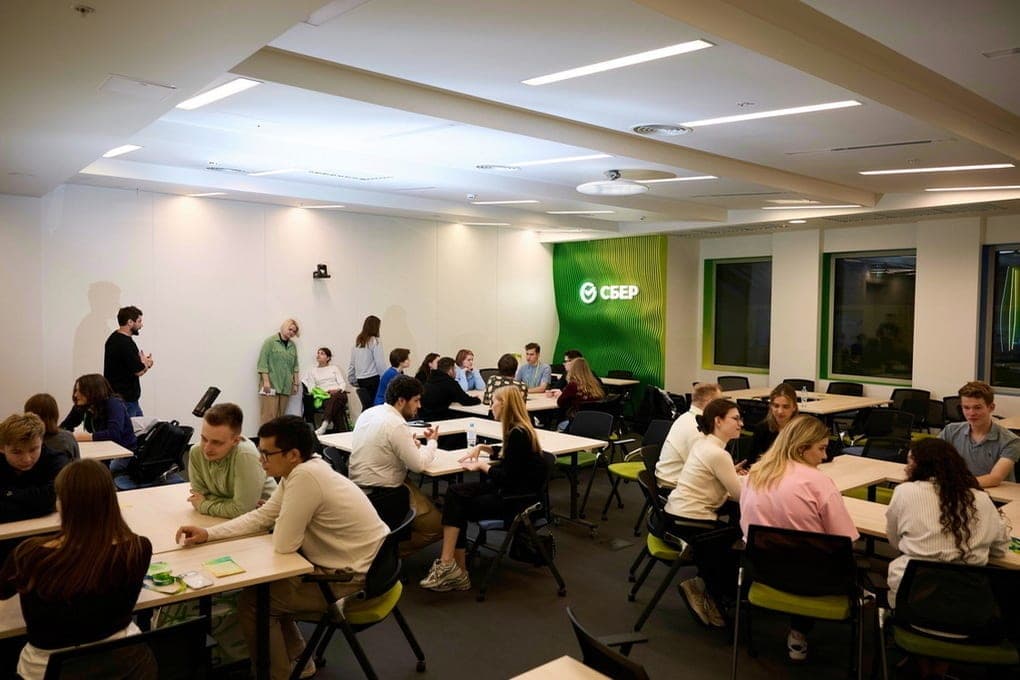
Ahead of the More than Learning conference, which will be held on October 23-24, Sber analyzed data on interns who joined the company in 2026. Almost a third of interns who started working in Sber in 2026 are trained in joint programs of the company with universities.
Every second intern (49.8%) is studying in the third or fourth year, another 27.3% in the first or second year. The most popular area of internships is data analysis (27.8%). This is followed by IT development (19.5%) and business and system analysis (9.5%). Together, these three areas account for almost 57% of internships. The most common areas of training among interns are applied mathematics and computer science, software engineering, economics, computer science and computing, as well as business informatics.
At the same time, the choice of career directions in Sber is much wider: students are trained in technology teams, finance, risk management, design, law, marketing and HR.
Among interns, the highest number of HSE students (15.8%). Next are MIPT (6.2%), Lomonosov Moscow State University (5.9%), Financial University under the Government of the Russian Federation (4.4%) and RTU MIREA (4.3%).
In the 2026/27 academic year, Sber implements 45 joint educational programs with Russian universities, which enroll more than 5 thousand students. Over the past academic year, 733 people graduated from the programs.
At joint programs, students also master new approaches to development. One of them is AI PDLC, in which artificial intelligence is used at different stages of creating technological products. Students learn to work with AI not only as a subject of study, but also as a tool for solving problems faced by teams of developers and analysts.
Olga Tsukanova, Managing Director of the Directorate of Academic Partnerships of Sberbank:
“We are used to the fact that the path to the profession begins with tasks on which a young specialist gradually gains experience. But today, some of these tasks are increasingly being taken over by artificial intelligence. And the question arises: how do young professionals get the first practical experience, if the usual starting tasks become less?
This is a major challenge for both universities and employers. Therefore, it is so important for us to involve students in real work during their studies, and from the very first courses. For example, we conduct turbo internships for freshmen, where students can immerse themselves in the working environment, try themselves in different directions and better understand what field they want to develop in. We want the internship to be an opportunity to learn how to make decisions, see the results of your work and gradually take responsibility for them.”.