Cancer prevention: what is bad habits, love of red meat and an impressive figure on the scales
Any disease is easier to prevent than to treat long and hard. It has long been proven that most serious chronic diseases are the result of our harmful diseases.

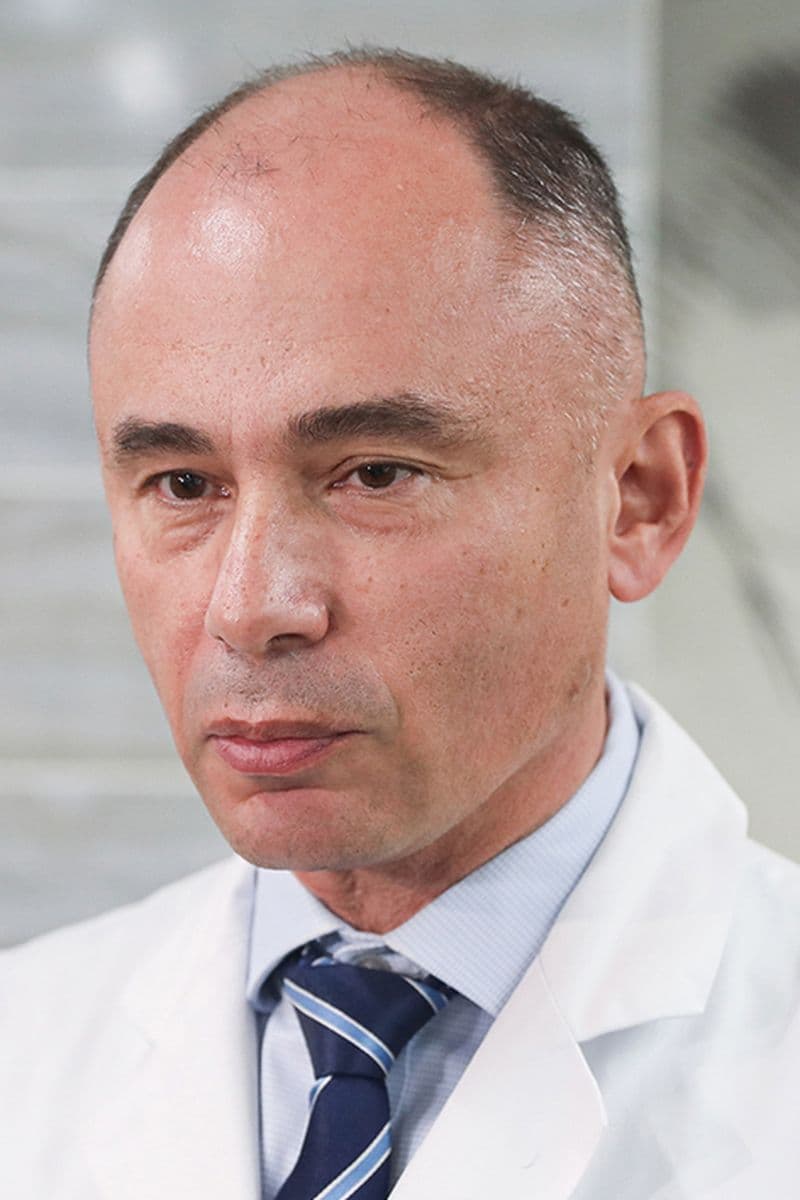
Any disease is easier to prevent than to treat long and hard. It has long been proven that most serious chronic diseases are the result of our bad habits, lack of physical activity, too far from proper nutrition and, of course, the inability to cope with stress. All these factors not only negatively affect cardiovascular activity and the work of the gastrointestinal tract, but also often provoke the development of the oncological process in the body. Today, together with the Doctor of Medical Sciences, Professor, Academician of the National Academy of Sciences of Belarus, Deputy Director for Scientific Work of the N. N. Aleksandrov Oncology and Medical Radiology Research Center, Sergey Krasny, we are talking about the role of a healthy lifestyle in cancer prevention, as well as why today this issue is paid the closest attention of oncologists around the world.

When the responsibility lies with the patient — Sergey Anatolyevich, it’s a trick. I know you are the one who said, “Everyone has cancer, but not everyone will live to see it.” If so, why are we talking about prevention? What's the point, because cancer is actually a biological inevitability?
Sergei Red. The point of prevention is that biological inevitability overtook us in 80-90 years, and not in 30-40 years. Yes, the oncological process of cell mutation science has not yet been able to take under control. Cancer was and continues to be considered a disease of aging. Ideally. But what is happening in the world today, when active able-bodied citizens are increasingly becoming our patients, is a matter of lifestyle, our ecology and, of course, genetics.
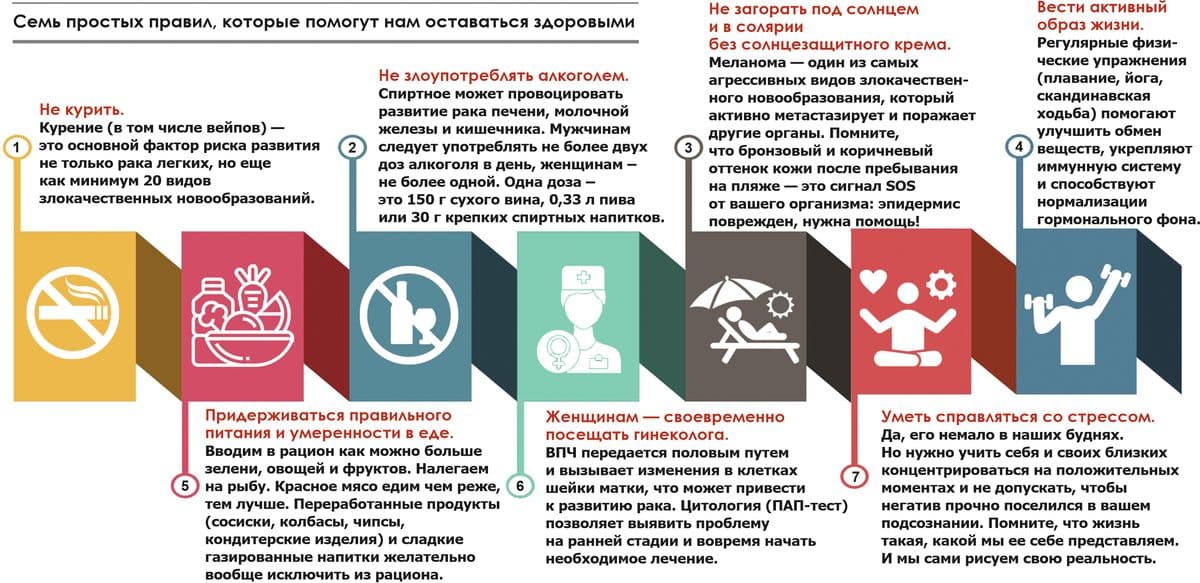
In oncology, the approach to prevention is somewhat different from the measures taken in the health care system to prevent other diseases. It is divided into several gradations: primary, secondary, tertiary and even quaternary prevention. We will not talk about everything, we will focus on those who are more dependent on society in general and on the patient in particular. For example, primary prevention is the elimination of the causes of malignant tumors. In global terms, we are talking about the state of the environment, the presence of harmful effects. And here the average person, and even alone, of course, can do little. But there is another aspect of primary prevention – bad habits. This is where the full responsibility lies with the patient. If we get rid of bad habits in the form of smoking, overeating, alcohol abuse, we can prevent the development of up to 30% of malignant tumors.

Right. Smoking is one of the main causes of malignant tumors, and a number of them. People for some reason believe that nicotine provokes only lung cancer. In fact, a huge number of tumors, since tobacco smoke, as well as smoke from electronic cigarettes, also affects the mouth, upper respiratory tract, trachea, bronchi and then on the lungs. It is there that tobacco products are absorbed into the blood, then spread throughout the body and can affect any organ. But most of all - on the bladder, since nicotine is excreted in the urine. If you look at our urology department, 80 percent of patients with bladder cancer are smokers. The rest have some other reasons: either a hereditary predisposition, or other harmful factors (primarily these are petroleum products or dyes). Attention to the stomach and liver - Another type of cancer prevention is the treatment of precancerous conditions. This automatically means timely diagnosis.
- Not only diagnostics, but also timely vaccination. There are many chronic diseases that are accompanied by hyperplasia or mucosal dysplasia. And this is the first step to the emergence of a malignant tumor. In some people, this process can stop or they simply do not live to see the onset of cancer. In others, cells regenerate. When we absolutely know the pathogen, it is possible to get vaccinated in advance. For example, since last year in Belarus, girls 11 years old have been vaccinated free of charge against the human papillomavirus, which provokes cervical cancer. This is a huge achievement, the results of which allow us to hope that in a few decades we will be able to defeat this type of malignant tumor. The next step, from my point of view, should be a logical continuation: start vaccinating boys. Firstly, because they become men, will be carriers of HPV. Secondly, this virus causes many other types of cancer: oral and pharyngeal cancer, bladder cancer, penile cancer, anal cancer. Therefore, vaccine prevention not only for girls, but also for boys is more than relevant.
As for the prevention of stomach cancer, the timely diagnosis and treatment of Helicobacter pylori - a bacterium that has been proven to cause the tumor process - play a major role here. Today, almost every health organization can pass the necessary tests to identify Helicobacter pylori. This is usually either an endoscopic examination of the stomach (EGD) or a breath test. The bacterium, by the way, is very insidious and lively: transmitted by contact through spoons, forks, plates, kissing, through saliva. Therefore, if one family member found Helicobacter, treatment should be approached comprehensively, examine and sanitize the whole family.
- Hepatitis is considered the main cause of malignant liver tumors. Should they be vaccinated?
- Unfortunately, the hepatitis C vaccine is not yet effective enough. However, the medical scientific community is working hard in this direction, so I hope that this problem will be solved in the near future. Fortunately, there is an effective treatment for this disease. It is very expensive, but our state provides it for its citizens on a budget basis.
But vaccination against hepatitis B is the most important and indispensable stage of protection against this infection. After vaccination, a person receives more than 90% of the probability not to get sick, which, in turn, will protect not only from infection, but also from its consequences: chronic viral hepatitis, cirrhosis and liver cancer. It would seem that the simplest, but at the same time the most difficult factor of a healthy lifestyle is our diet.
- Yes, in this matter everything is subject to willpower, self-discipline, culture of proper cooking. Overweight and obesity is not in vain called the epidemic of the XXI century. This is a symbiosis of our diet and lack of physical activity. Moreover, both of these factors go, we can say, hand in hand: you will not change the situation for the better if you start eating right, but at the same time continue to suffer from hypodynamia, and at the same time active fitness classes will not help if your diet remains mainly fast food, carcinogens, excess red meat, fatty and fried, a lot of sweets. Obesity is very harmful to the body, it provokes a number of malignant tumors - uterine body cancer and breast cancer in women, colorectal cancer, stomach cancer and liver cancer in both sexes, etc. In men, obesity causes serious hormonal changes, which do not have the best effect on erectile function.
At the same time, I will make an important clarification: a little extra weight can even be useful. But here the defining word is "small." Within 10% of the optimal body mass index (for its calculation, divide your weight in kilograms by height in meters squared and Google the result). The fact is that in our RSPC we observe a curious picture: after complex operations, patients who have a small fat reserve are much faster to recover. Fat is a certain energy reserve of the body, and it still must be present. But only within reasonable limits.
- Since we touched upon the “fatty topic”, let’s talk about why today Belarusians are actively encouraged to use rapeseed oil, although the same Mediterranean diet, which is recognized almost as a reference throughout the world, focuses on olive oil?
- The fact is that for the normal functioning of the body and the prevention of tumor processes requires a strict balance between polyunsaturated fatty acids omega-6 and omega-3, which we get together with food. Due to the low intake of vegetables and large amounts of red meat (pork, beef), the ratio of omega-6 to omega-3 in the body reaches 15:1, although the ideal ratio is considered to be 1:1. Omega-6 acid in excess can damage the vascular walls and provoke tumor growth, while omega-3 acids, on the contrary, are stabilizers and prevent the occurrence of malignant neoplasms.
In the popular sunflower oil, this ratio is catastrophic 1:200 in favor of harmful omega-6. Even the vaunted olive oil has a ratio of 1:15. Rapese oil is advantageously different - 1: 6. 100 grams of rapeseed oil contains 9 grams of omega-3, while olive oil contains only 0.8 grams. Yes, in the Mediterranean countries, omega-3 acids are usually replenished with seafood and vegetables, but we have no sea in Belarus. In such a situation, rapeseed oil is a real find. In addition, it has a burning temperature higher than sunflower. Accordingly, when frying, much less carcinogens are released.
- Recently, in social networks and popular TV programs devoted to the topic of a healthy lifestyle, information began to appear that our favorite tomatoes and cucumbers are largely useless products for the body. How come?
There is truth in these claims. Vegetables are needed primarily as a source of fiber. In tomatoes it is quite a bit, cucumbers - generally almost entirely consist of water. A much better solution, if we are talking about vegetables, is to diversify the diet with pumpkin, squash, cabbage, radish. And tomatoes and cucumbers are for fun, because they are very tasty.
The WHO recommends eating at least 400 grams of fruits and vegetables per day. But, planning a diet for a week or making a list of products before going to the store, do not forget about another most important category - greens. With regular use of spicy and salad leaves, age-related cognitive decline slows down, the risk of developing cardiovascular and oncological diseases decreases. Dill, cilantro, parsley, lettuce leaves, onions, celery, spinach, handle should be in our diet on a permanent basis. And the more, the better. Why do you think there are so many centenarians in Georgia and Abkhazia, although red meat kebabs are a favorite national dish in these countries? Of course, genetics, ecology play a role, but also a healthy cult of greenery. The most popular side dish for kebabs in our southern neighbors is not fried potatoes with bread, but cilantro, tarhoun, basil. Therefore, take an example from them and lean on greens with a Belarusian bias - parsley, dill, lettuce leaves, green onions, spinach. This will help normalize the work of the intestine and will best affect your figure.
In a small number of patients (5-7% of all cases of cancer), there is some mutation in the genes that significantly increases the likelihood of developing a tumor, which is usually inherited. Such cases of malignant neoplasms occur in the form of so-called "family cancer" and develop in middle age. Today, hereditary forms of cancer processes are well studied in breast cancer, ovarian cancer and colon cancer.
As a rule, you can suspect a genetic predisposition to a malignant neoplasm if the patient has two or more blood relatives who have cancer. Special genetic studies are needed for more accurate diagnosis.
THEME
♦ Every person once a year should undergo an ultrasound of the abdominal cavity, kidneys, bladder. Periodically perform the FGD procedure and colonoscopy. After 45 years, men should visit a urologist and get tested for PSA.
Women should be regularly observed by a gynecologist, take smears, do ultrasound of the pelvic organs, examine the mammary glands on their own and after 45 years perform mammography once every 2 years.
♦ Remember that cancer detected at an early stage is curable in 90% of cases.
KSTATI
Unfortunately, despite high hopes for the preventive effects of antioxidants, various vitamins or dietary supplements, clinical studies have not shown their effectiveness. Moreover, in some cases, these substances can harm the human body. A number of hormonal drugs are proposed to be used for the prevention of breast and prostate cancer. Despite encouraging research results, there is general debate about the need for widespread use of these drugs. The high cost, the need for long-term administration, the risk of side effects make in most cases the use of these drugs unreasonable.
lvk@sb.by