Rigid and dangerous. What is important to know about the diagnosis and treatment of Helicobacter bacteria in children
The discovery of the bacterium Helicobacter pylori was a real breakthrough in the study of the microbiology of the stomach and the causes of diseases of the gastrointestinal tract, such as pylori.
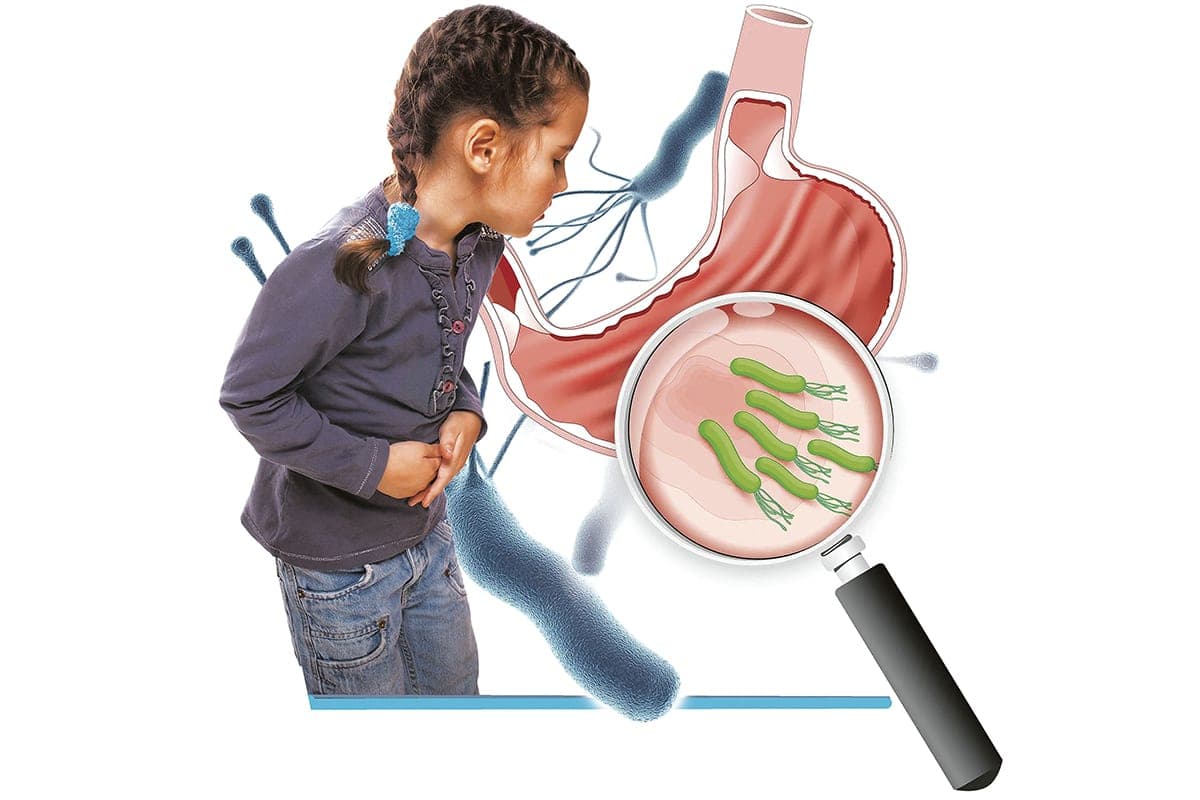
The discovery of the bacterium Helicobacter pylori was a real breakthrough in the study of the microbiology of the stomach and the causes of diseases of the gastrointestinal tract, such as gastritis, peptic ulcer and cancer. It is believed that on average in the population about 70% of people are infected with Helicobacter, both adults and children. Of course, this does not mean that in each of the carriers the bacterium will certainly give an impetus to the oncological process, but with concomitant factors, the risk is still quite large.
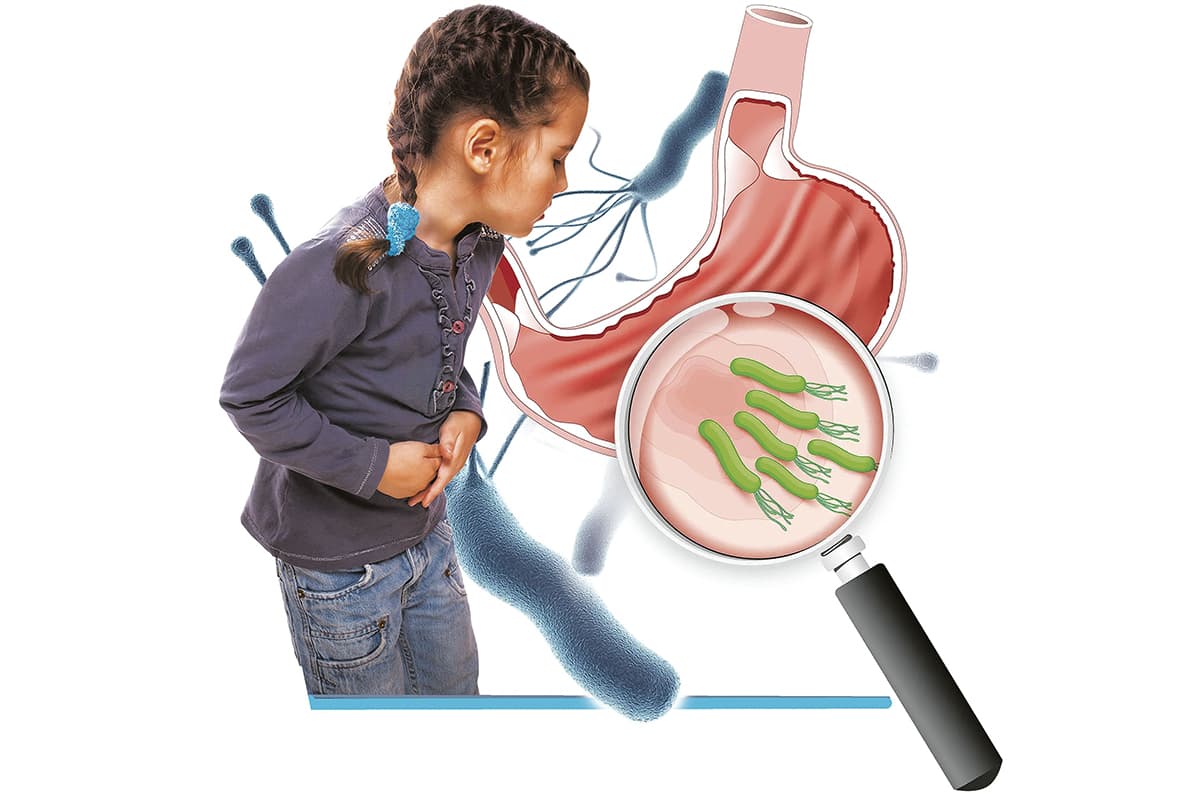
The insidiousness of Helicobacter pylori is not only that it provokes the development of serious diseases, but also in its truly colossal contagiousness: if the infection was found in one family member, most likely, it will be present in the body of all households, since the bacterium can be transmitted through saliva when kissing, using common dishes, cutlery, personal hygiene items. An adult patient is usually prescribed a course of therapy, including the use of antibiotics. What about the kids?
- The problem of Helicobacter pylori for children is very relevant, says Lyudmila Boyarin, pediatrician of the 21st Central District Polyclinic of the Factory District of Minsk. If mom and dad are infected, most likely, the child will have Helicobacter pylori. However, it should be remembered that this bacterium can live in the stomach for many years absolutely asymptomatic. This is what happens most often in children. Their body has a special lability - the ability to adapt to many microorganisms and live with them for a long time "in commonwealth". Therefore, before any complaints about health, we do not conduct screening studies of young children for the presence of Helicobacter pylori. If immunological failures or characteristic symptoms appear, then the pediatrician prescribes an additional examination, which usually includes FGD (fibrogastroduodenoscopy) - an endoscopic examination that allows the doctor to examine in detail the mucous membrane of the esophagus, stomach and the initial section of the duodenum from the inside.
— Lyudmila Semyonovna, what symptoms can indicate the presence of this infection in the child’s body?
- The most likely symptoms include frequent recurring abdominal pain in the area of the epigastrium (upper central part of the abdomen), a feeling of heaviness, pressure, rapid saturation and overflow of the stomach even after a small amount of food, vomiting, burping after eating, burning, unstable stools (constipation is replaced by diarrhea). But here you need to understand that the listed symptoms may indicate the presence of many diseases of the gastrointestinal tract, and Helicobacter pylori during diagnosis will be more a random find. By the way, in children, even symptomatic Helicobacter infection is much easier than in adults. Moreover, at an early age, only 5% of symptomatic infections occur in peptic ulcers, and in adolescents - 10%. Interrupt the pathological cascade – Common gastritis can lead to stomach cancer?
Yeah. When the bacterium Helicobacter pylori attaches to the cells of the gastric epithelium, a powerful inflammatory reaction is triggered and chronic active gastritis develops. It is present in 100% of those infected, although most people do not feel it. Chronic inflammation disrupts the normal regulation of hydrochloric acid secretion. Depending on the localization of the infection, either hypersecretion occurs (with antral gastritis - typical for duodenal ulcers), or hyposecretion (with pangastritis with atrophy - a risk factor for stomach cancer). A special role in oncogenesis is played by the so-called Correa cascade - a sequence of changes in the gastric mucosa, described by the Colombian pathologist Pelayo Correa: normal gastric mucosa - chronic superficial gastritis (it is initiated by Helicobacter pylori) - chronic atrophic gastritis (death of the glands) - intestinal metaplasia (replacement of the gastric epithelium by intestinal) - dysplasia (precance changes) - adenocarcinoma of the stomach.
In 1994, WHO classified Helicobacter pylori as a group I carcinogen, that is, an agent with a proven causal relationship with the development of cancer in humans. This pathway — from infection with a bacterium to cancer — can take decades. But timely therapy in the early stages of the Correa cascade interrupts the pathological process.
FGD is not a favorite procedure even in adults, let alone children. Paid medical laboratories offer patients a service to identify Helicobacter pylori based on a venous blood test. Another option is a laboratory method for diagnosing Helicobacteriosis (13C-urease respiratory test). How informative is that?
- As for the analysis of venous blood, microorganisms cause an immune response in the presence of bacteria and the formation of specific antibodies of classes M, G, A. But the test for antibodies has an average level of confidence, more often used in patients older than 10 years, who are characterized by strong immune reactions to helicobacteriosis. In young children, the effectiveness of the study is no more than 27%.
The gold standard of diagnosis is a combination of non-invasive (13C-urease breath test with labeled urea) and invasive methods (endoscopic examination with biopsy). This approach allows not only to identify the infection, but also to determine the most effective therapy for the prevention of stomach cancer.
STOP BELIEVING IN FAIRY TALES!
Some zealous followers of alternative medicine assure: it is not necessary to “poison the body with antibiotics”, Helicobacter pylori can be cured with miraculous herbs and fractional nutrition!
But this is what evidence-based medicine claims: no herbal remedy and no diet provide eradication (complete destruction of the pathogen) of Helicobacter pylori. But modern regimens of antibiotic therapy with proper use reach the effectiveness of 85-95%. Remember: self-medication with herbs is a waste of time and the risk of disease progression!
Another well-established myth about this bacterium is that people sincerely believe that the process of reinfection is too high, because Helicobacter pylori enters our body in the simplest household ways. However, the facts are stubborn: reinfection after successful therapy occurs in less than 0.1% of cases per year in developed countries.
TESTED ON MYSELF
Until 1982, the medical community adhered to the version that gastric ulcer is a consequence of congenital excessive secretion of hydrochloric acid, stress and malnutrition. It was believed that in the acidic environment of the stomach, no bacteria can survive.
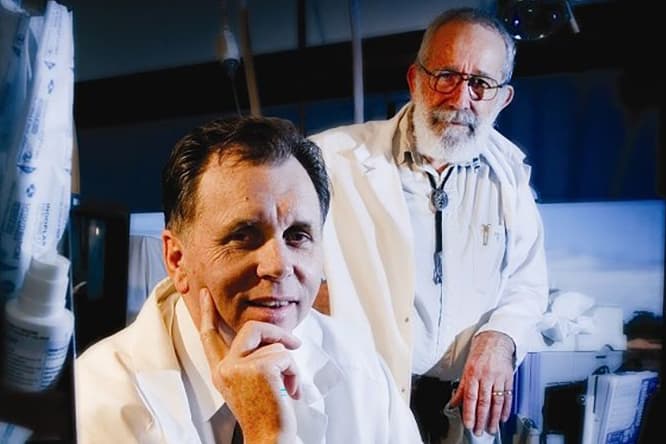
In 1982, Australian pathologist, microbiologist and scientist Robin Warren drew attention to the presence of bacteria in stomach biopsies in patients with gastritis. However, his colleague Professor of Clinical Microbiology at the University of Western Australia Barry Marshall suggested the infectious nature of the disease. The scientific community was extremely skeptical of this hypothesis. To confirm his theory, in 1984 Marshall drank a culture of H. pylori grown from a patient's biopsy. A few days later, he developed symptoms of gastritis (halitosis - breath odor, nausea, heartburn, bubbling in the abdomen), which was confirmed endoscopically and histologically, after which the doctor began taking bismuth salts and antibiotics for 14 days and cured himself, which was also confirmed by endoscopic methods.
In 2005, Barry Marshall and Robin Warren received the Nobel Prize in Physiology or Medicine for their discovery of the bacterium Helicobacter pylori and its role in the development of gastritis and peptic ulcer disease.
KSTATI
In the stomach there are protection factors and aggression factors that constantly affect the mucous membrane. Normally, the protection factors are stronger, so the mucous membrane remains normal. If the factors of aggression begin to prevail, erosions appear, and then ulcers. Helicobacter pylori is one of the factors of aggression that can tip the scales in the direction of disease.
lvk@sb.by